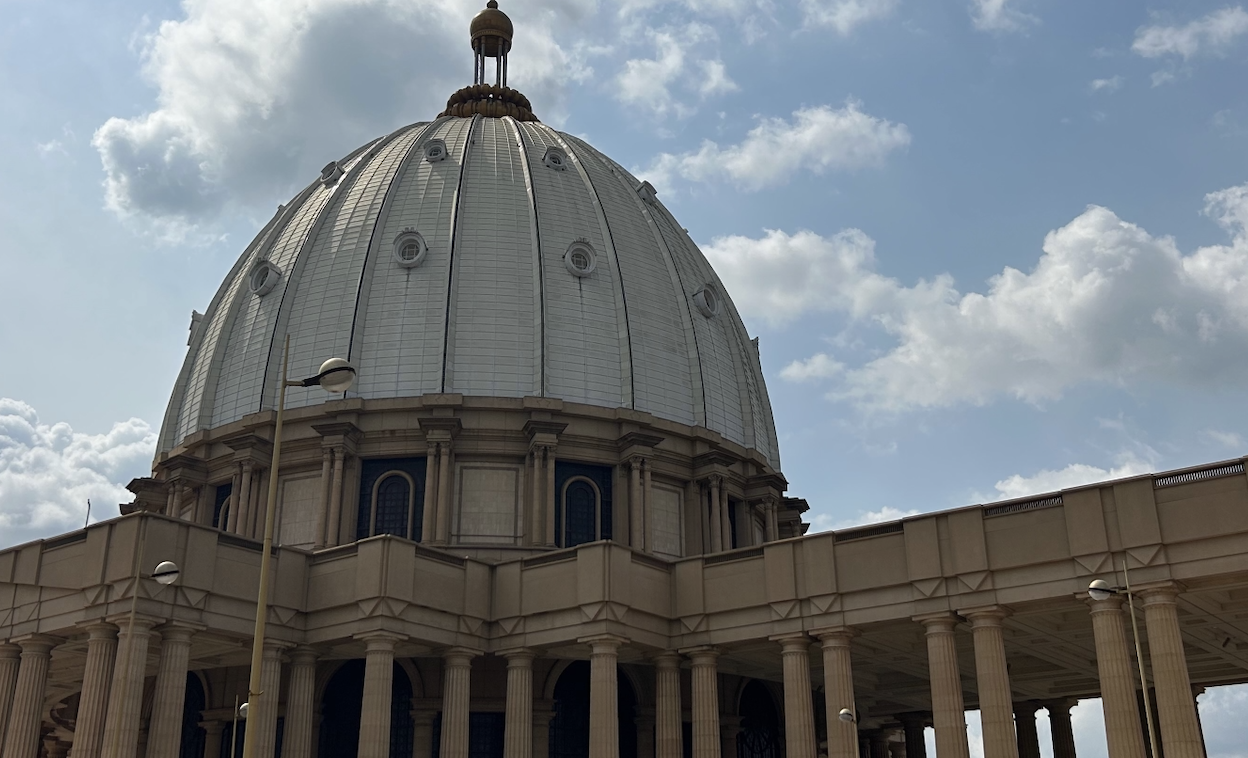
Cote D'Ivoire Biggest Church in the World
 Côte d’Ivoire | Country 41 | 3 day |
Regrettably I am only in Ivory Coast for 3 days. I will definitely be back to explore the country more.
- Much more economically developed than some West African countries (higher GDP per capita than Benin), the world’s largest exporter of cocoa
- Political history includes a coup in 1999, a 2002 rebellion/civil war, and the 2010–2011 post‑election crisis.
- Muslim population around 40% (higher than Benin’s roughly 25–30% but lower than Senegal’s ~95%). Folks dress significantly less West African (not the colorful clothes).
- Local delicacy called Attieke, which is fermented cassava that tastes a lot like rice.
As I got off the plane, in the custom lines, I met a nice couple from IL, USA, who were Jehovah’s Witnesses and went to a conference in Togo, then traveled to Benin and will be continuing their journey in Côte d’Ivoire.
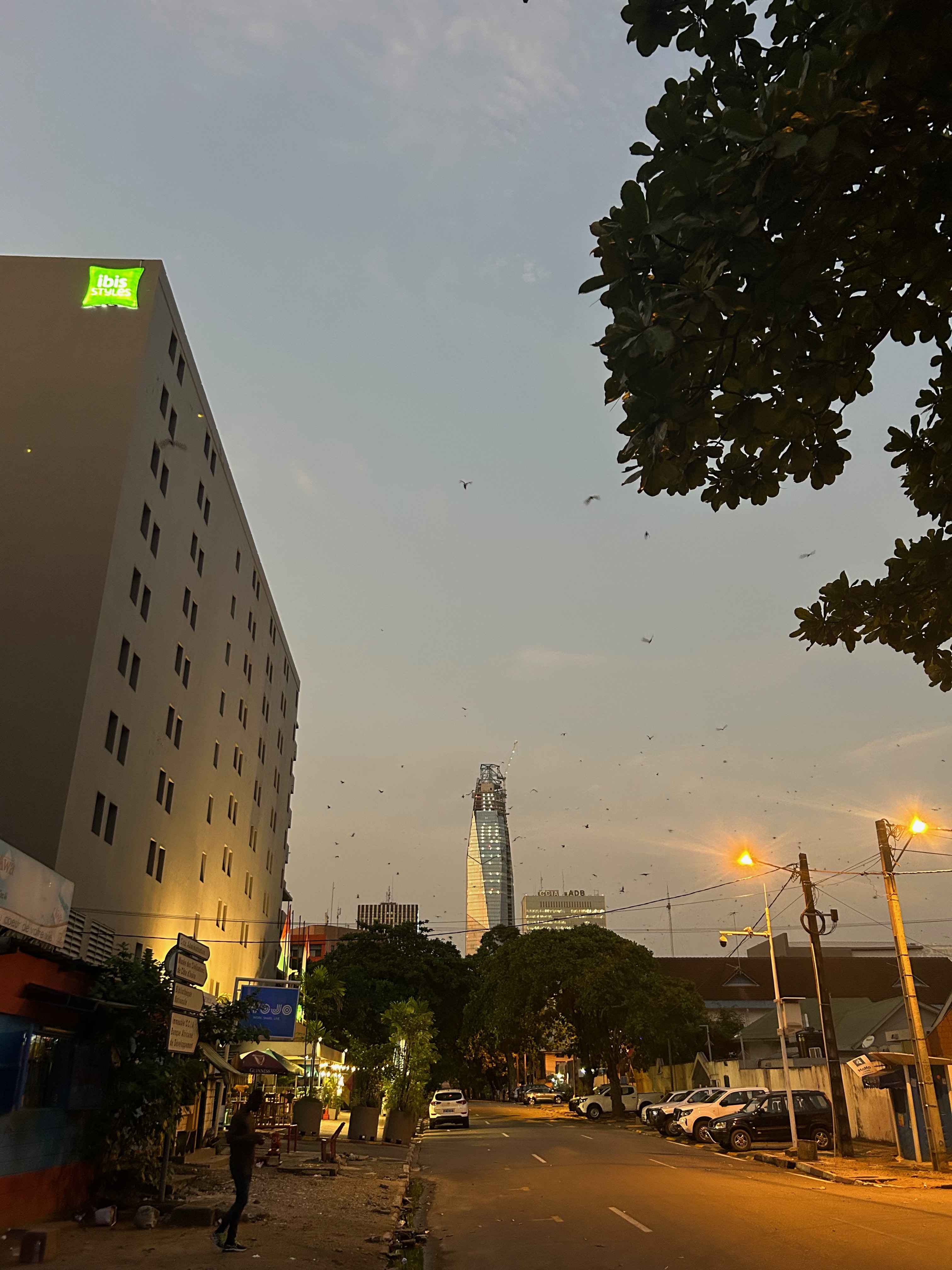
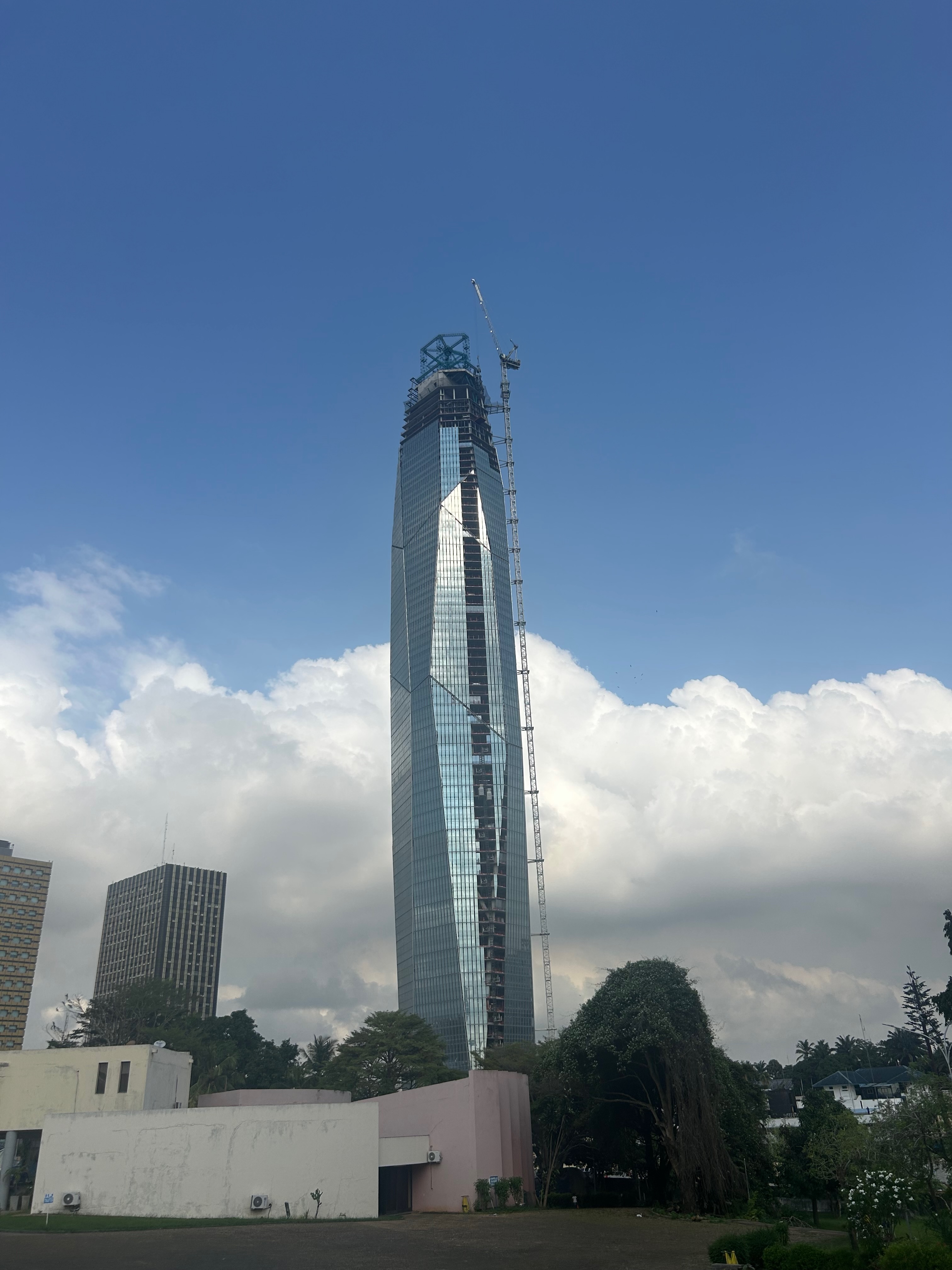
I took an easy Yango ride to my hotel in Abidjan’s Plateau area (which is very similar to Manhattan, many tall buildings and on an island). Throughout the ride, I was excited to see many modern malls and cars on the road (instead of the motorbikes in Benin). Interestingly, hotels here have a government registration web form (which reminds me a lot of China).
Day 2: Treichville and Grand Bassam
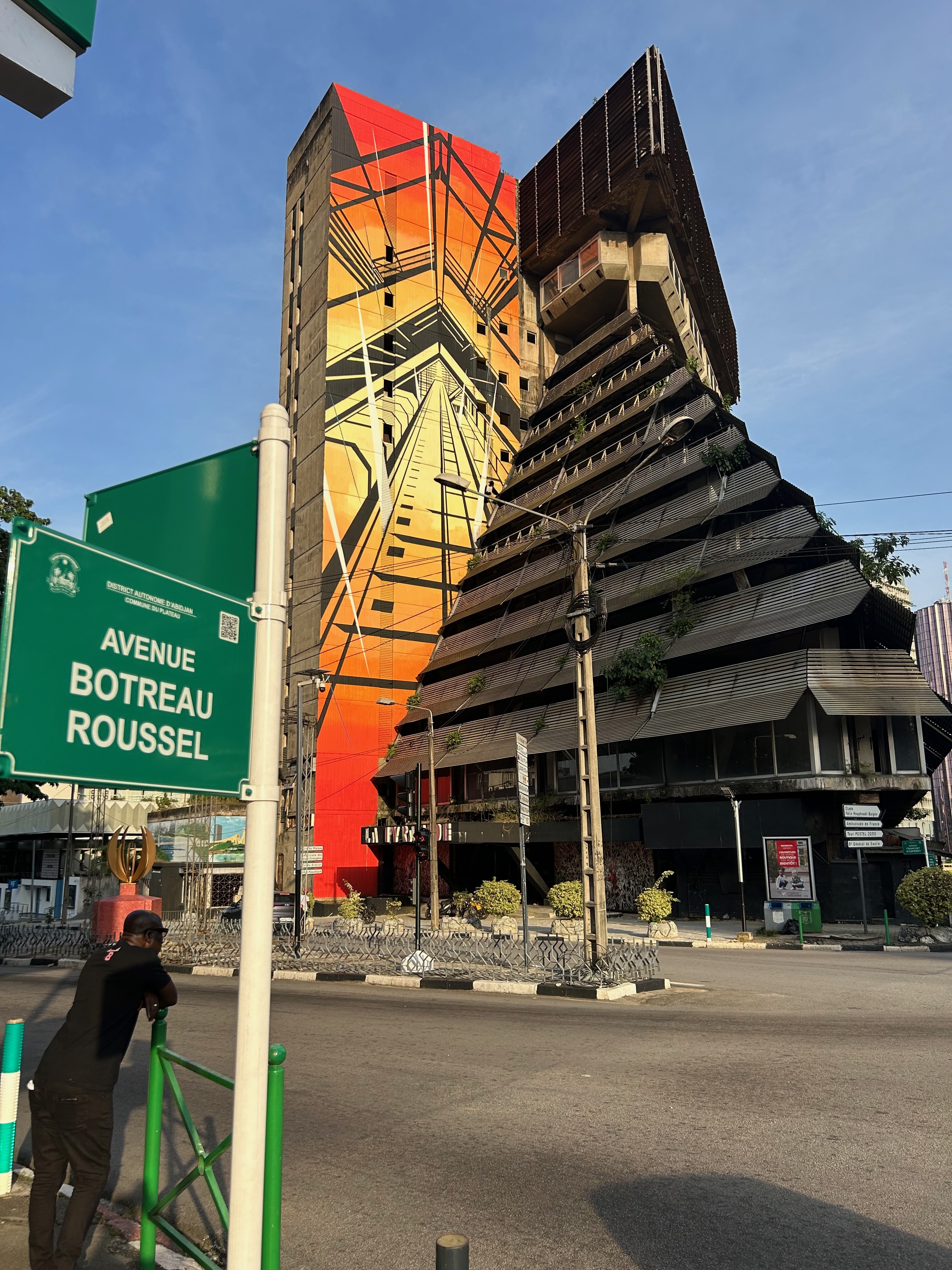
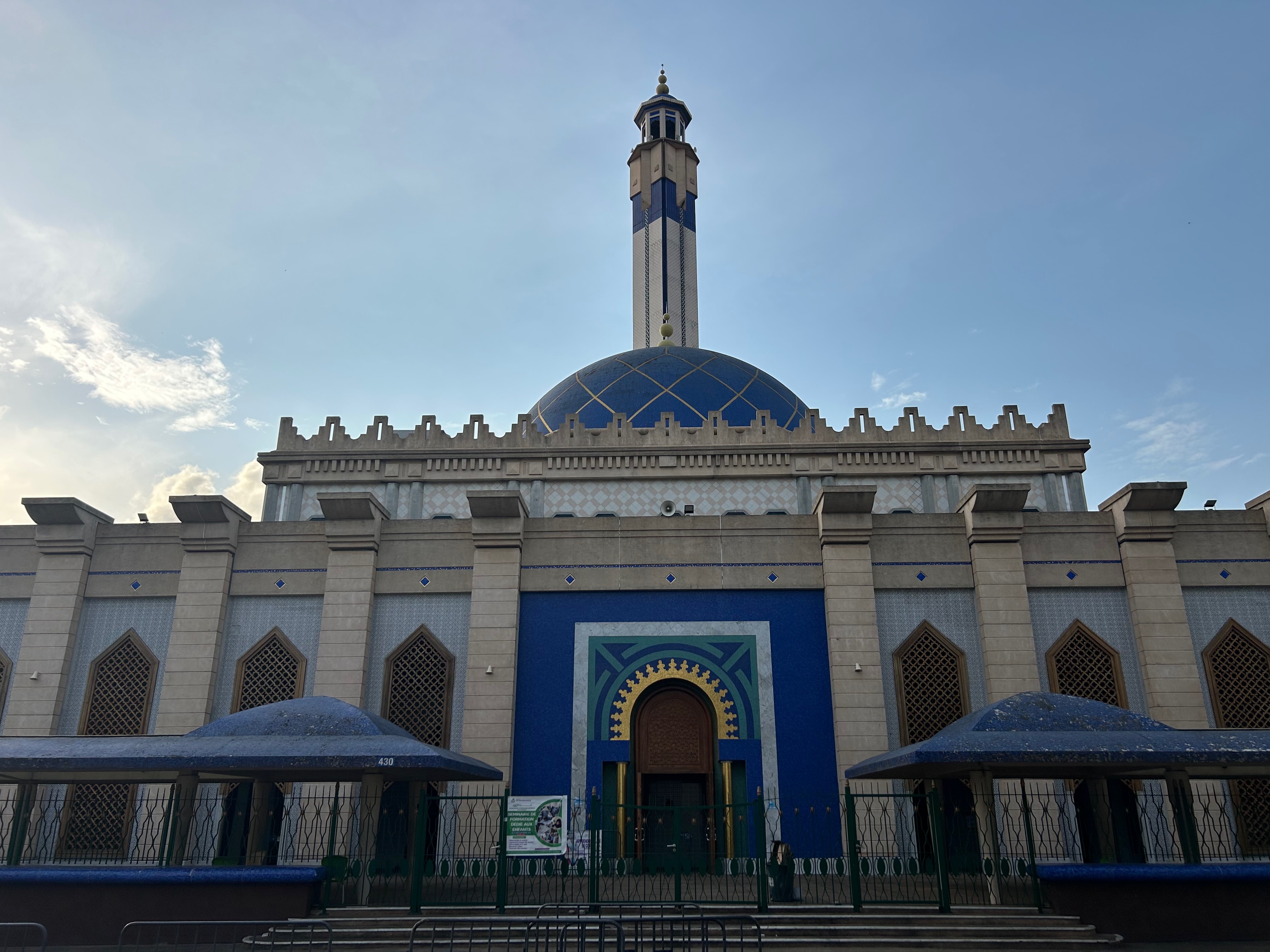
Waking up early in the morning, I first explored the Pyramid and Salam Mosque. Because my walking tour was delayed to my last day in Cote d’Ivoire, I will cover it later in the blog.
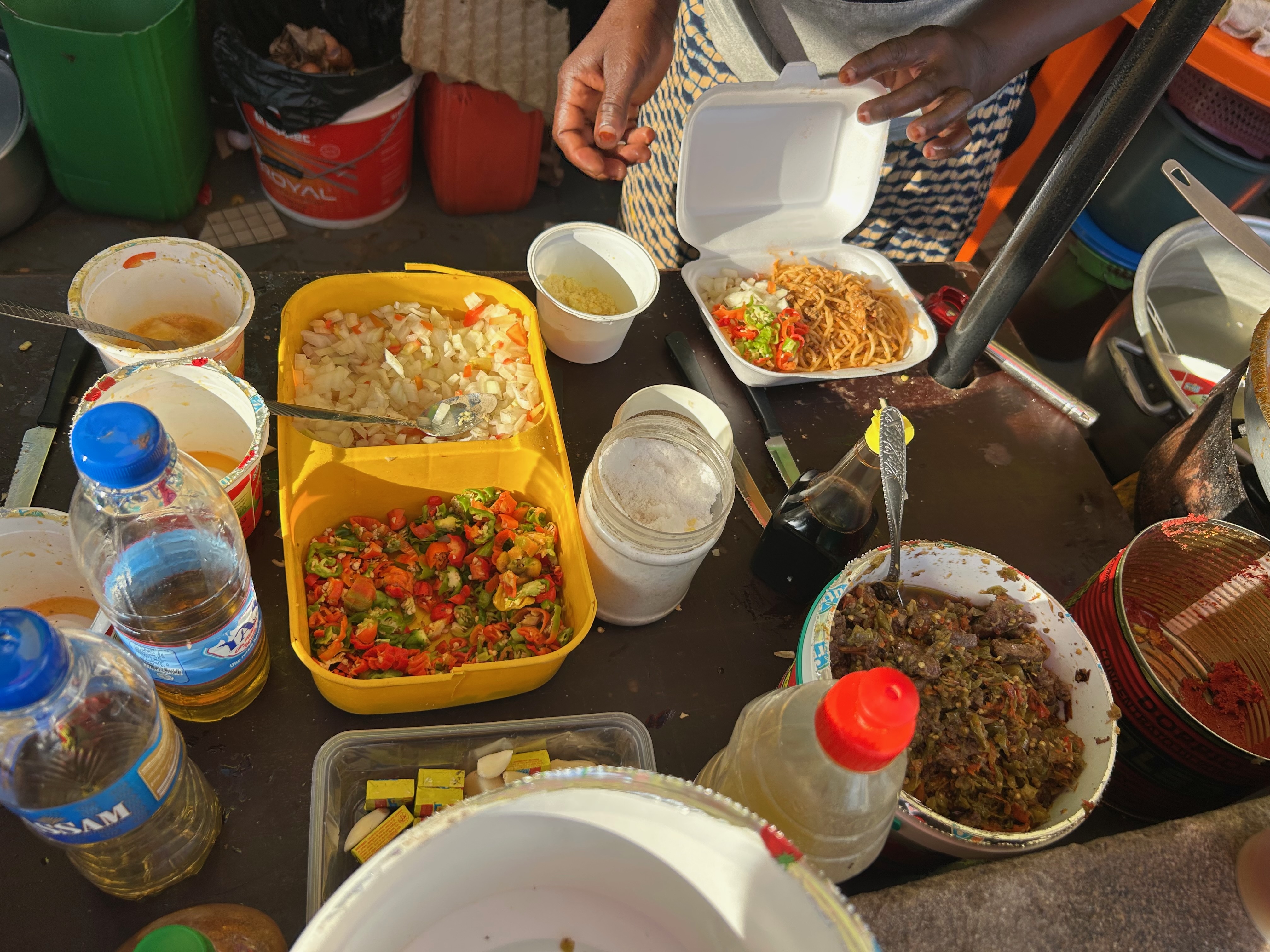
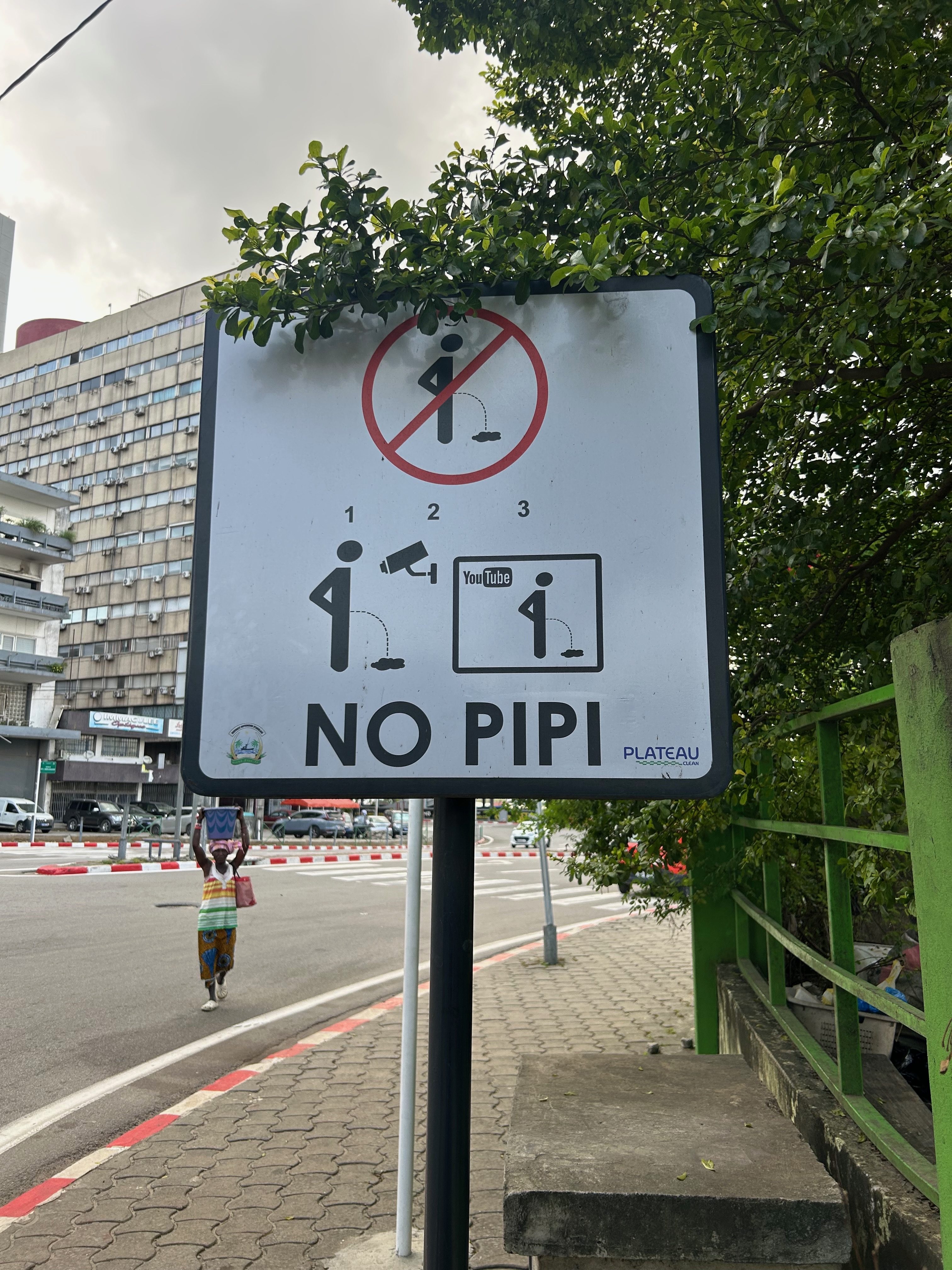 breakfast stand in Plateau
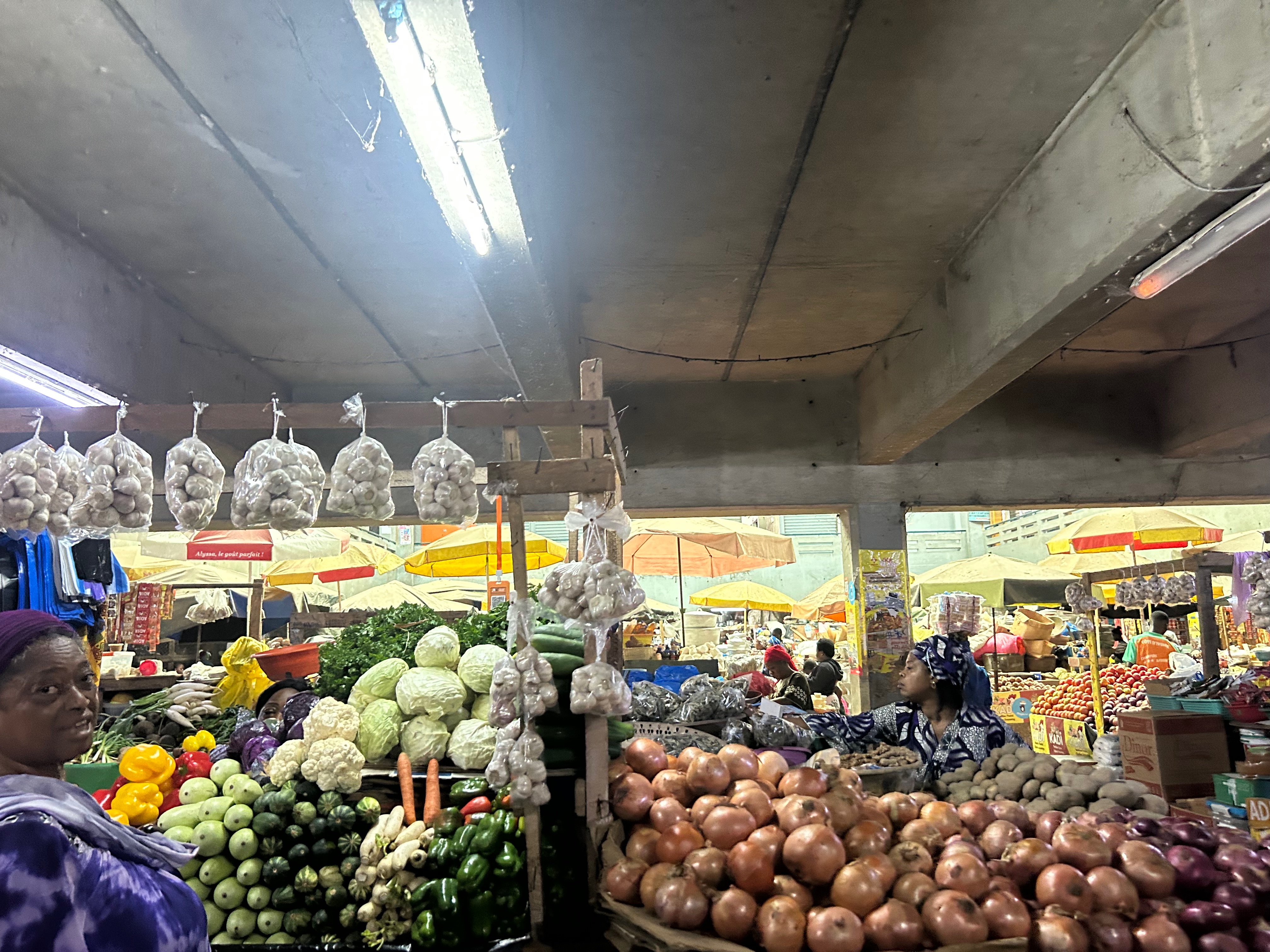
I traveled to Treichville, just south of Plateau. My first stop was the Grand Marche, which was a super crowded building divided into sections. I traversed the cooking section, produce section and got out at the chicken section.
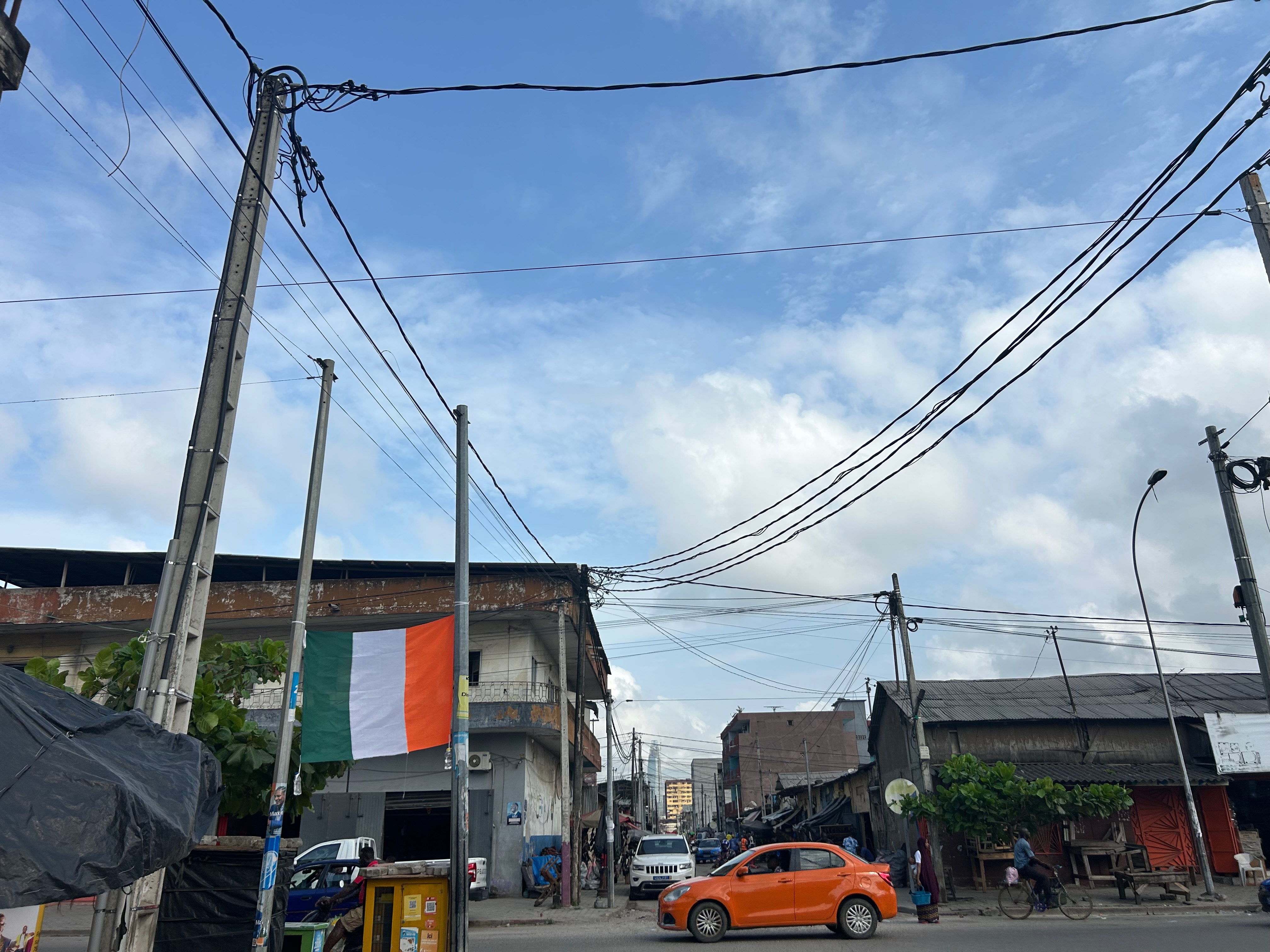
I wandered the streets of Treichville before visiting the Cap Sud mall. The mall contains many modern amenities and brands.
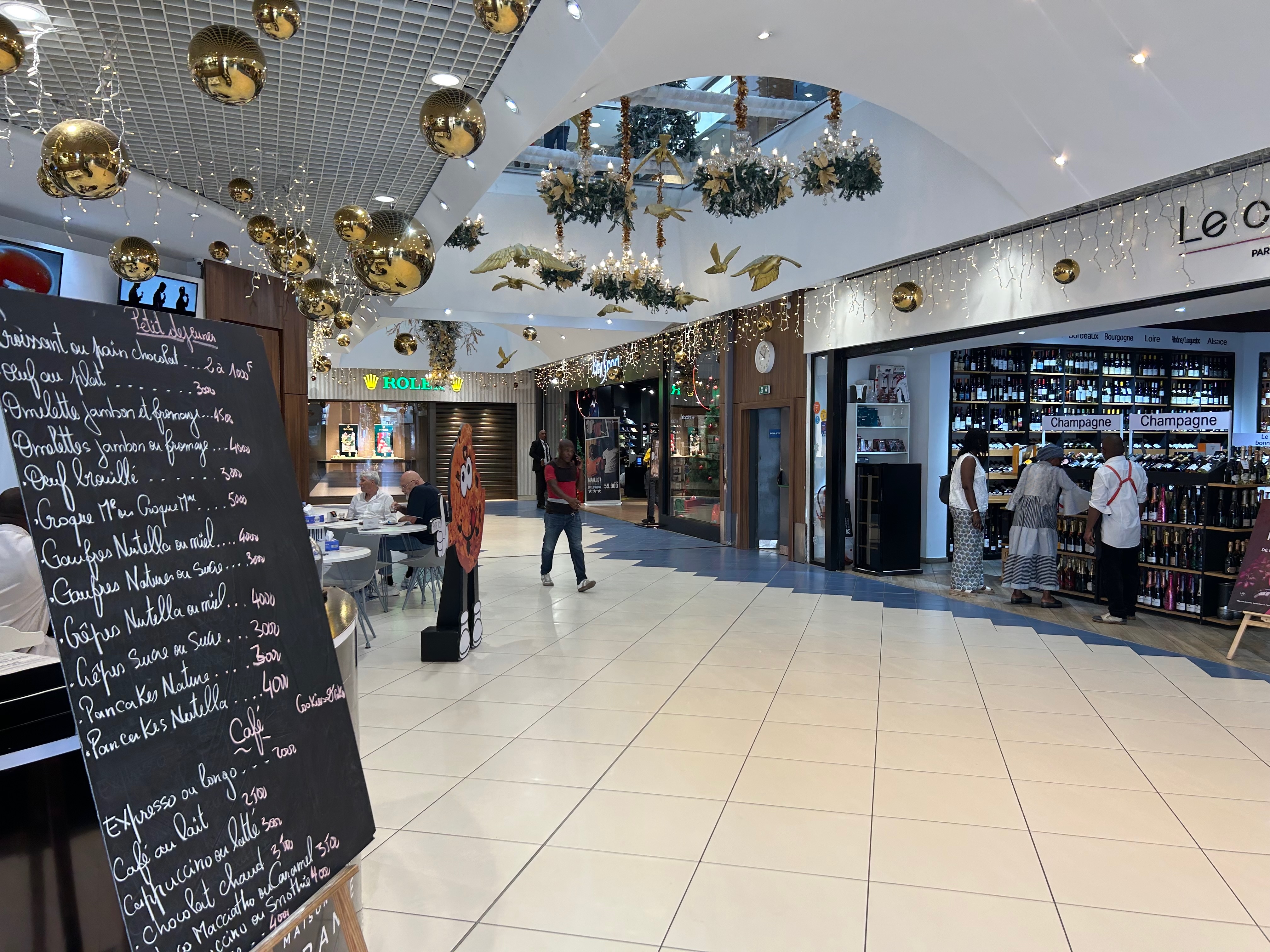
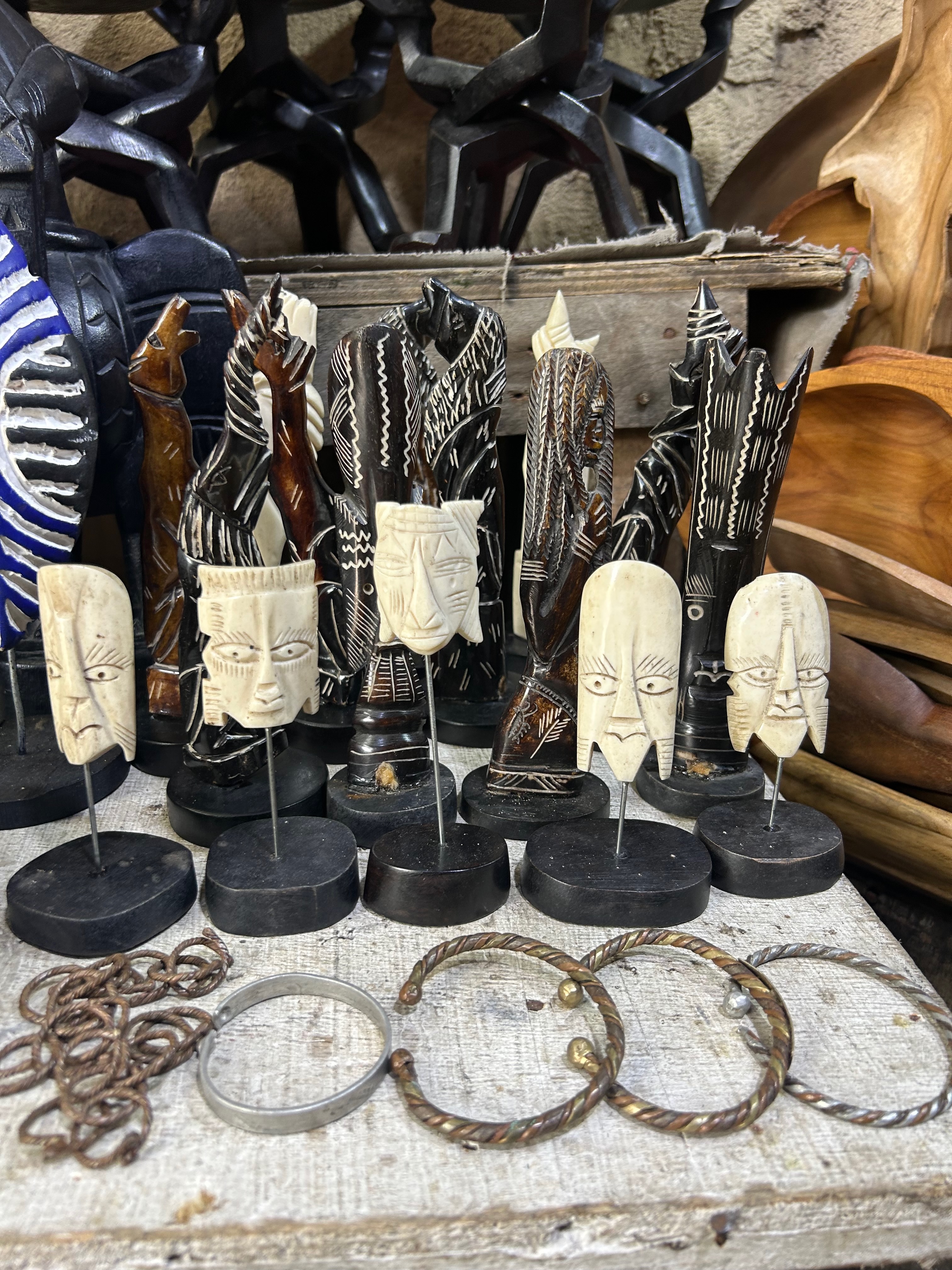 Right: masks made from cow bones
The CAVA souvenir market was next. Having been to many souvenir markets, I found many high quality souvenirs here, beyond the wooden masks and magnets that you typically see. They have many bone-carved arts, glass arts (like in Senegal) and my favorite, the coconut arts. Elephant symbols were everywhere and it was very high quality.
In the afternoon, I had booked a tour at Grand Bassam and took an hour long Yango along the Atlantic ocean. We saw many small shops, folks waiting for shared buses and some super modern houses as we got closer to Grand Bassam.
A hustler along the road was selling 2 turtles, 1 in each hand on the side of the road.
Arriving an hour earlier than the tour, I meandered the small island of the smaller GB. There were many aggressive fake guides and overly expensive restaurants on the beach unfortunately.
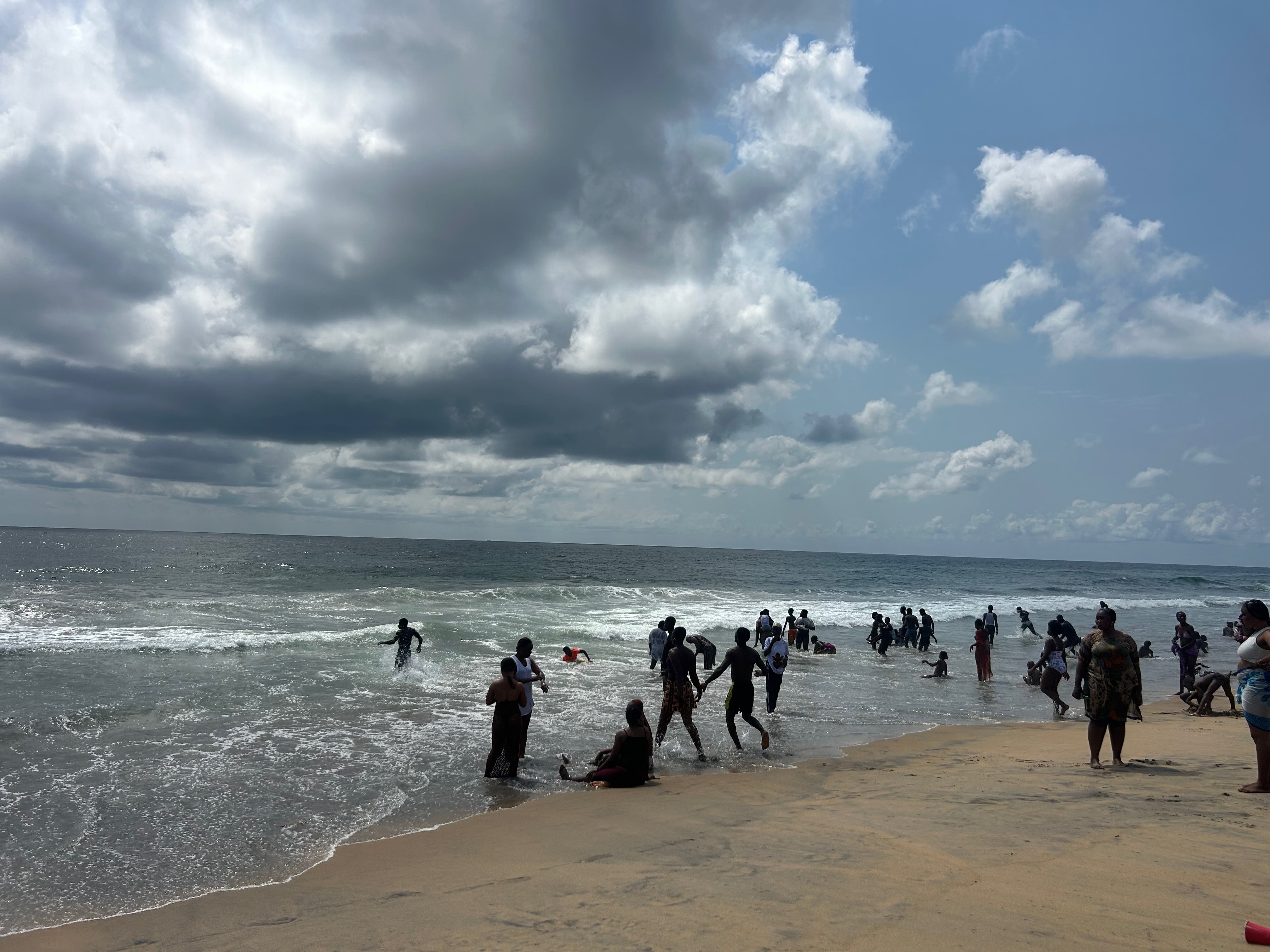
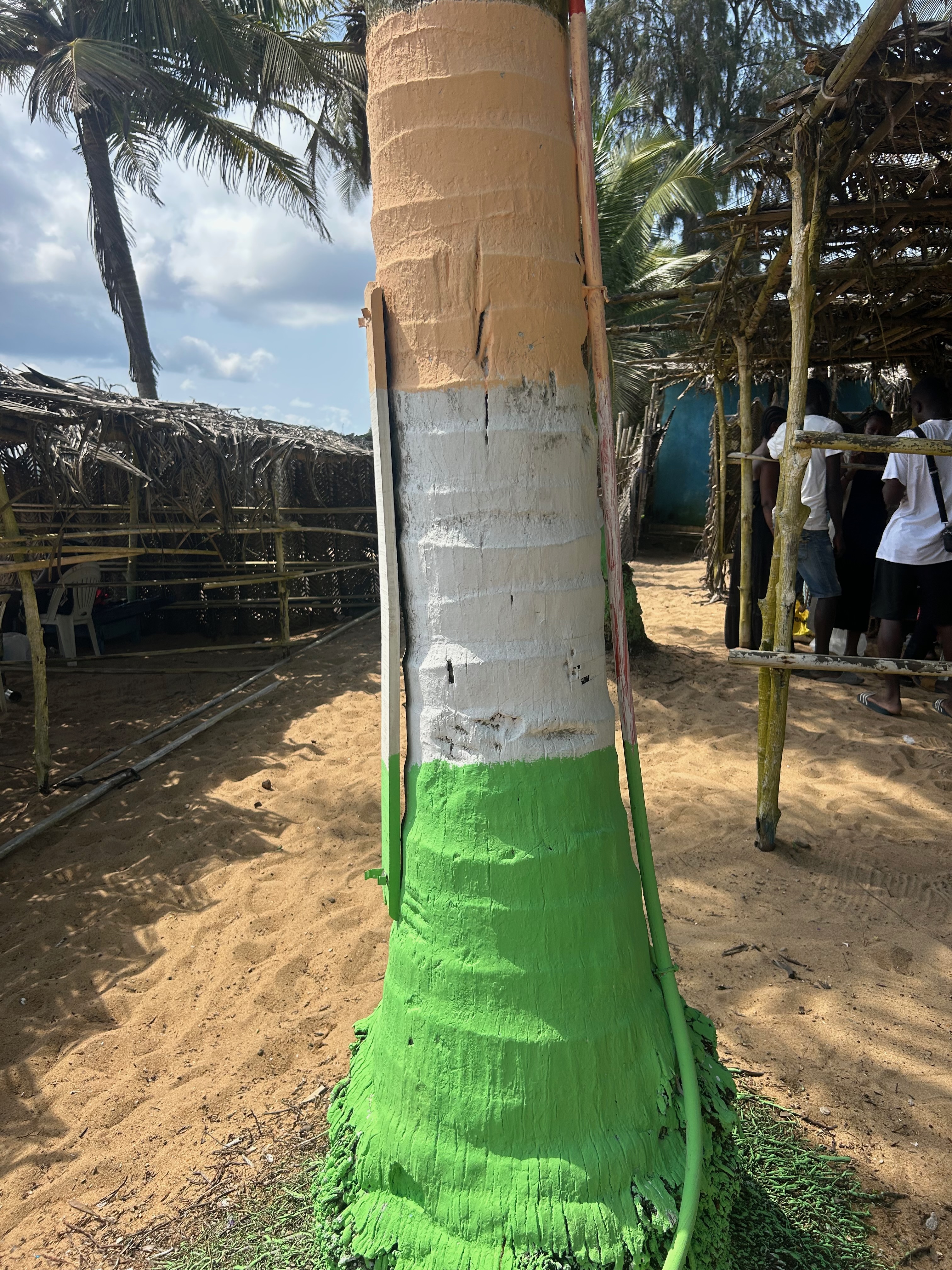 The ocean is beautiful and many people were in the water, with horse rides being sold too.
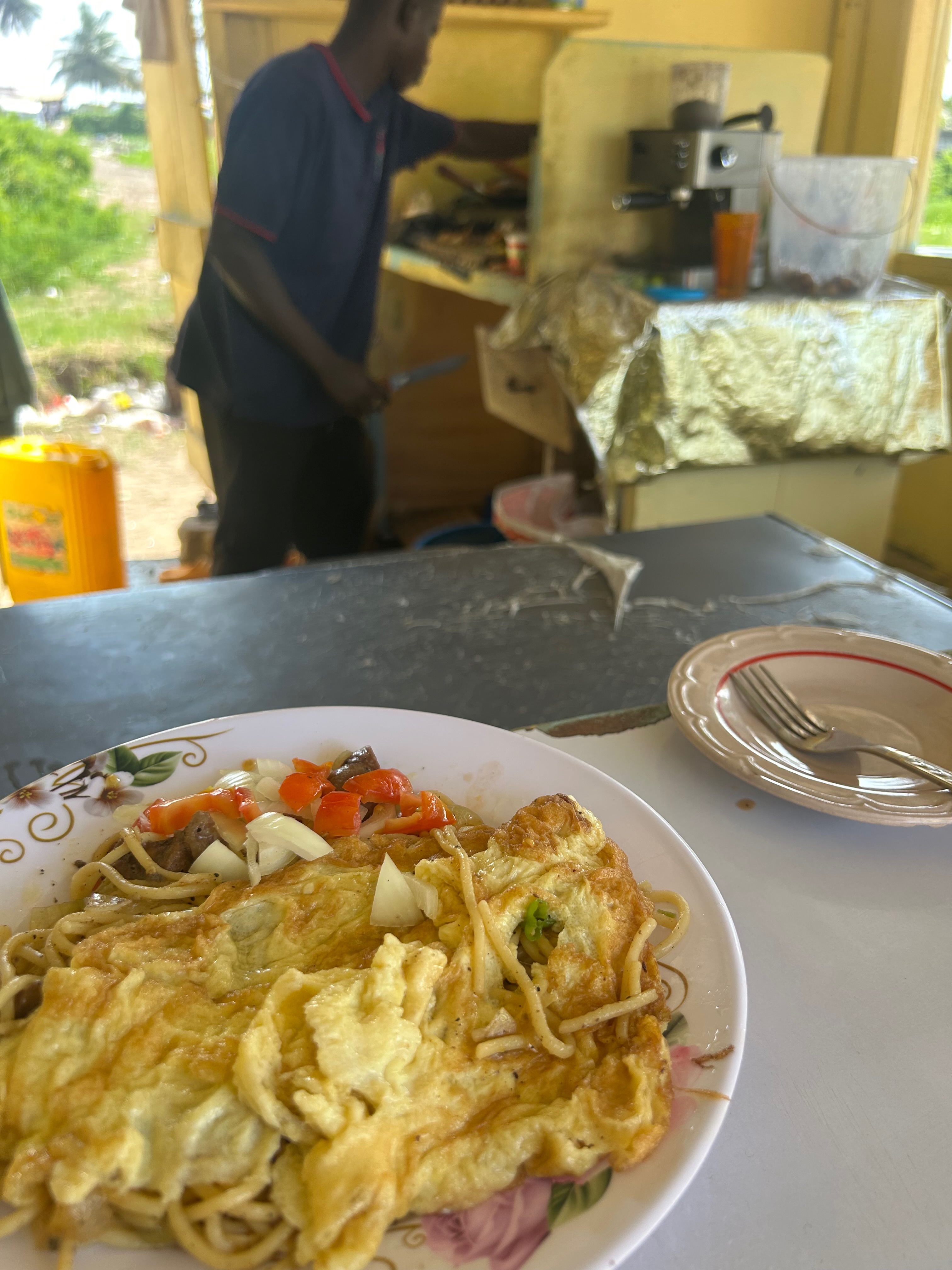
Hungry, I ate at a stand a strip away from the beach. I watched the cook make omelette + spaghetti, while a woman next to me put attieke into smaller bags for sale.
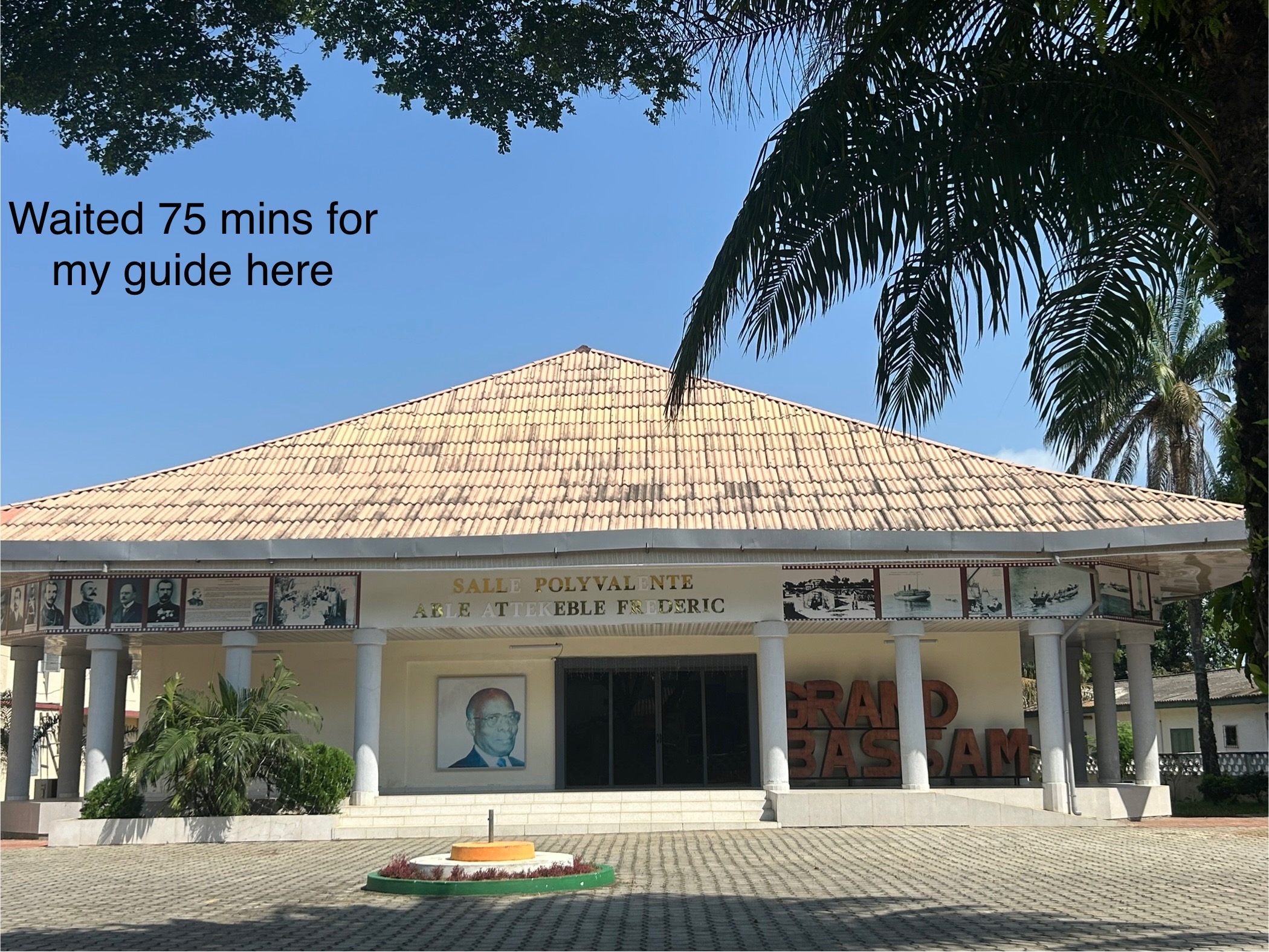
My guide Merceline and I had been communicating on WhatsApp and unfortunately she ran pretty late.
Once the capital of French côte d’ivoire from 1893, but abandoned in 1899 because of yellow fever; Portuguese and Dutch were here for a long time since the 1400s.
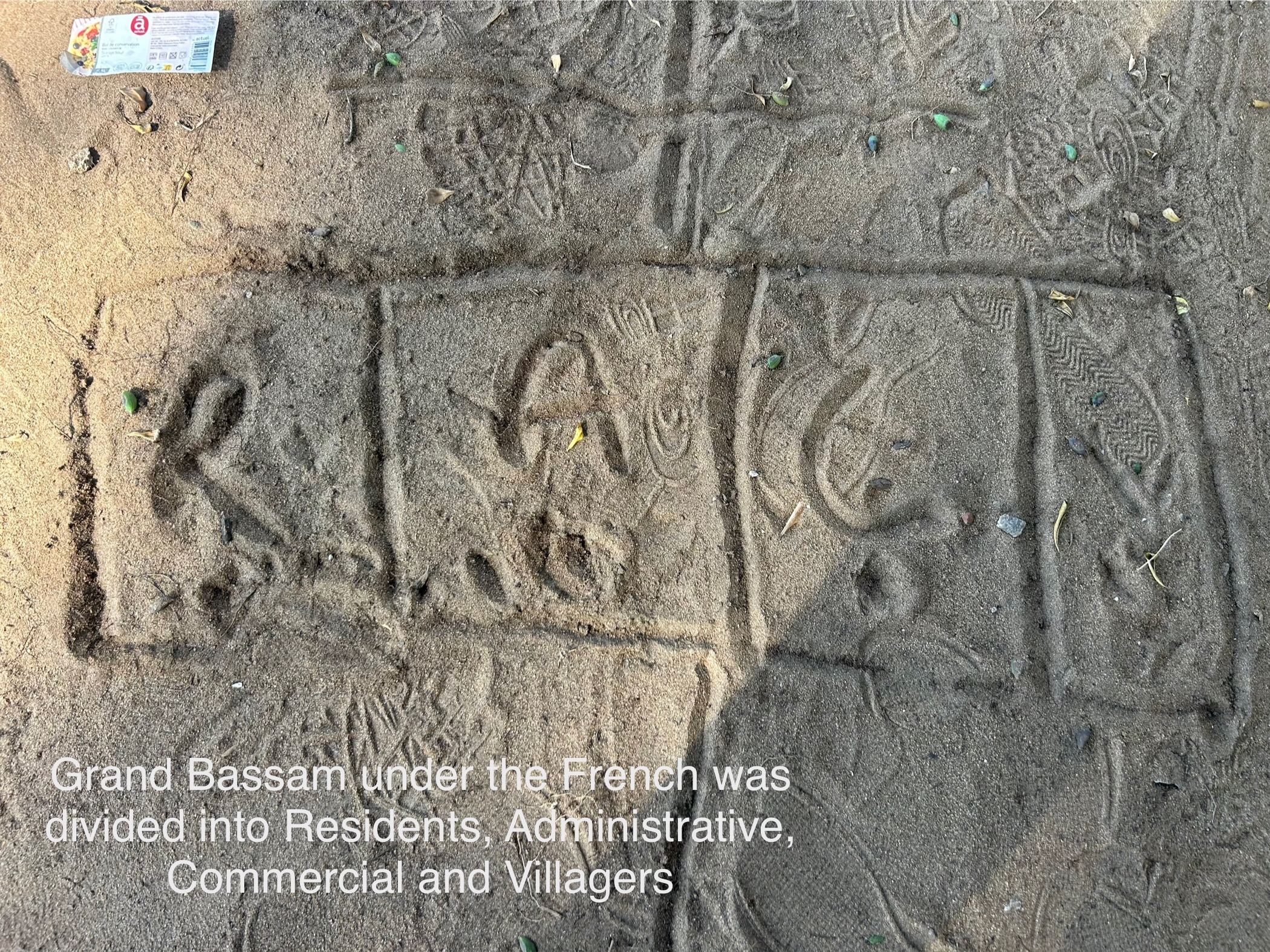
Merceline drew me a picture in the sand of GB’s map. GB was divided by the French into a rectangle with 4 sections: resident, administrative, commercial, village (for the African community).
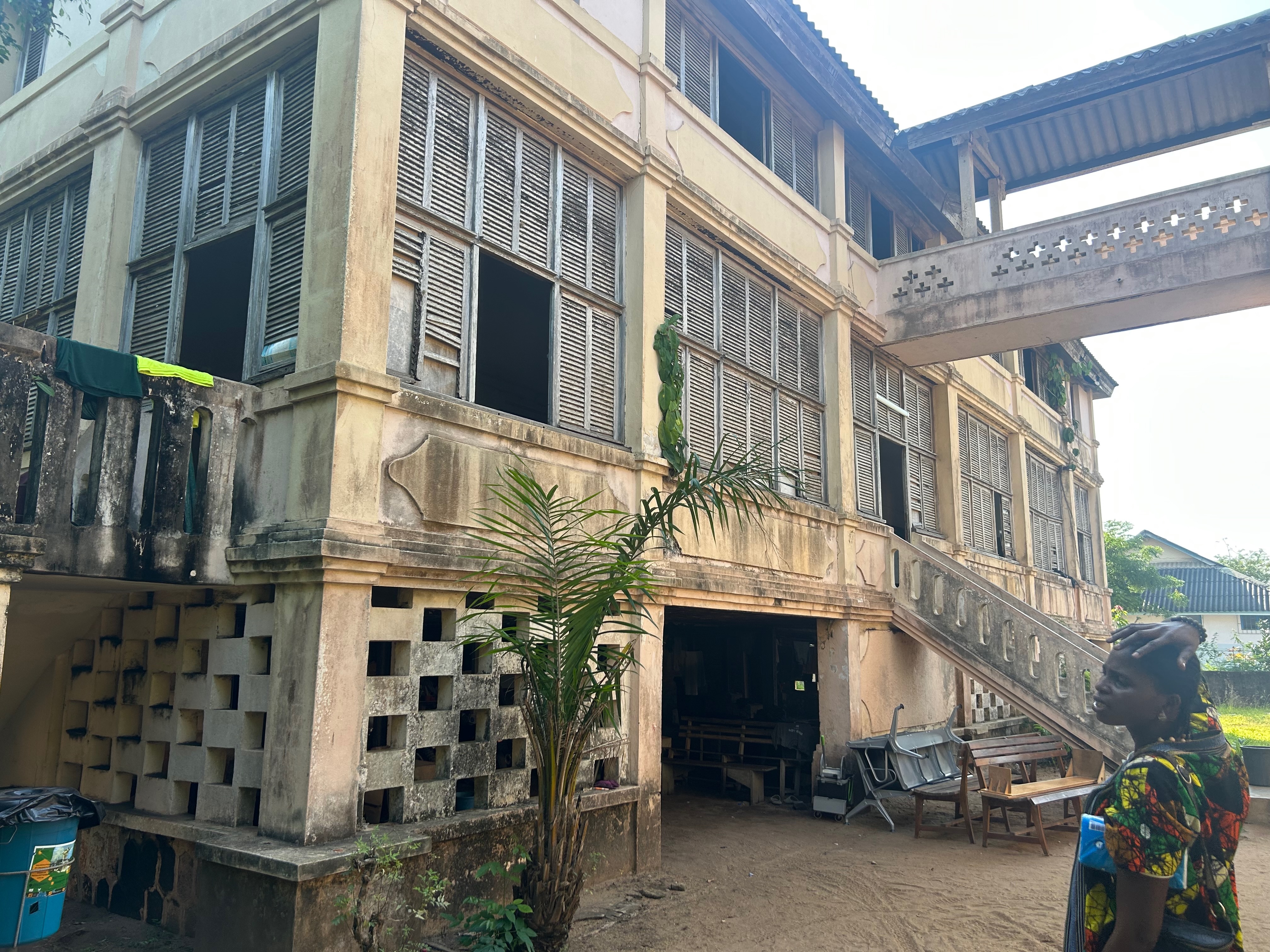
The buildings in Bassam were mostly built when GB was the capital. Since abandonment, many buildings are abandoned, but some were maintained.
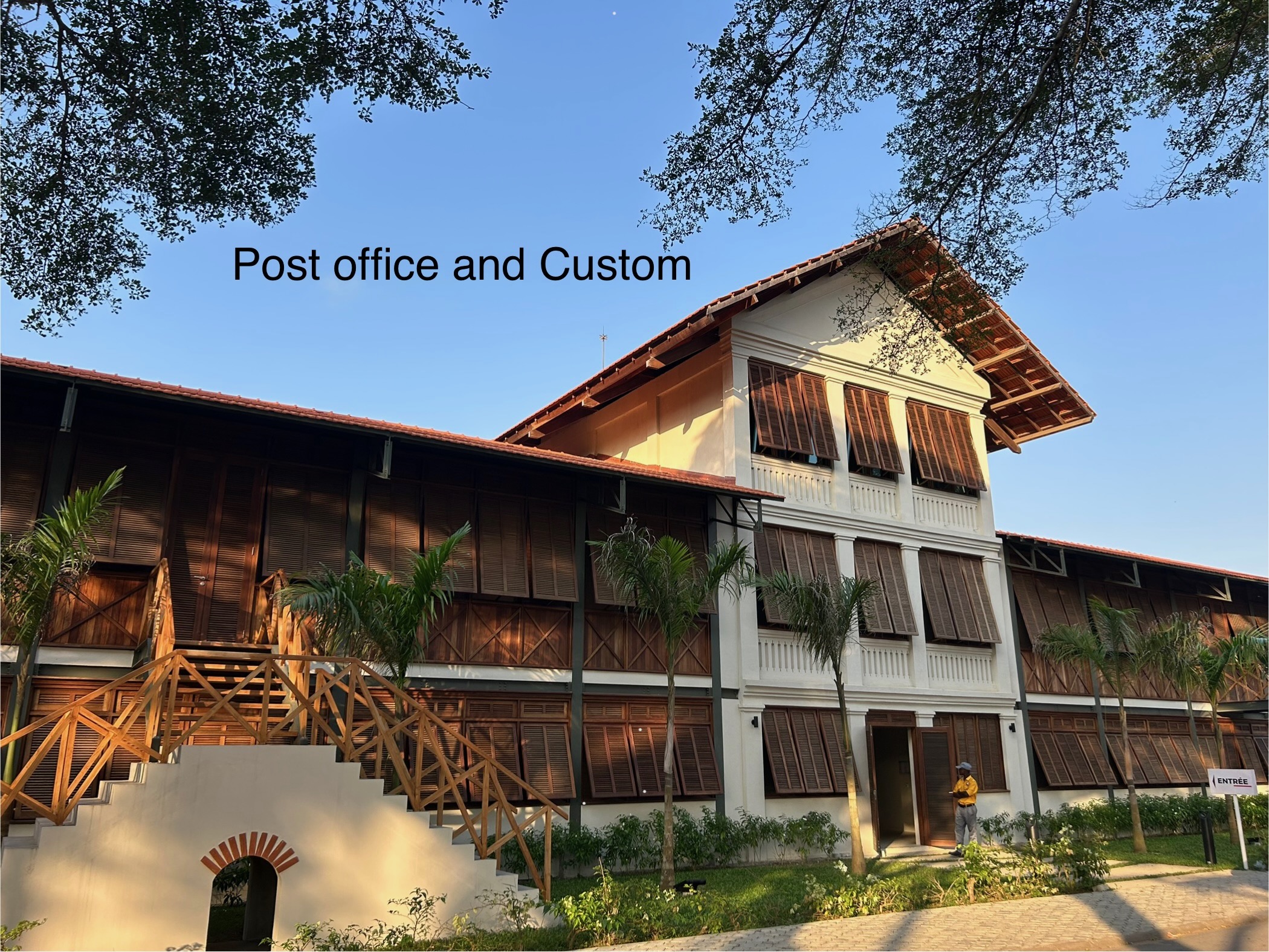
We toured the resident section, and she told me about these important French officials or merchants and their houses. We walked through the first schools, the first hospitals, the first church…etc. There had a distinct French colonial style.
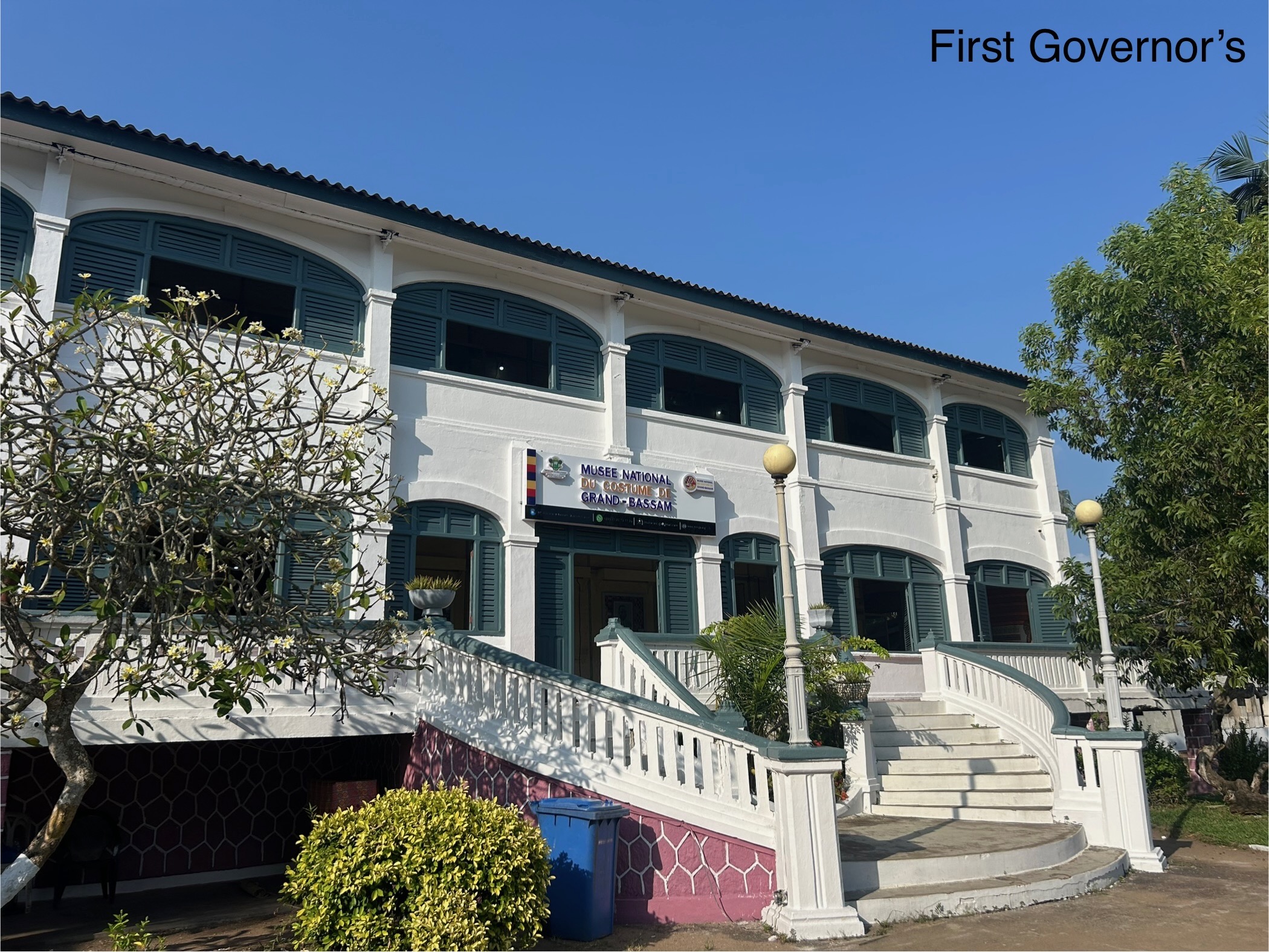
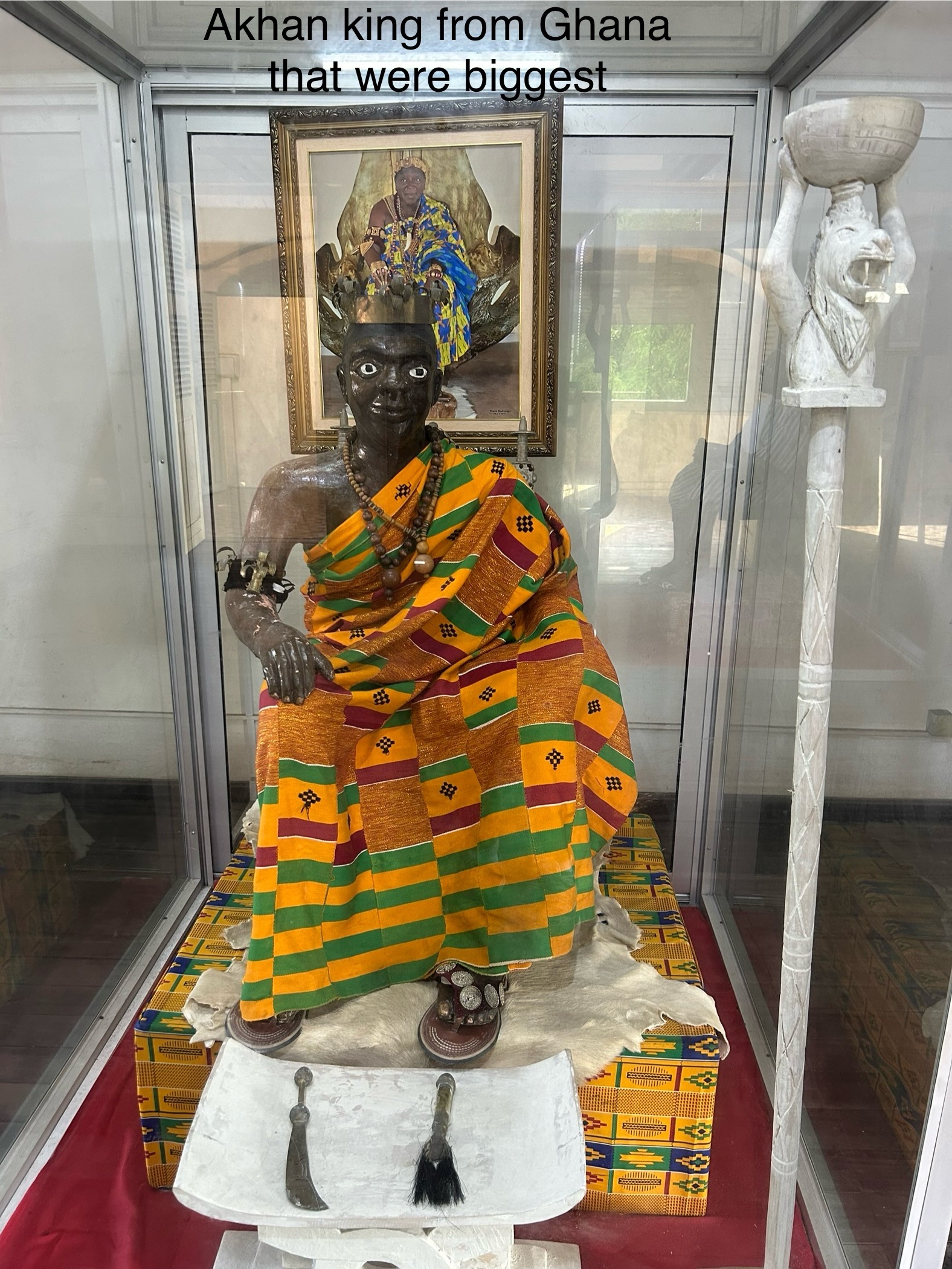
We walked through the governors’ office that is now the costume museum featuring the Akan (Ghanaian tribes) and other tribes like Dan that were here.
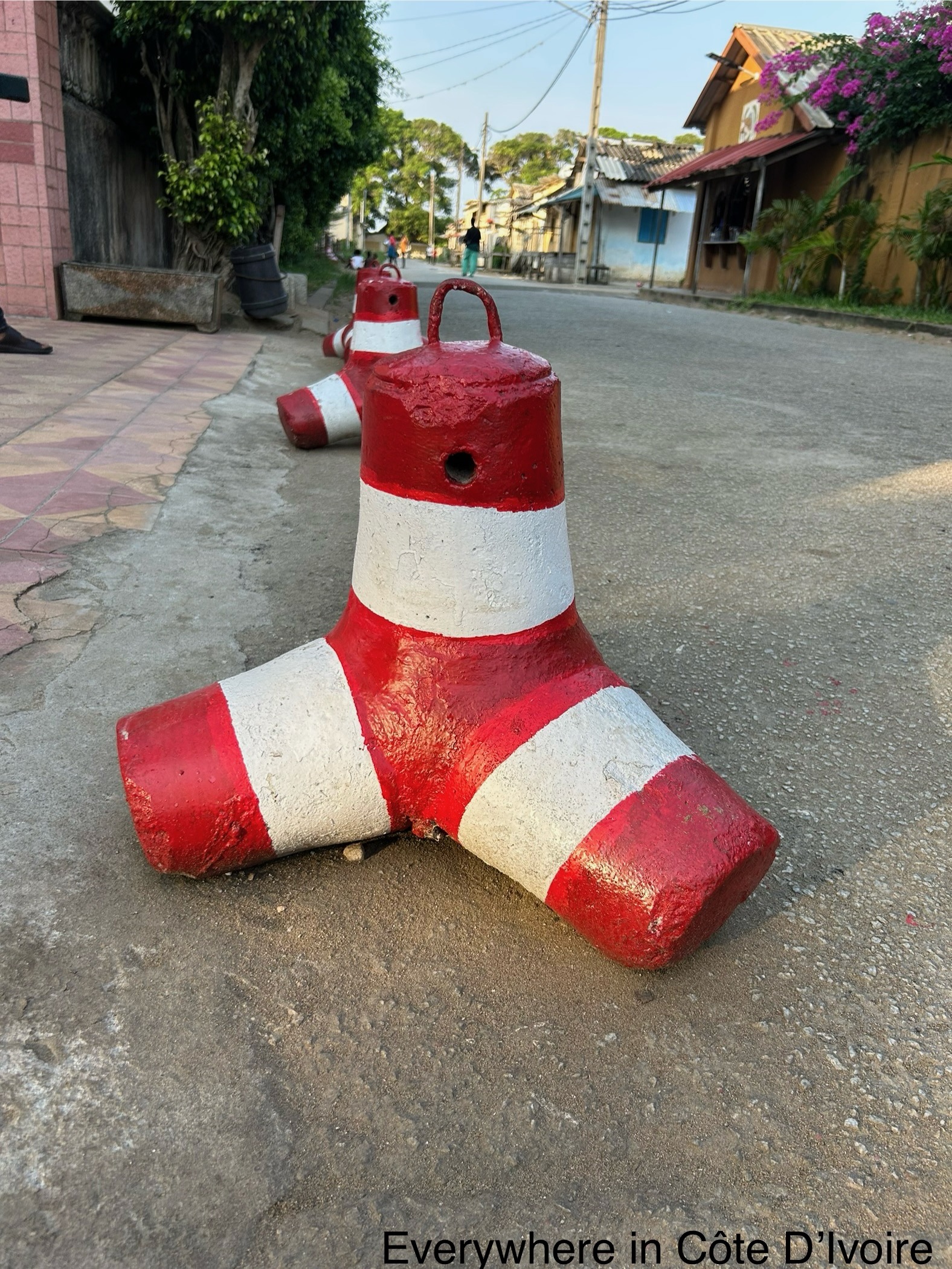 Right: These cones are very popular here in Cote d’Ivoire instead of cylindrical structures or posts?
We walked through the first hotels and a restaurant that everyone loves called La Case Bleue.
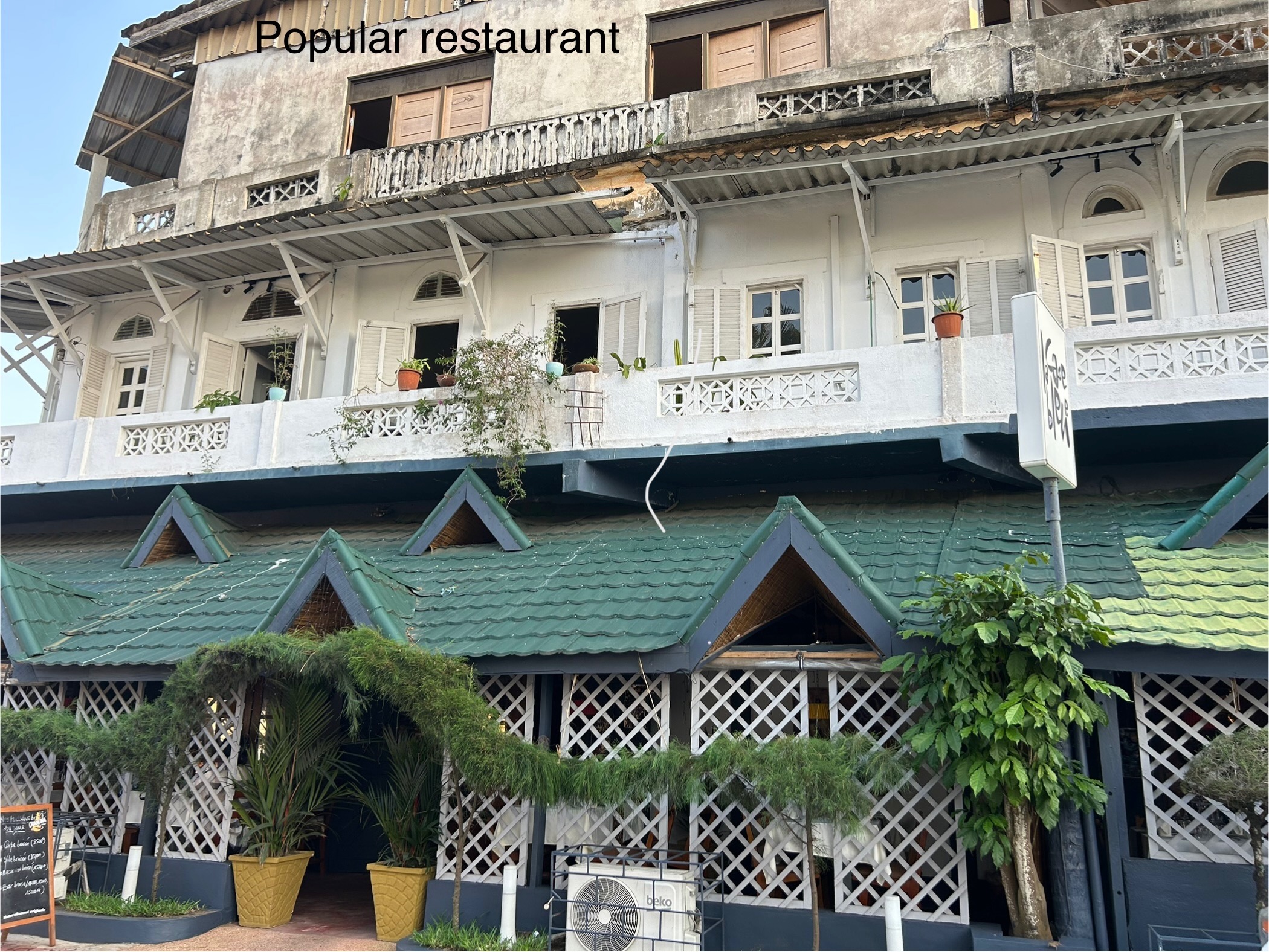
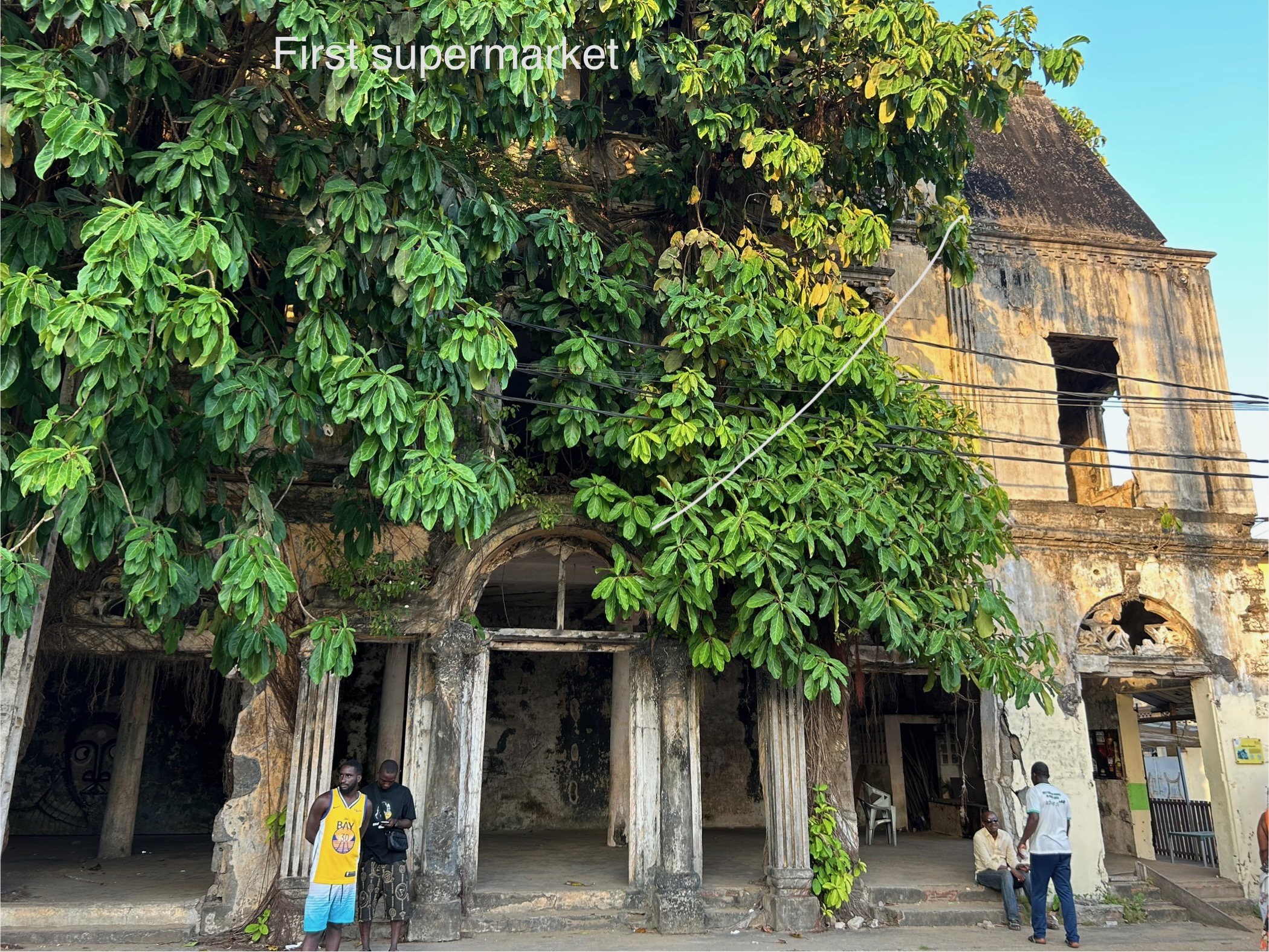
Syrian traders arrived in great numbers in the 1920s, playing roles similar to Lebanese communities elsewhere in French West Africa. At that time, Syria and Lebanon were under the French Mandate following the fall of the Ottoman Empire.
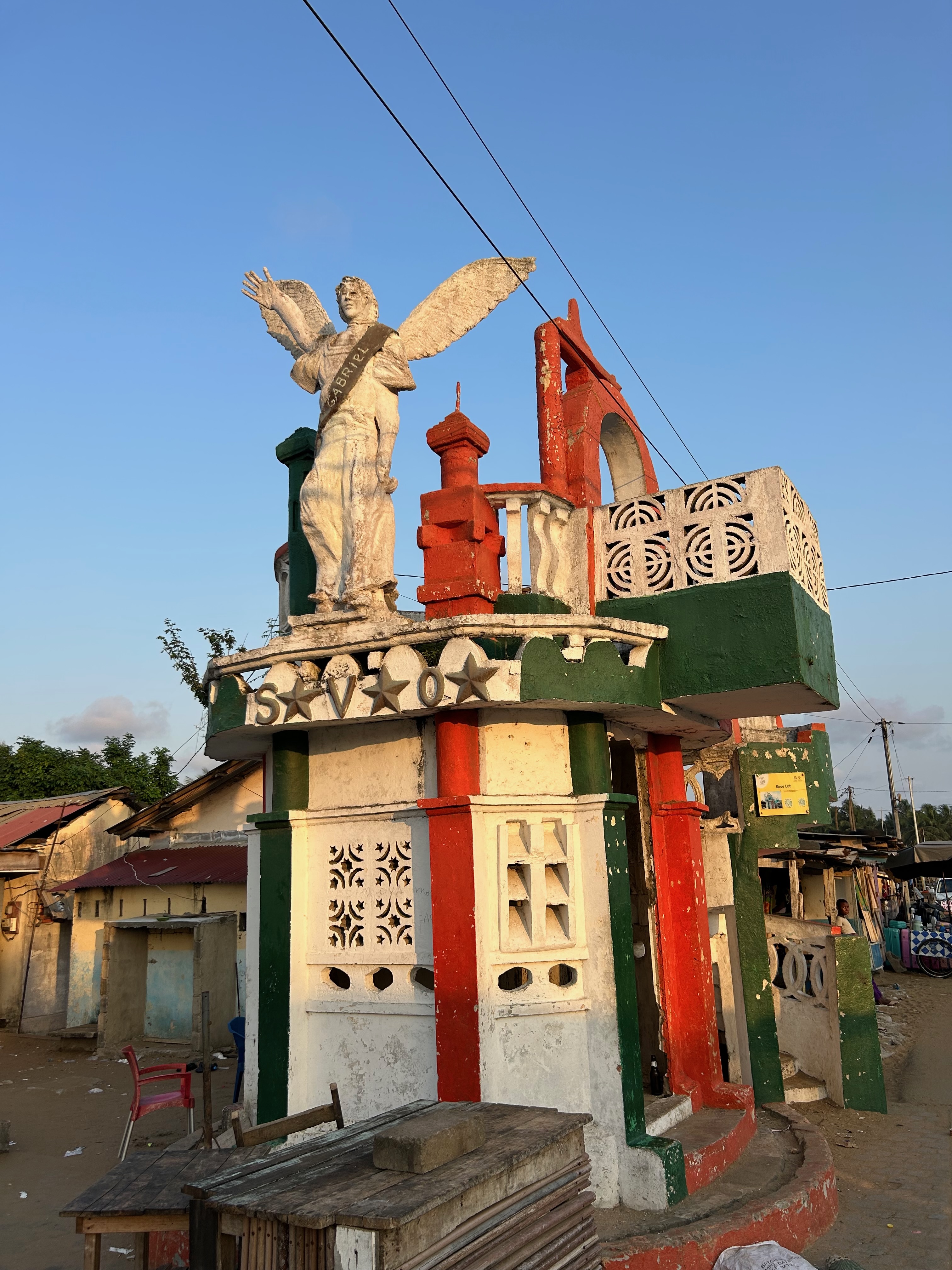
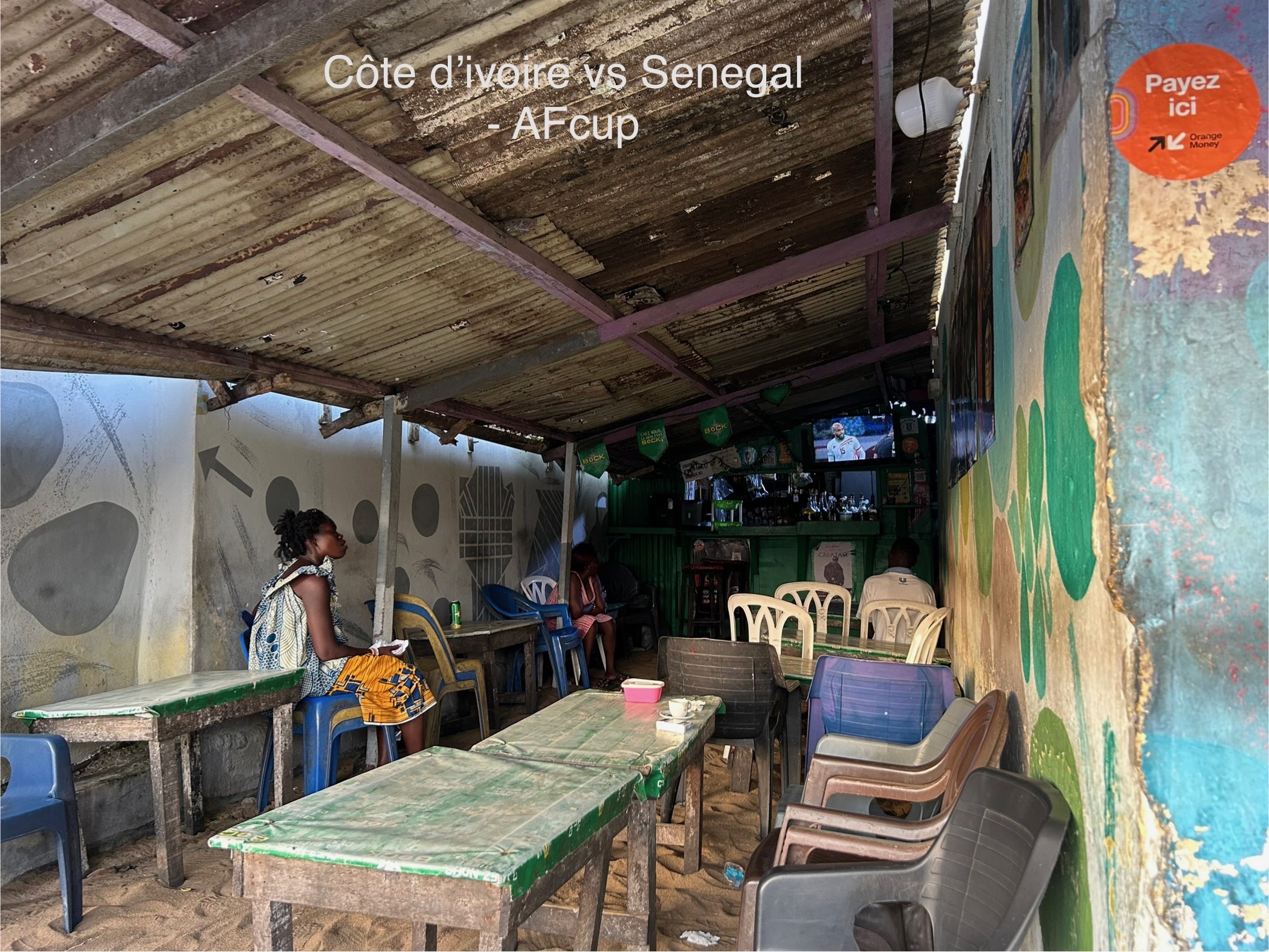 Left: These are dancers’ posts where people dance and share news? | Right: Africa Cup is ongoing.
Walking through the villager sections, we saw lively streets in which many Africans still live in today with shops striving.
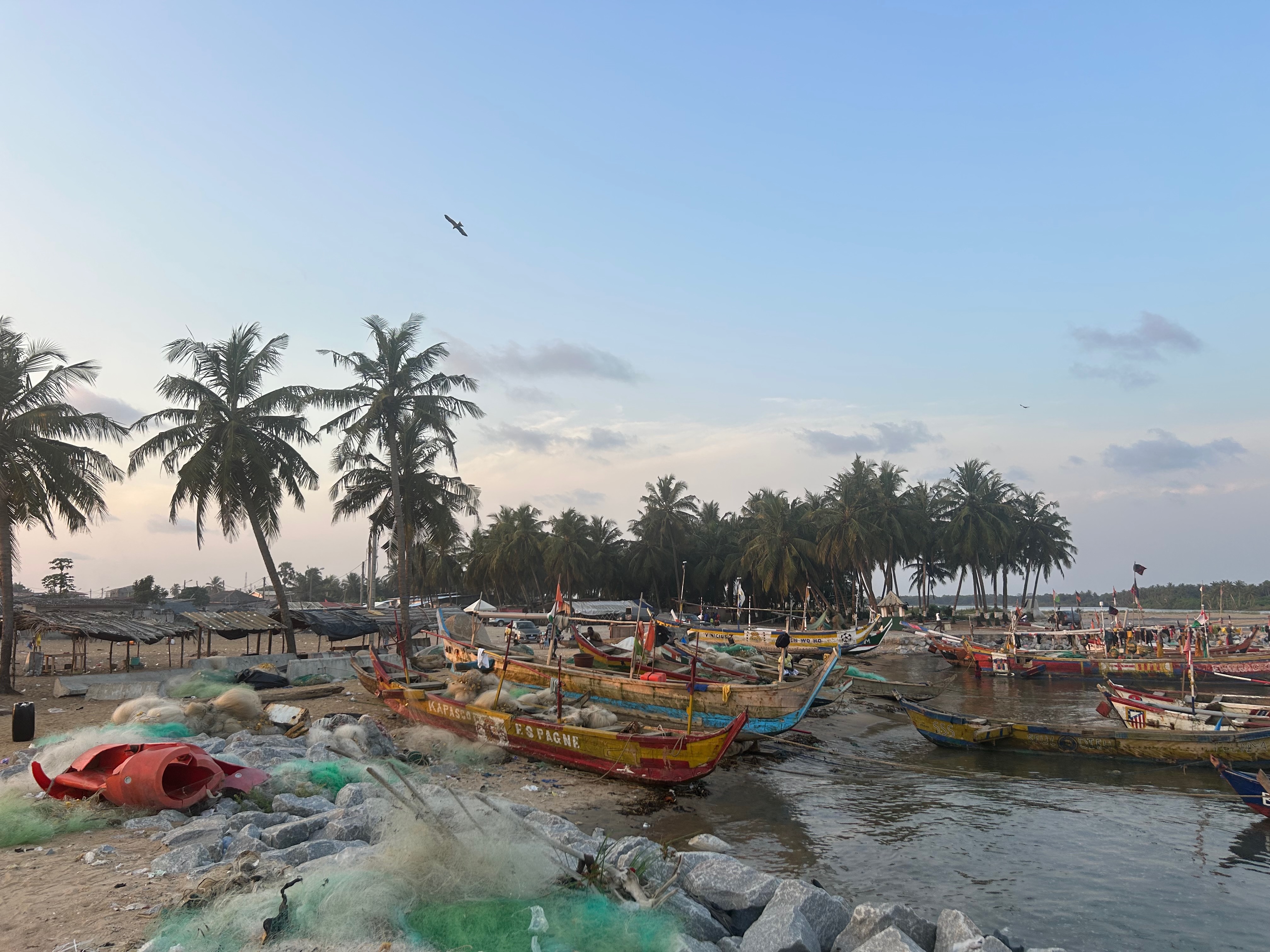
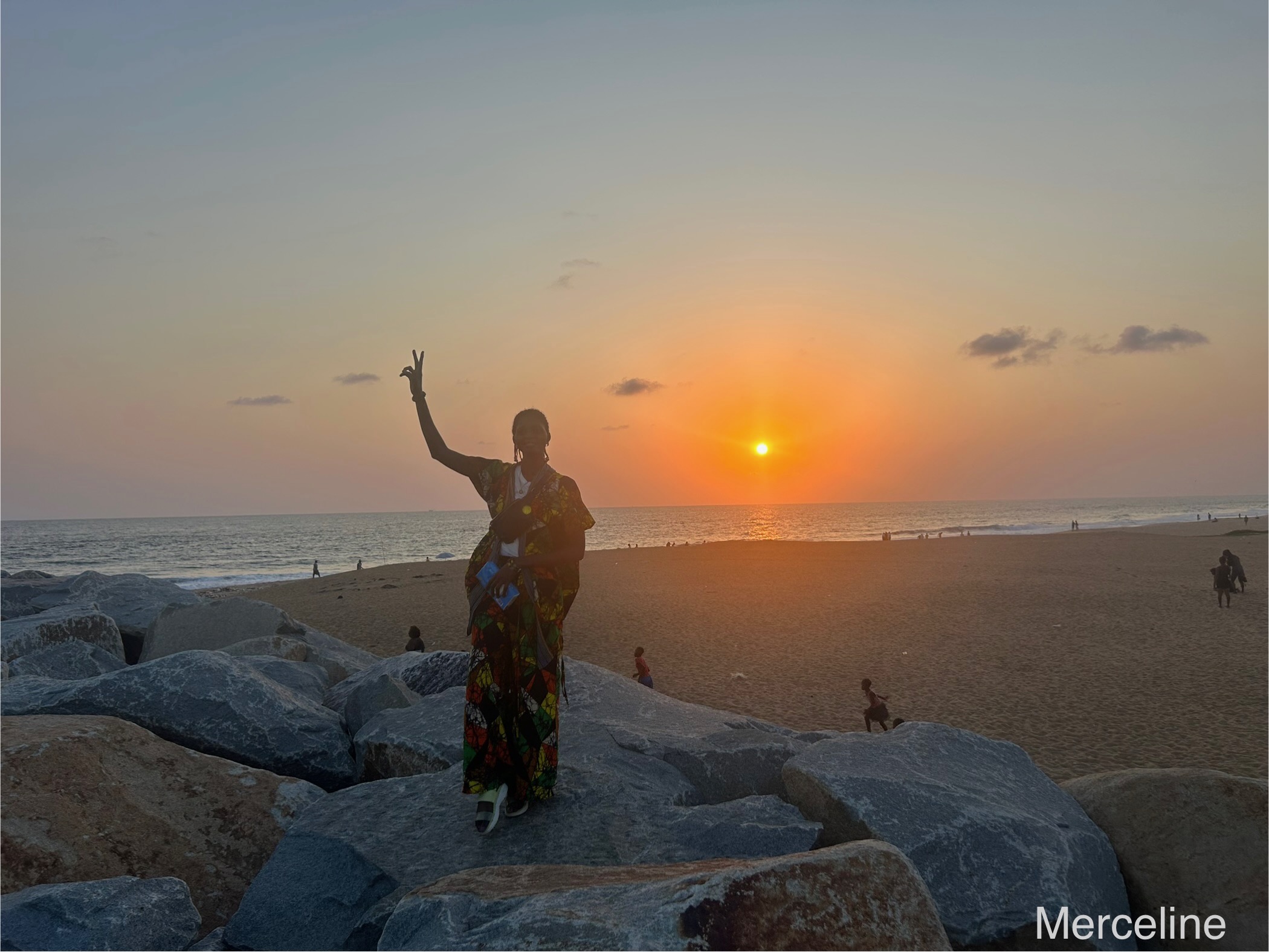
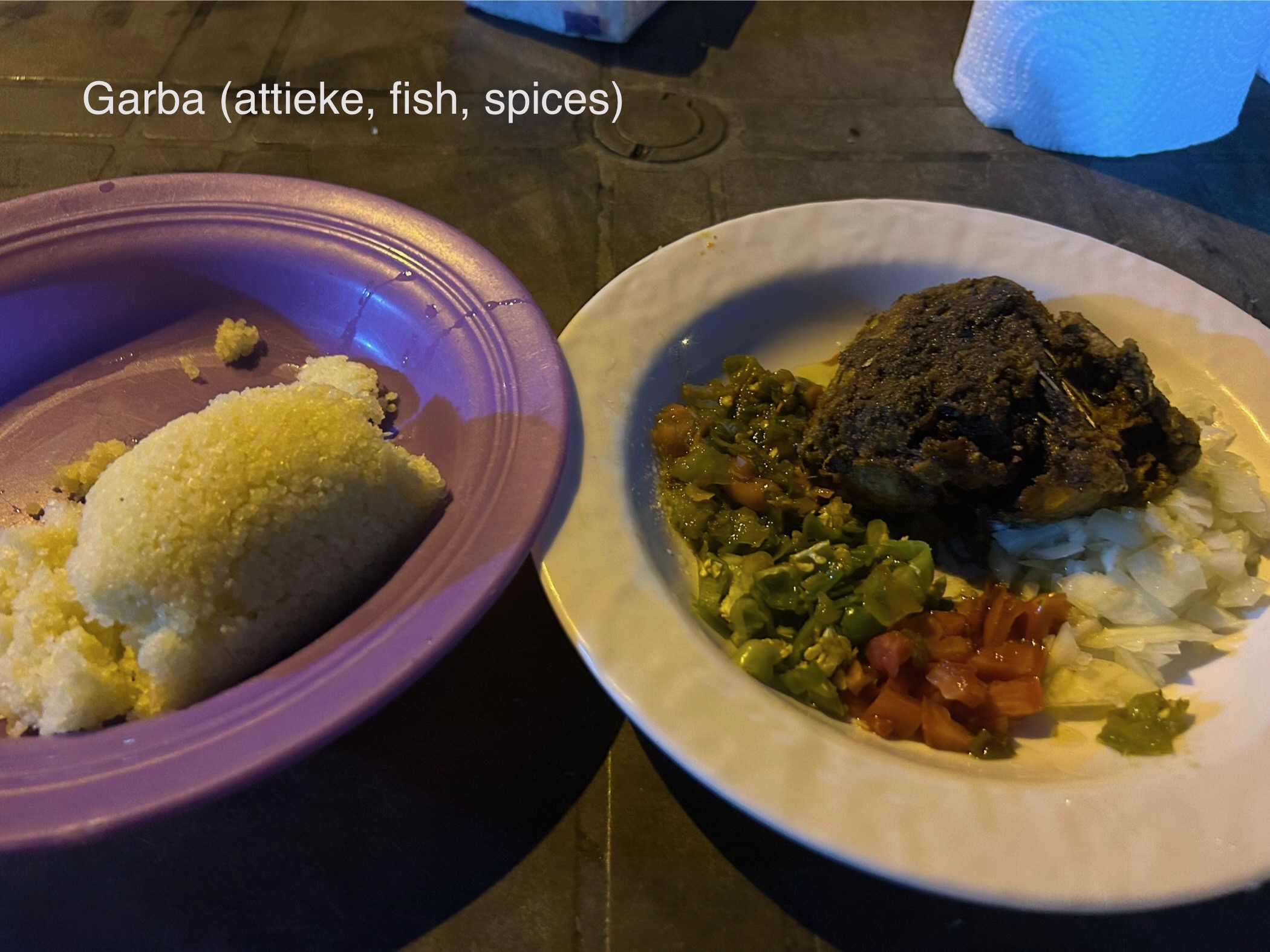
We went to the beach to watch the sunset with the fishing boats and village in the backdrop. Merceline heard that I wanted to try garba (attieke, fish, spices) and we went to a restaurant together.
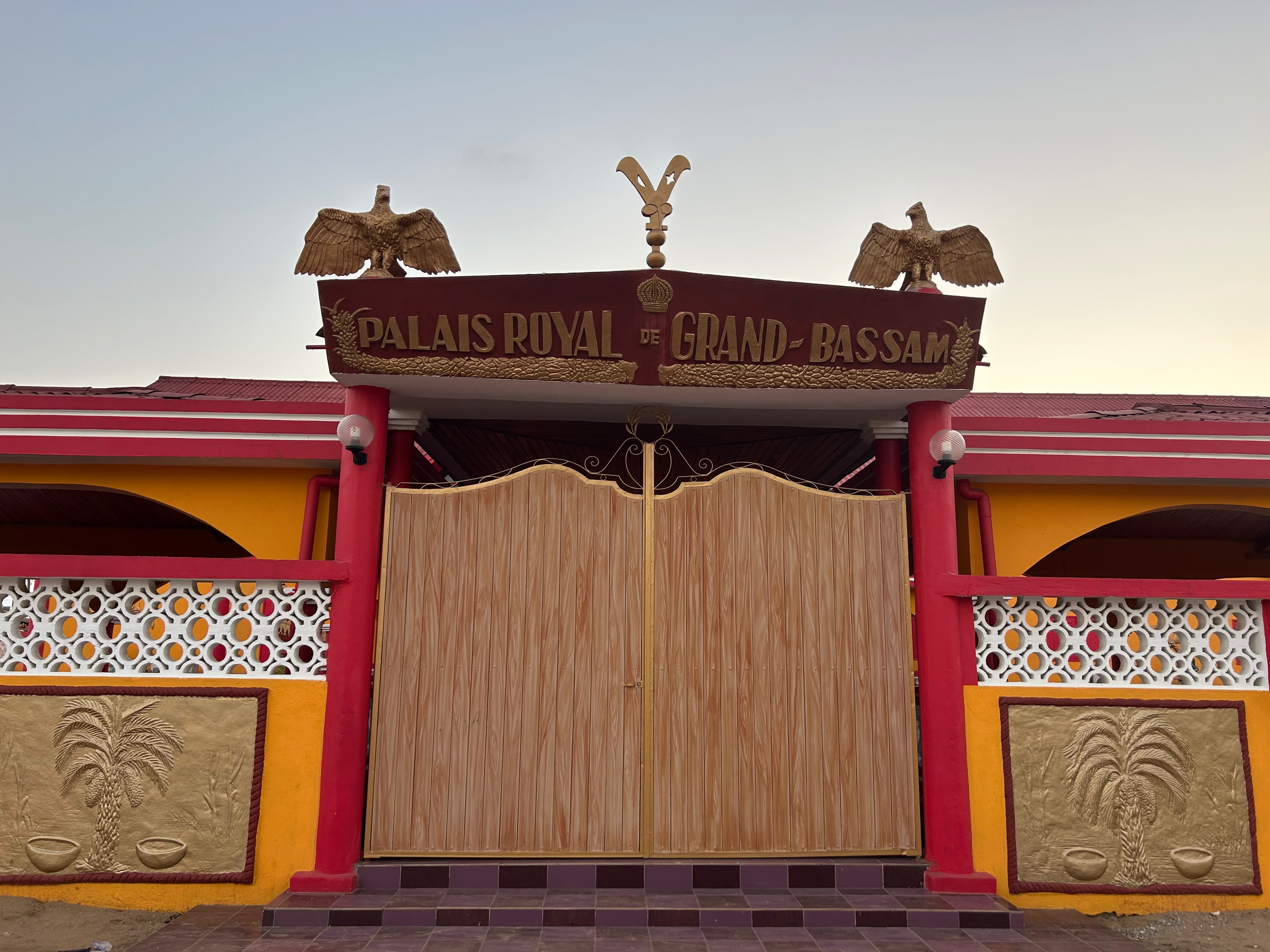
 Left: The King’s palace of the Akan people built in 2003. There is a distinctive king’s stone.
I tried garba (attieke + fish + spices) with my hand and it was like a fish rice ball once I blended everything together. Merceline asked me to make a good video testimony for her and I did just that.
The time is now 6:30pm in the evening. The sky is drawing darker.
I tried to find a Yango over and over again. But drivers were either all busy, or kept on declining / canceling the rides. We walked a bit to sit by La Case Bleue, the popular restaurant.
At some point, Merceline called her brother to ask if her neighbor a driver would be close by. We even walked towards her house. She mentioned that a passenger yesterday also had issues with Yangos. As the night drew, we became more and more worried.
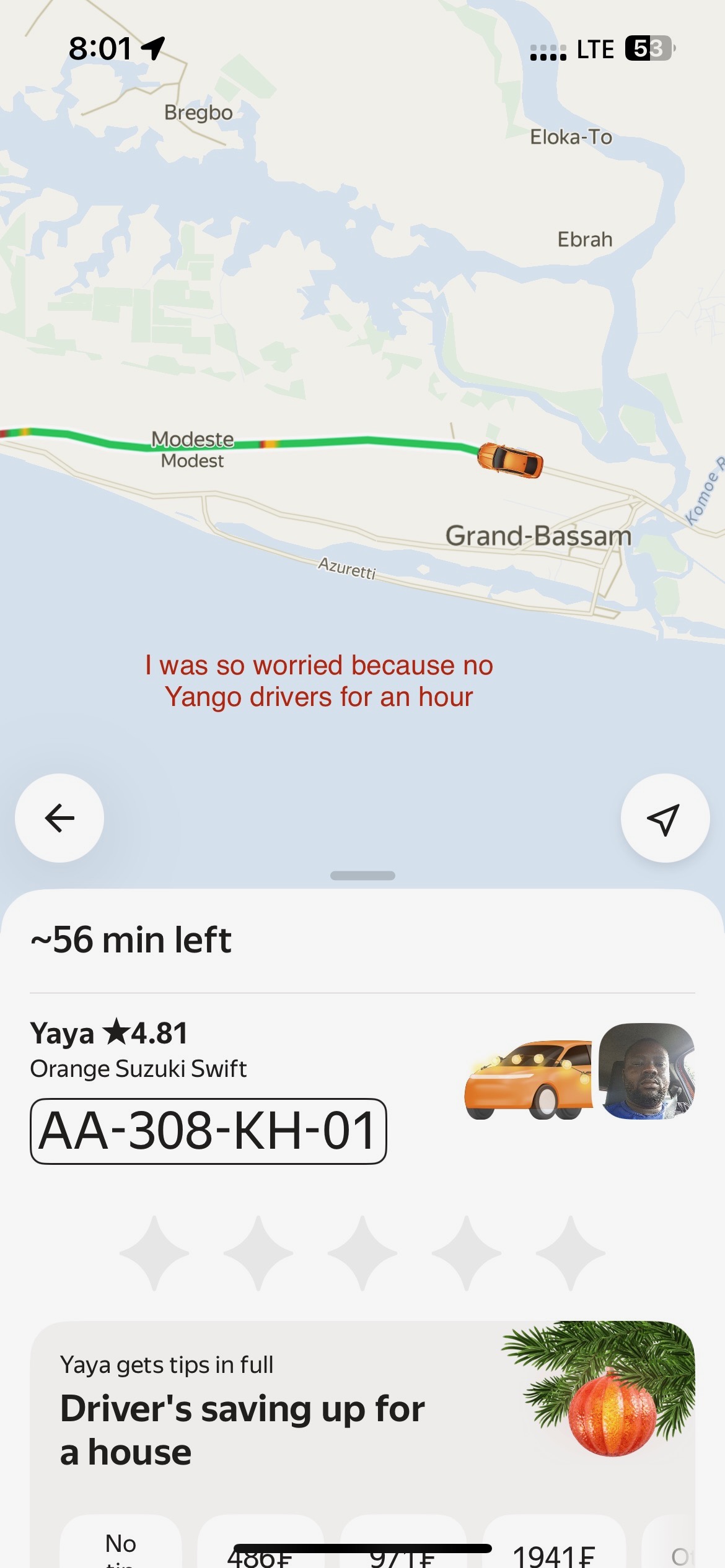
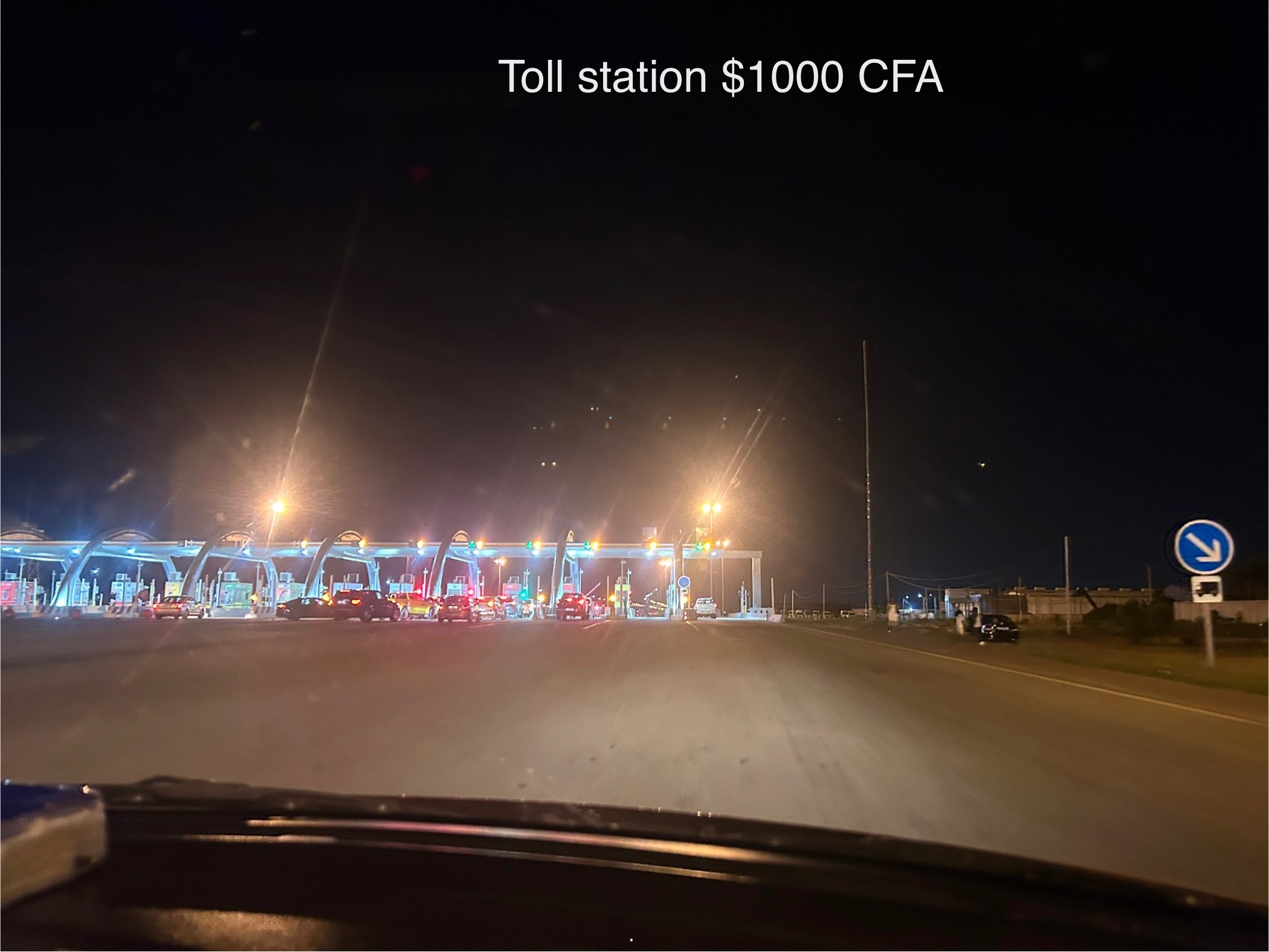
Finally, after a whole hour, a miracle driver accepted and get me back to Abidjan. Phew!!! I need to get myself home before dark with more buffer room in the future.
Day 3: Largest Church in the World, Yamoussoukro
I was greeted in the early morning by Merceline (guide from yesterday who offered this opportunity) and our driver for the day.
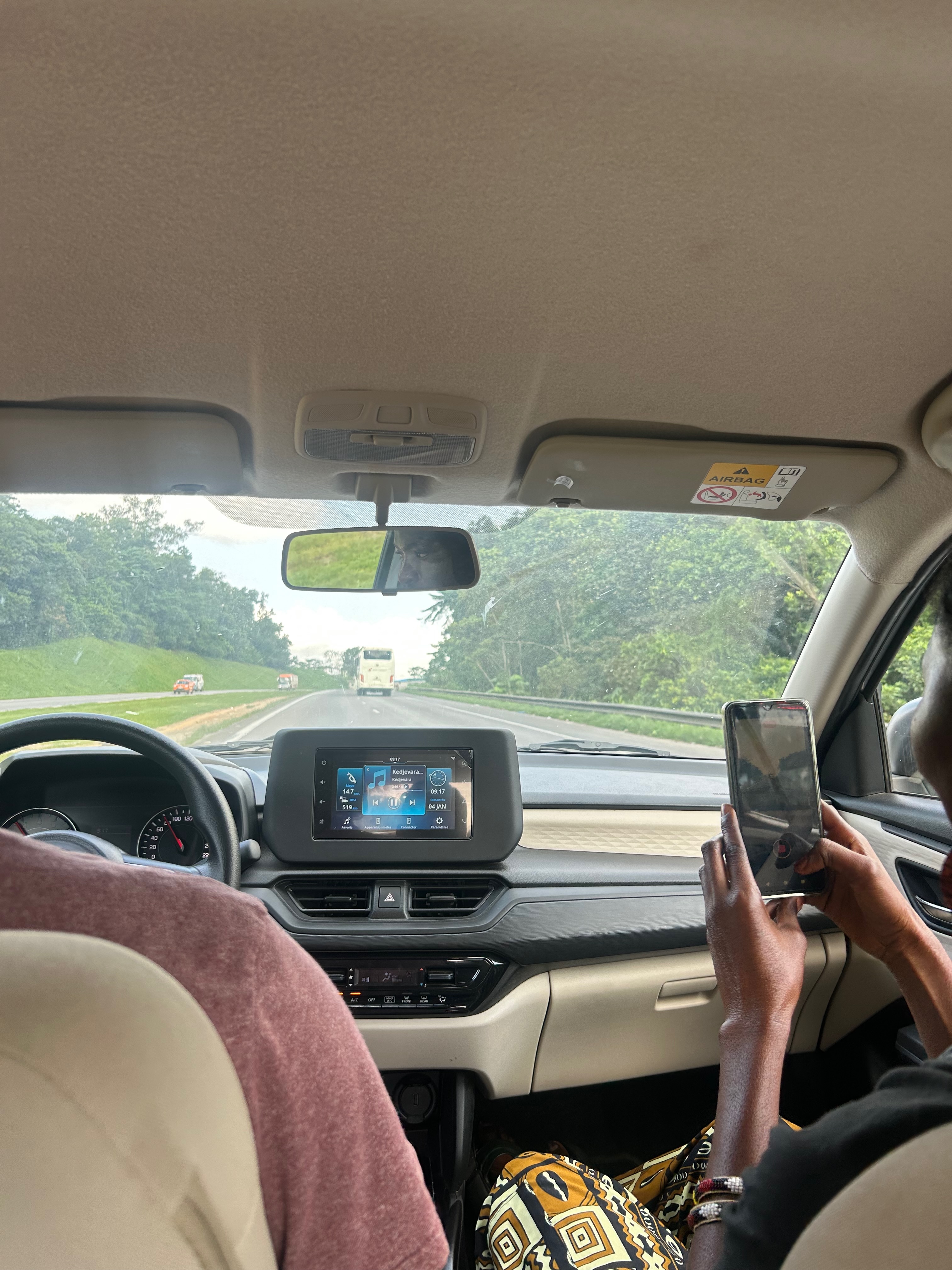
It’s a 2.5 hour road trip to the capital; the road will be a straight one directly from Abidjan. On the road, there were scarcely any villages; forests dominate. We saw a giant truck flipped over, with dead cows scattered on the ground, along with still surviving cows on a hill.
At around noon, we finally arrived in the capital, Yamoussoukro. This city was a village in the 1950s, home to the first president, who transformed it. The city is relatively small and sparse.
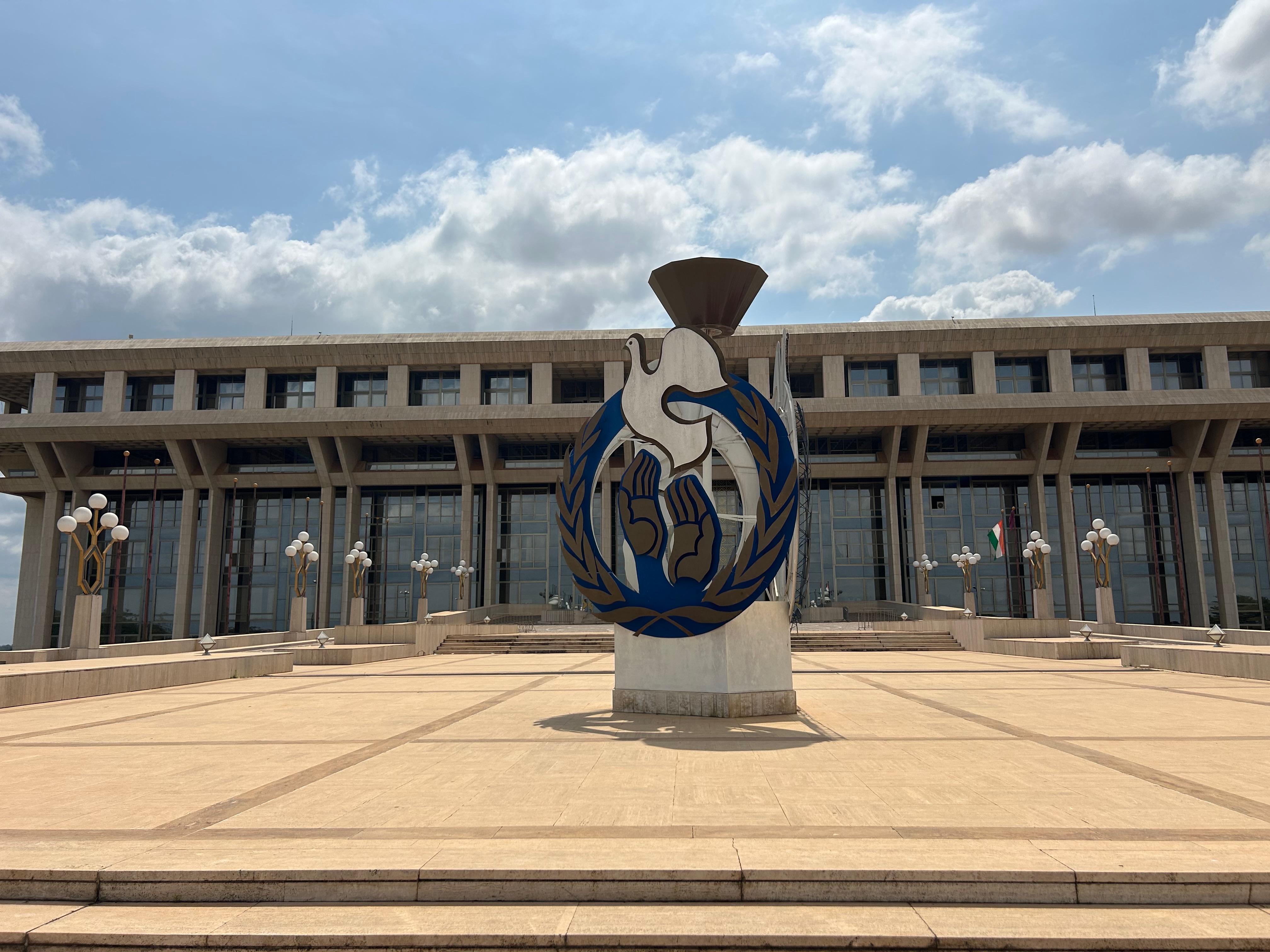
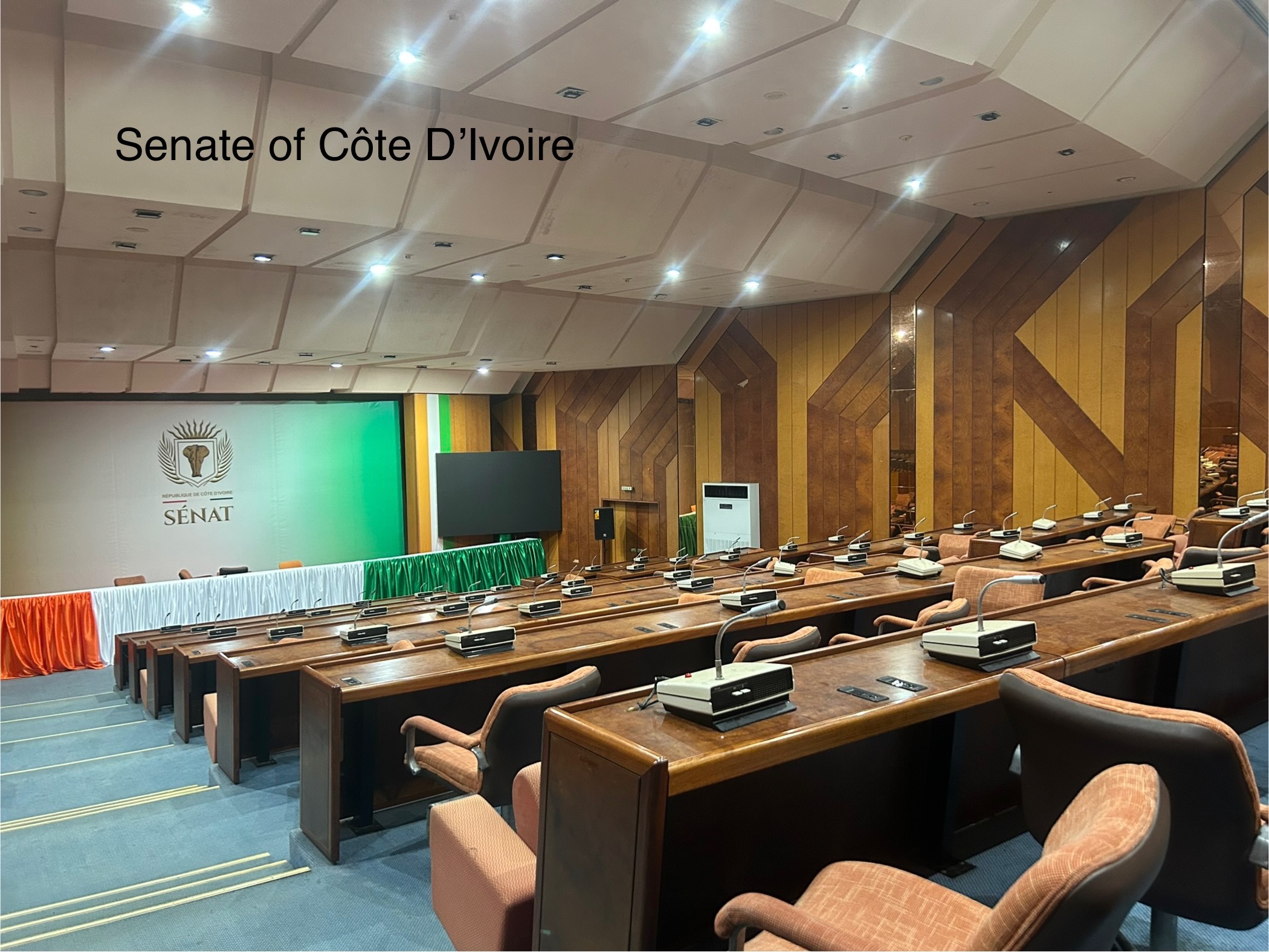
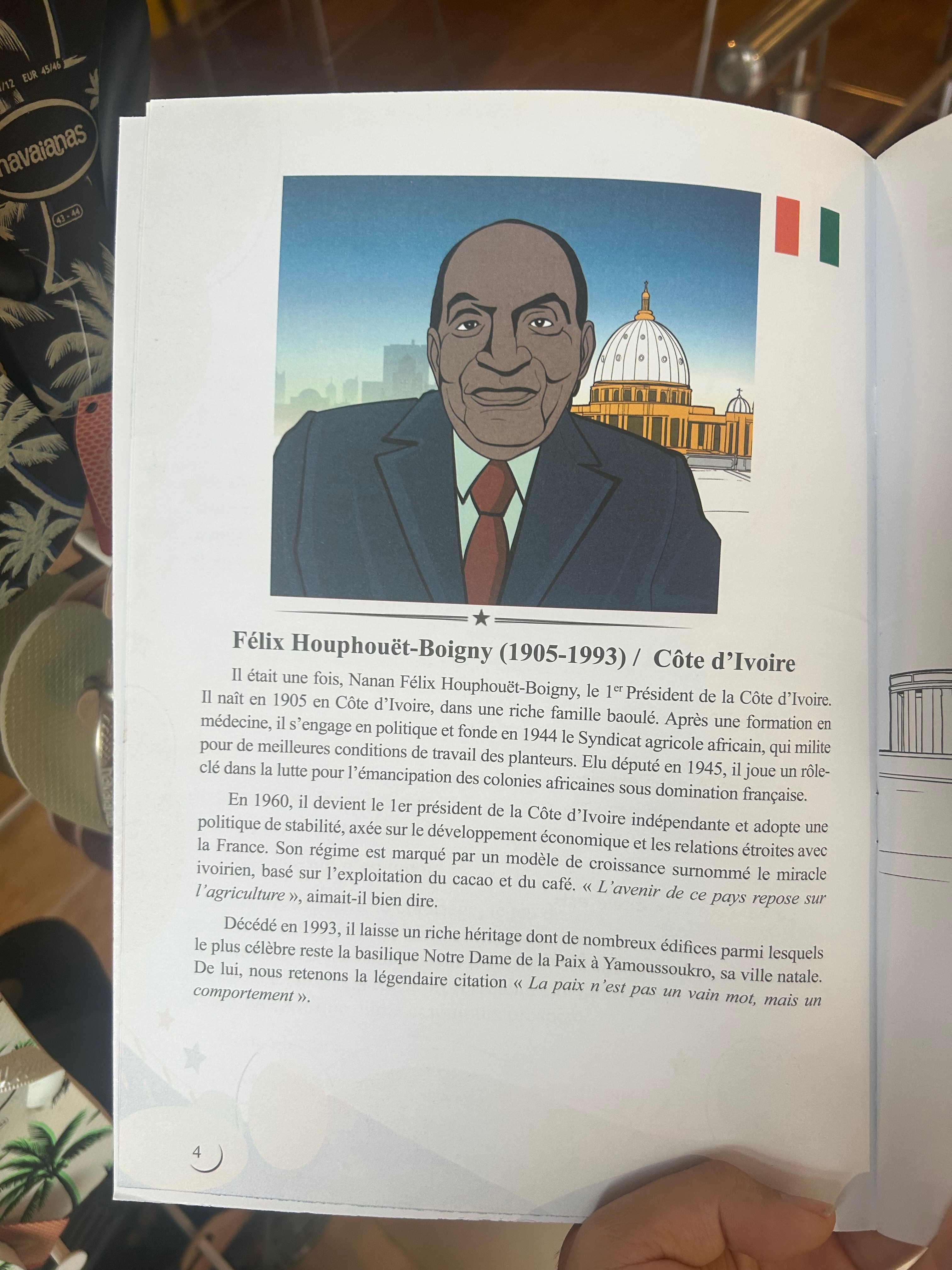
Our first stop was the first president’s foundation. This complex hosts sessions of the Senate. The upstairs is a museum that describes Félix Houphouët‑Boigny (FHB)’s life. FHB can be summarized to be someone who was very pro‑French and had close connections to elites in France. FHB did help draft the bill to end forced labor in French West Africa in 1946.
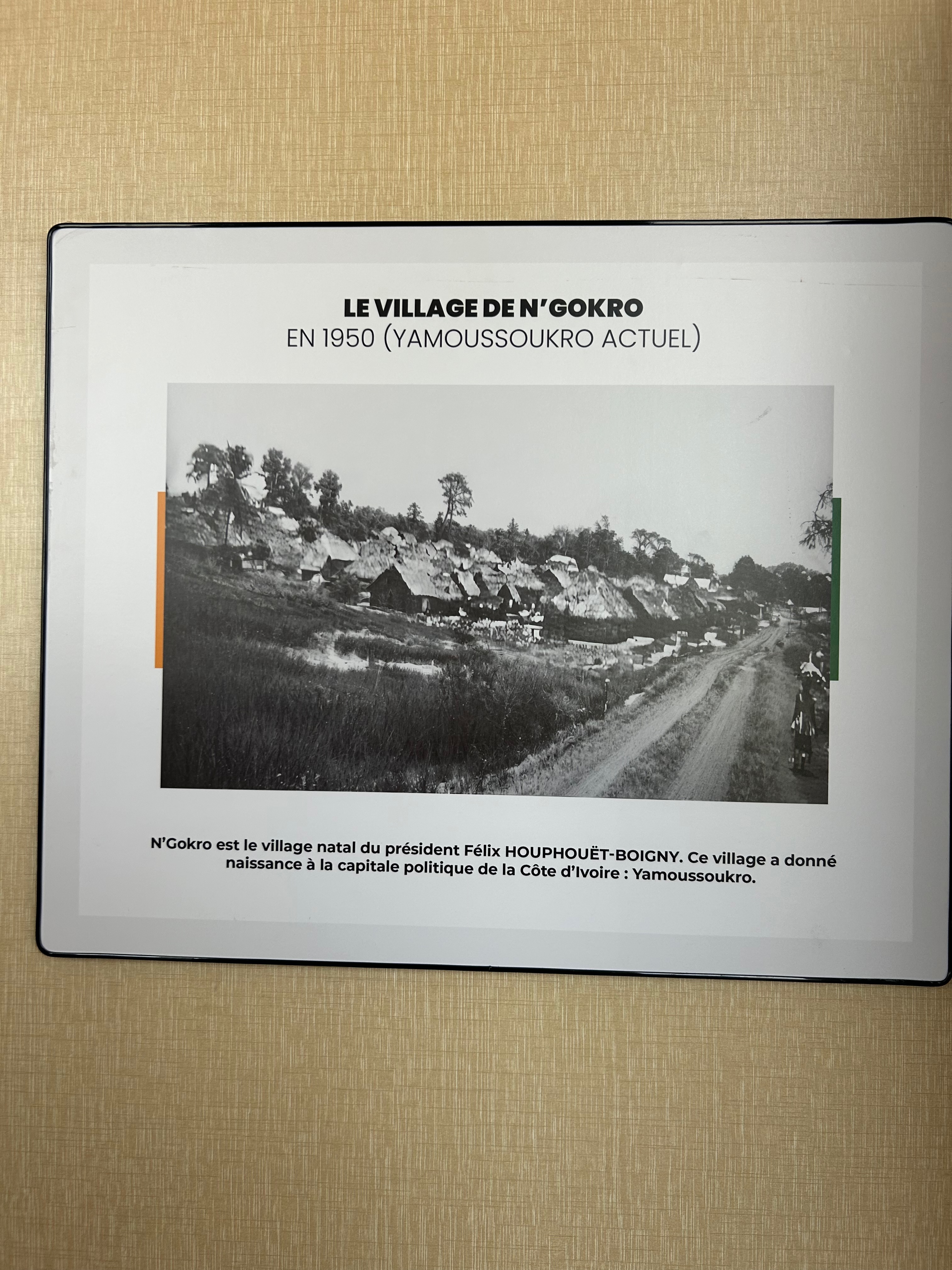
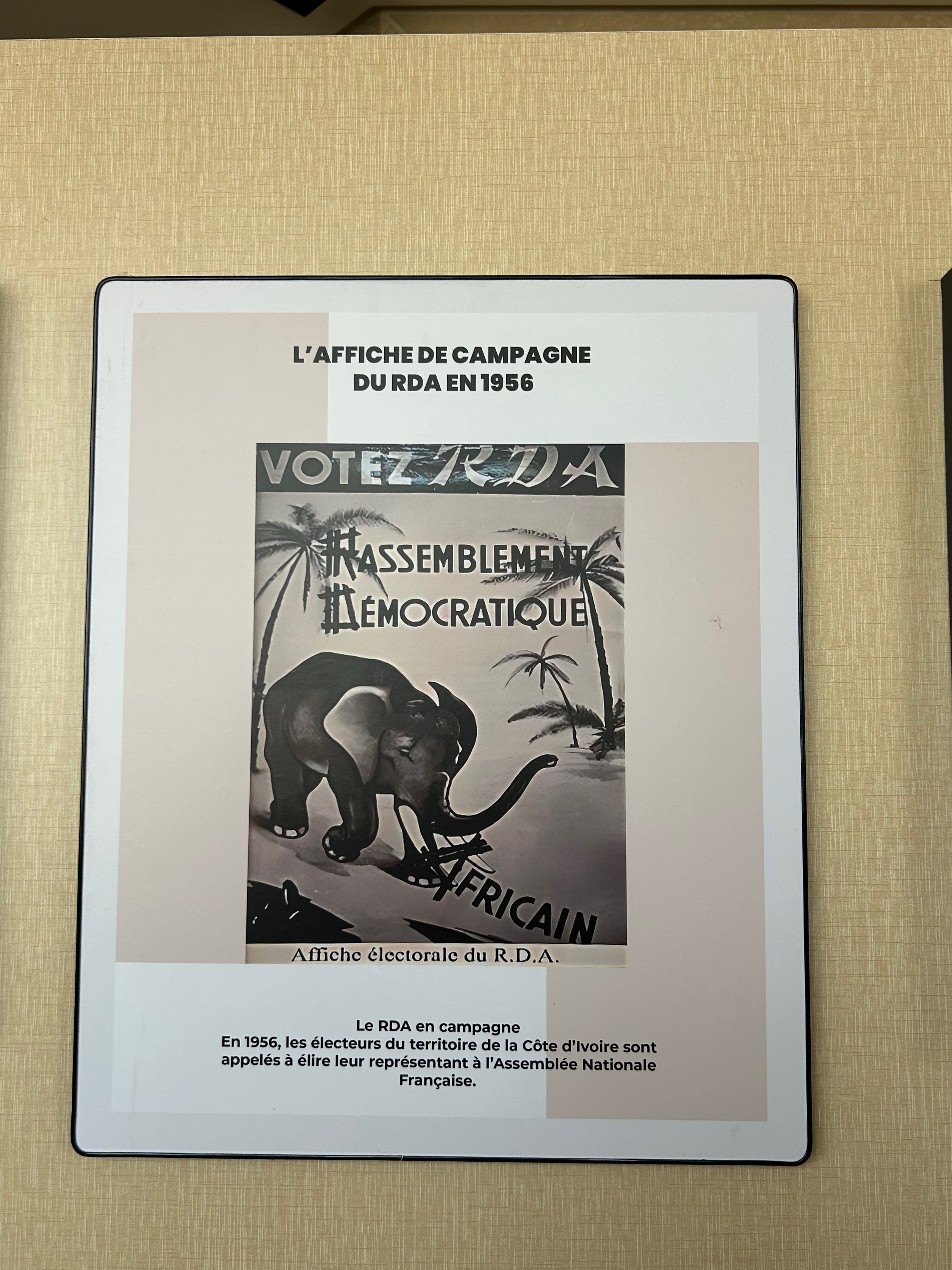
FHB was the chief of his tribe (the Baoulé). He let his brother take the chief position to go study medicine in France. He worked in the French parliament and rose through the ranks, before the French allowed CI to become independent in 1960. He was a one‑party president who built many grandiose structures.
As we drove to our next stop, we could see it from a far away.
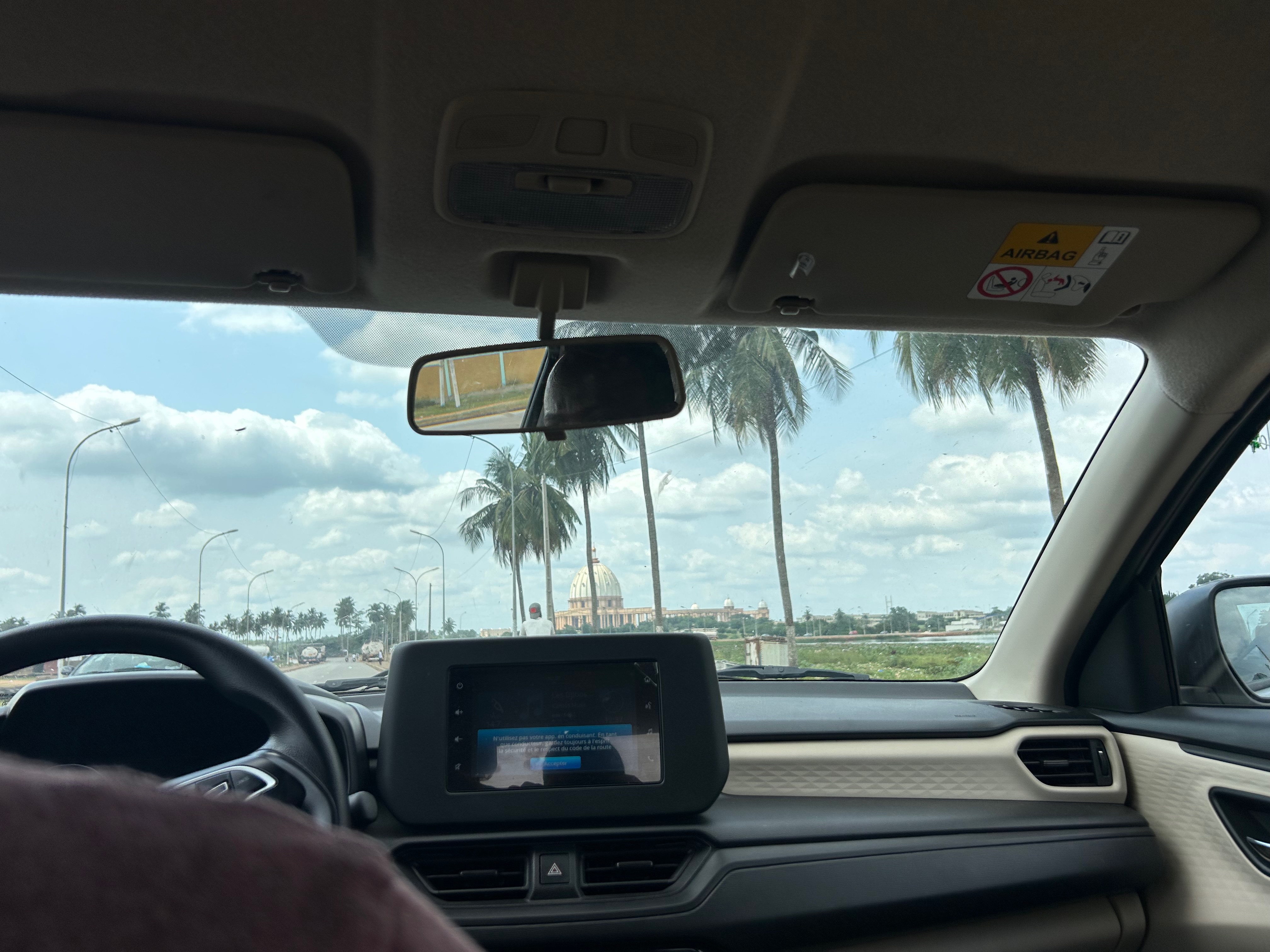
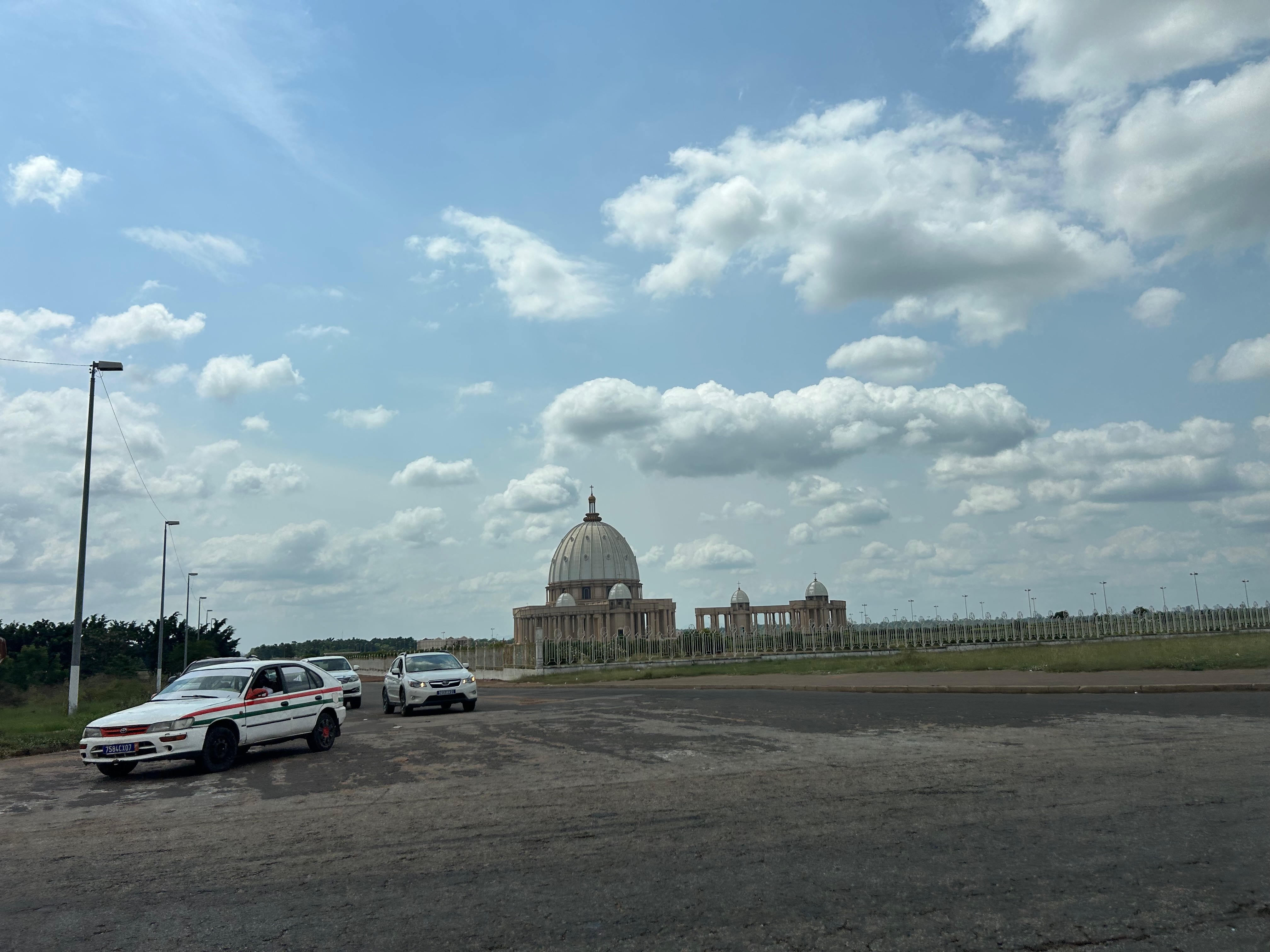
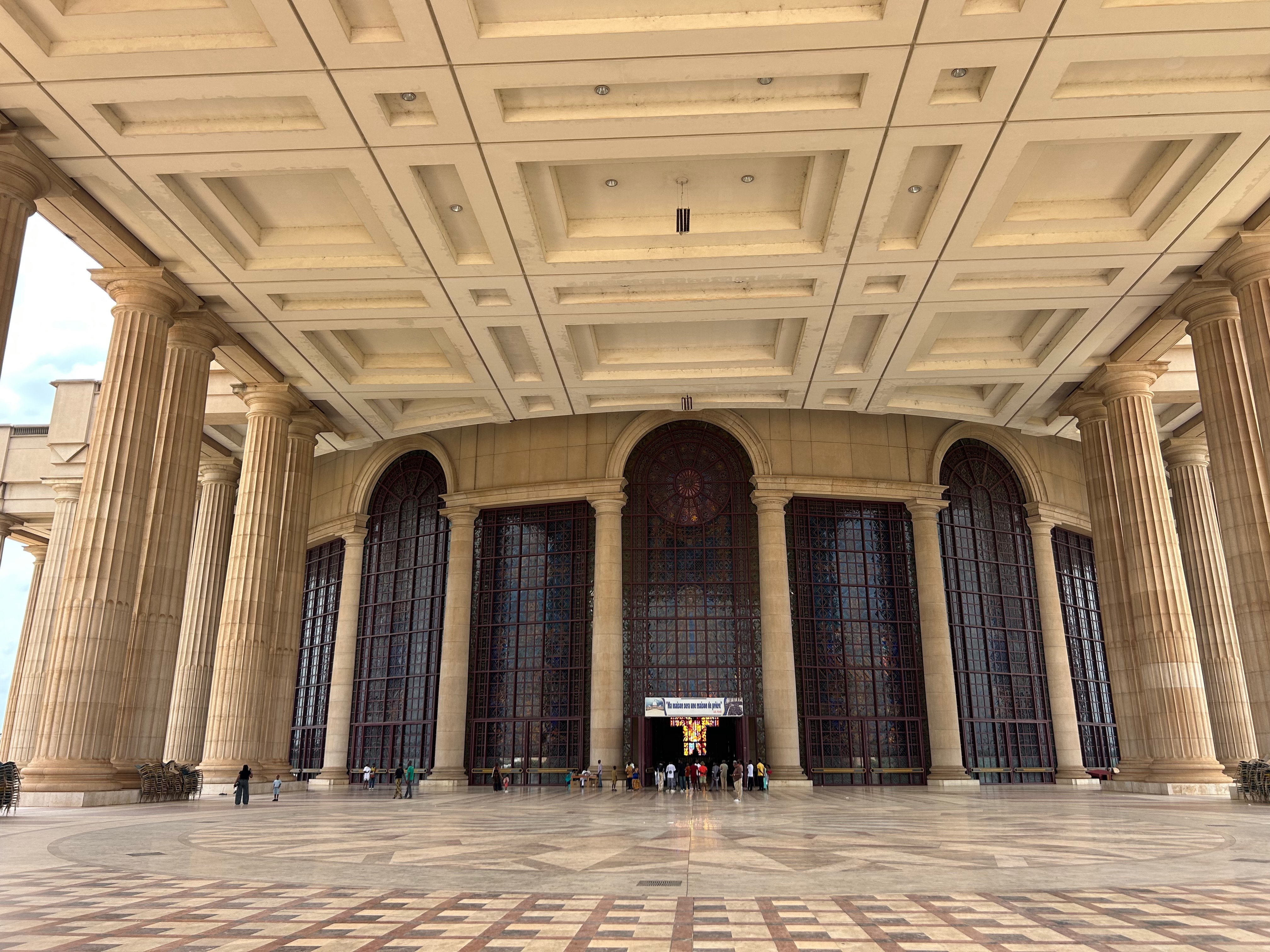
Merceline was super helpful and helped me not pay quite a few tourist trap fees. I am now standing in front of a site widely cited as the largest basilica in the world (by area)!
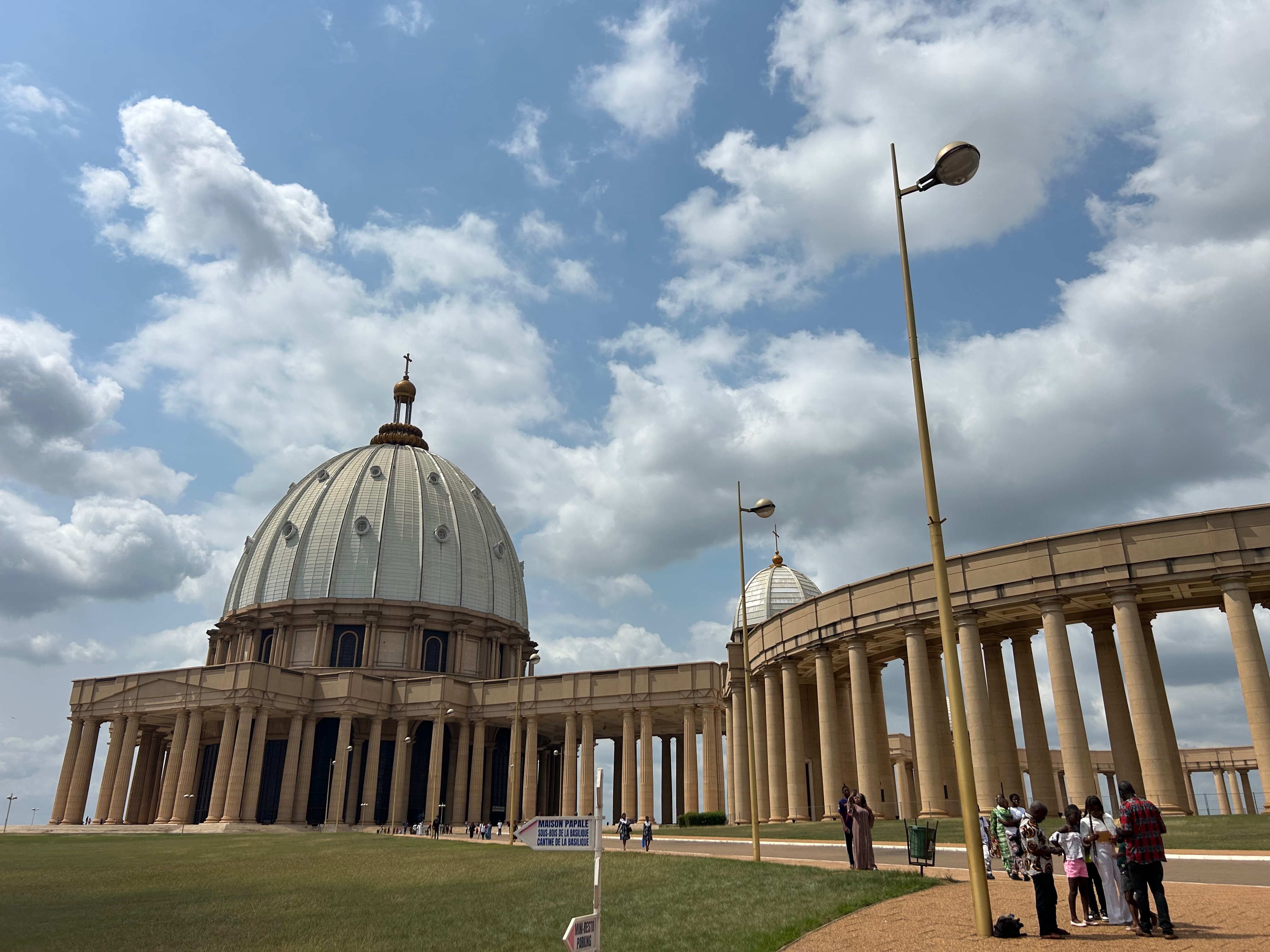
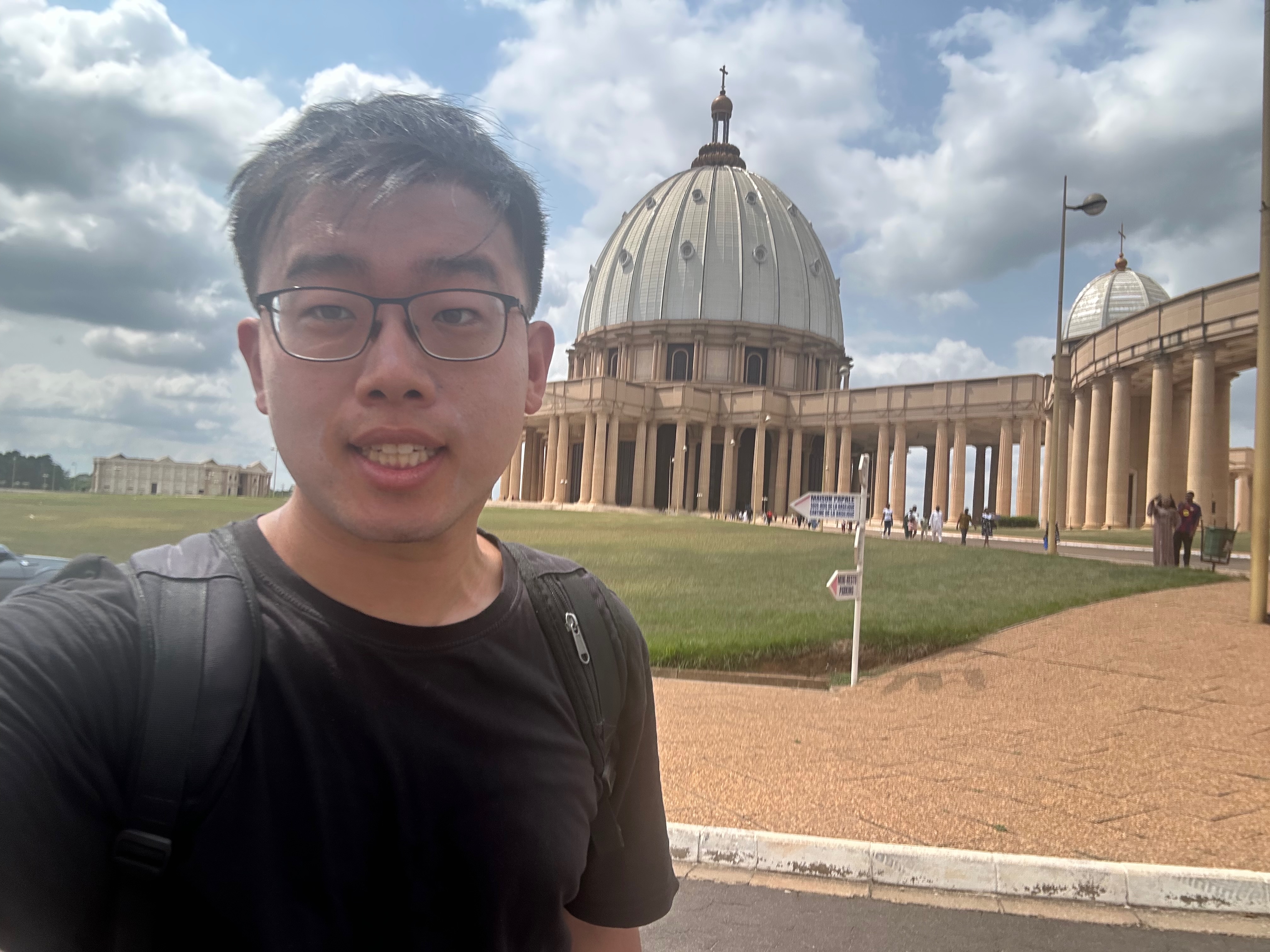
The basilica was built in roughly three years (1985–1989) and was later consecrated in 1990, then gifted to the Vatican. During a time when CI was much poorer, the first president commissioned this structure, importing many materials from Europe. When someone asked the guide how much it cost, the guide noted that many art pieces were gifted, making an exact figure hard to pin down.
There is AC for each seat, and a second level and crypt level which were unavailable for visitors.
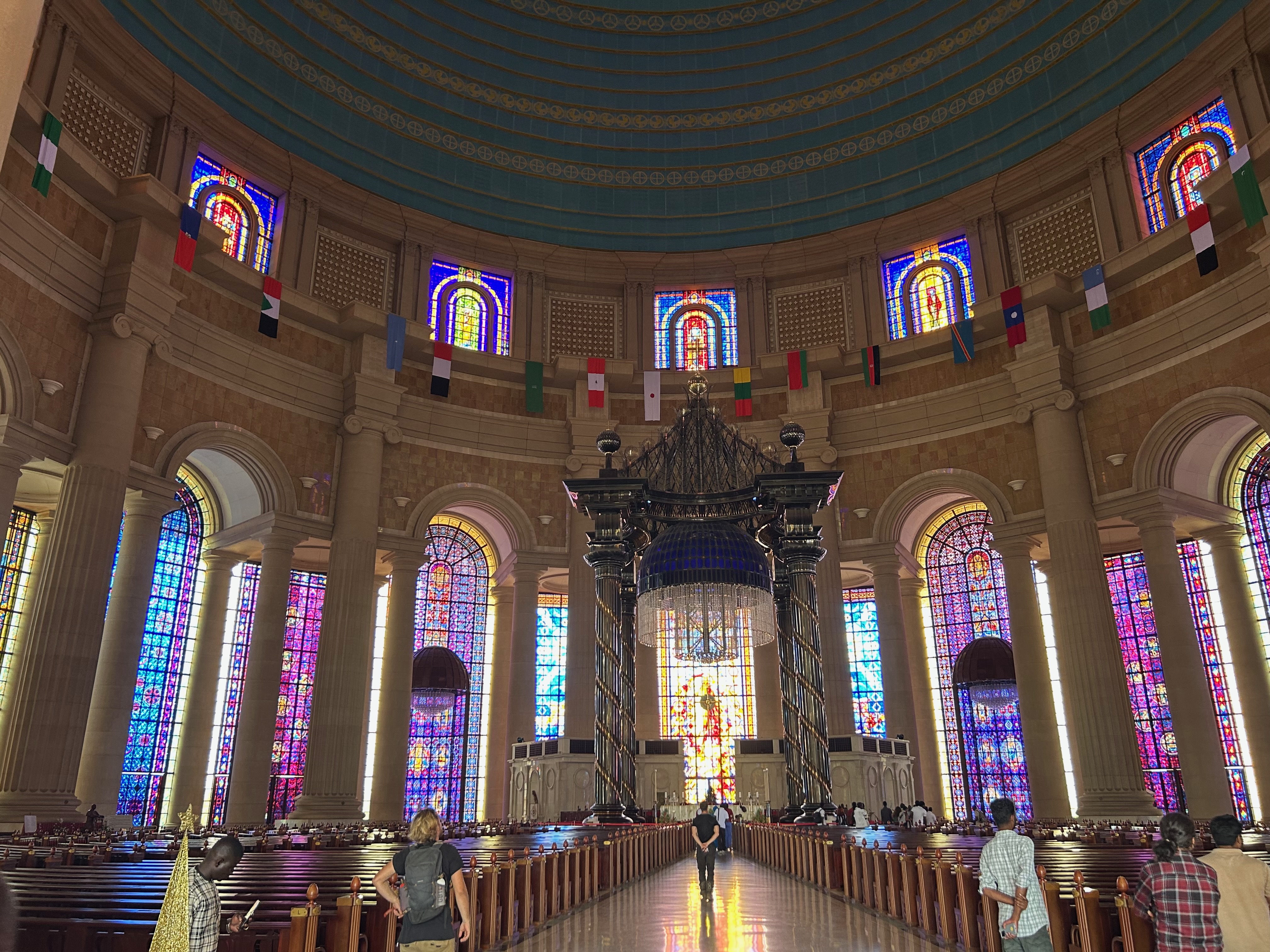
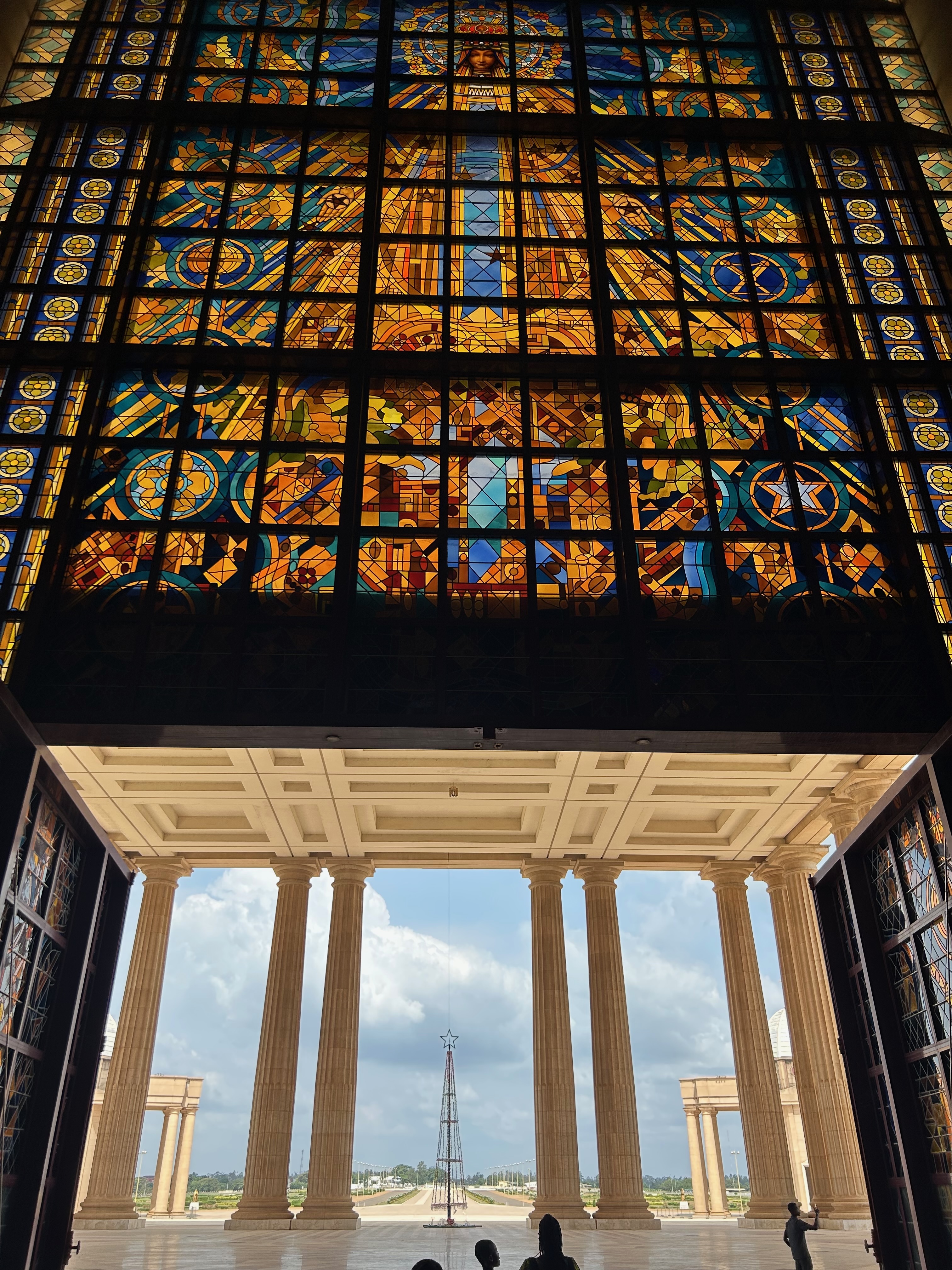
When the structure was finished, Pope John Paul II came in 1990. The basilica rises to 158 m including the cross and is often cited as the largest basilica by area, although its interior capacity is smaller than St. Peter’s. It can accommodate about 7,000 seated and up to roughly 11,000 people standing. I visited on a Sunday with 10am mass, and I’d say only a few hundred people came here. The guide took us around the whole inside describing the intricacies of the structure.
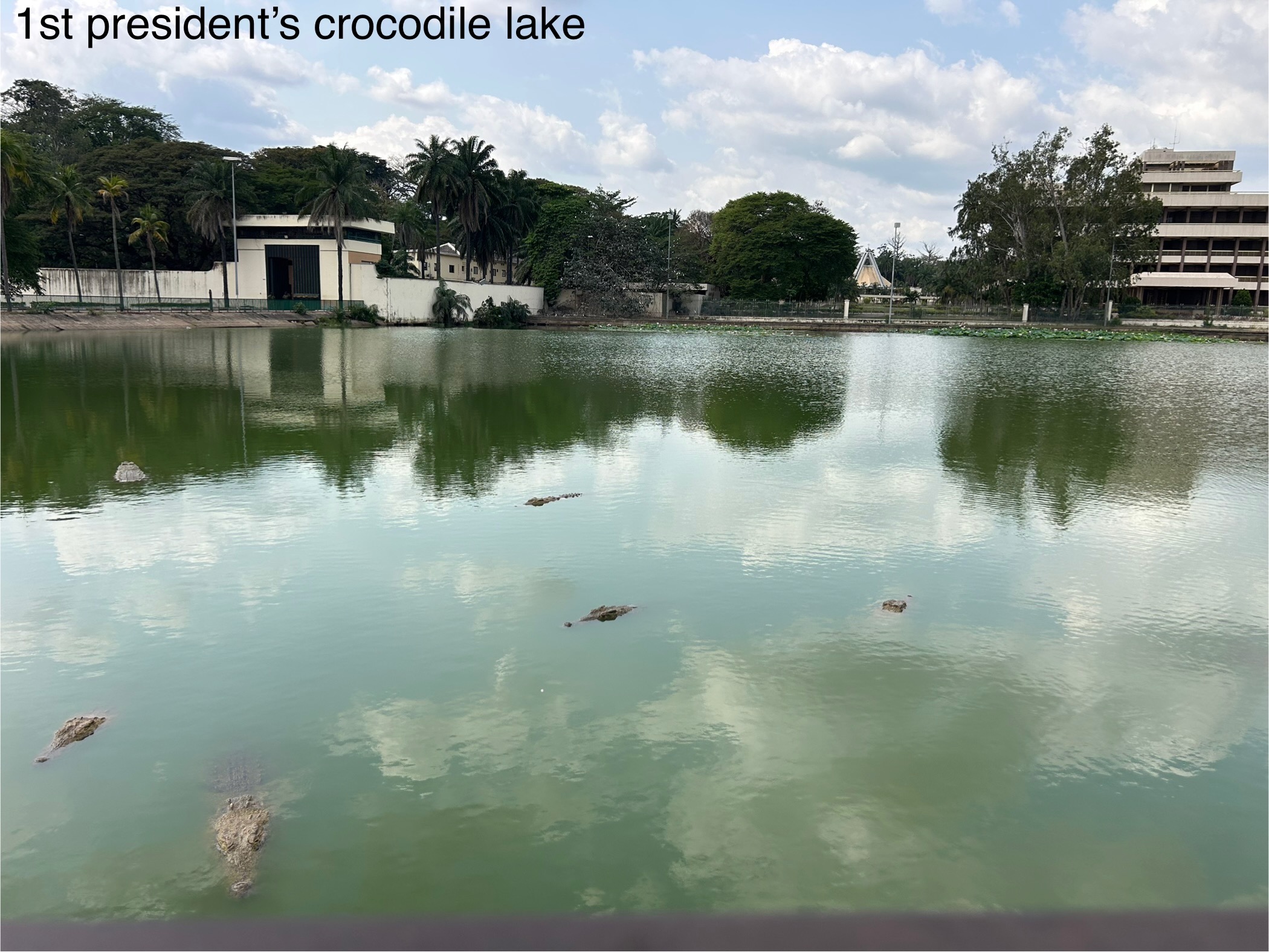
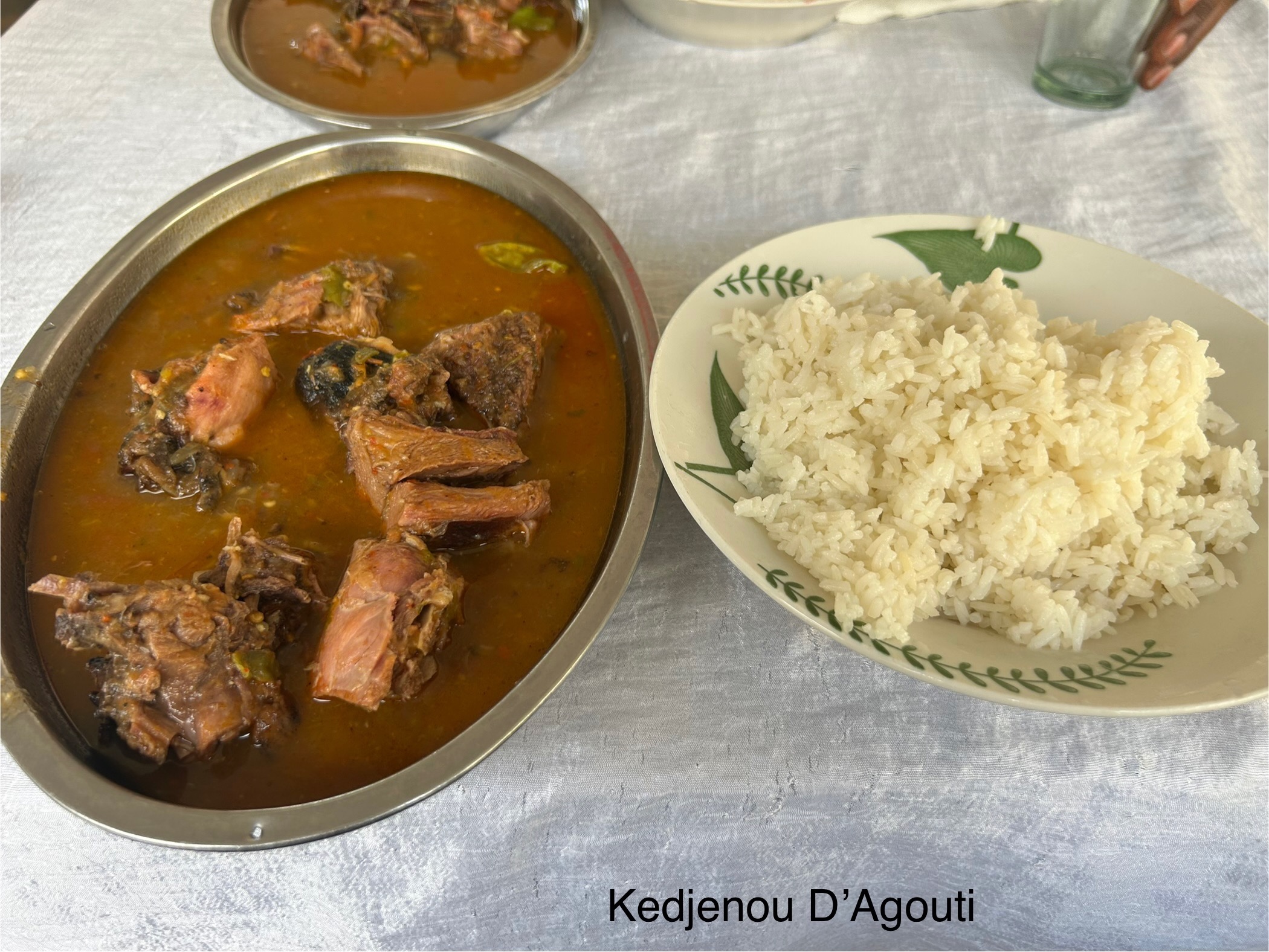
After the basilica, we went to see the first president FHB’s crocodile lake. Merceline got us coconuts and we went to a restaurant to taste a local dish like kedjenou d’agouti (bushmeat stew).
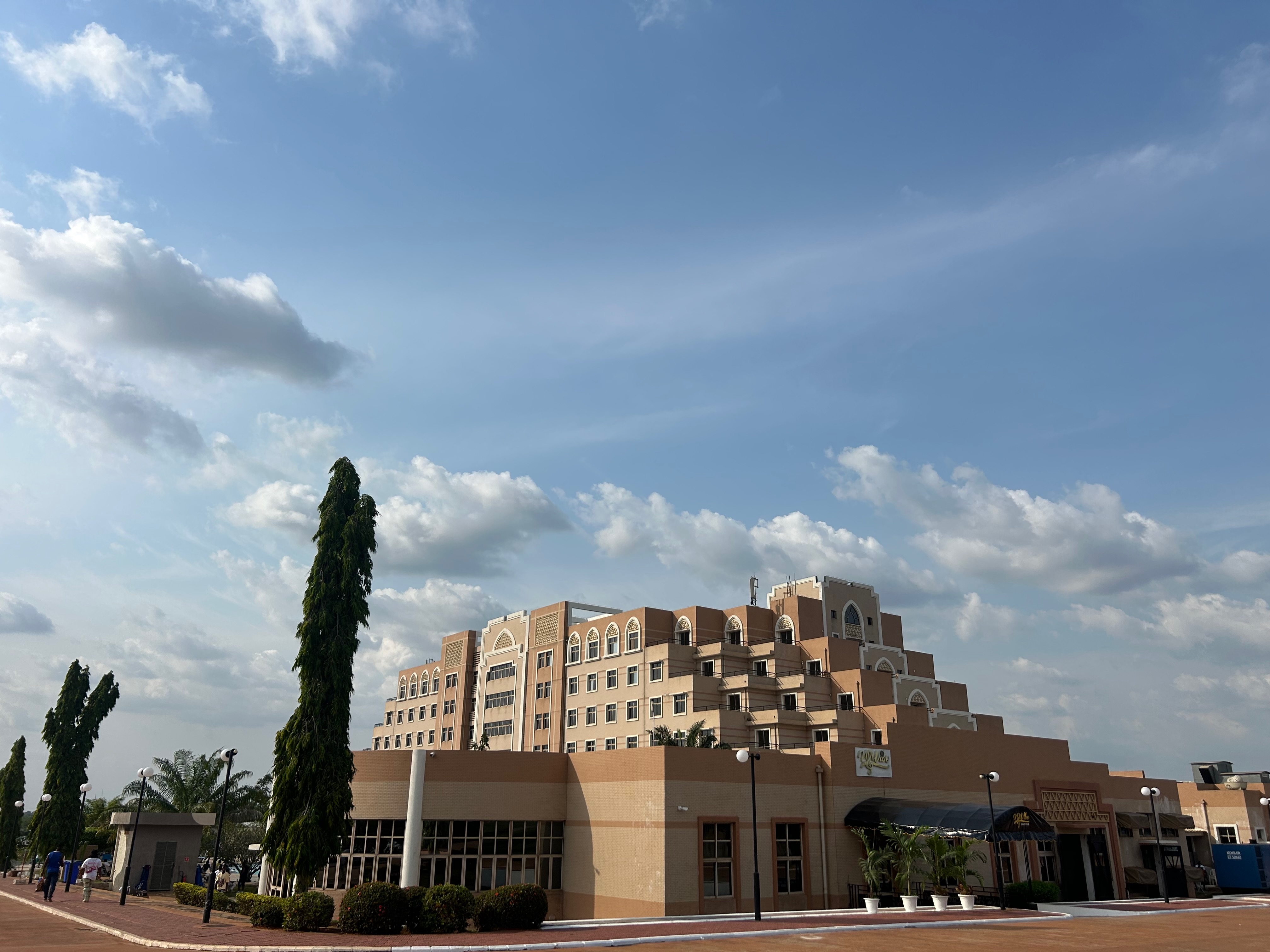 Right: The hotel has been renamed, with mostly tourists and diplomats having fun here.
We then visited the Hotel des Parlementaires. Merceline has never visited here before and started to ask me to take so many pictures of her (for her advertising). On the way back to ABJ, she mentioned that she wants to get out of CI and work hard for one year in another country to buy a house, since her parents died and there are many grand siblings. She has been a guide for one year and was looking to improve her life.
Day 4: Vacation wrap up
On the last day, it was a Monday in Abidjan, and the folks wearing suits and business clothes were everywhere in the plateau area.
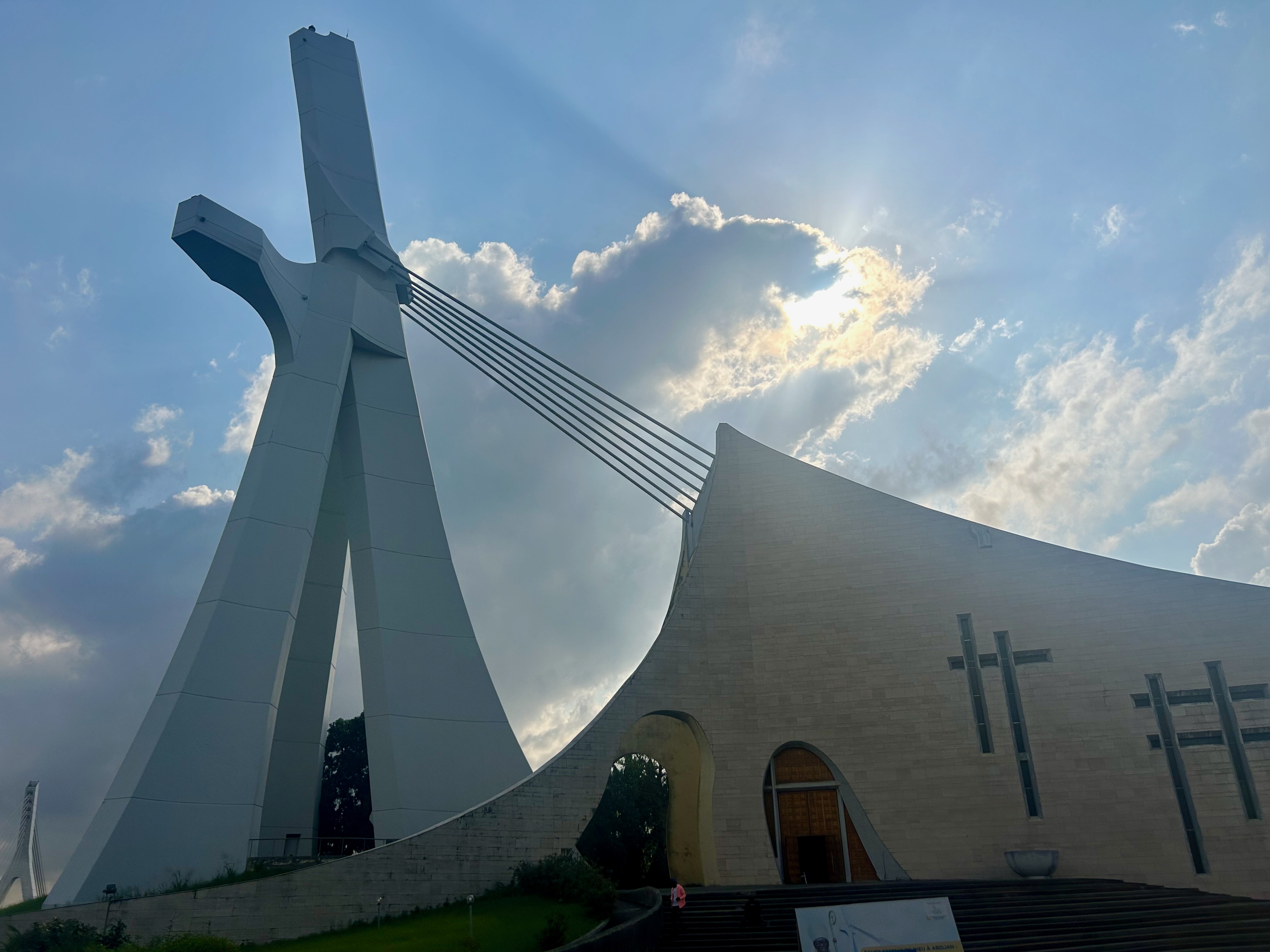
I visited St Paul’s cathedral and enjoyed the beautiful glass work.
This wraps up my wonderful vacation during the holidays in Benin and Côte d’Ivoire.
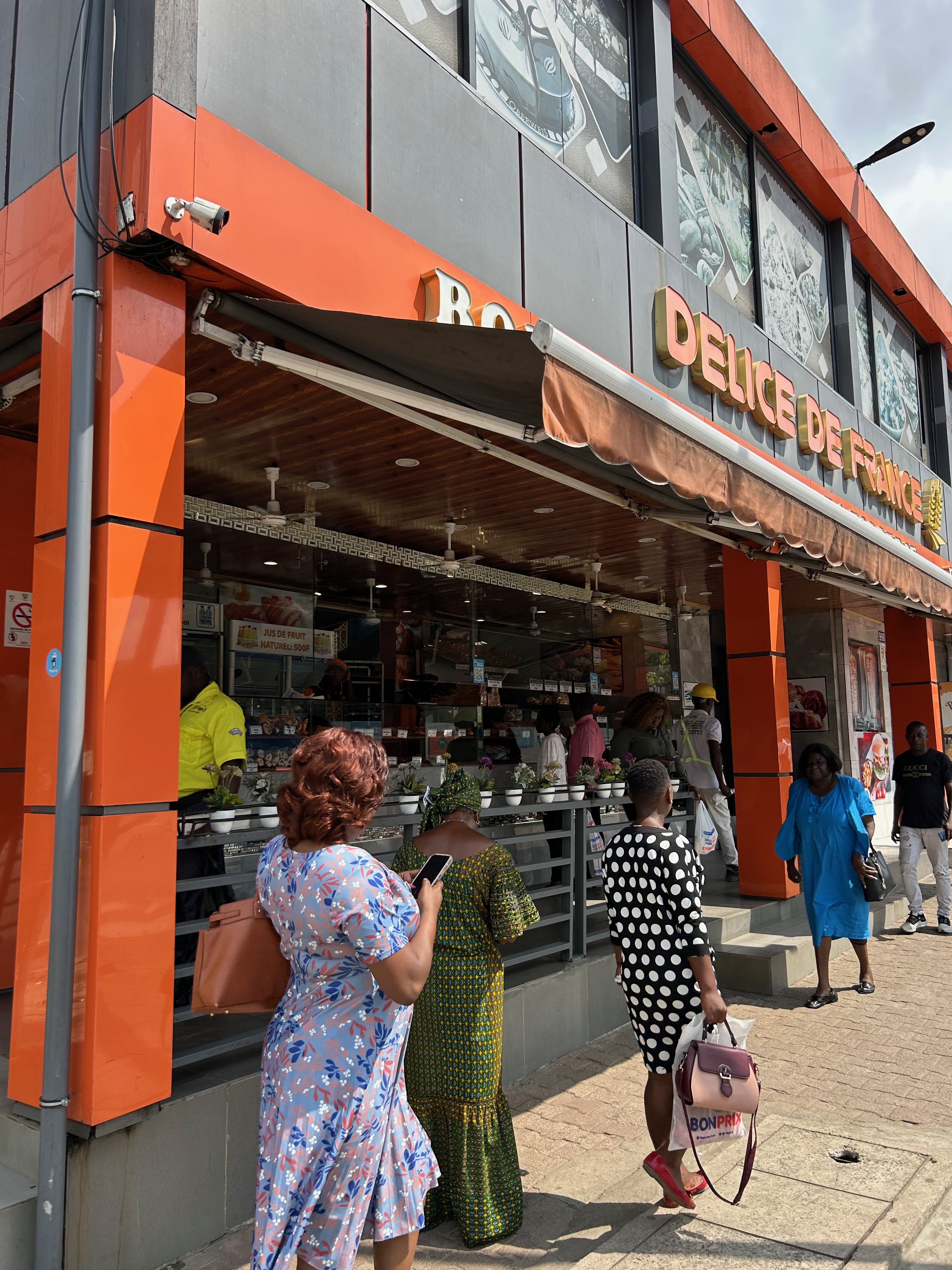
A bakery that I often visited called Delice De France.
Bribery at the airport?
As I entered ABJ, before picking up my Royal Air Maroc tickets, a police officer in a green uniform asked me to follow him.
He led me to a back office where another officer was eating lunch. They asked where I was headed.
I had a really good impression of CI up to this point. No strangers being aggressive on the streets. Strong infrastructure.
Then he pointed at my carry‑on and asked for money, gesturing to his mouth and lunch and saying “à manger.” I couldn’t believe this was happening at an airport in a country I’d considered one of the more developed.
I handed him a 100 CFA coin; he pointed to a 2,000 CFA note and repeated “à manger.”
I told him I had nothing in my suitcase and wouldn’t be giving him more. He let me go.
It instantly soured what had been a very positive impression of Côte d’Ivoire.
I can only imagine future challenges in more corrupt contries in the future…
[Receive future updates]