Gambia Village and Initiation Ritual
 Gambia | Country 38 | 2 days |
- The Gambia is named after the Gambia River and is almost completely surrounded by Senegal; the river was once a major trade artery in West Africa
- There is a stereotype of older European women vacationing here to mingle with young Gambian men
- Mandinka, Fula, Wolof, Jola and Serahule are among the main ethnic groups
- Former British colony; from 1982–1989 it formed the Senegambia Confederation with Senegal
- In the wet season, The Gambia is lush and rain‑soaked despite lying in the Sahel; even with GDP per capita under $1,000, there’s cell service almost everywhere
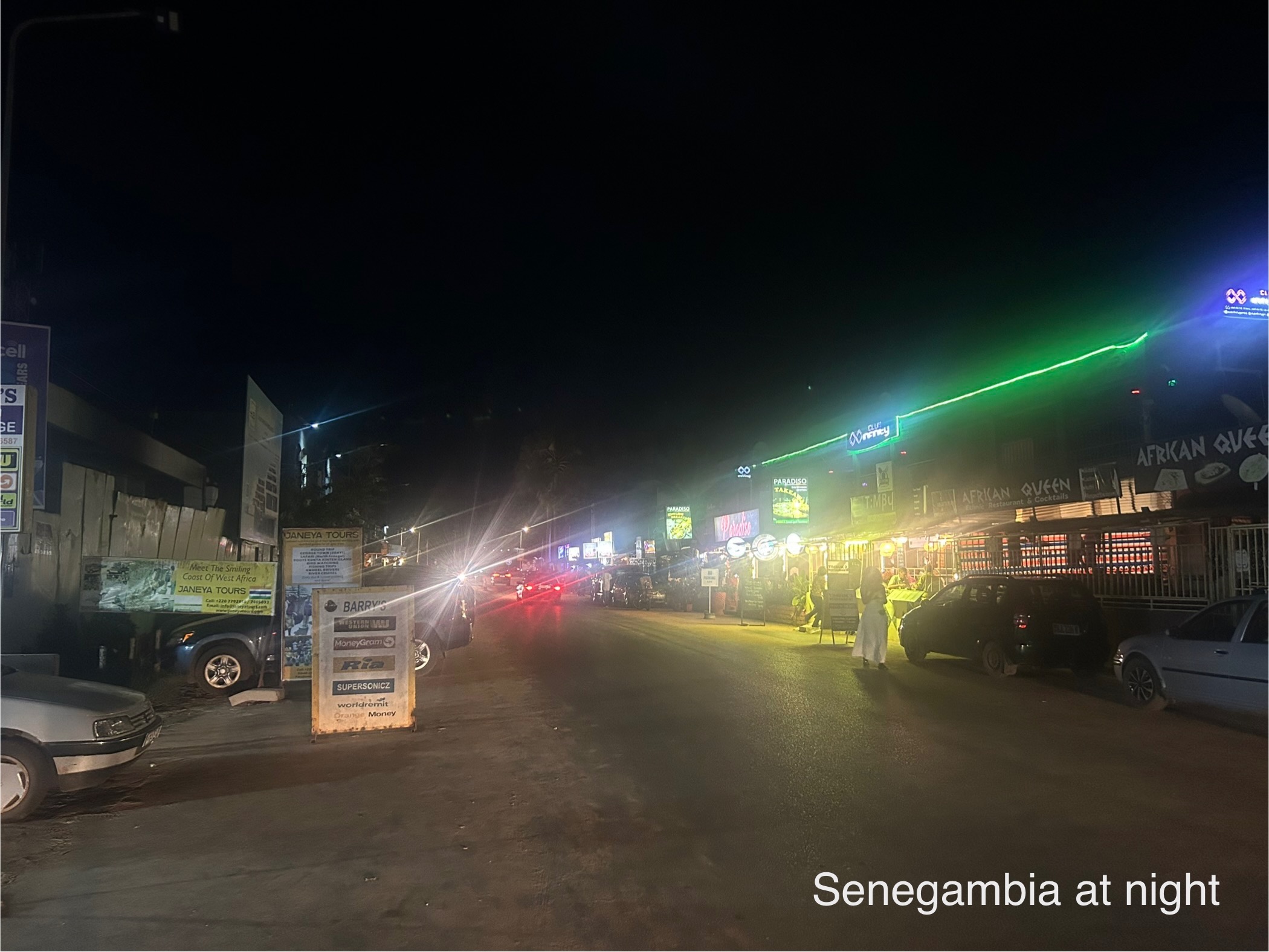
Arriving at Senegambia in the evening, I took a taxi ride from Banjul Airport to the lively strip full of people having a good time. After checking into the hotel, I wandered the streets for some dinner.
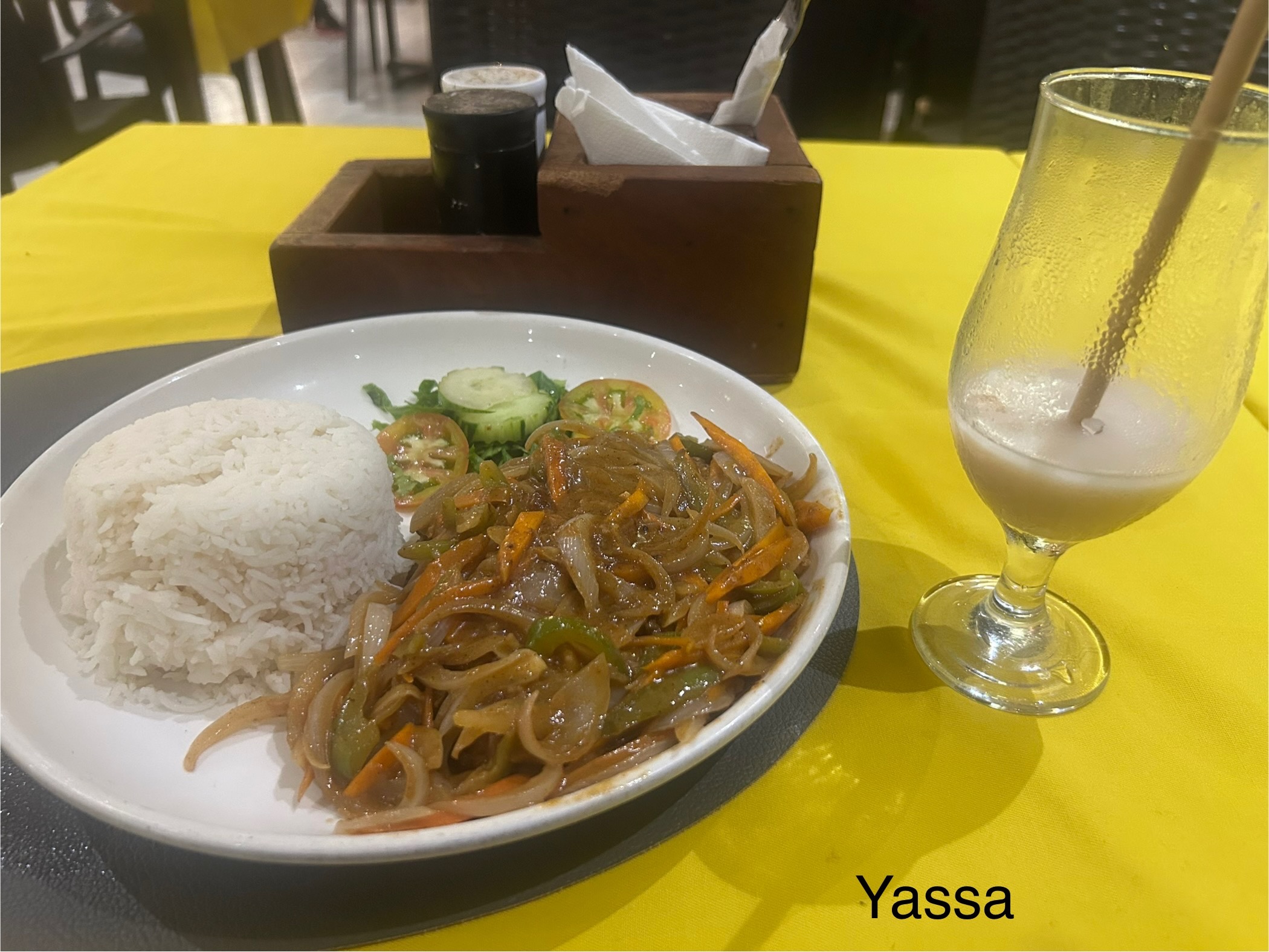 Yassa: popular in West Africa (Chicken, Onions and many flavors)
Day 1: Village tour
You know the cliché of children swarming a foreigner? It really does happen in rural villages here.
I woke up in the morning to meet my guide, Kayce. Today, we were going on a remote village tour.
It was pouring rain (wet season), and the car leaked water in the front passenger seat. Every couple of minutes, Kayce wiped fog from the windshield with a rag.
We drove to downtown Banjul and then to the port to take the ferry north across the Gambia River. We walked a bit and bought our tickets.
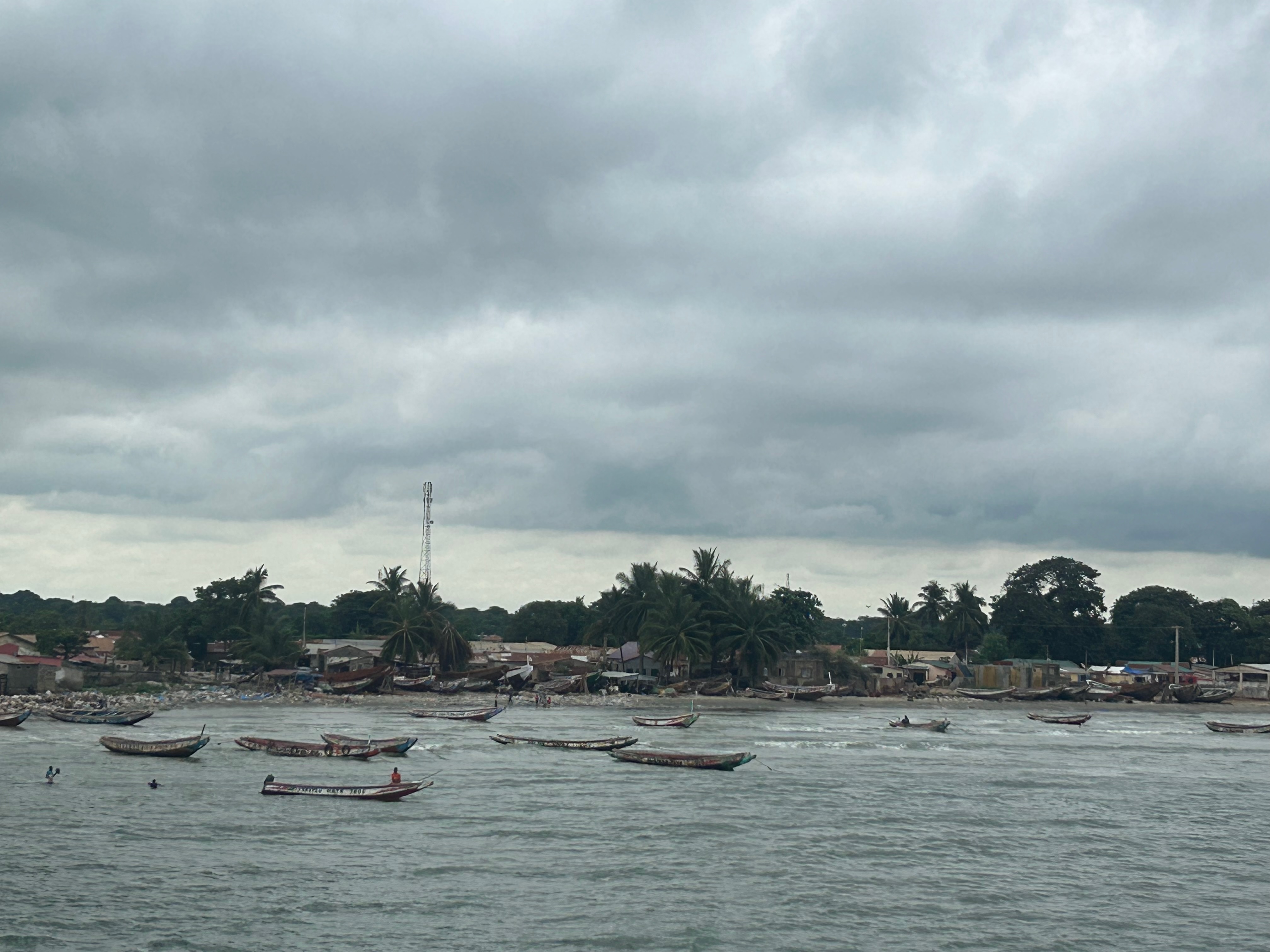
On the open-air top deck, we watched cars drive onto the ferry and looked out over the Gambia River. Smaller transport and fishing boats crisscrossed the water.
After about an hour, we arrived in Barra.
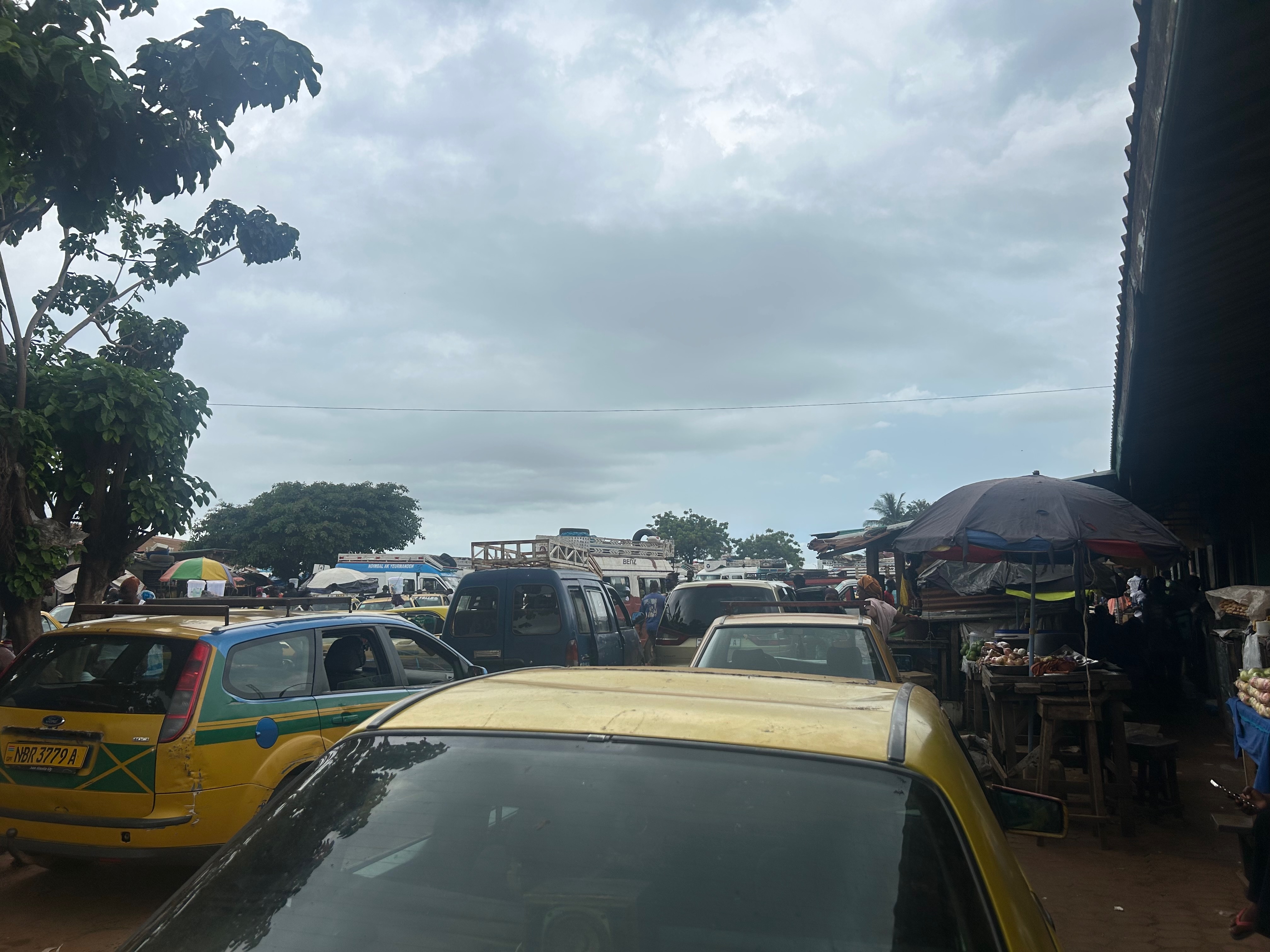
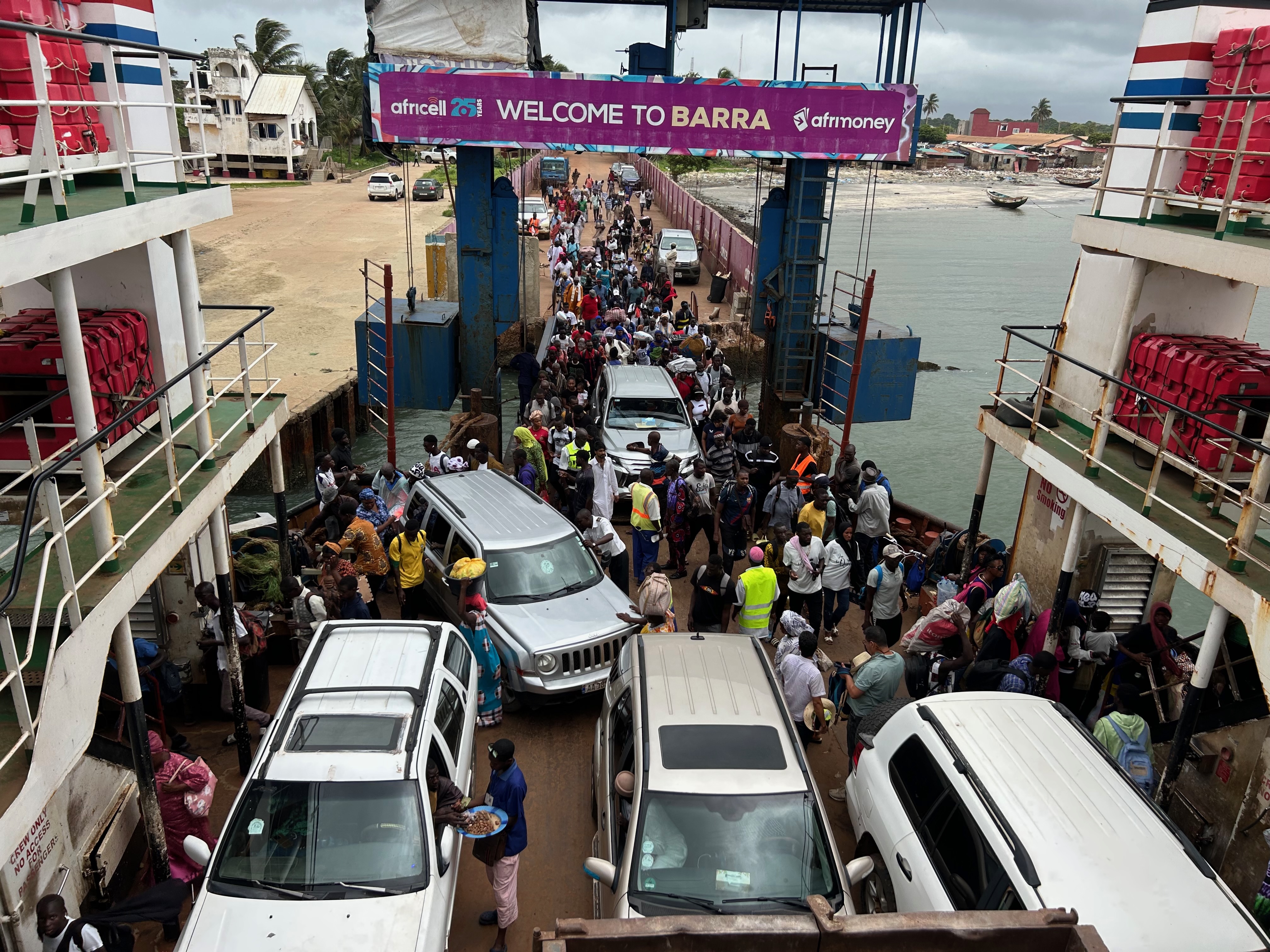
The port of Barra is intense. I was overwhelmed by the bustle—cars, people, and vendors everywhere.
Kayce asked if I wanted to use the bathroom. I said yes. We went to two restaurants and were turned away. We then wandered into a government building. Suddenly, I saw bars and hands behind them. This was a friggin’ prison. Kayce walked past the front-desk police officer before being told no; we had to leave. We gave up on finding a bathroom.
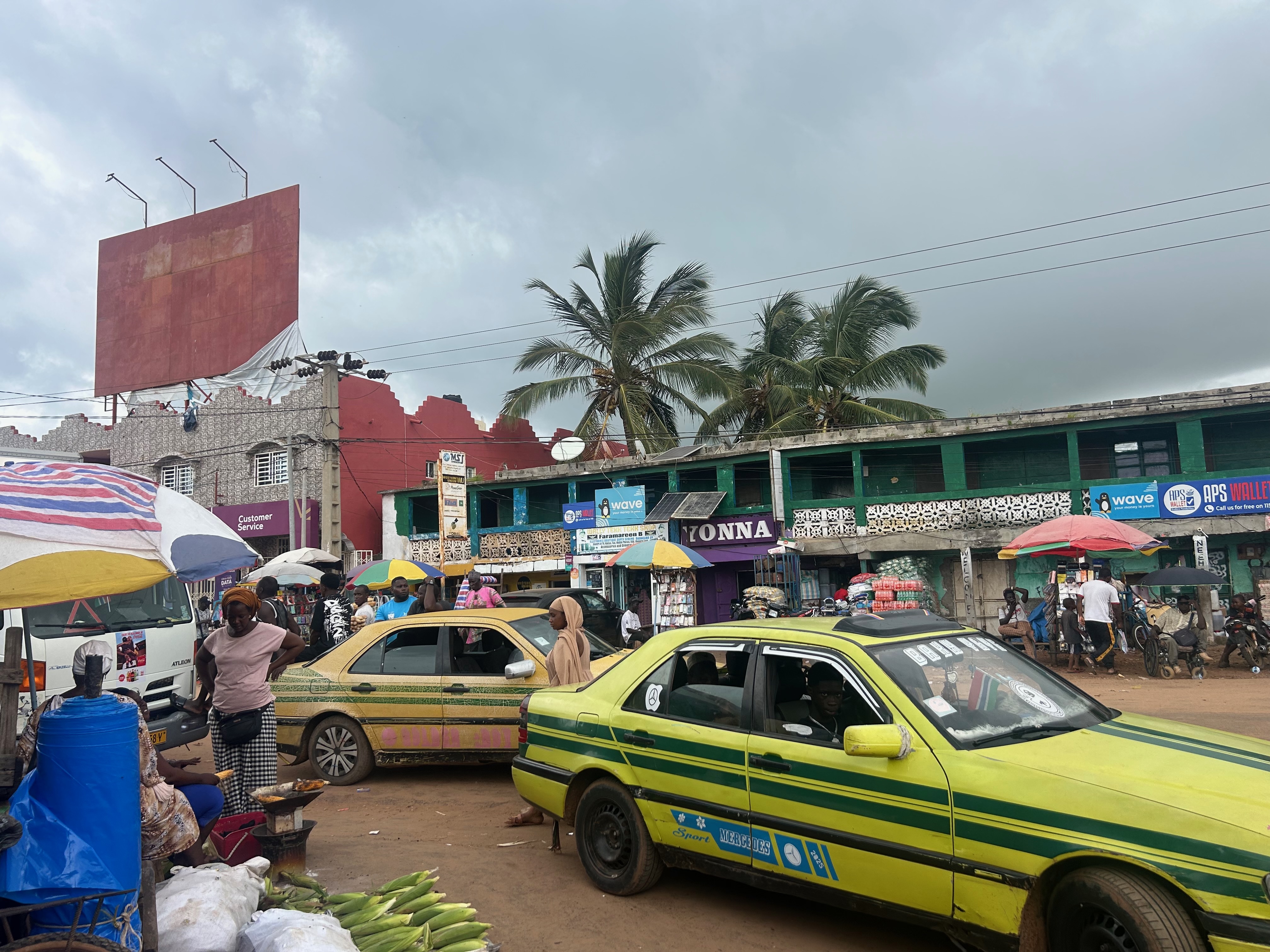
After some intense bargaining at the market, we finally secured a taxi to a small town on the North Bank.
As we left town, it dawned on me this might be the least economically developed country I’ve visited. The Gambia ranks in the 160s by GDP per capita; despite being at peace, it remains very underdeveloped.
After a 15-minute taxi ride, I found myself in the middle of the Saturday market.
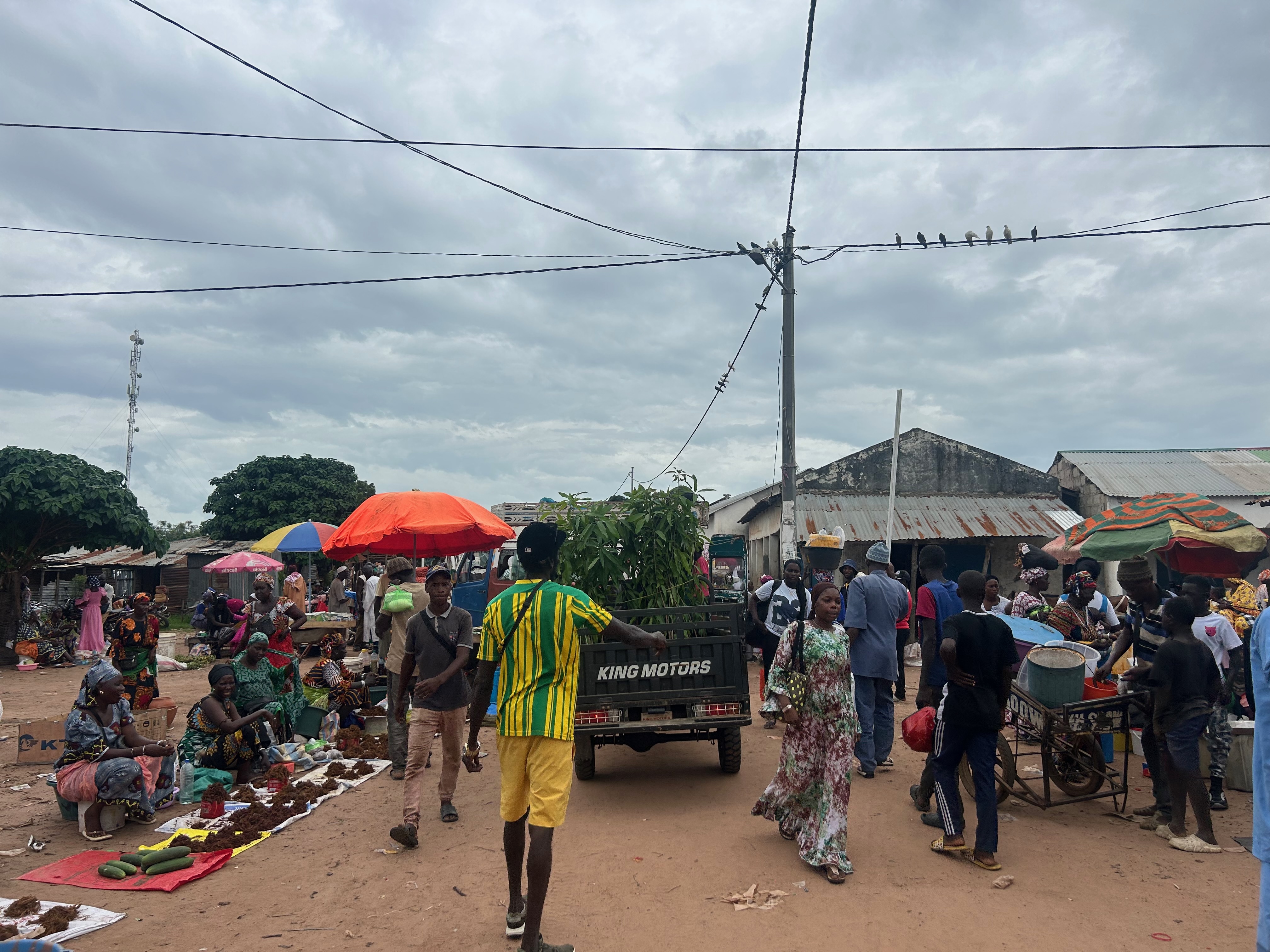
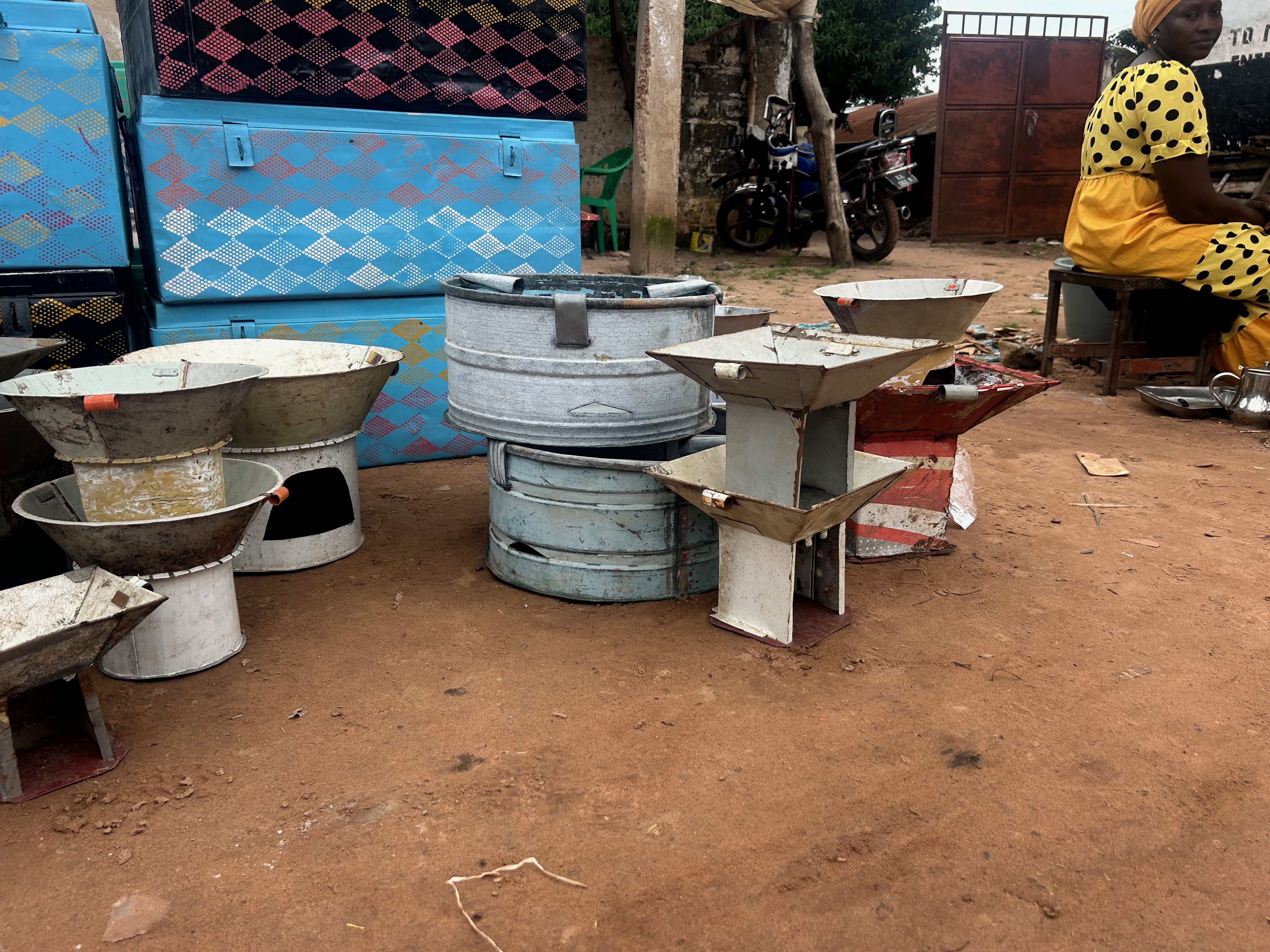
There were so many animals in the streets. People sold farm tools, bags of onions, other foods, seeds—just everything.
Here we met K, the local tour organizer. He introduced me to vendors and explained what they were selling.
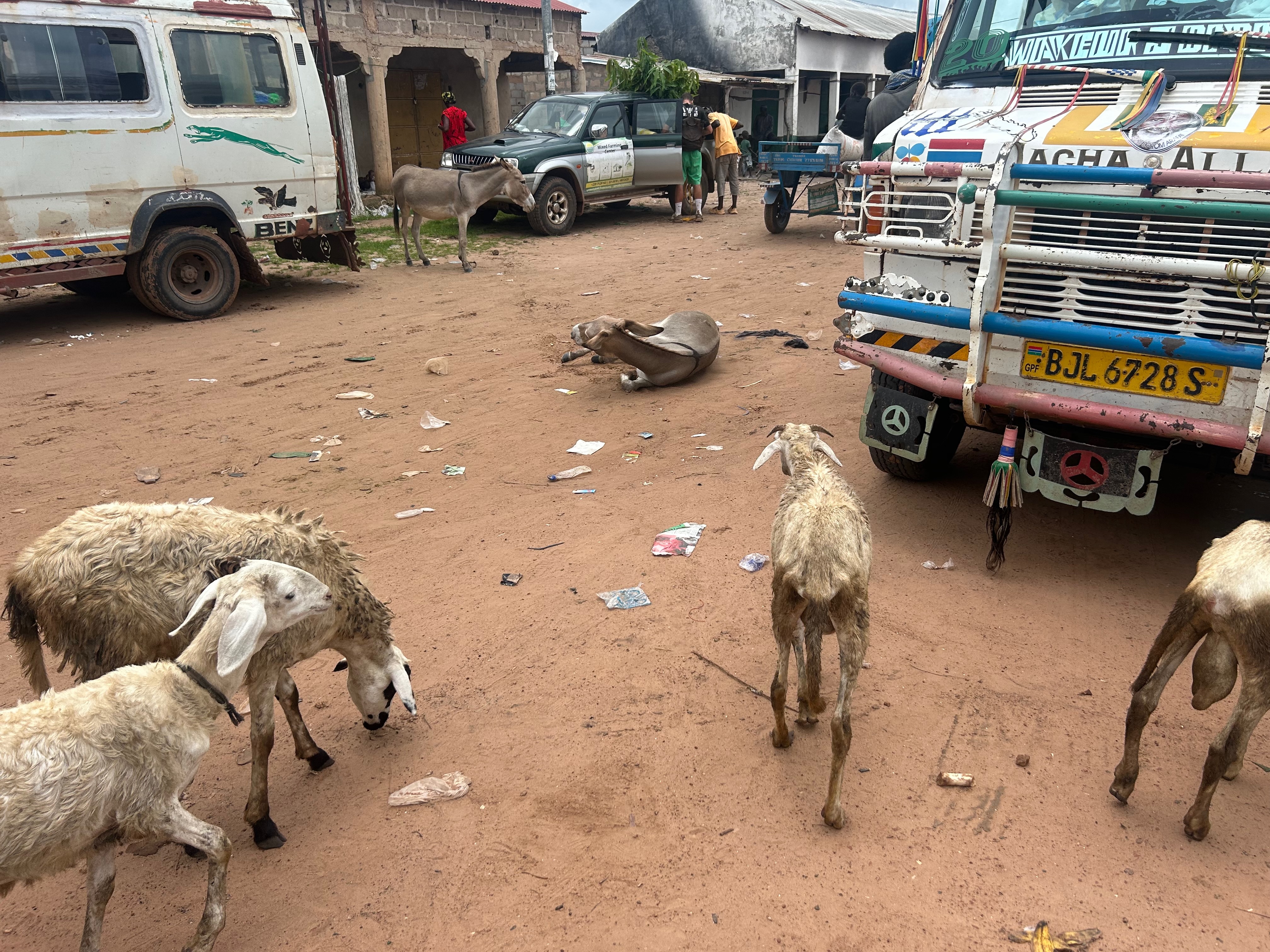
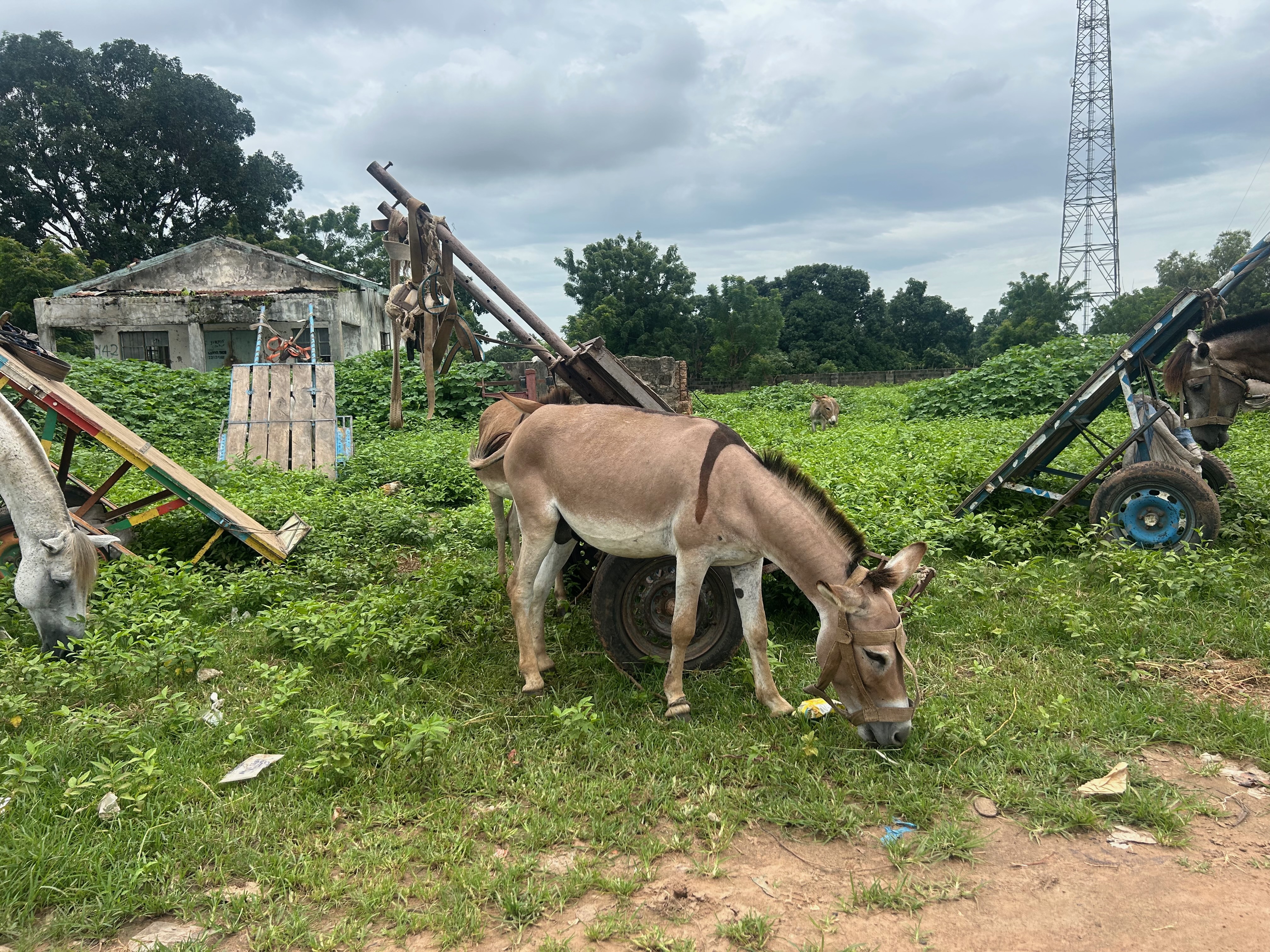
I was surprised to see so many donkey carts. K walked up to an eight‑ish‑year‑old boy, paid him a small fee, and let me ride the cart for a bit. Wow.
After seeing the main market street, we walked towards our host’s home.
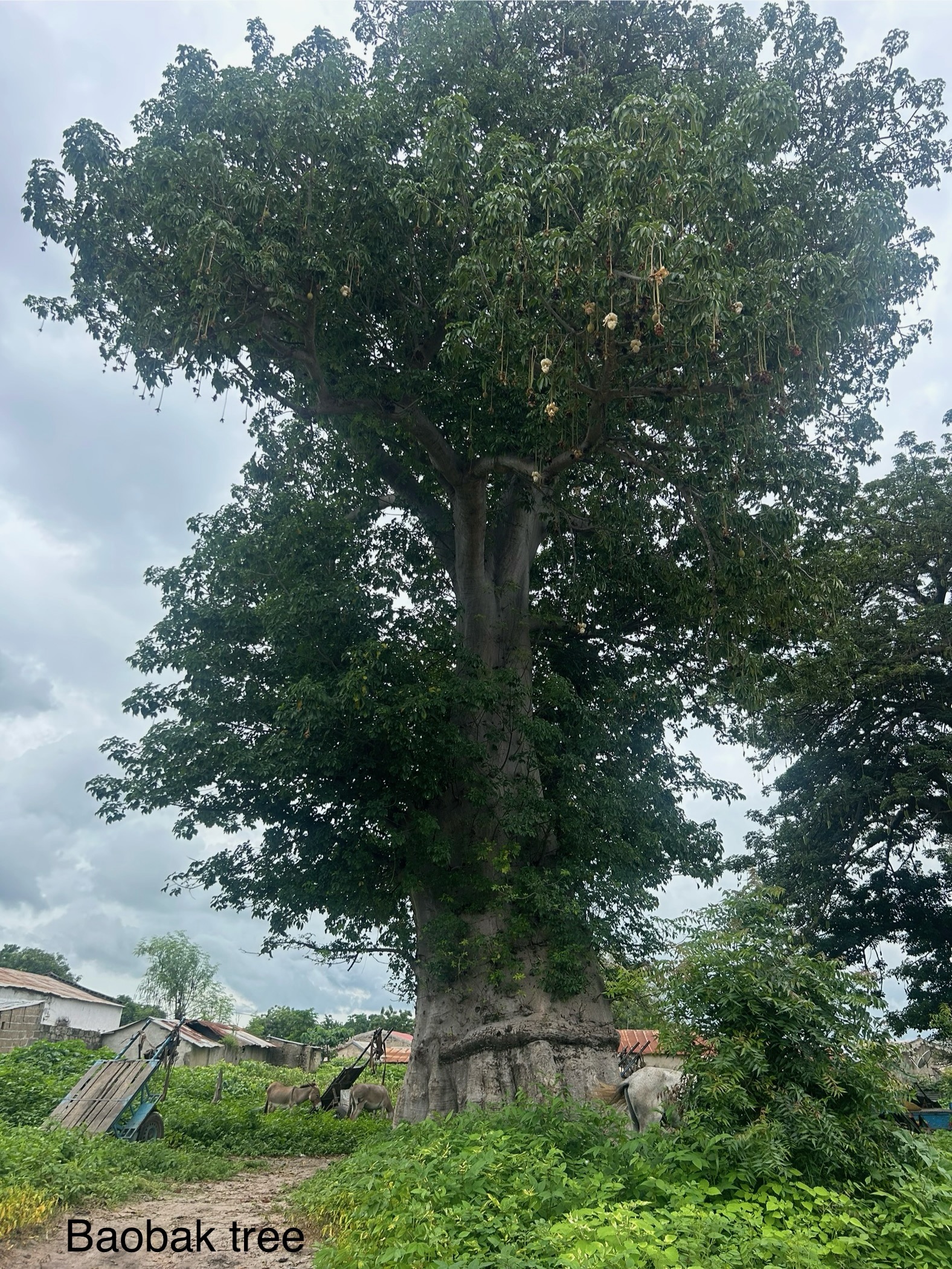
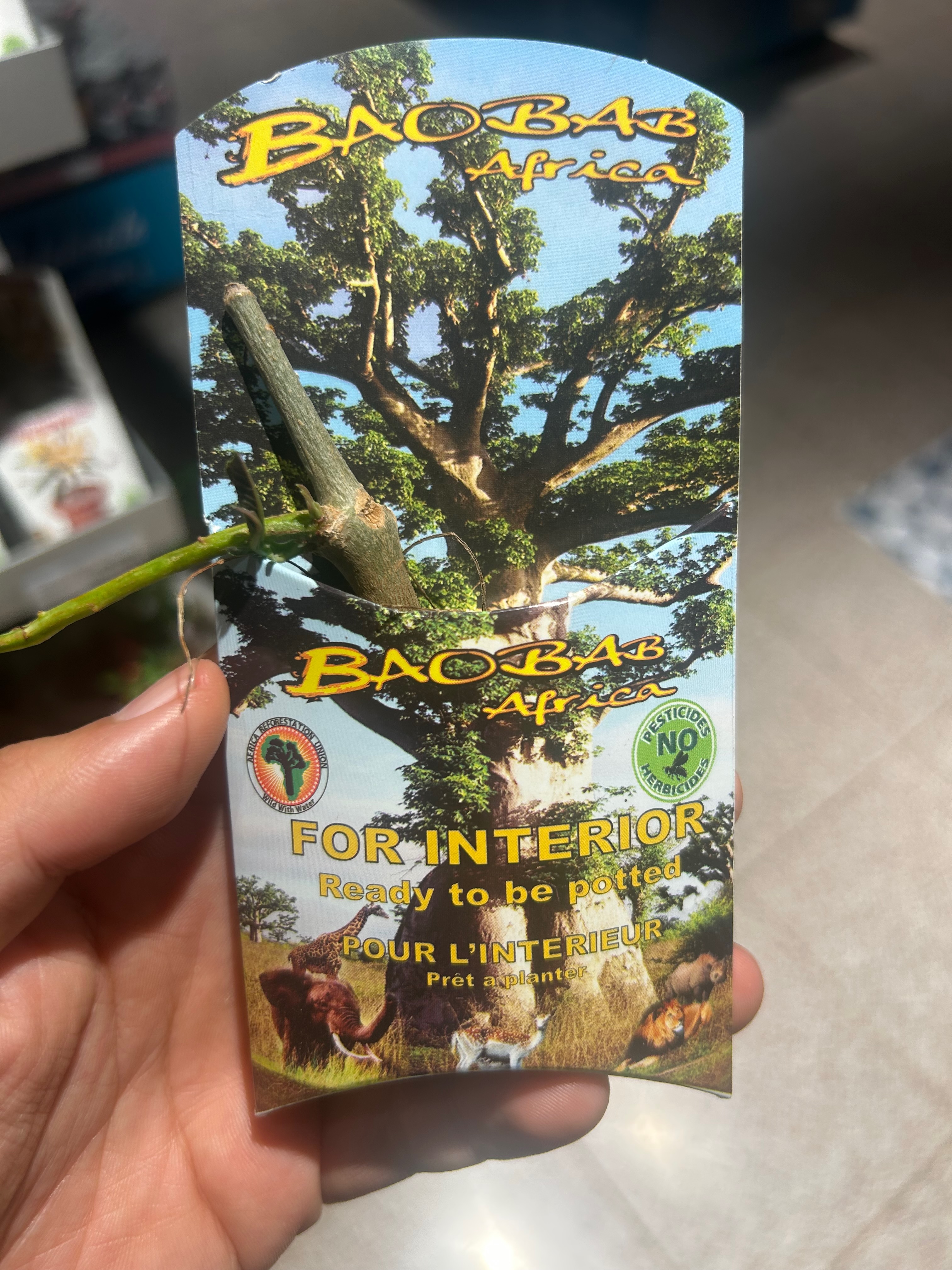
The baobab is a culturally important tree in Senegal and The Gambia.
We said hello to the host family. Immediately, two women greeted us; one was breastfeeding a baby. They sat around an open-air stove with a big pot and explained that they were cooking lunch.
The grandma of the family was lying on the mat across the front porch. Men walked around or watched soccer (football) on the TV.
Some very young sheep just sat on the ledges and roamed freely in the village corridor.
Walking through the back door, we passed even more livestock from the host family and walked a bit to K’s guest home.
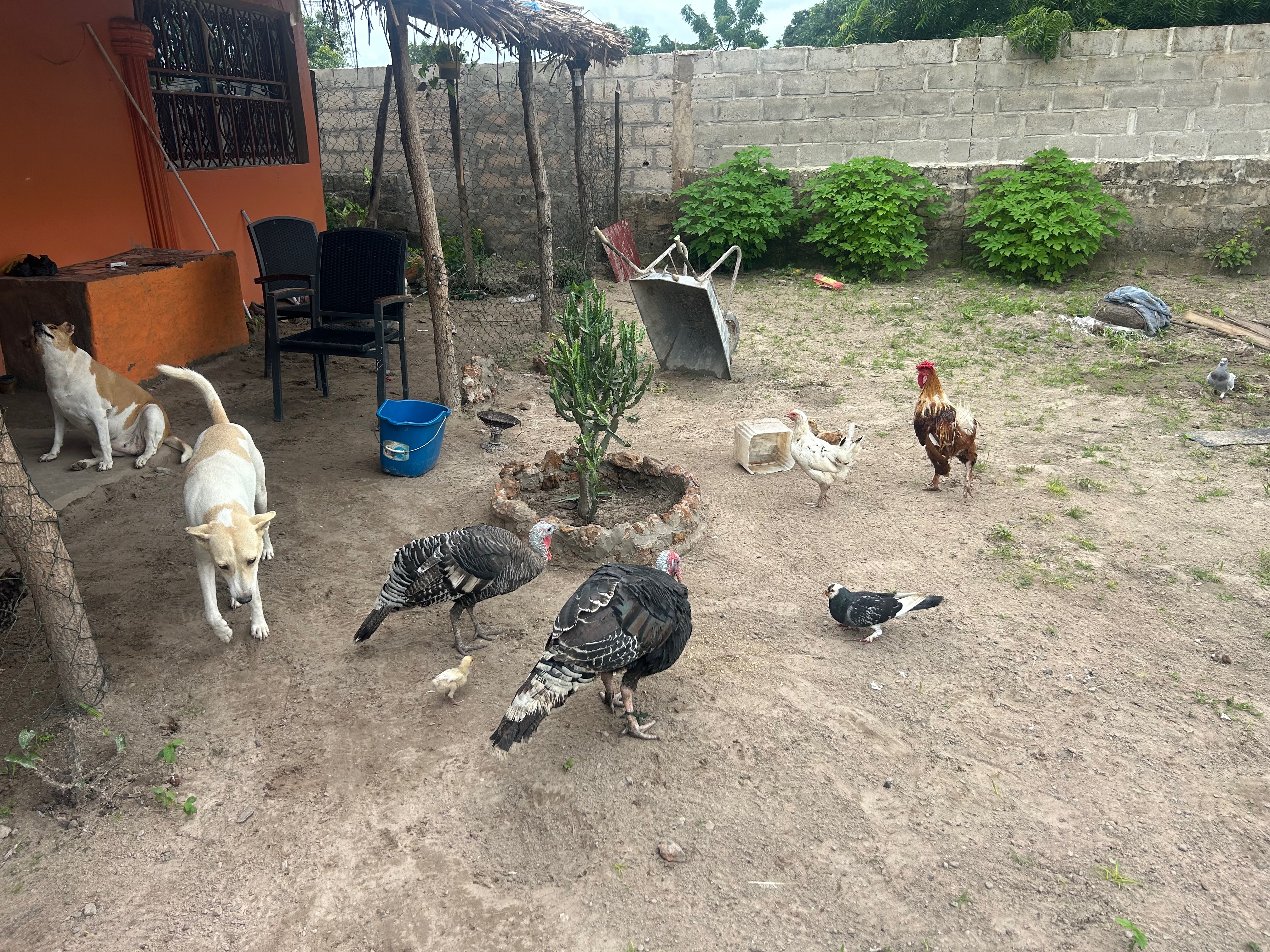
K’s guest house had two dogs, two turkeys, and a bunch of pheasants and chickens. He explained that he is building a guest house in the village because it is close to many local tourist attractions.
Then K, Kayce, two of K’s friends, and I took a donkey ride.
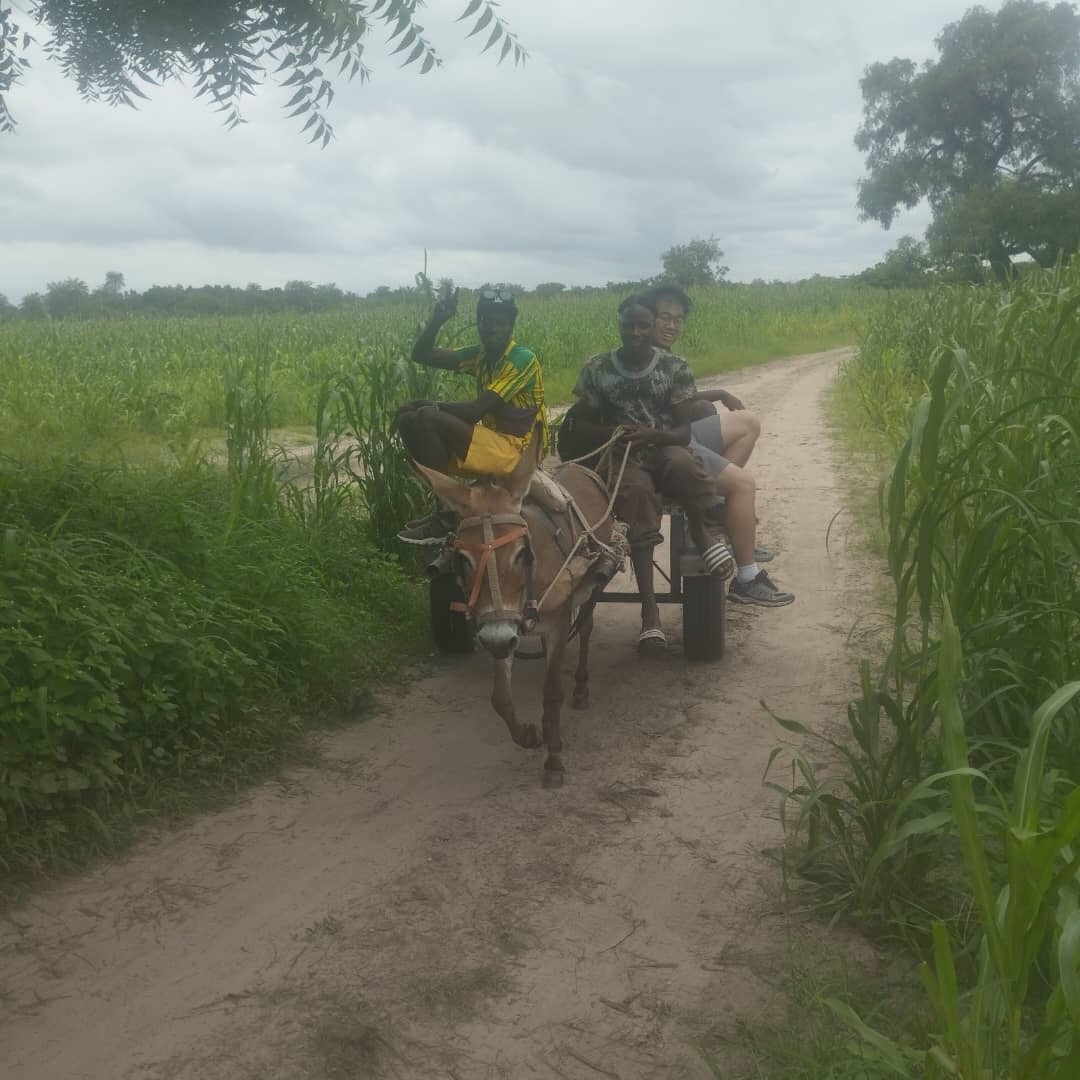
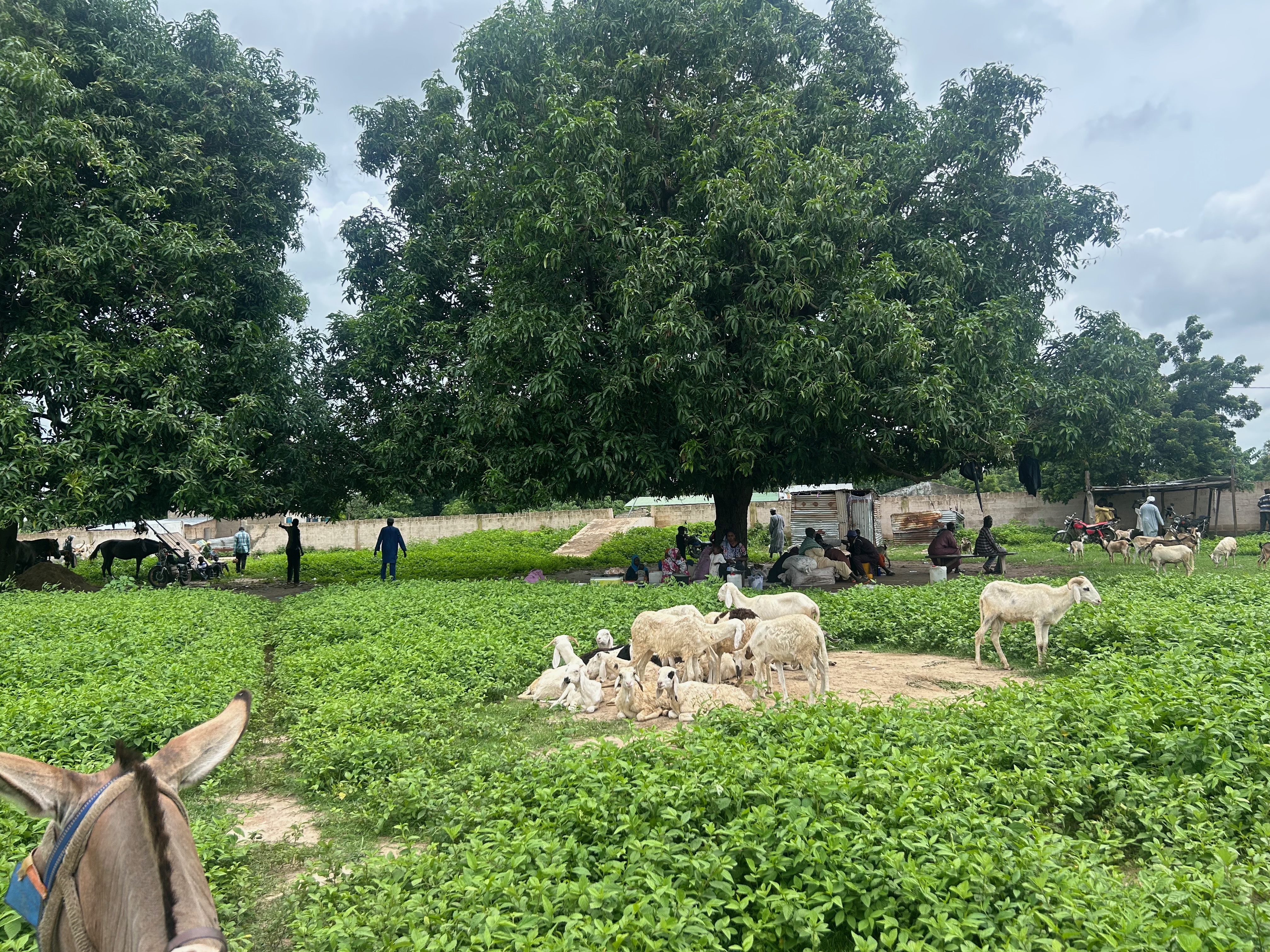 Right: Livestock market with many goats and horses. One of the men told me about visiting Shanghai in the early 2000s.
On the donkey cart, we passed many farm fields. This was the growing season (September). K explained that most farmers grow peanuts, millet, and rice.
After the donkey ride, we went back to the host family’s residence.
We ate a traditional West African meal. On the floor! Everyone kneeled on the floor, eating with their hands. As the foreigner, I was given a spoon.
There was a big pot of food—jollof rice, fish, vegetables, and many spices. There were maybe three women, three men, and about ten kids.
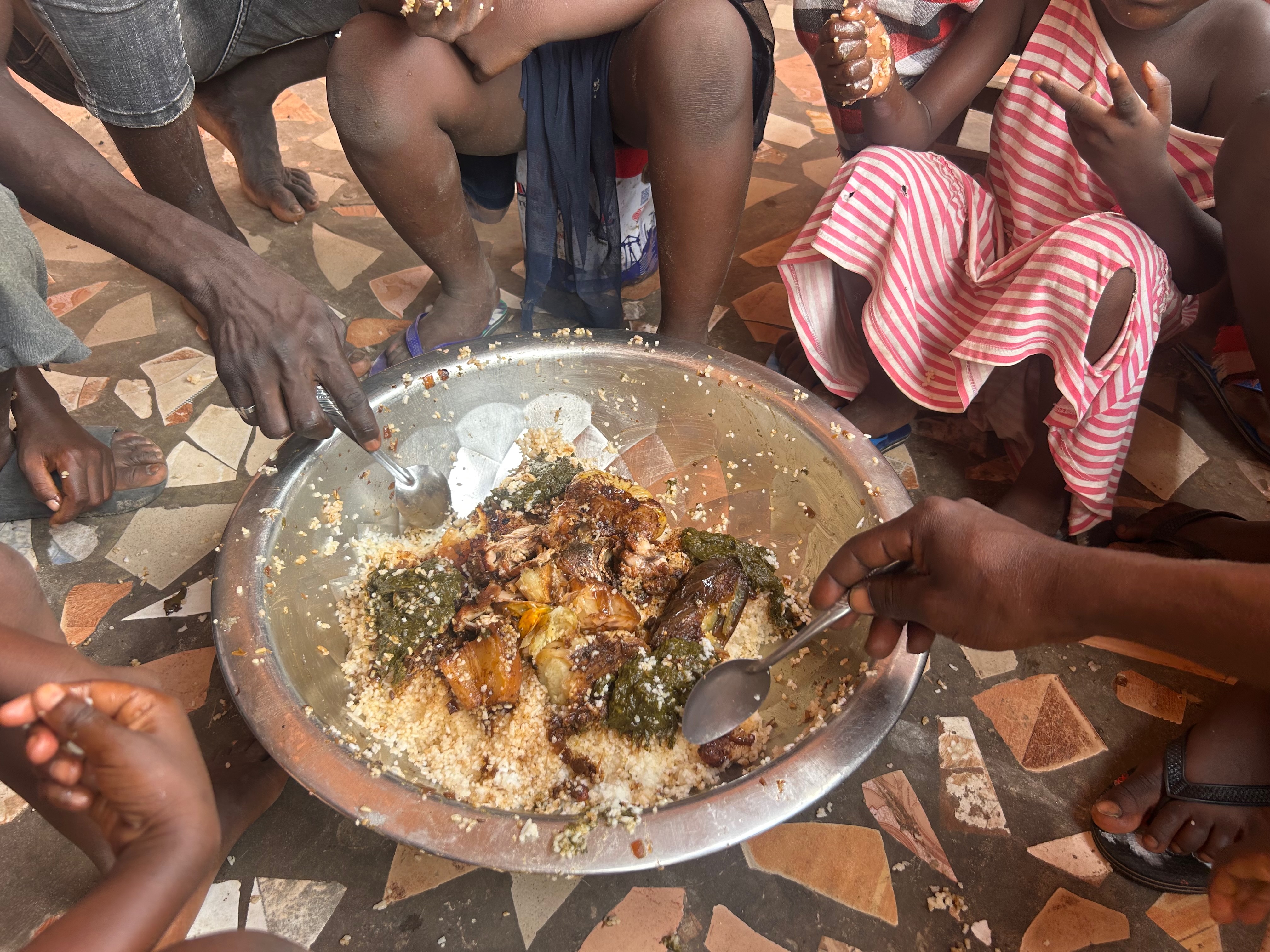
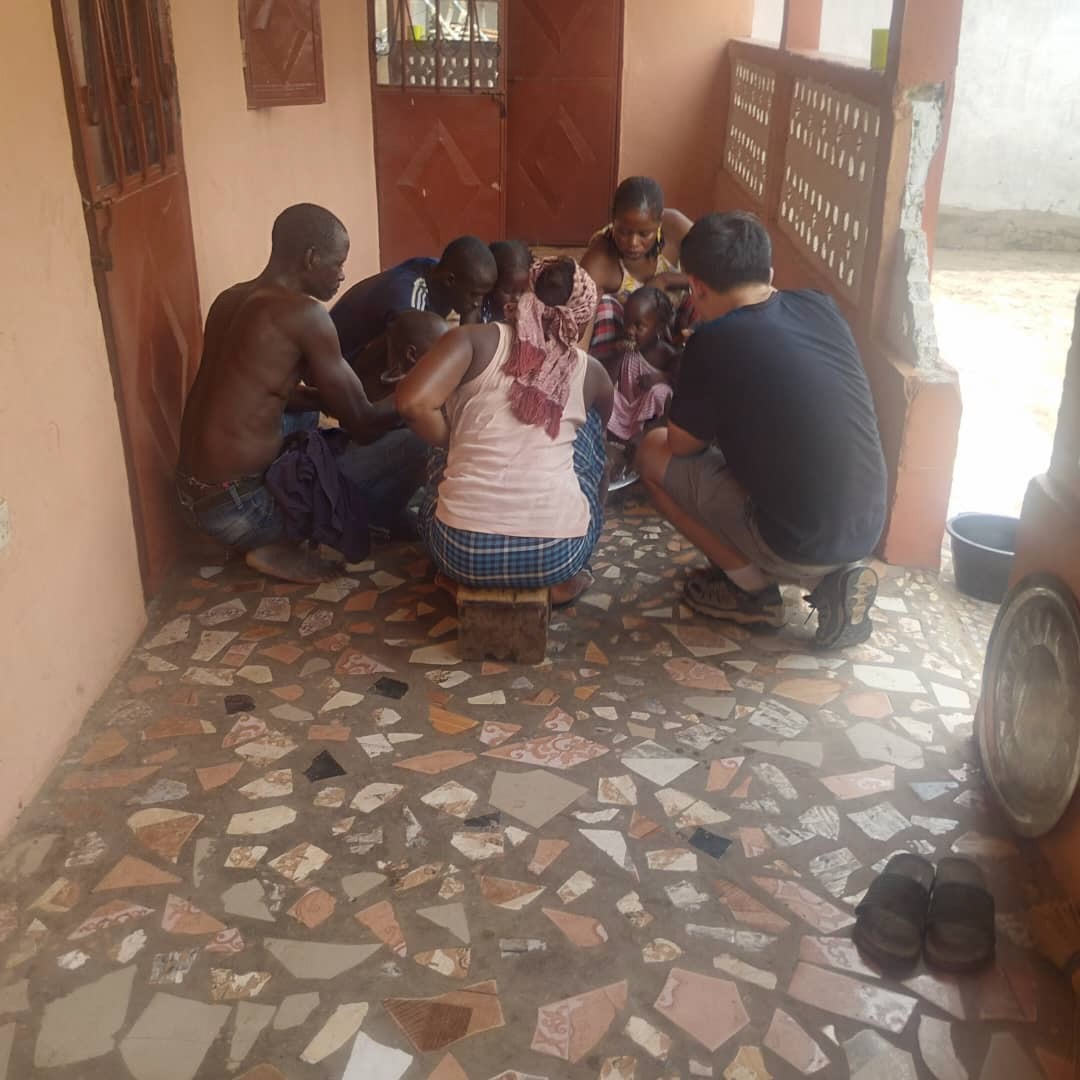
The patriarch of the family was organizing the eating. He broke off the main chicken and put pieces of meat in front of everyone. The rice, the spice, and the protein tasted amazing. What a fascinating tradition—I learned more about it afterward.
One girl from the family was wearing the hijab, while the younger ones were not.
After the meal, we hung out some more in K’s home and made our way back to Senegambia. We got a ride from K’s neighbor, who was heading into Barra.
We had probably just missed the boat and waited an hour or more at the Barra port.
Kayce and I talked a bit with the army guards at the port. They had tiny teapots brewing Arabic tea, and one of them was dancing.
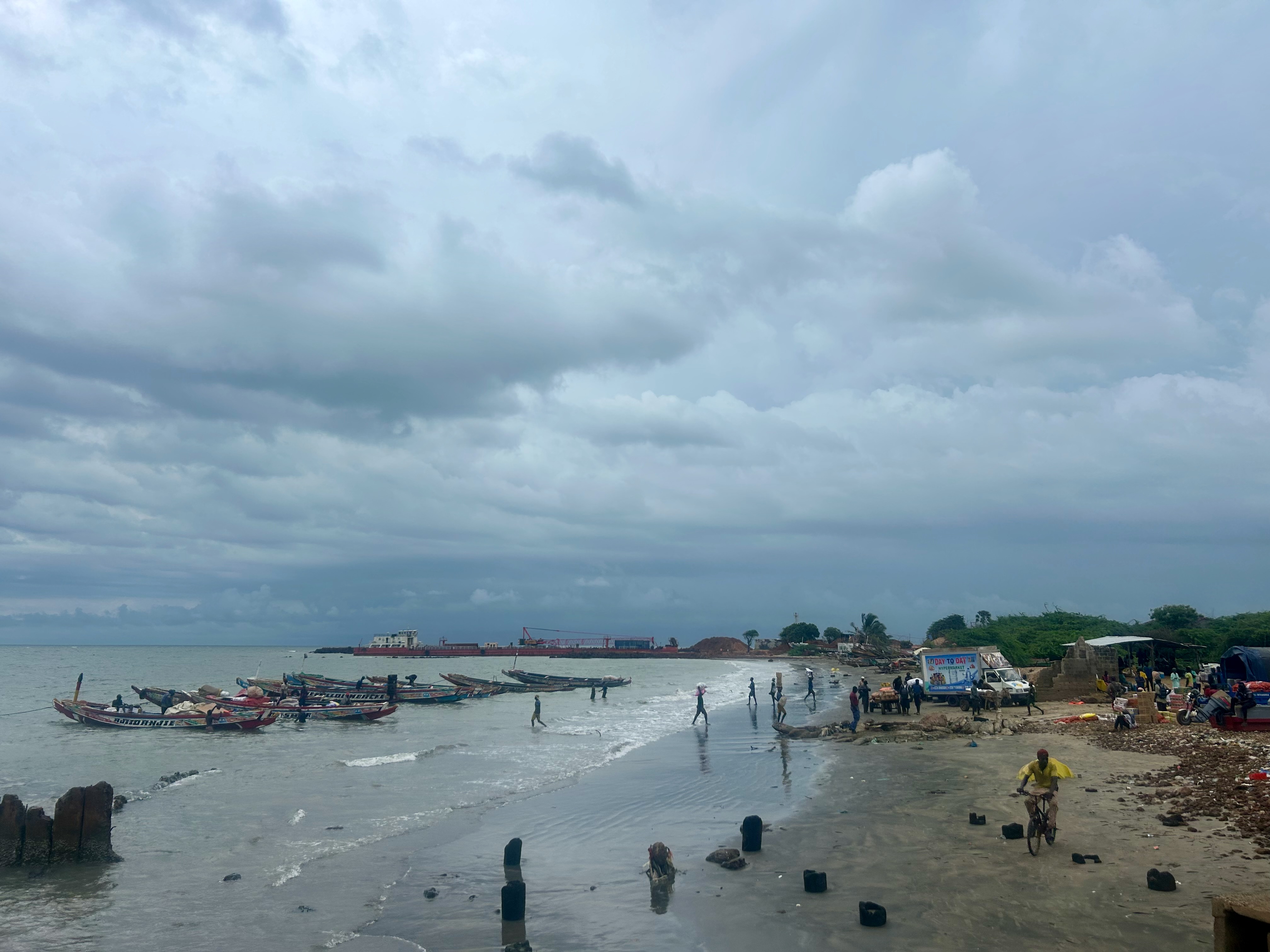
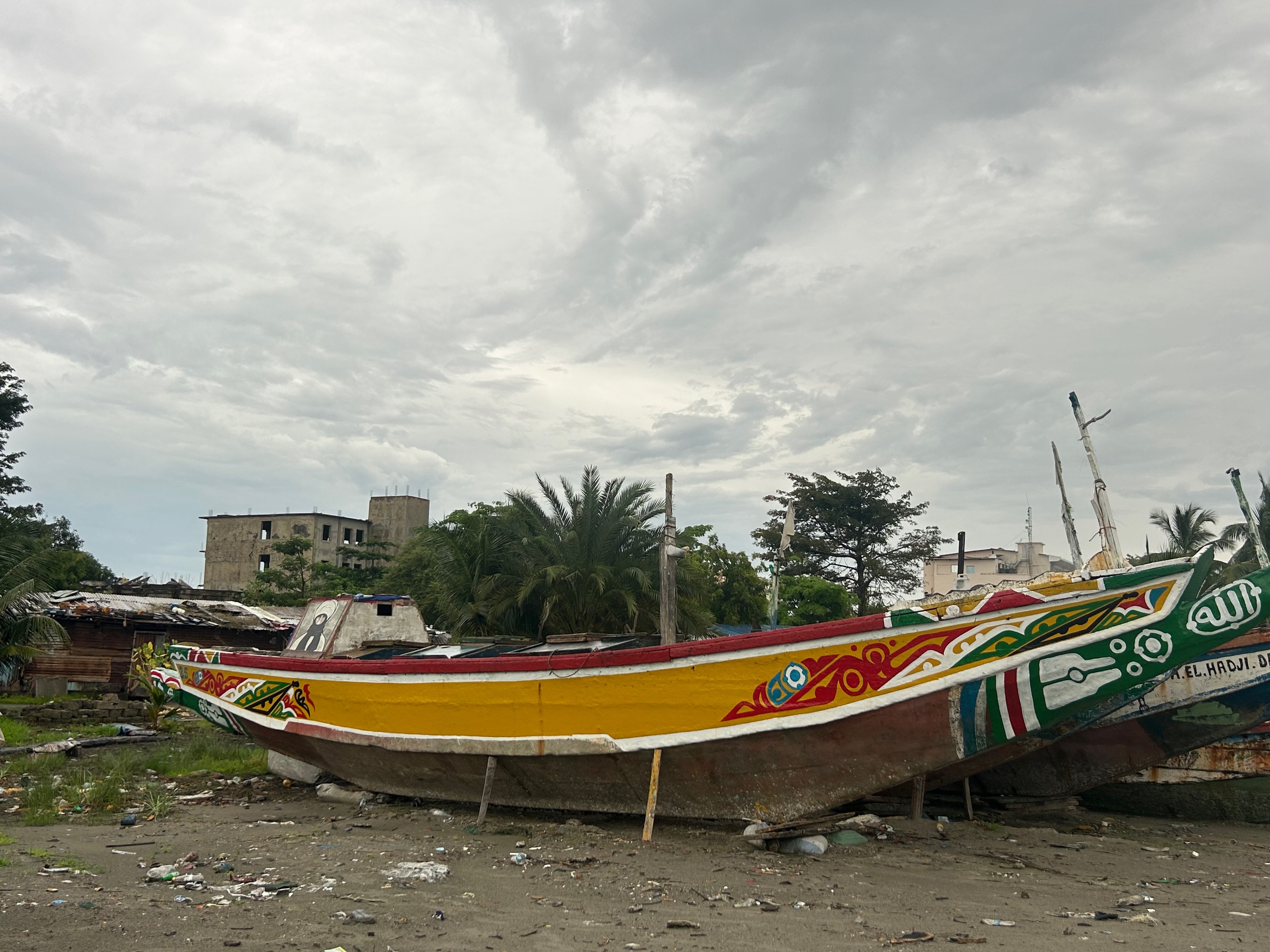
Kayce pointed out many smaller boats carrying cargo. Men walked back and forth with sacks of rice and other goods balanced on their heads. The boats were so colorful!
As we finally boarded the ferry, the rain poured and everyone huddled together on the packed‑to‑the‑brim ship. A truck in front of us had a tiny sheep in the back along with two guys.
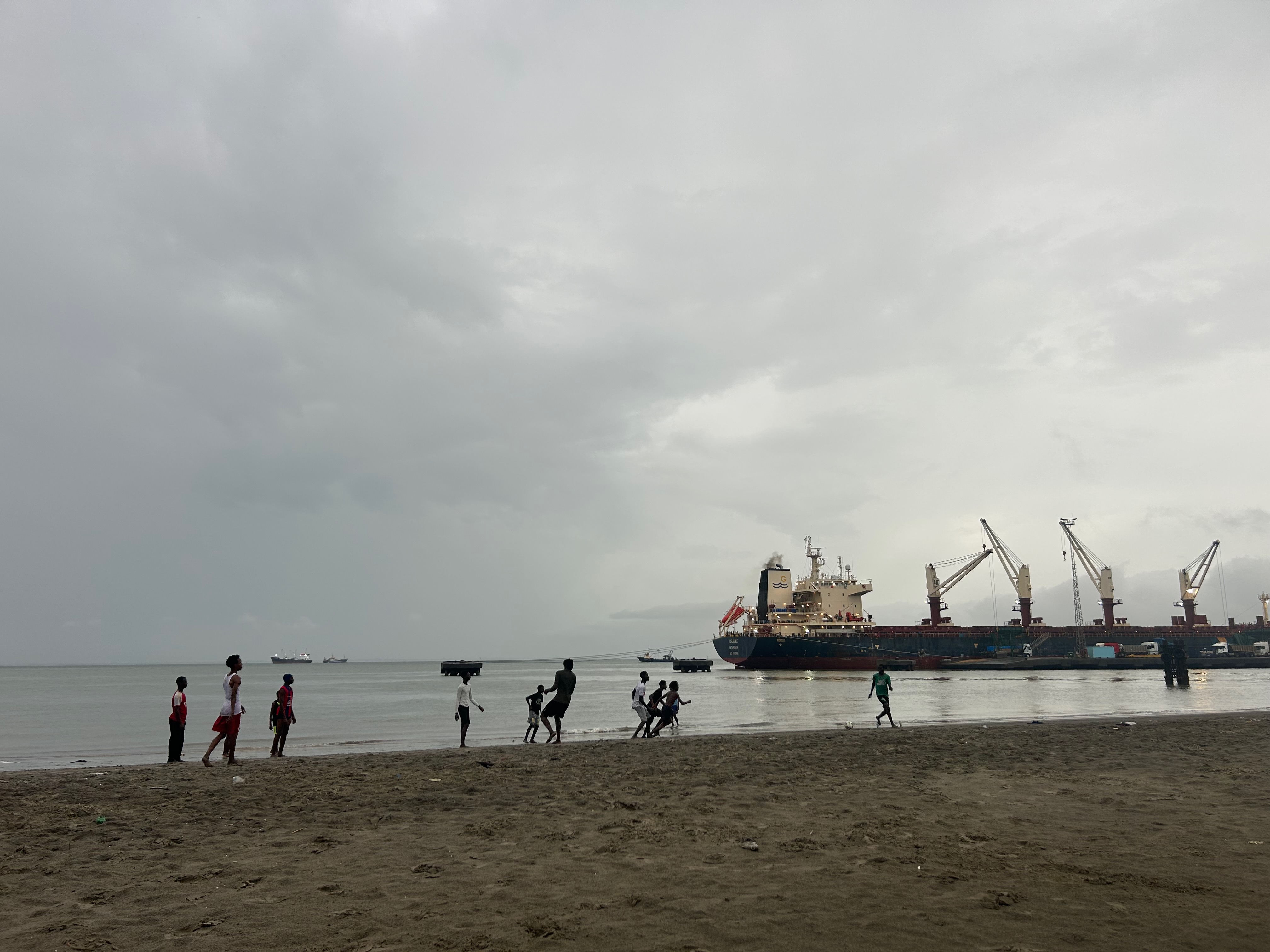
Back on the Banjul side of the river, we saw kids playing soccer on the beach with the sunset as a backdrop. What a beautiful view!
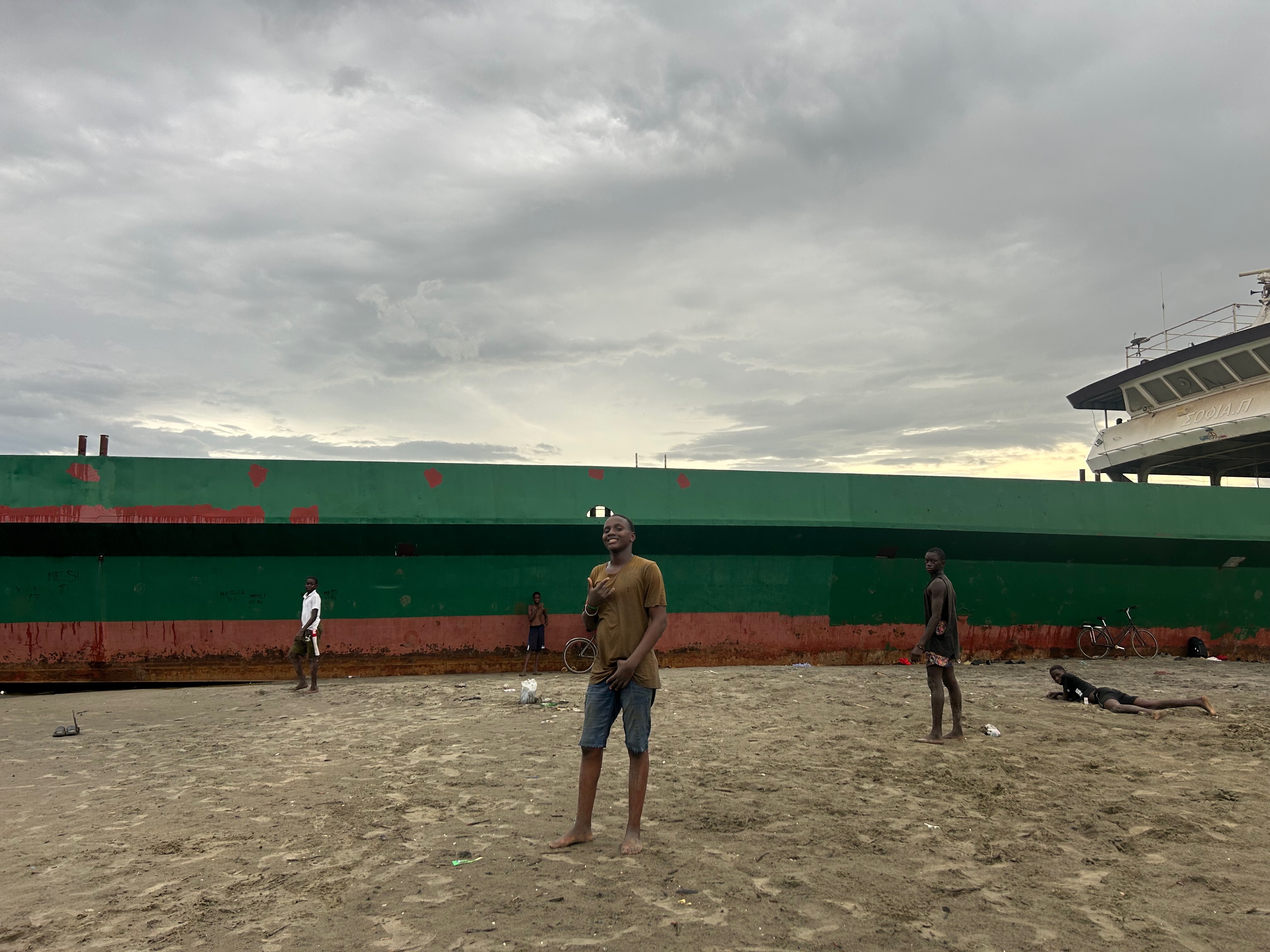 Right: He asked me to take a picture of him, and I told him I would remember him forever.
After such a wonderful day with Kayce, I called it a night.
I walked a few minutes to the Atlantic and had domoda, a peanut‑based local staple.
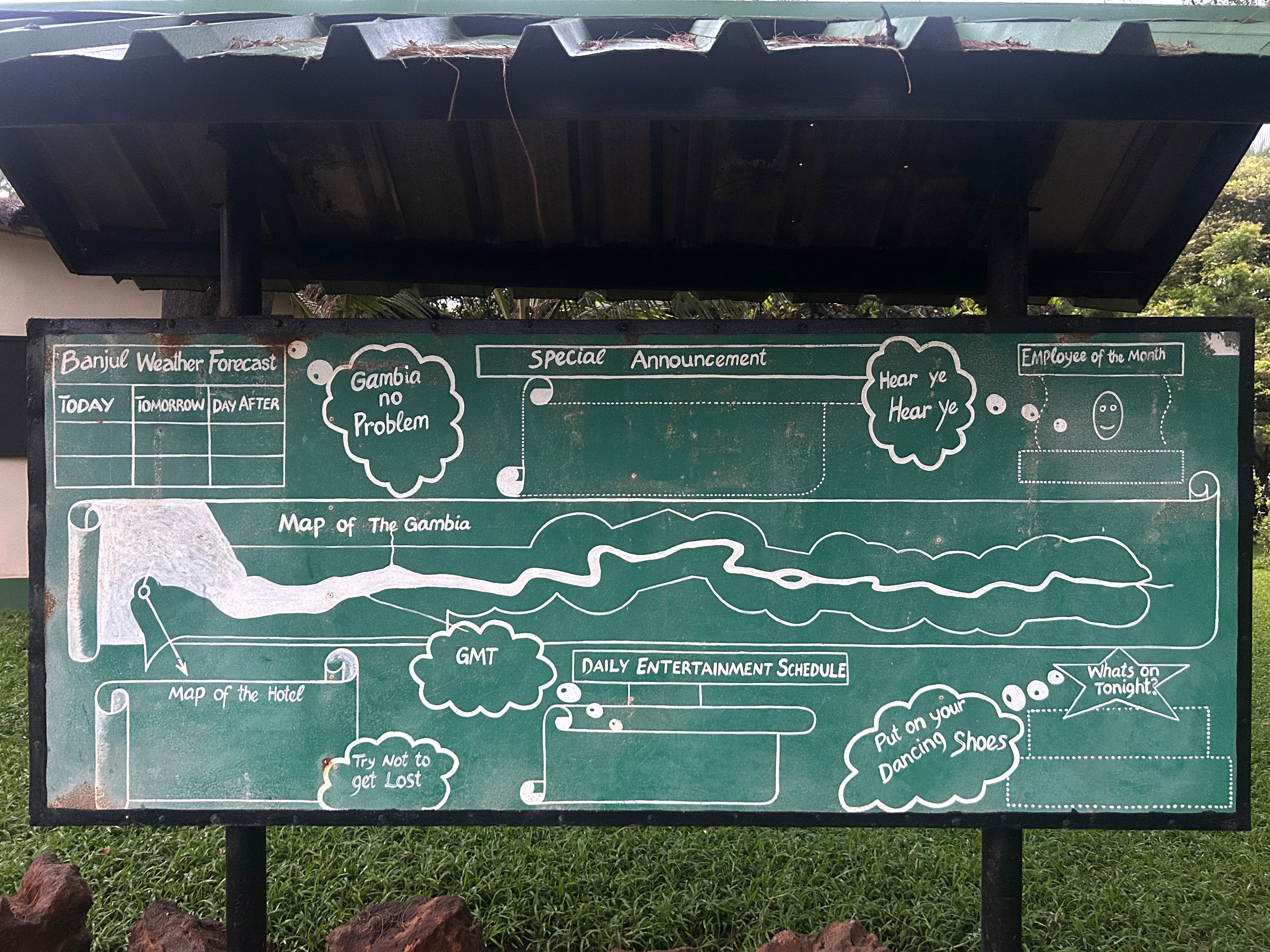
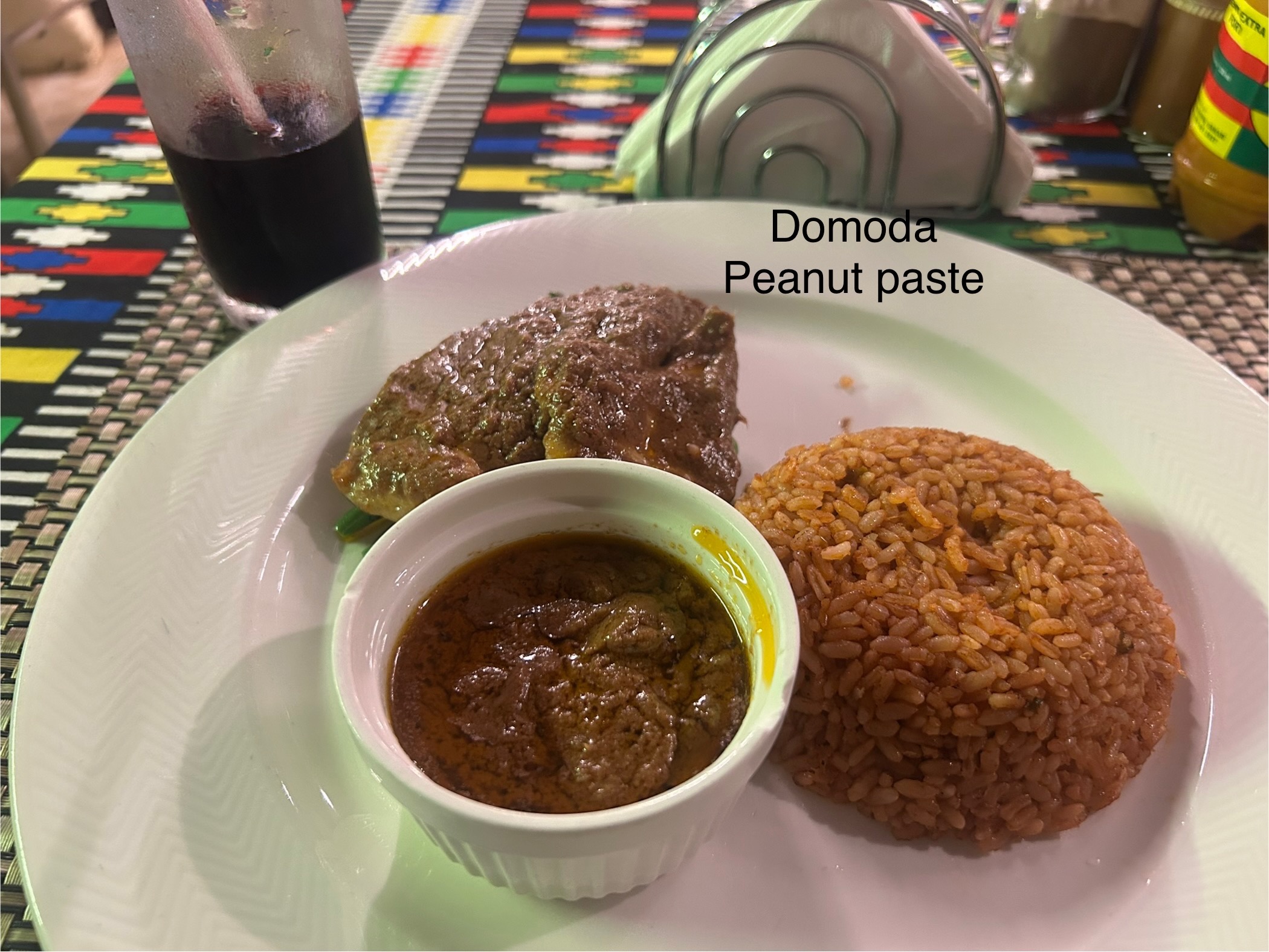 The drink is called bissap (hibiscus). Another popular option is baobab juice.
Day 2: Banjul and Initiation Ceremony
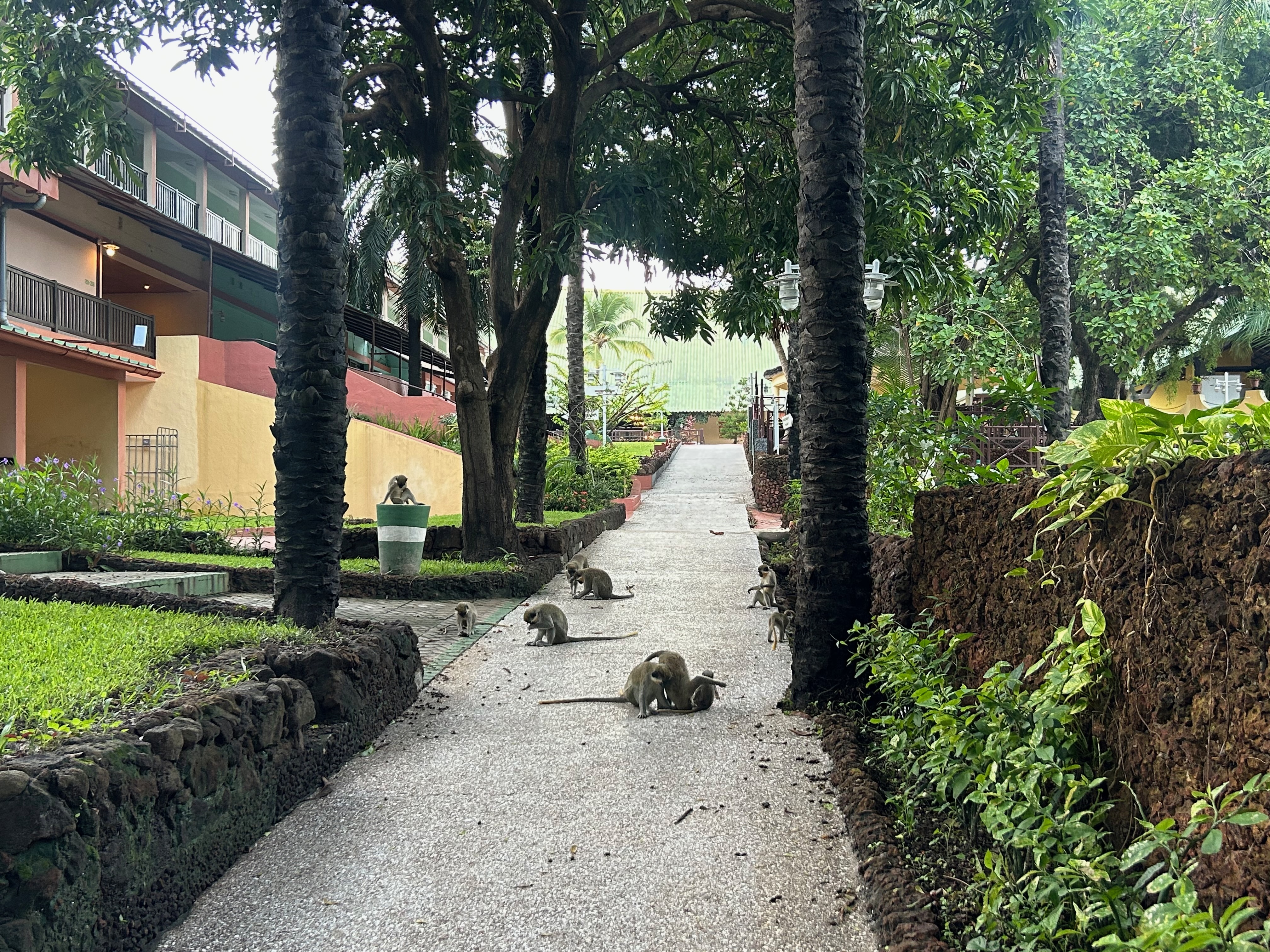
I woke up to some surprise guests on my way to breakfast. The hotel had very few guests because of the wet season, so I guess new ones popped up on their own. Today, I was taking a half-day tour to some tourist places around Banjul and Serekunda.
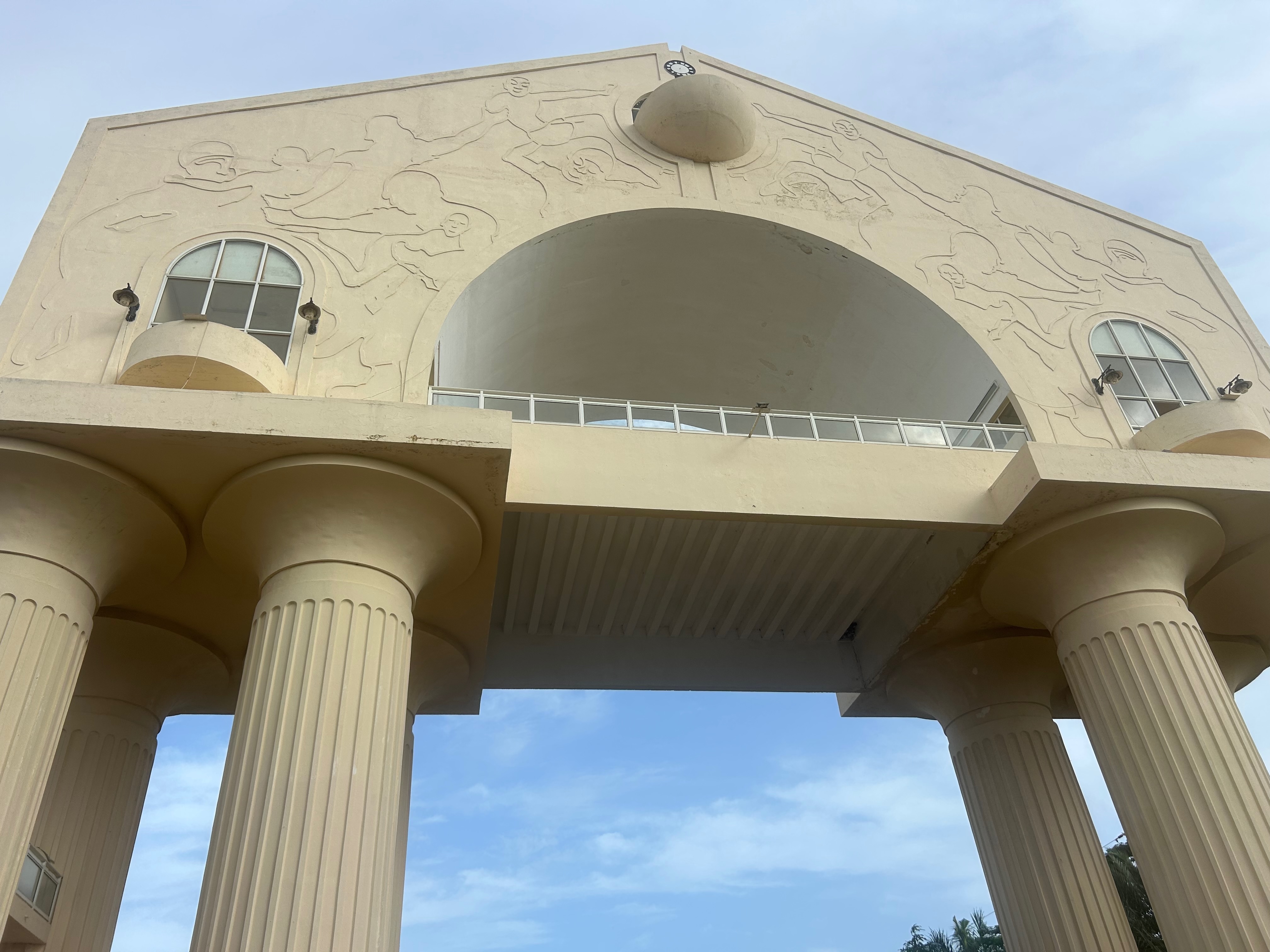
Pablo, my tour guide, and I drove to Arch 22. On the way there, we saw many vultures hanging out on the streets.
We climbed up the arch, named for the July 22, 1994 coup. The view of the city, the mosques, and the houses was amazing; Banjul sits on St. Mary’s Island, connected to the mainland by causeways and bridges.
At the very top there was a small museum detailing the events, where a young lieutenant, Yahya Jammeh, staged a coup and ruled until 2017.
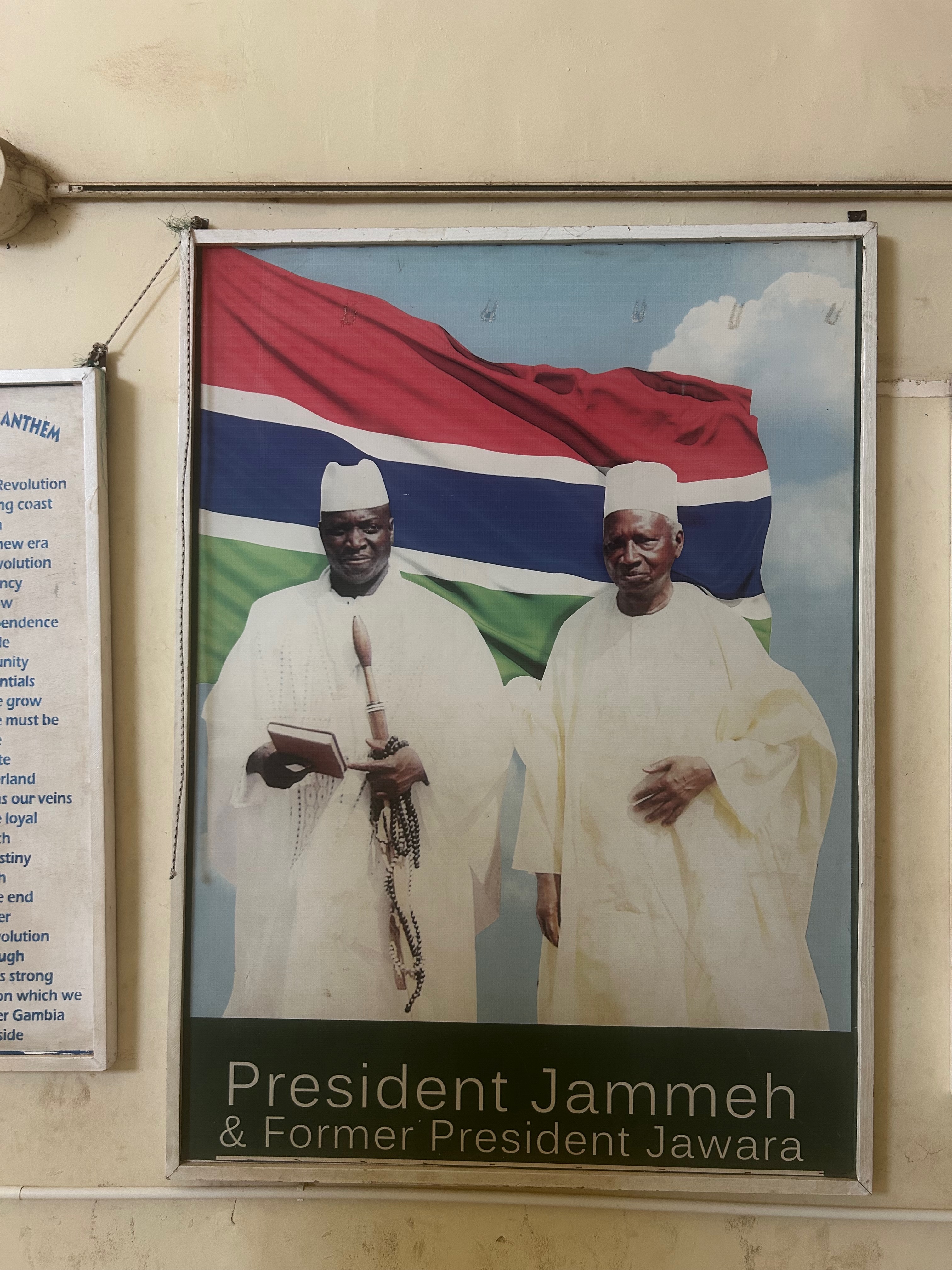
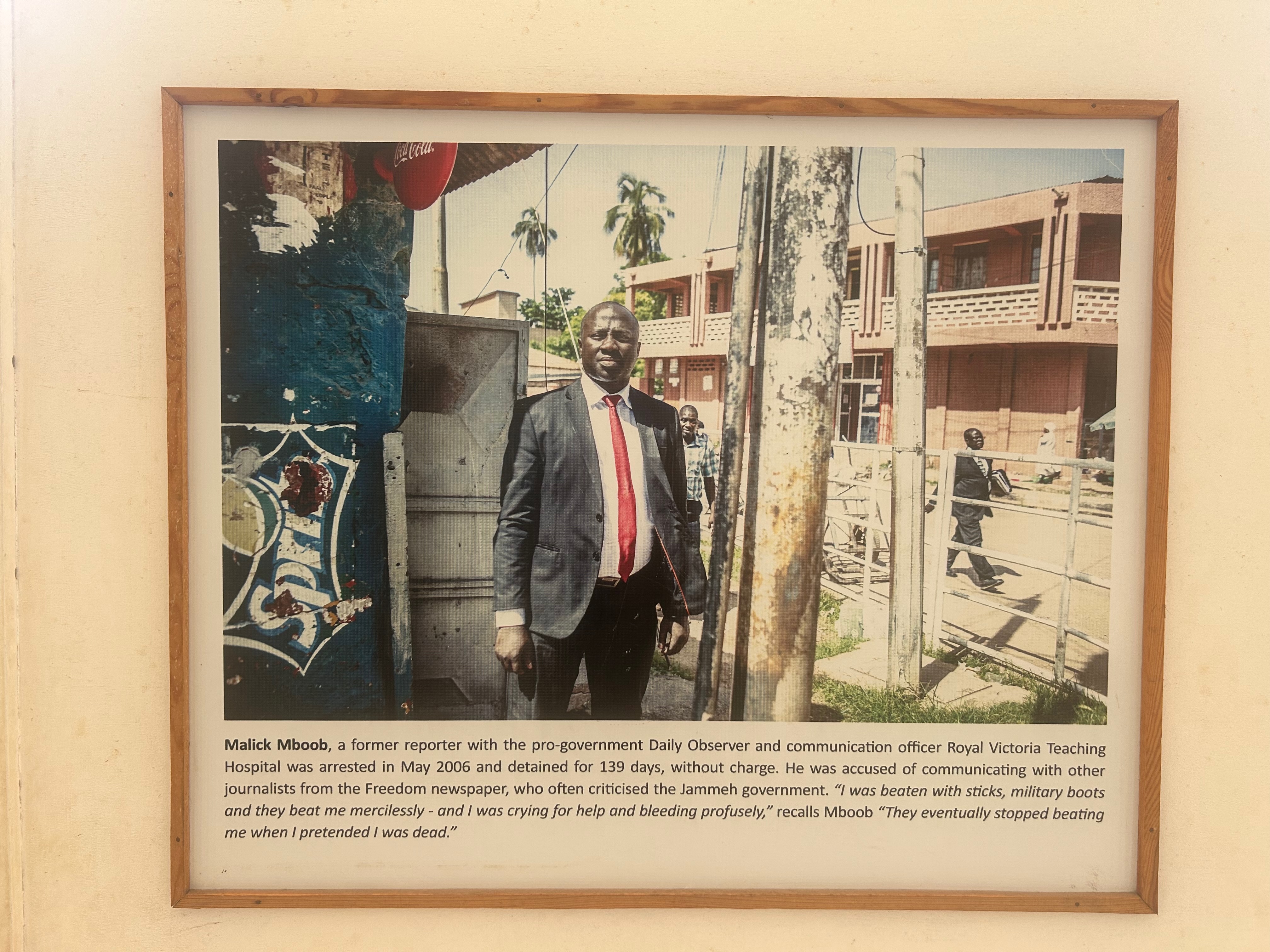 Journalists, businessmen and more disappeared in these 22 years.
Our next stop was the Kachikally Crocodile Pool and museum. We first drove to the town of Bakau, which had narrow streets and many young children.
The museum portion detailed the history of The Gambia and its many ethnic groups, like the Mandinka. I learned about spirit traditions.
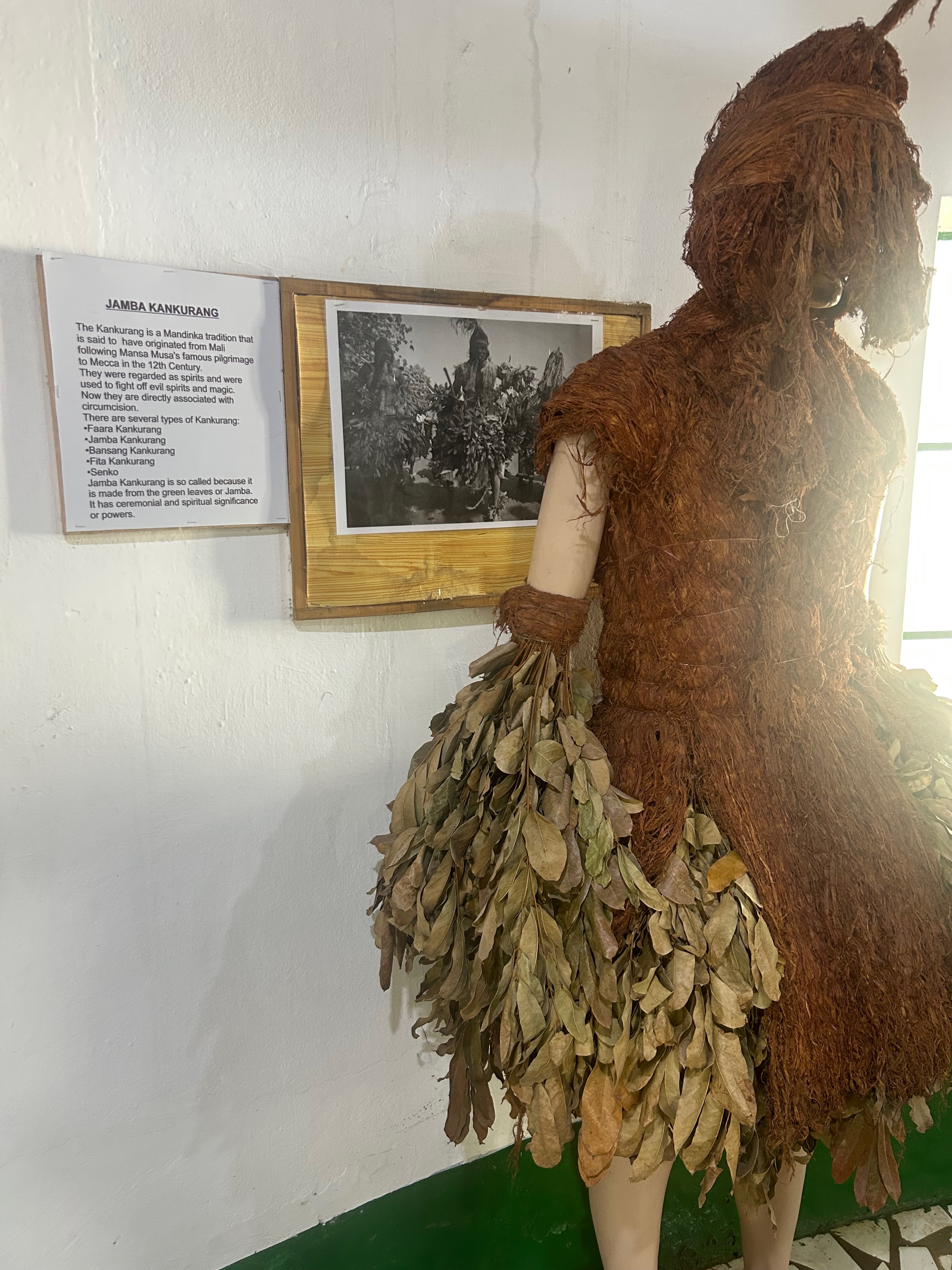
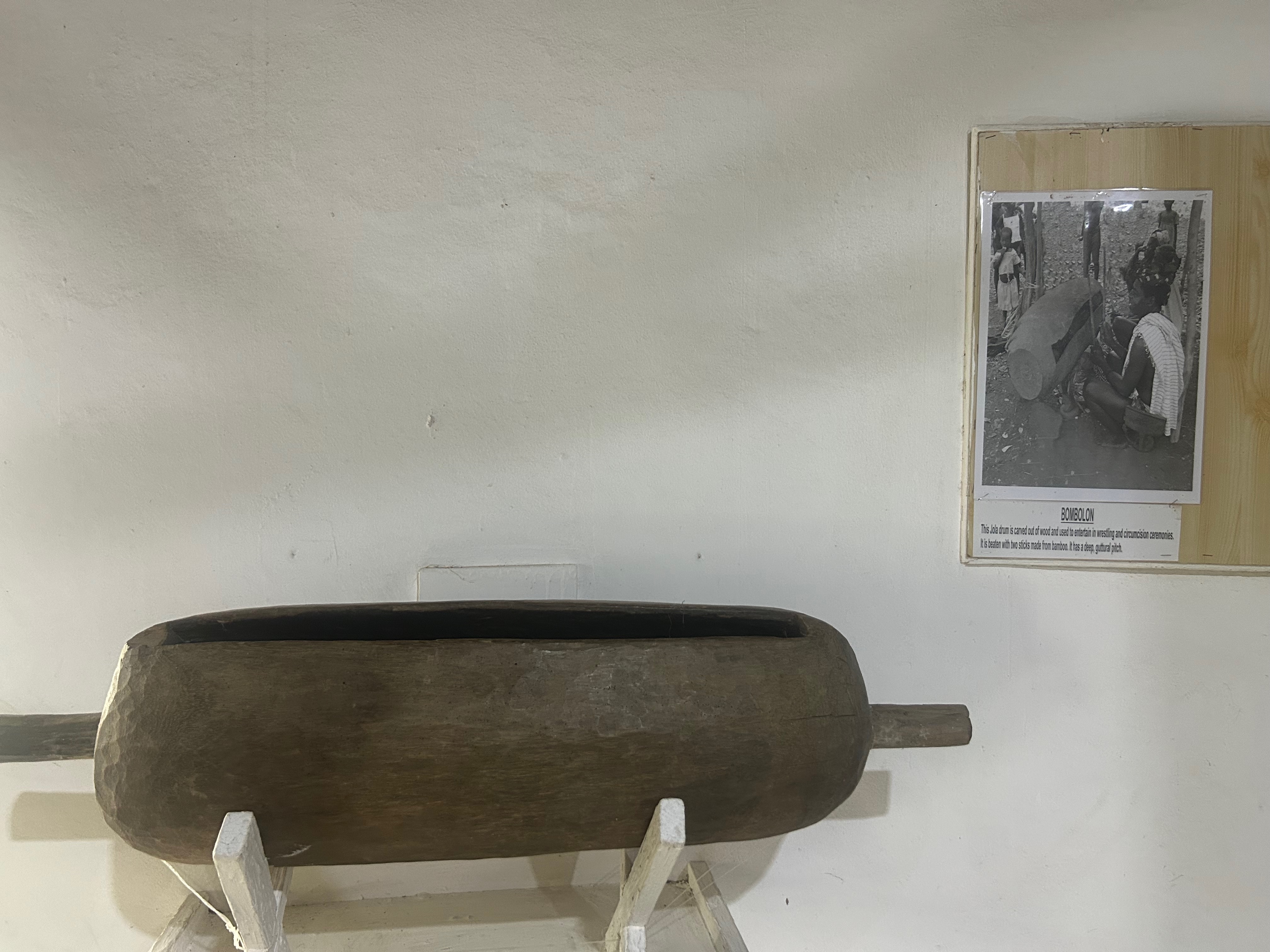 Left: The Kankurang, a revered protective spirit in The Gambia; Right: Jola drum
There were many details about initiation traditions, including male and female circumcision. Boys go with their elders into the bush for weeks of manhood lessons.
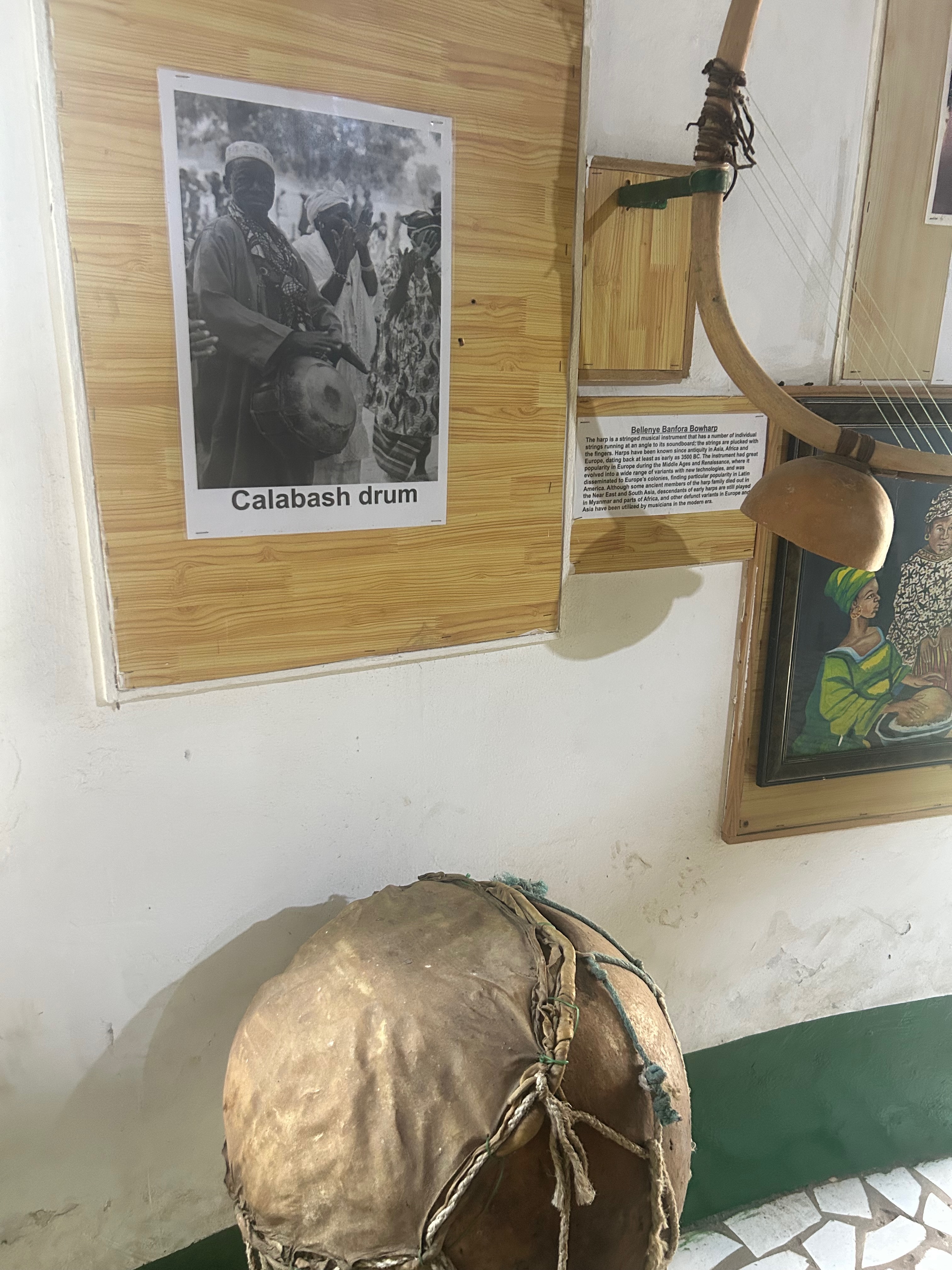
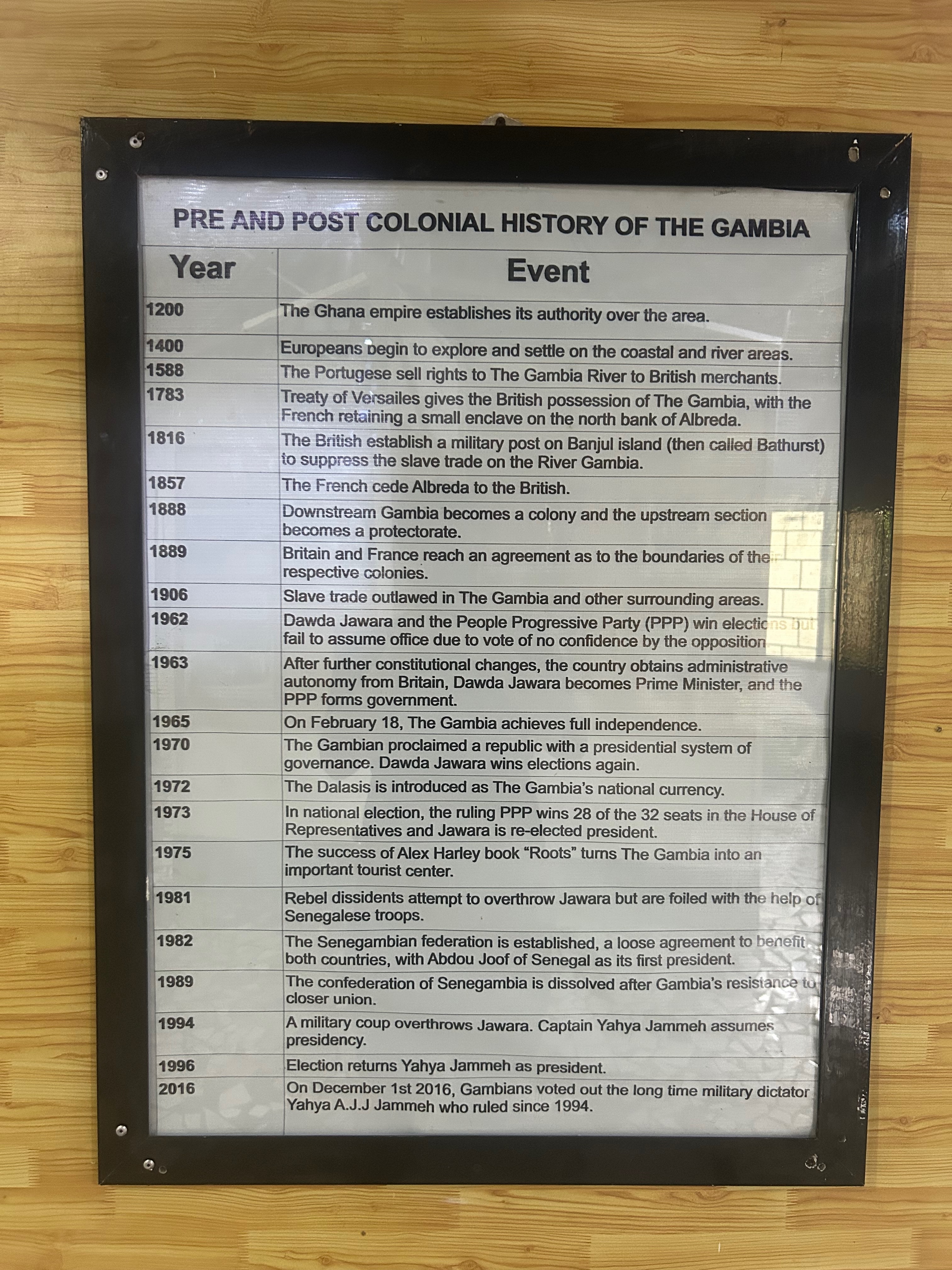 Left: Calabash; Right: Being a former British colony, Gambian soldiers fought in Burma?
We then visited the crocodile pool, where the crocs are fed fish, and I had the opportunity to touch a soft, scaly belly.
After leaving the pool, our next stop was the Serekunda market. Serekunda is the biggest city in The Gambia, and the market was a fantastic and crazy experience.
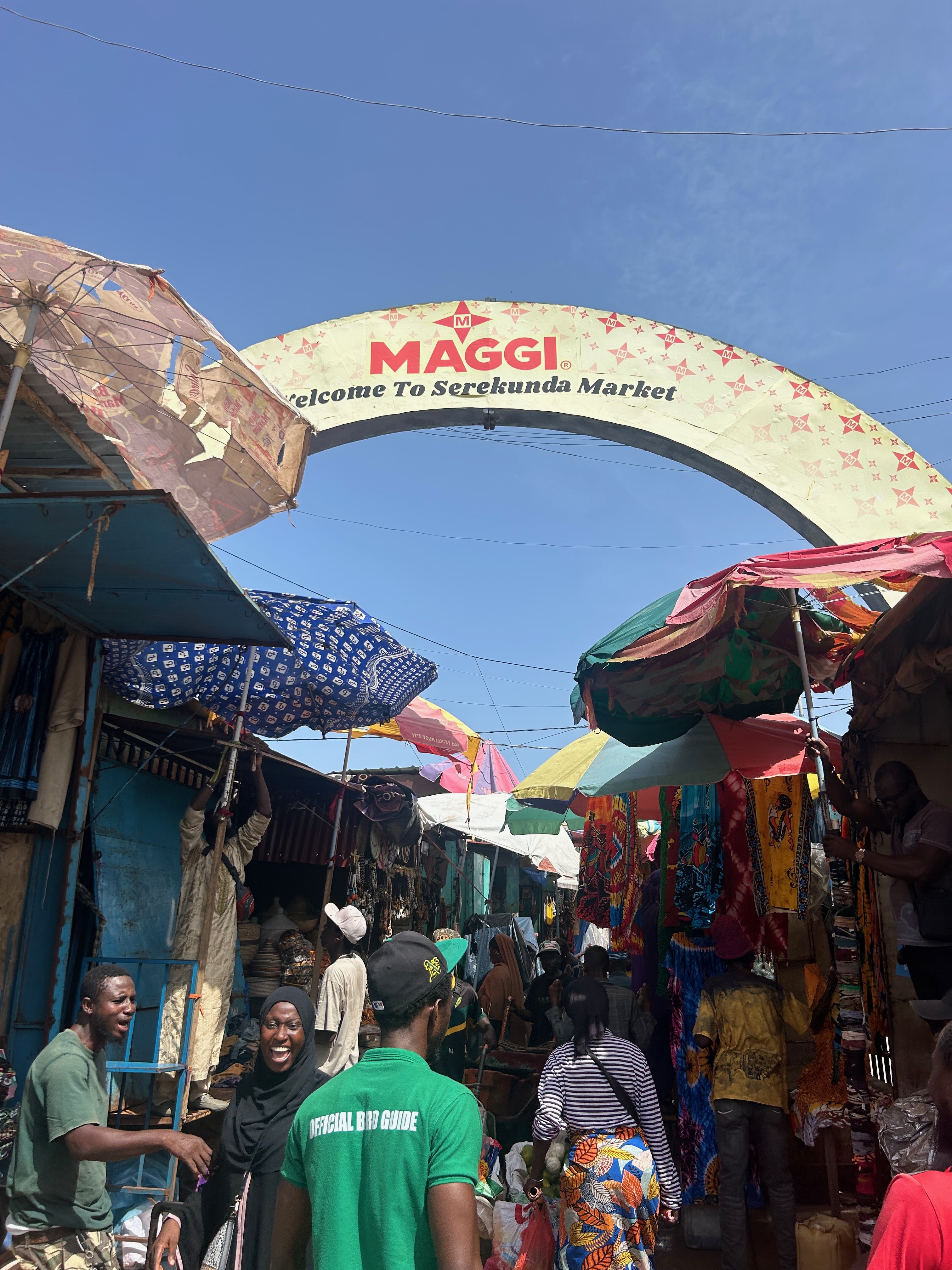
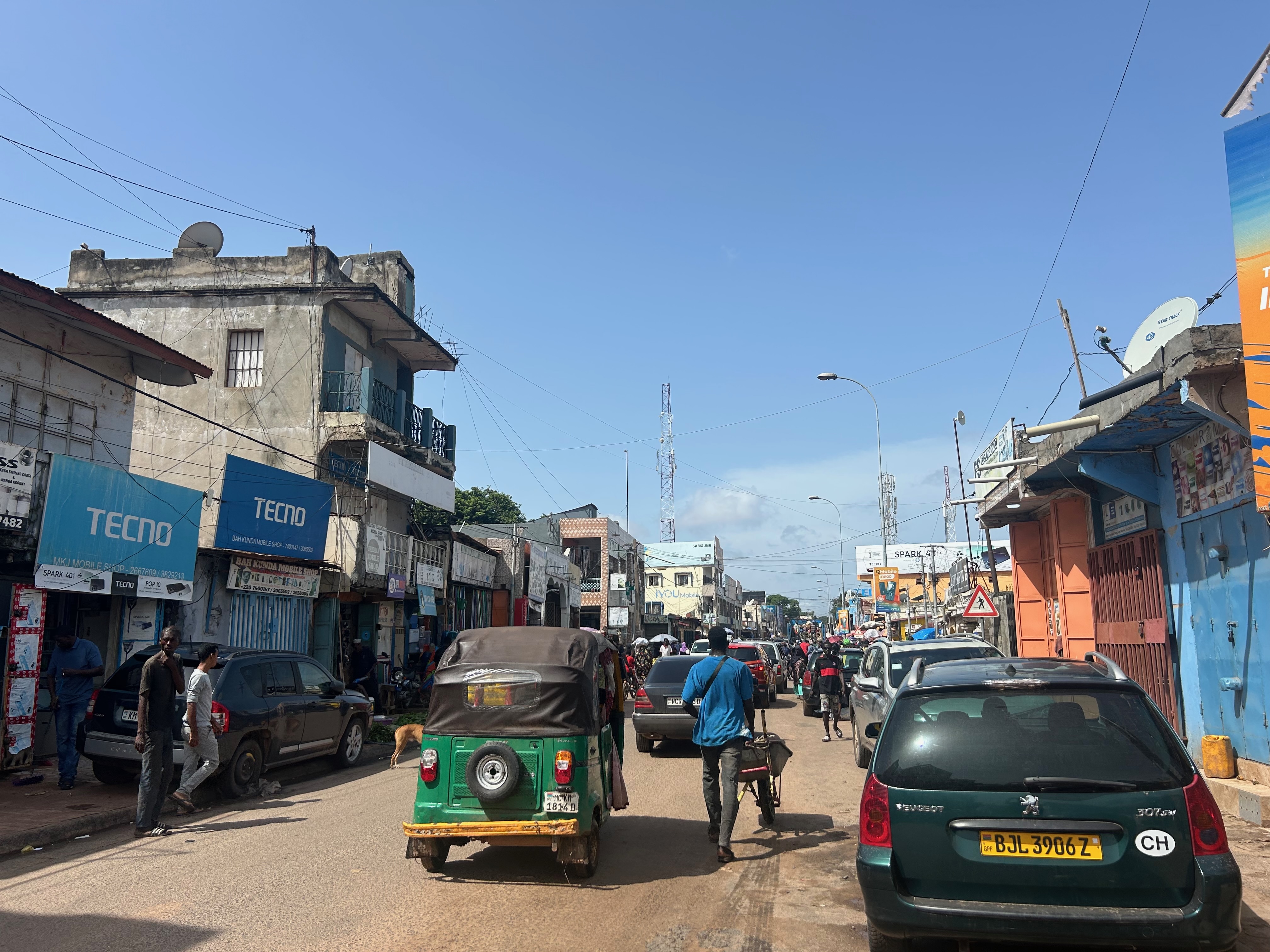
I ended up buying a traditional kora and a batik shirt.
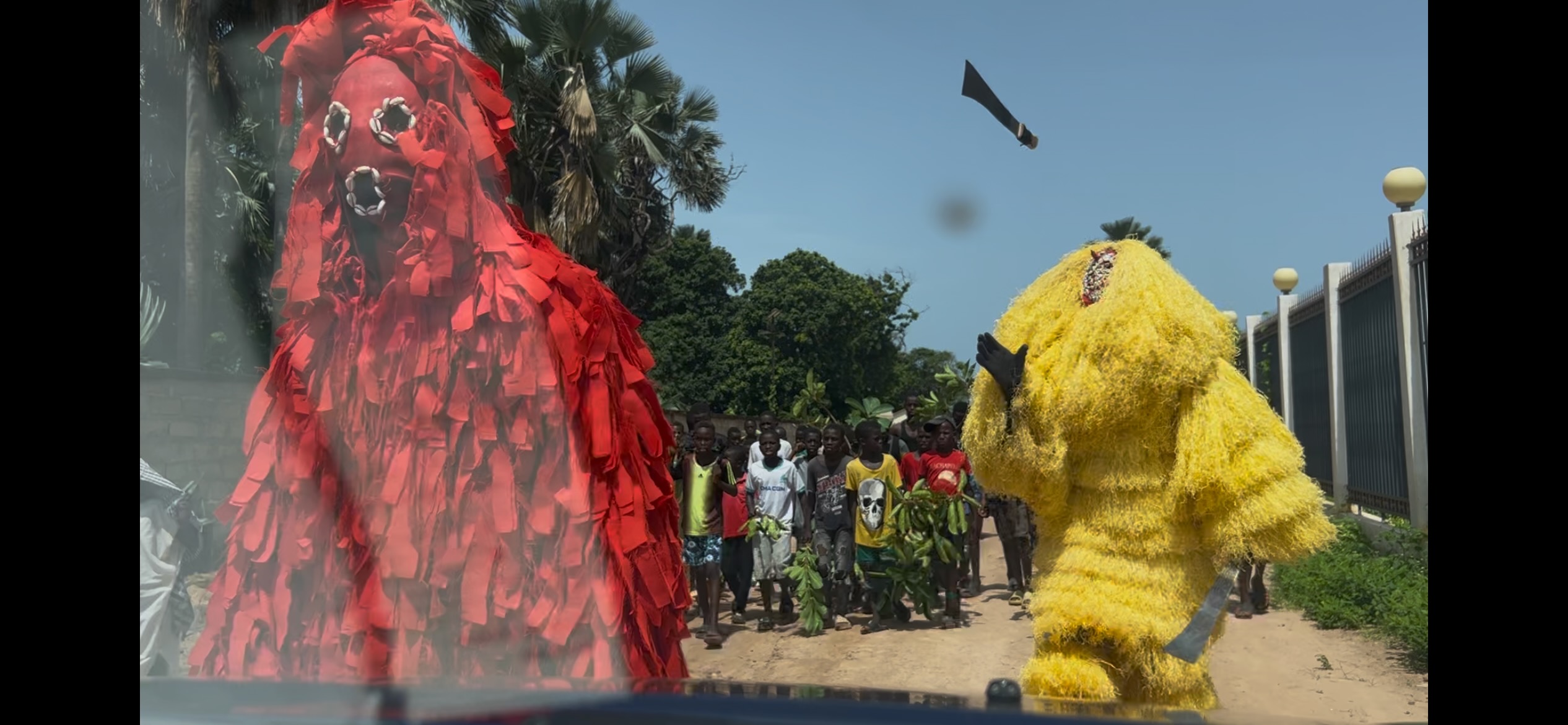
As we left Serekunda and drove toward the monkey sanctuary, we ran into a mass of folks walking toward us. One wore a pink costume, playing the role of the Kankurang spirit. Another boy made loud noises.
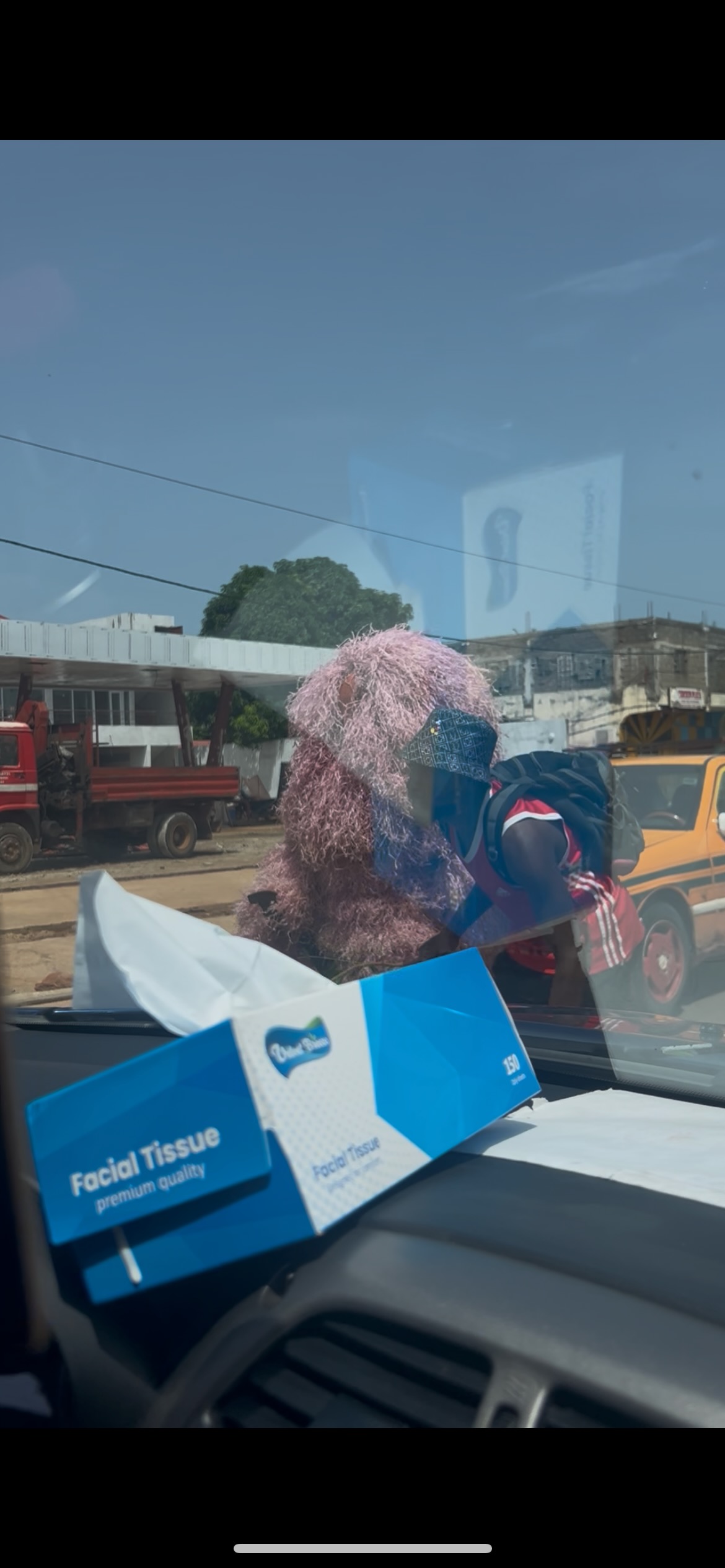
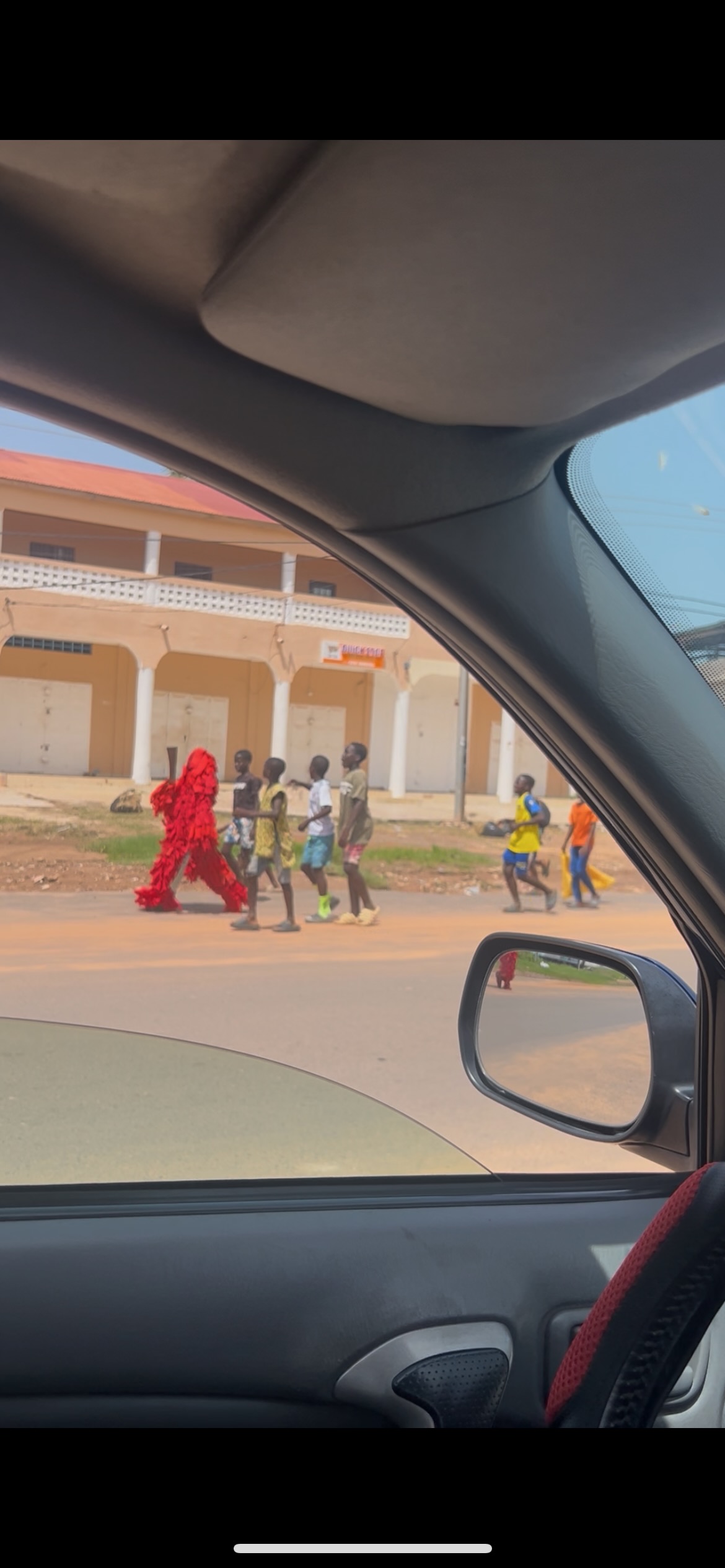
A boy walked to the car and Pablo gave some small change, explaining that this was a boys’ initiation procession. They were walking toward the saltwater (Atlantic Ocean) to clean the wound, as they explained is tradition.
Our final stop was the monkey sanctuary, where monkeys are free to come and go. There are two species here: green vervet monkeys and Western red colobus.
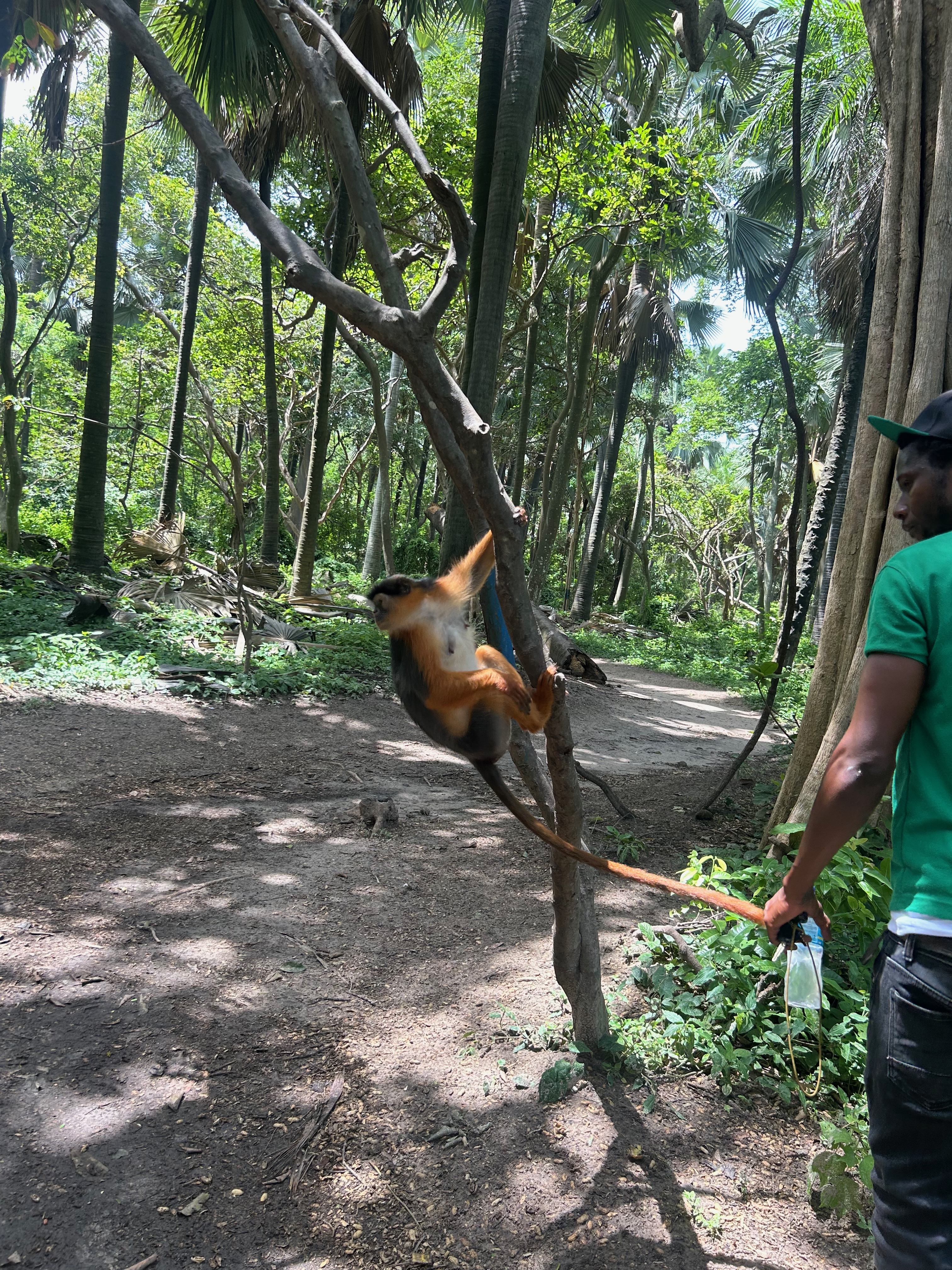
We bought some bananas. Pablo instructed me to stand still and hold my hand close to my chest. Sure enough, a monkey jumped onto my shoulder and ate the banana.
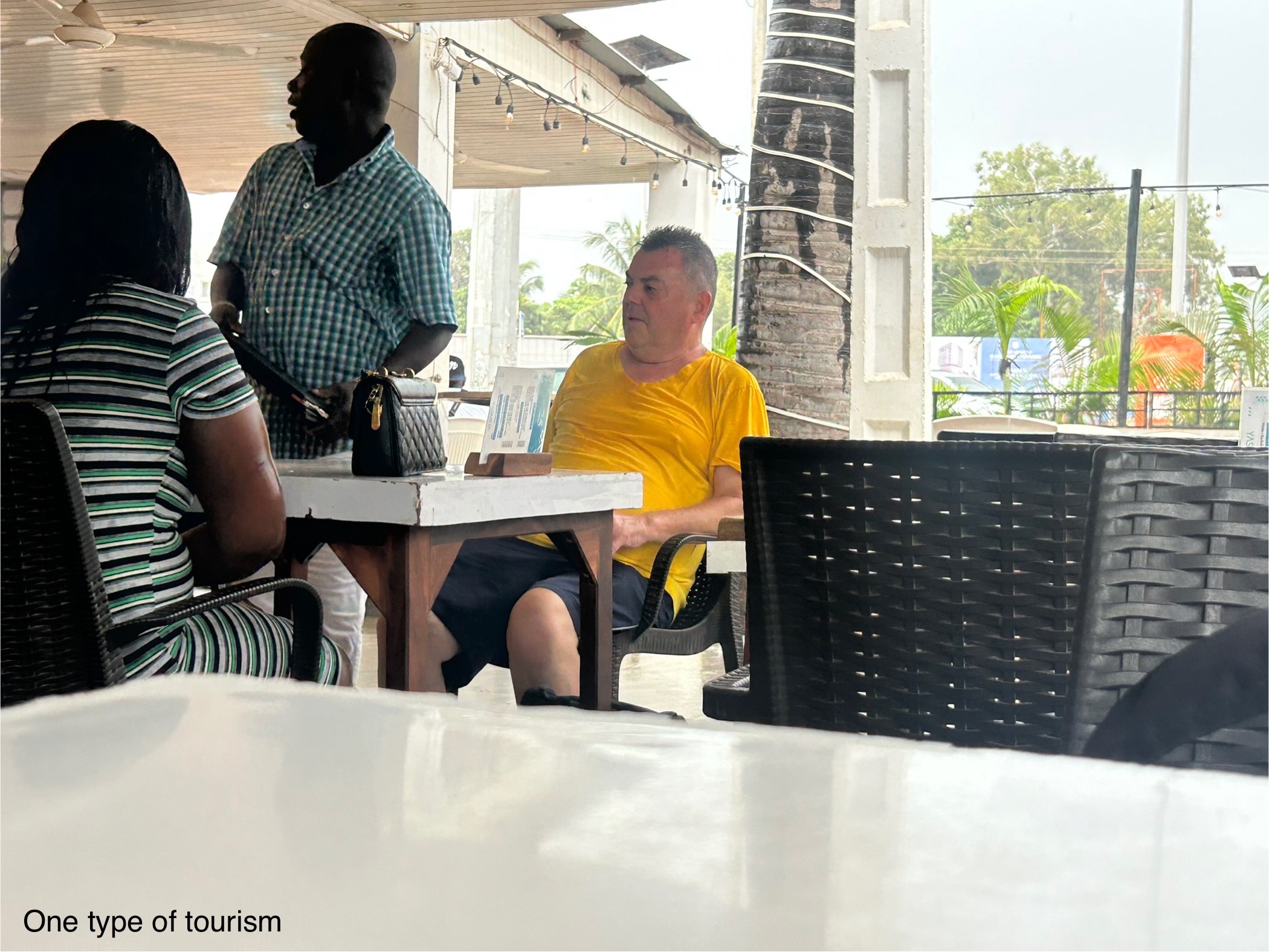
After the tour, I spent the afternoon at the local fancy mall with A/C, a welcome shelter from the heat. In the pastry shop, I witnessed the oft‑discussed dynamic between older European women and younger Gambian men.
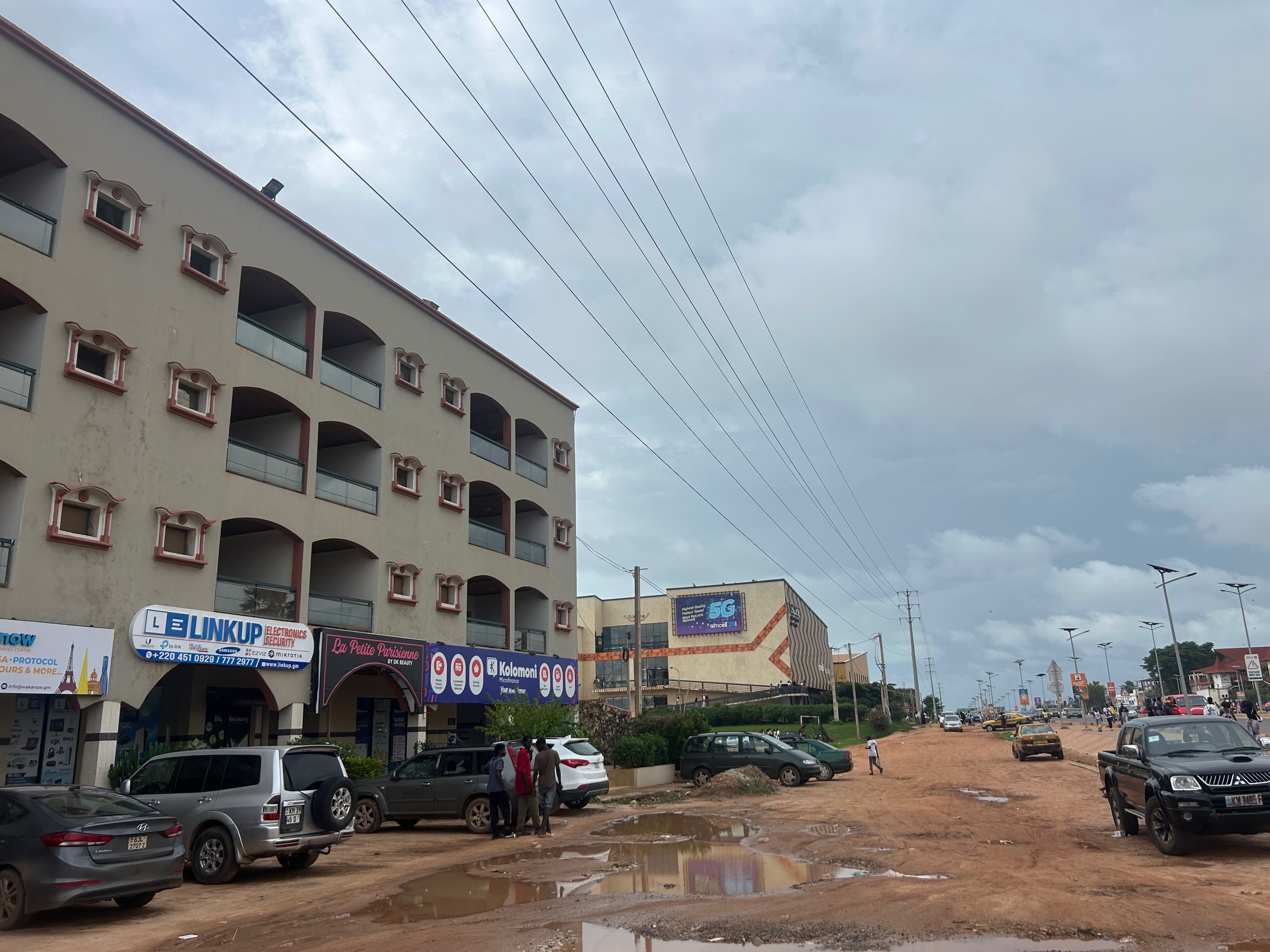
As evening approached, I ate my final meal in The Gambia with a baobab drink. The rain started again and I enjoyed the view of the Senegambia Strip in the early evening rain.
[Receive future updates]