Nicaragua Rice n Beans
 Nicaragua | Country 35 | 5 day |
Nicaragua was such a highlight of my time in Central America, from the volcanoes, to the colonial culture, and from the flavorful vigorón to the traditional El Güegüense masks. I am so happy to share more about this trip.
- Gallo Pinto is the national dish (as with Costa Rica), and I literally had the beans every single day here.
- It is completely normal for people to be transported by horses here on paved roads.
- I really wanted to visit the Masaya volcano, but unfortunately, it was closed at the moment due to activity.
- This country has a troubled past with the USA. It was overthrown and governed by the USA in the early 1900s for attempting to build a canal to rival the Panama Canal.
- The present government, FSLN, is named after Augusto Sandino, a martyr who was killed while fighting for independence from the US. It has many positive aspects, such as beautiful roads that contrast sharply with those in Honduras, but also exhibits authoritarian tendencies, as seen in the events of 2018.
- Crime here is significantly lower than in its neighboring countries. (Looking at you, Honduras and El Salvador!)
Managua Airport
Arriving in the early morning, I had a Gallo Pinto (rice and beans) breakfast at the airport. The lack of Wi-Fi and minimal communication from the hostel’s shared bus service left me panicking, convinced I’d missed my ride.
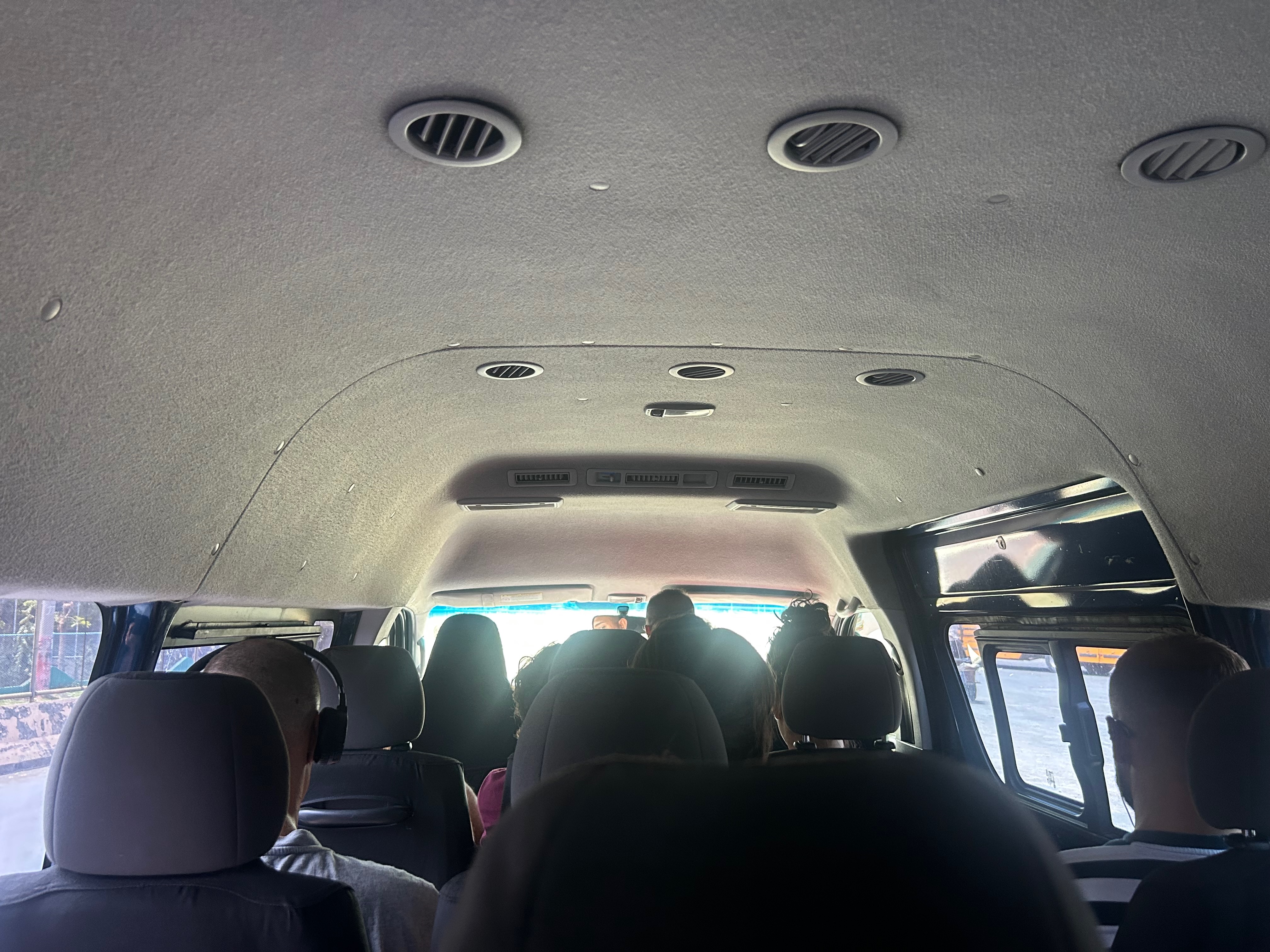
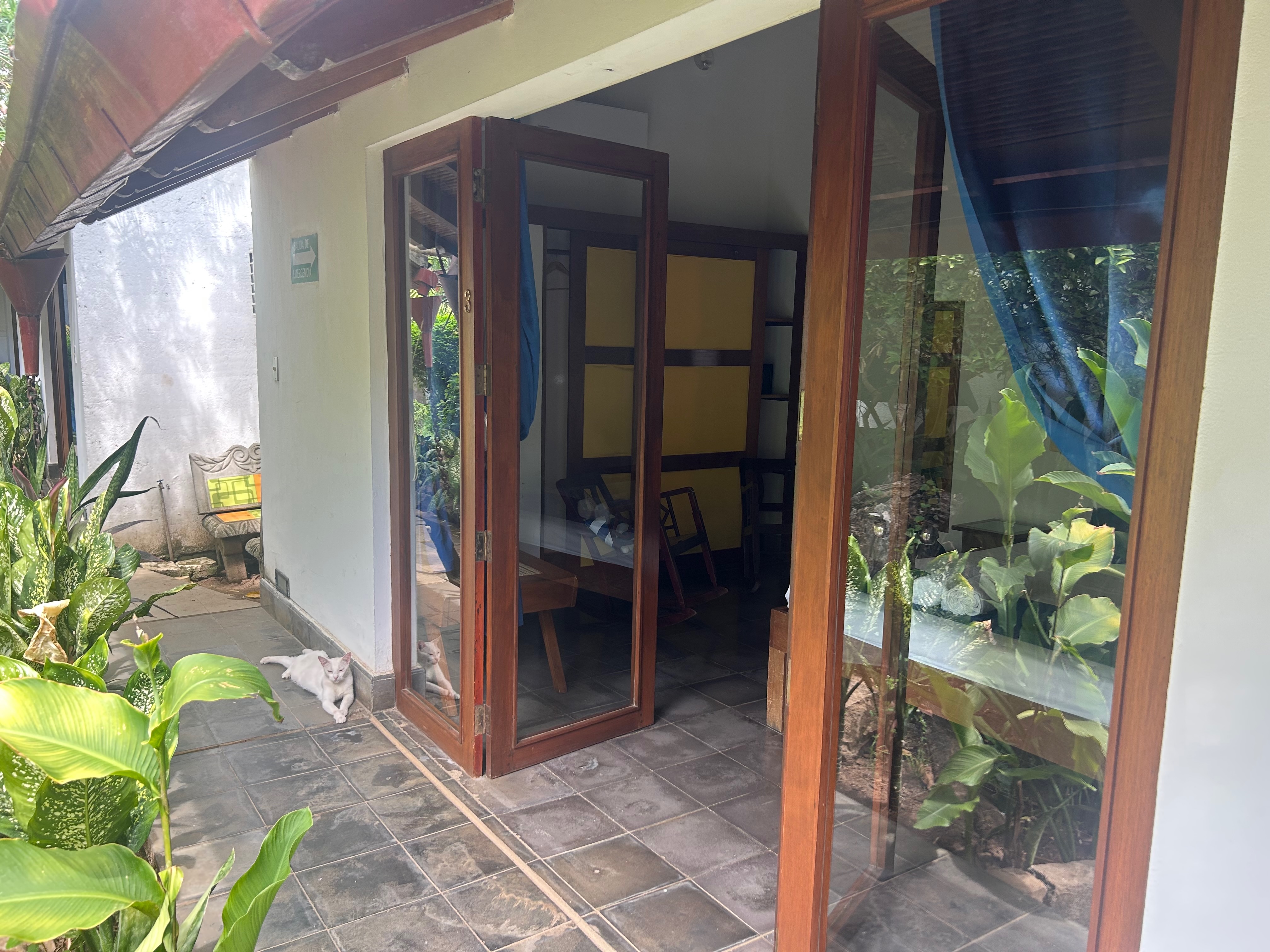
Fortunately, the bus was just late. After an hour in the shared van with around 10 other tourists, I arrived at my hotel, about a 5-minute walk from the Granada city center.
Granada, the oldest colonial city in NA
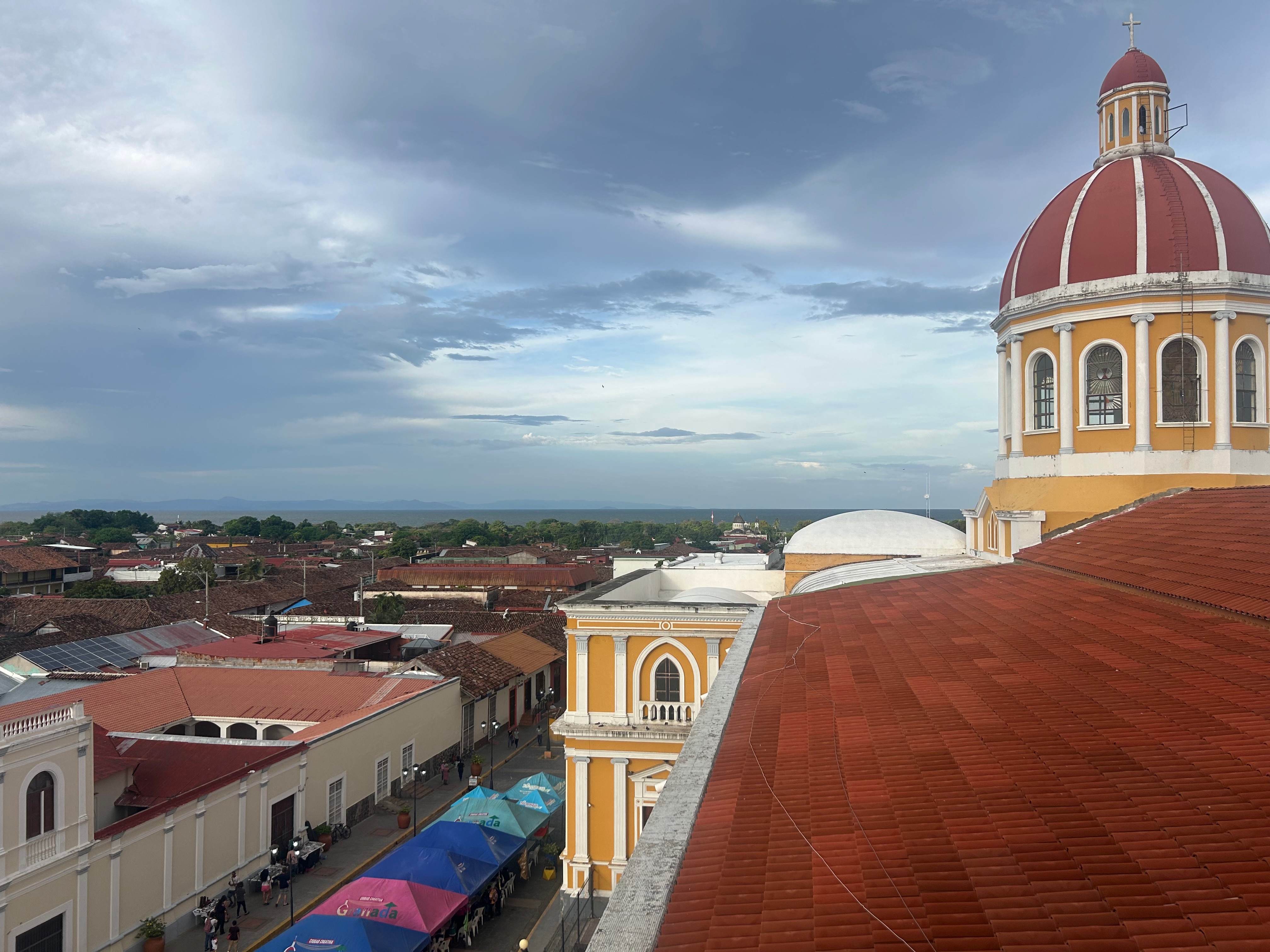
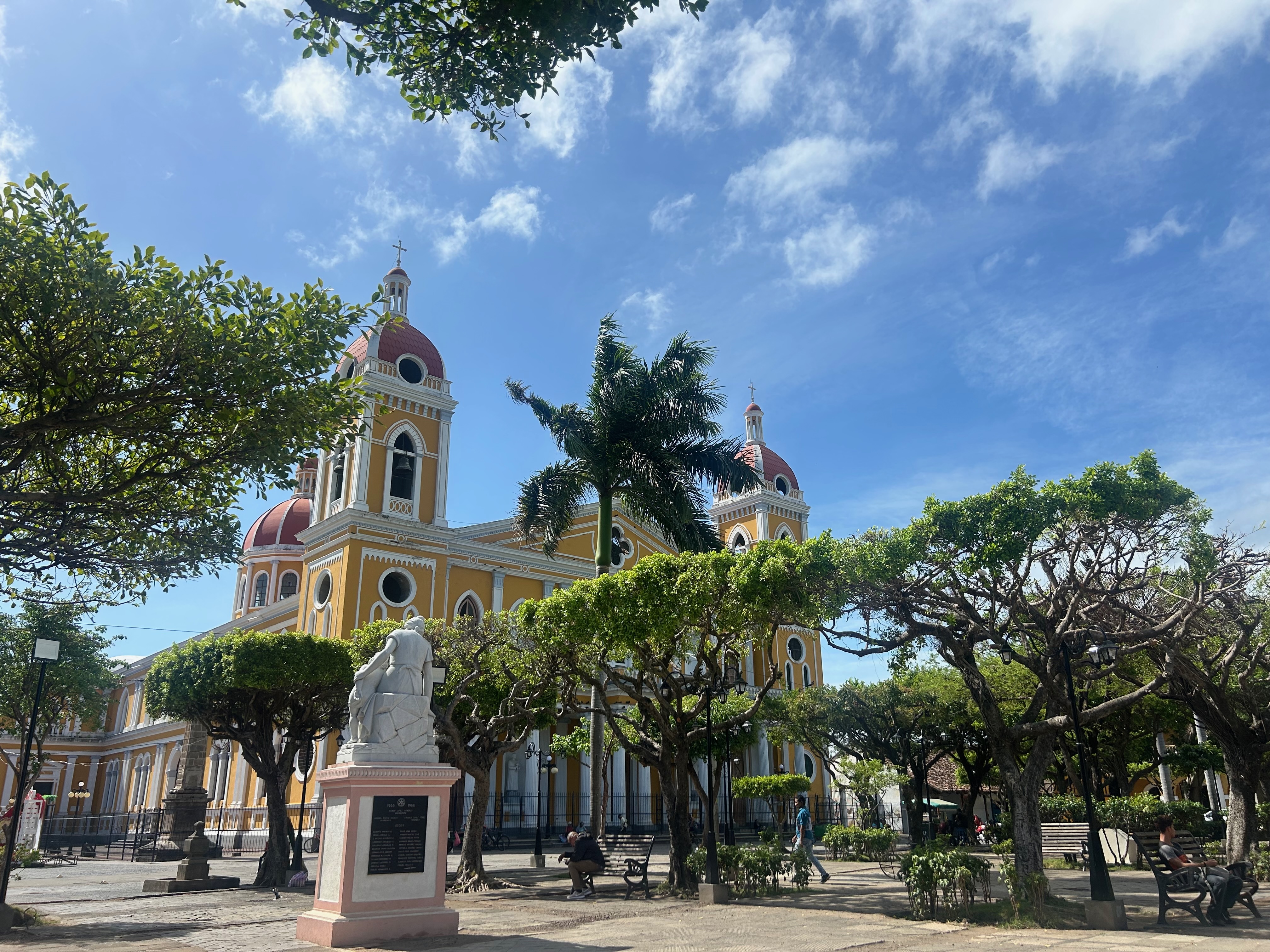
I was greeted by the charming colonial buildings of this 500-year-old city. Famous for being the conservative counterpart to the other renowned city, Leon, Granada boasts many buildings refurbished to their original colonial state. (It also helps that old Leon was burned down.)
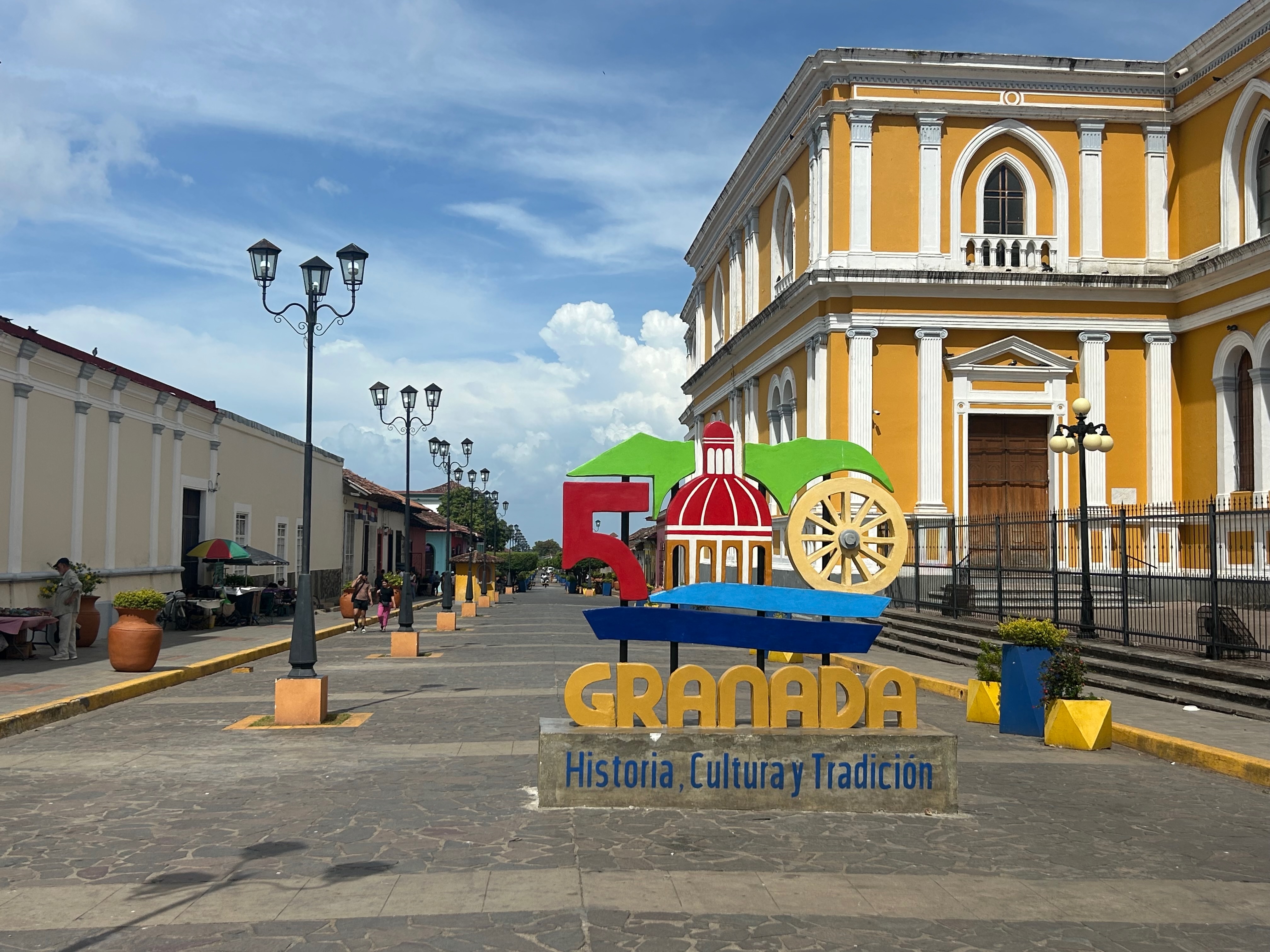
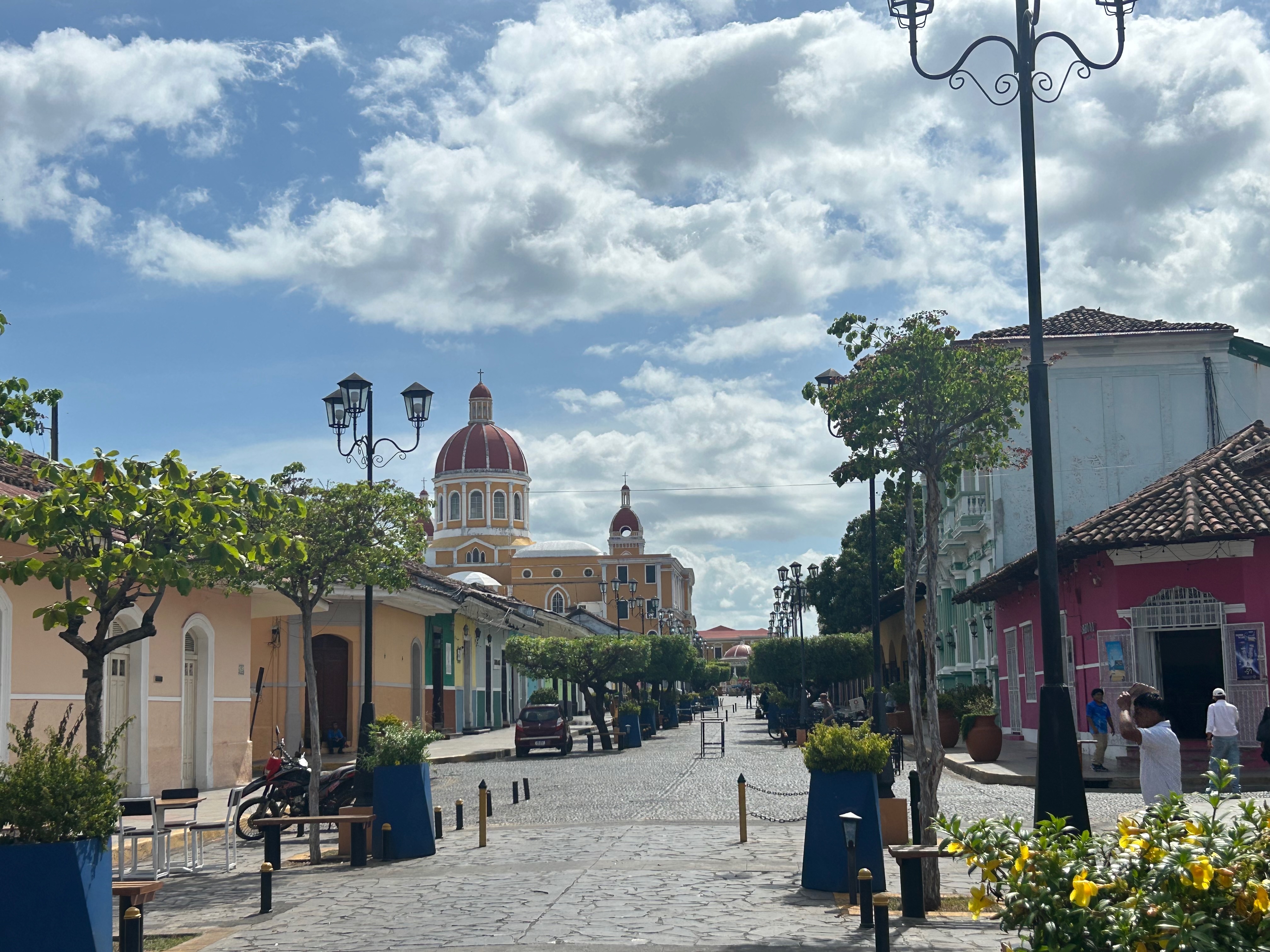
I was pleasantly surprised by the minimal Westernization (perhaps a result of political instability and low income). I heard locals discussing close ties with Venezuela and hopes for cheaper oil, which was certainly interesting.
I walked to the piers to behold Lake Nicaragua, a gigantic lake in the heart of the country.
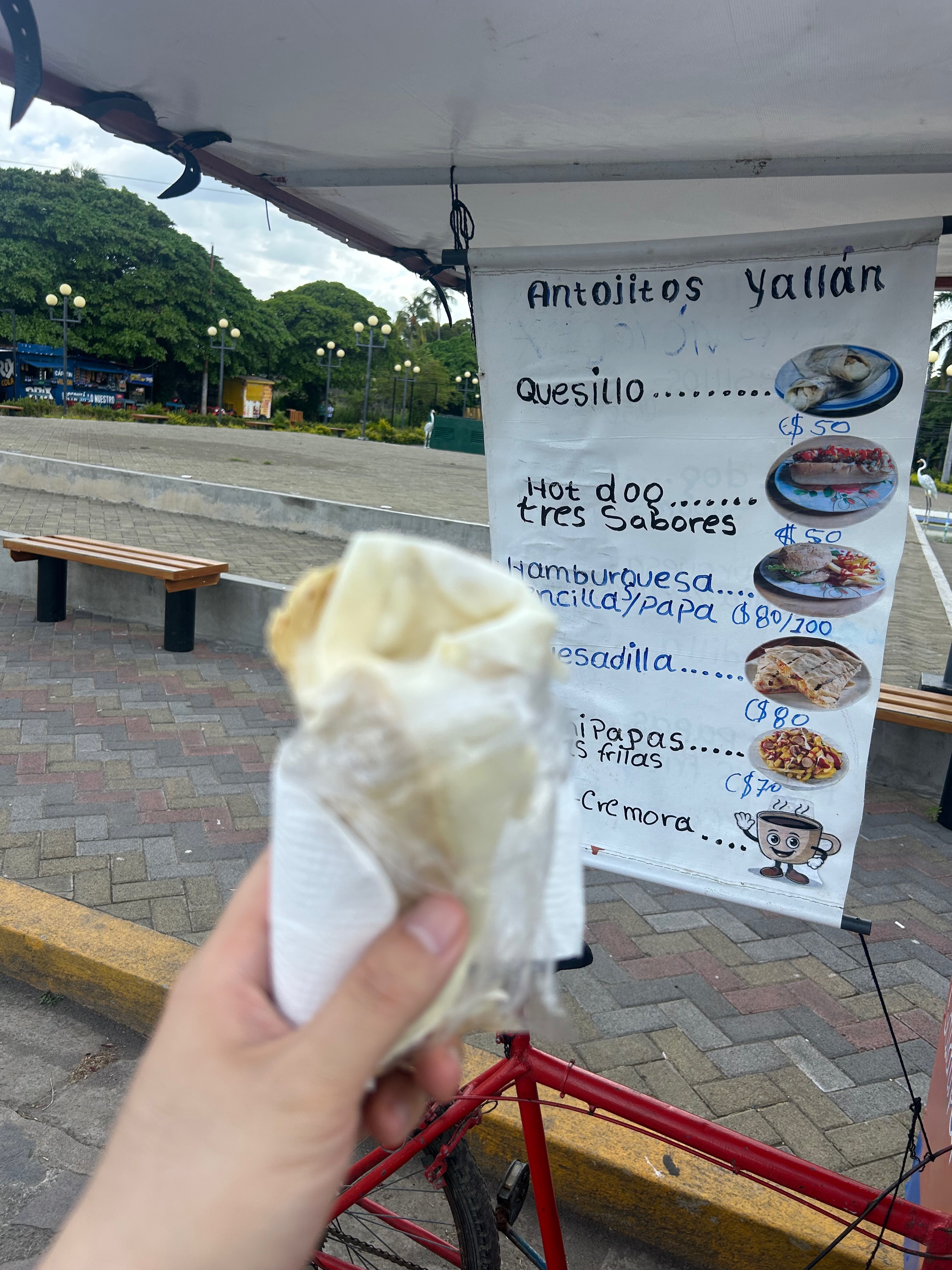
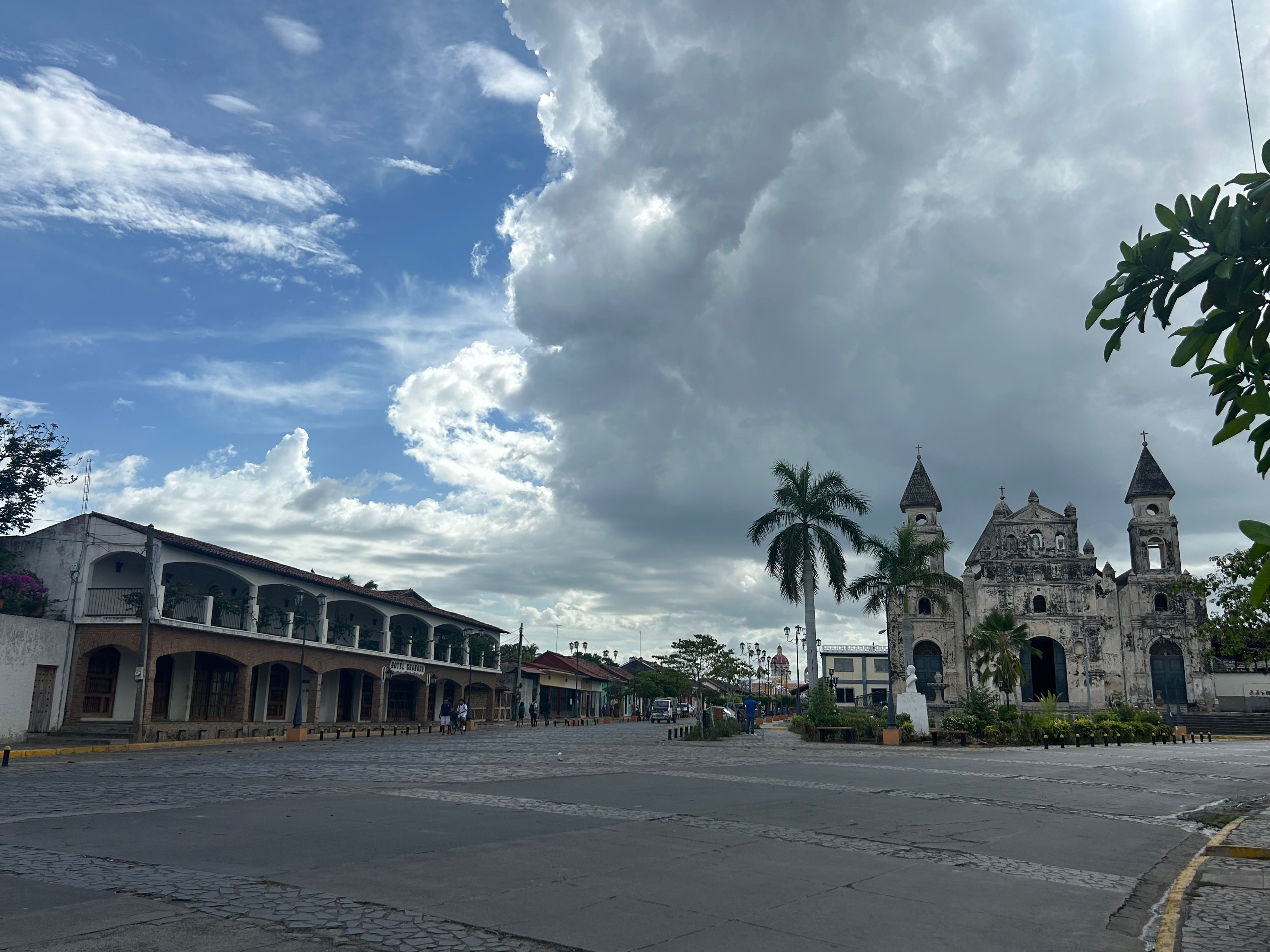 The quesillo is a popular wrap of tortilla and cheese with cream toppings.
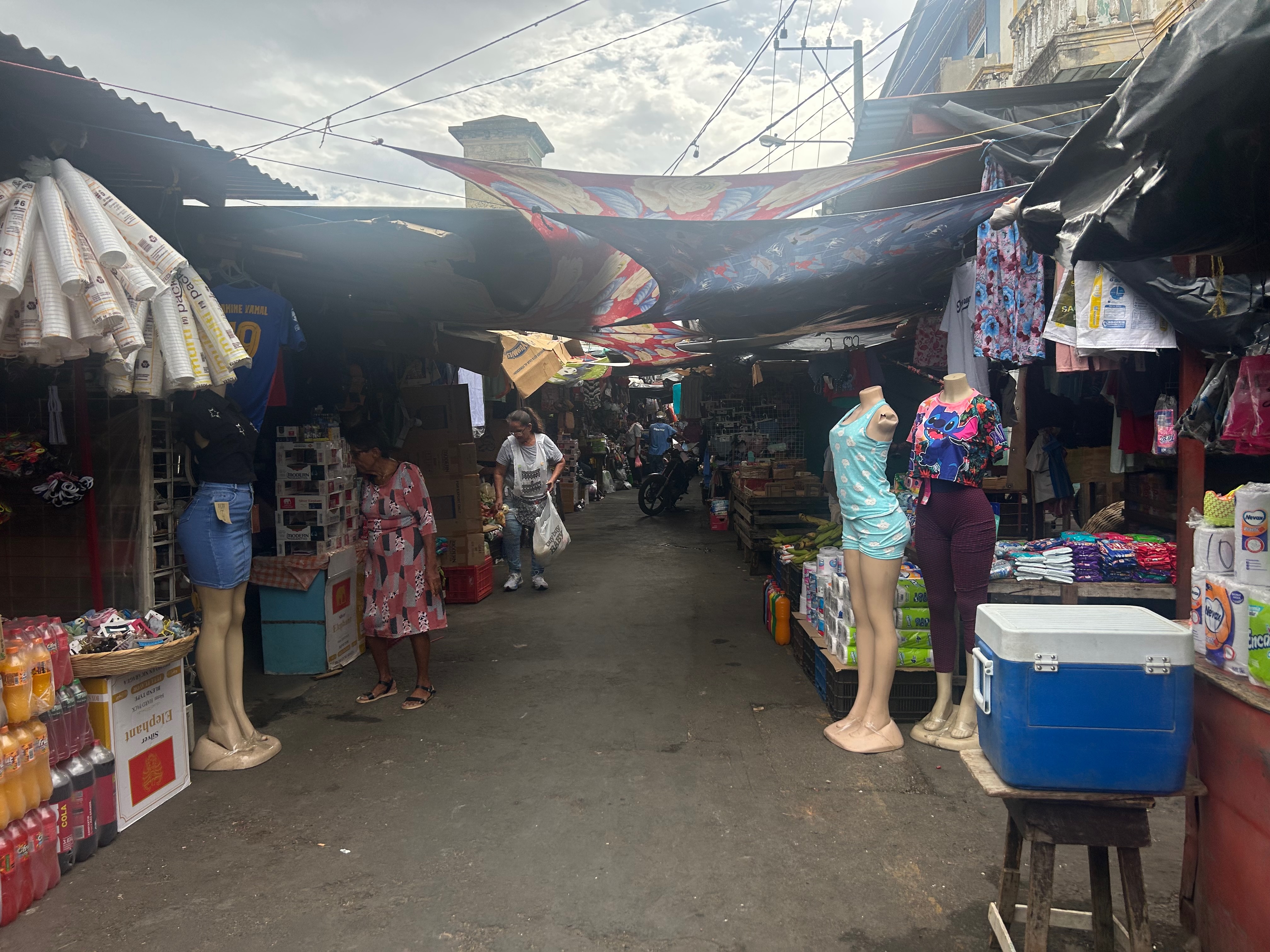
Due to the wet season and a low number of tourists, our walking tour was canceled, so I meandered through the markets of Granada instead.
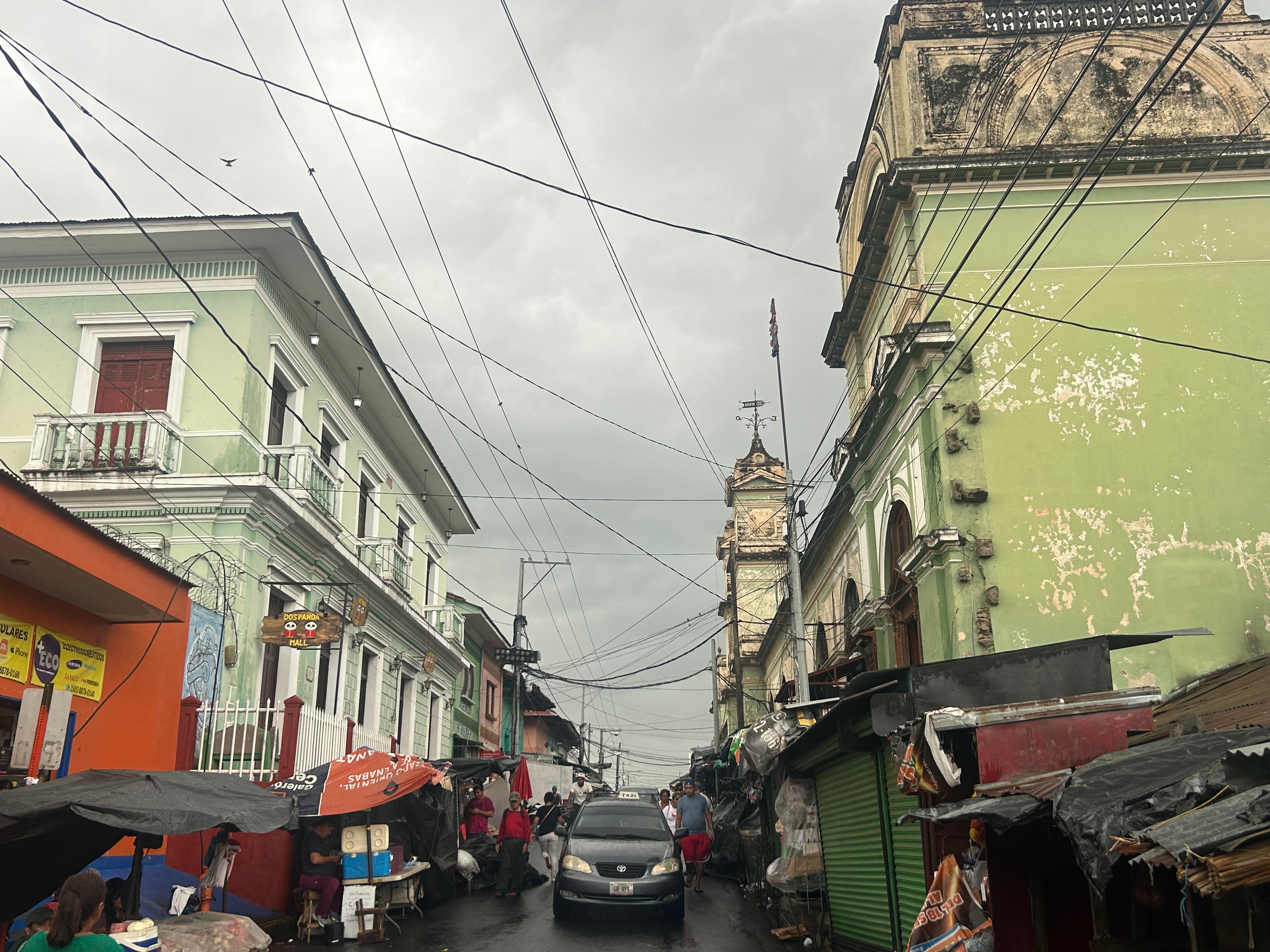
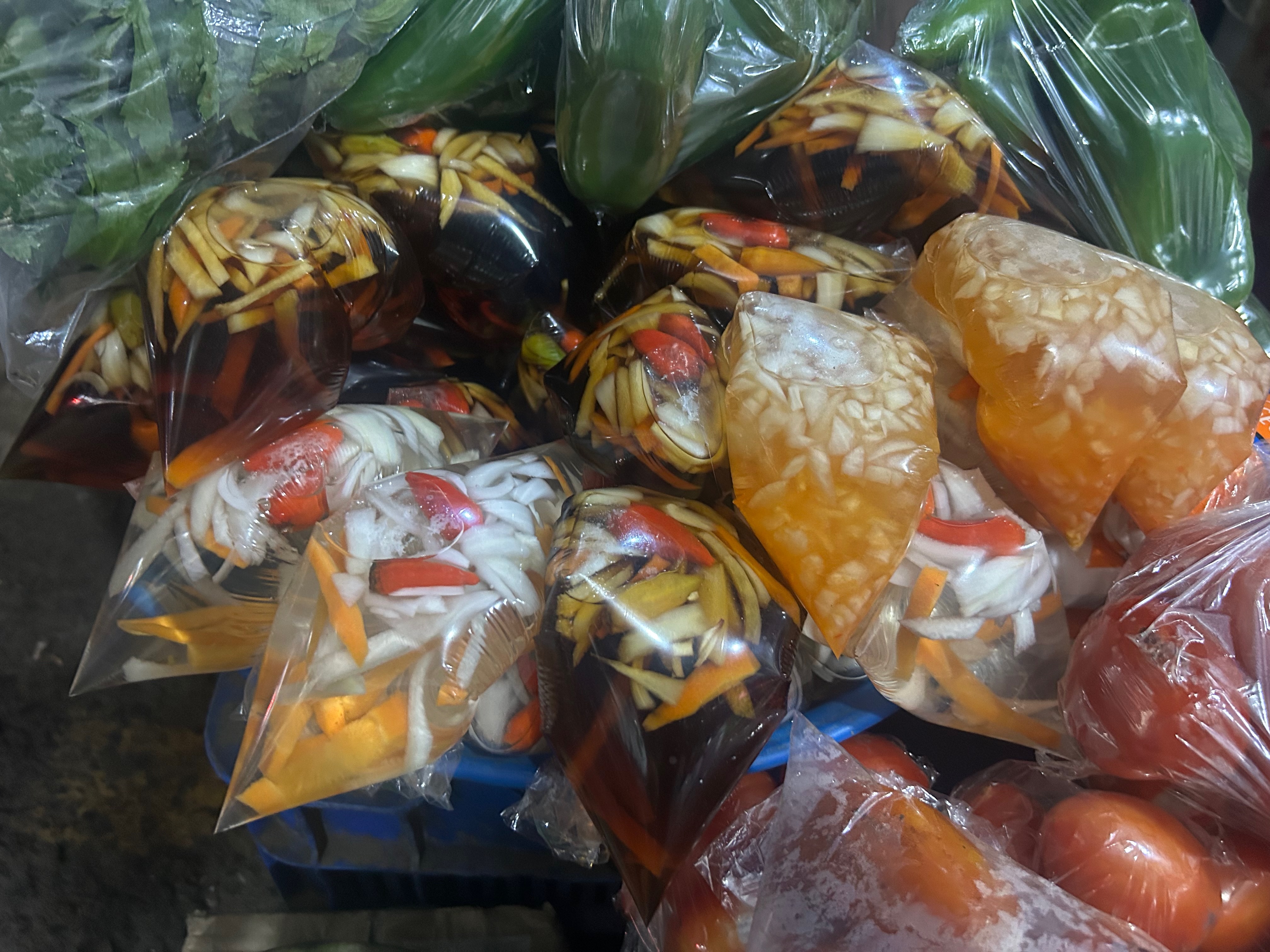 Spices, vegetable oil, chicharrón, and other goods are sold in bags here.
It was bustling with activity: street vendors, horses, taxis—everything happening all at once.
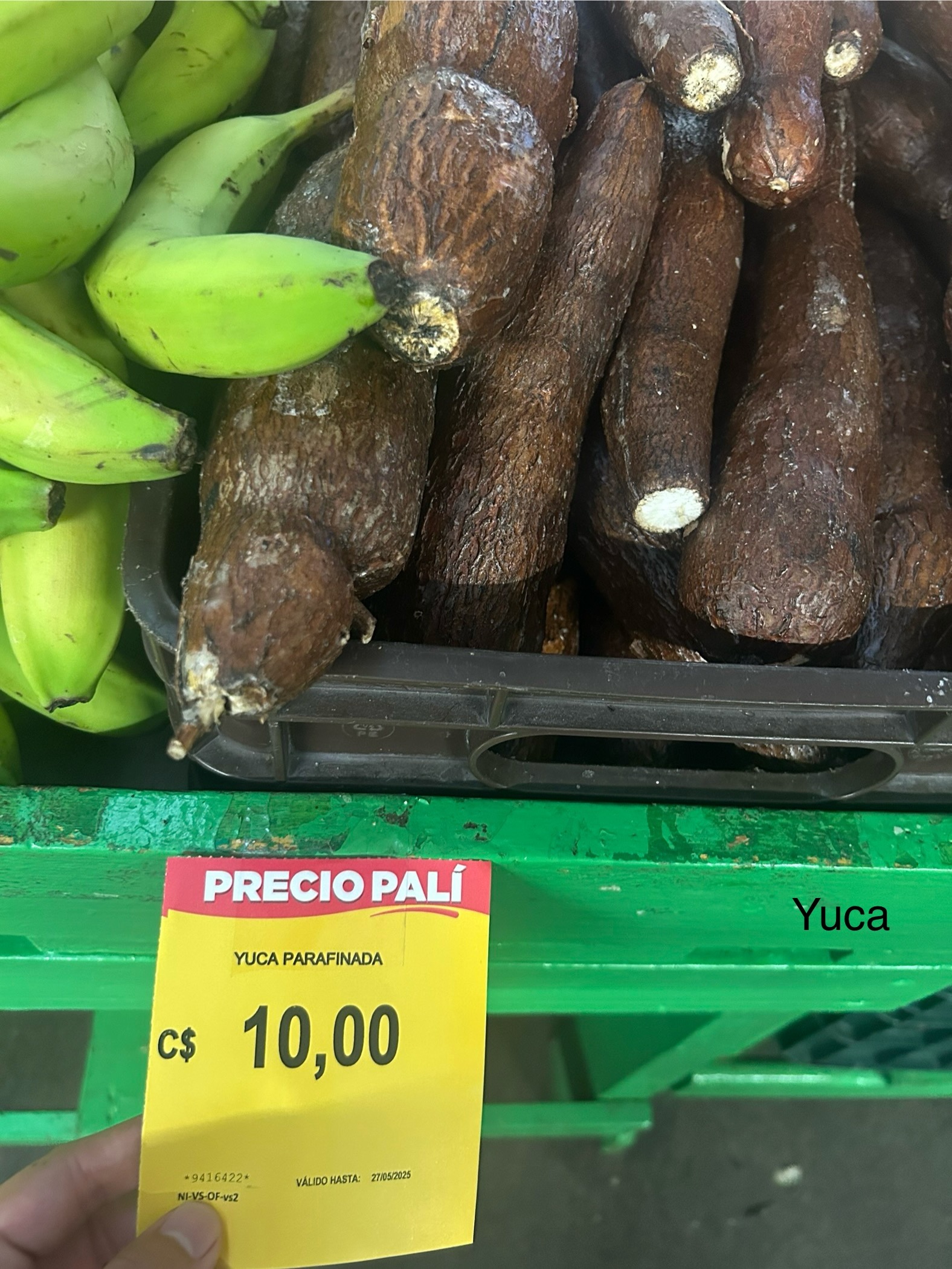
I went to the local supermarket and saw some local produce, such as plantain and cassava (yuca). The sudden rain extended my stay at the supermarket, reminding me so much of my time in San Salvador in 2022.
Isletas de Granada and Laguna de Apoyo
On my second day, I participated in a tour of the surrounding attractions.
Our first stop was the Isletas tour, visiting the small islands formed by the eruption of the Mombacho Volcano. There are hundreds of islands; some are home to the private residences of the elite, while others cater to tourists.
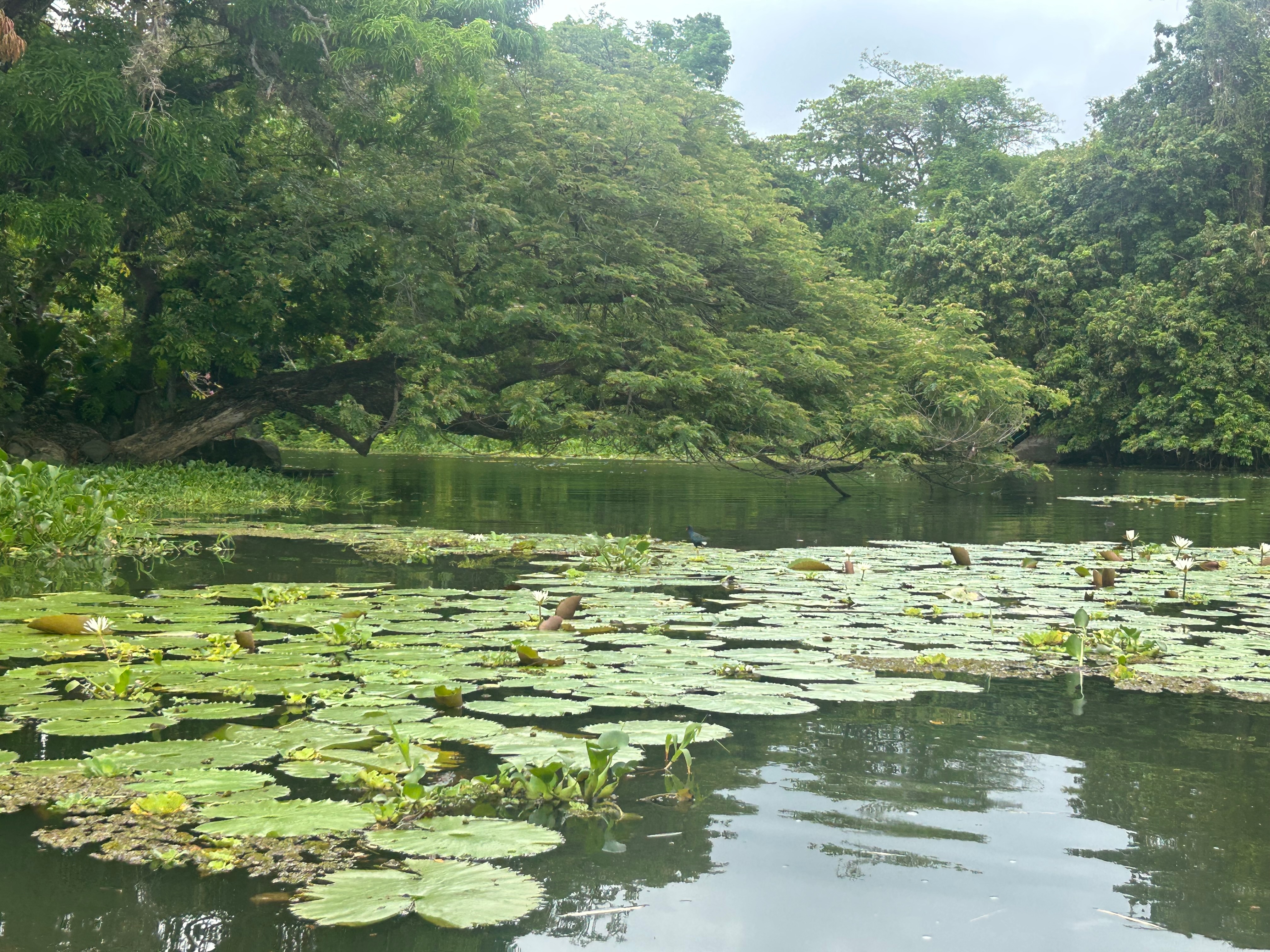
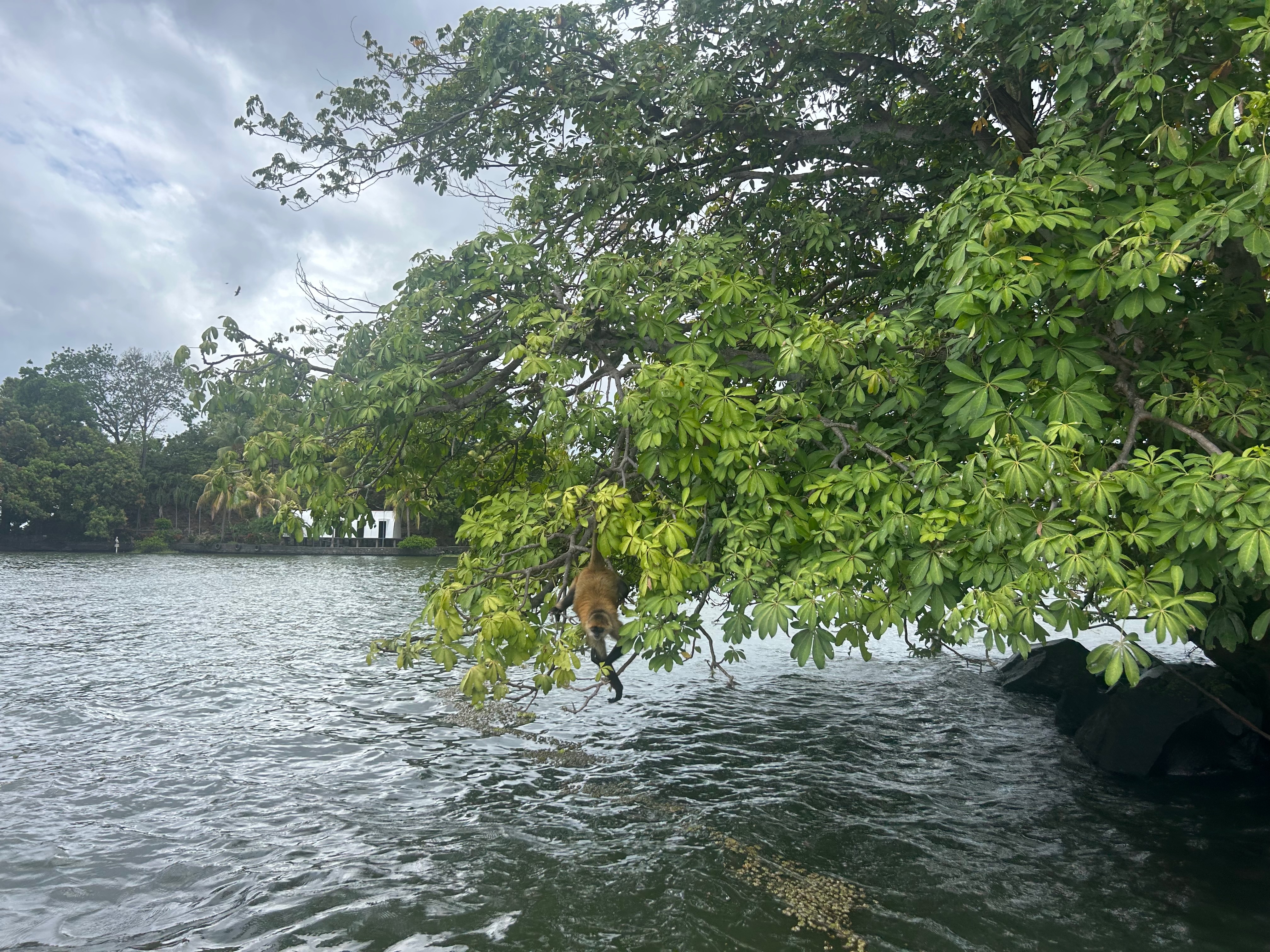 We fed the spider monkeys bananas. The tour guide stressed that the monkeys had jumped onto boats in the past, so we needed to be cautious.
We made a cafe stop on one of the islands (which conveniently had restrooms) and saw a few fishermen using various nets to catch fish.
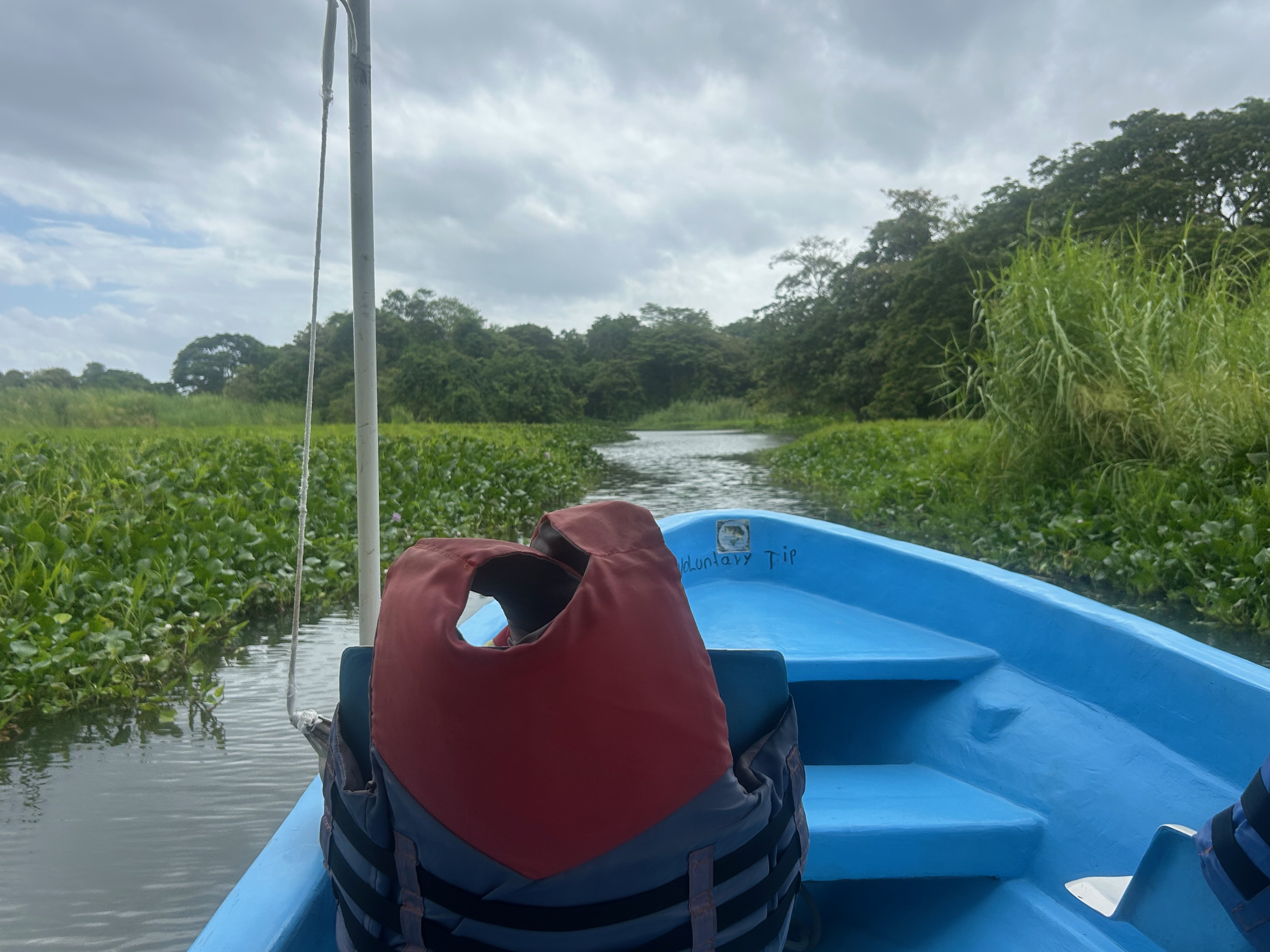
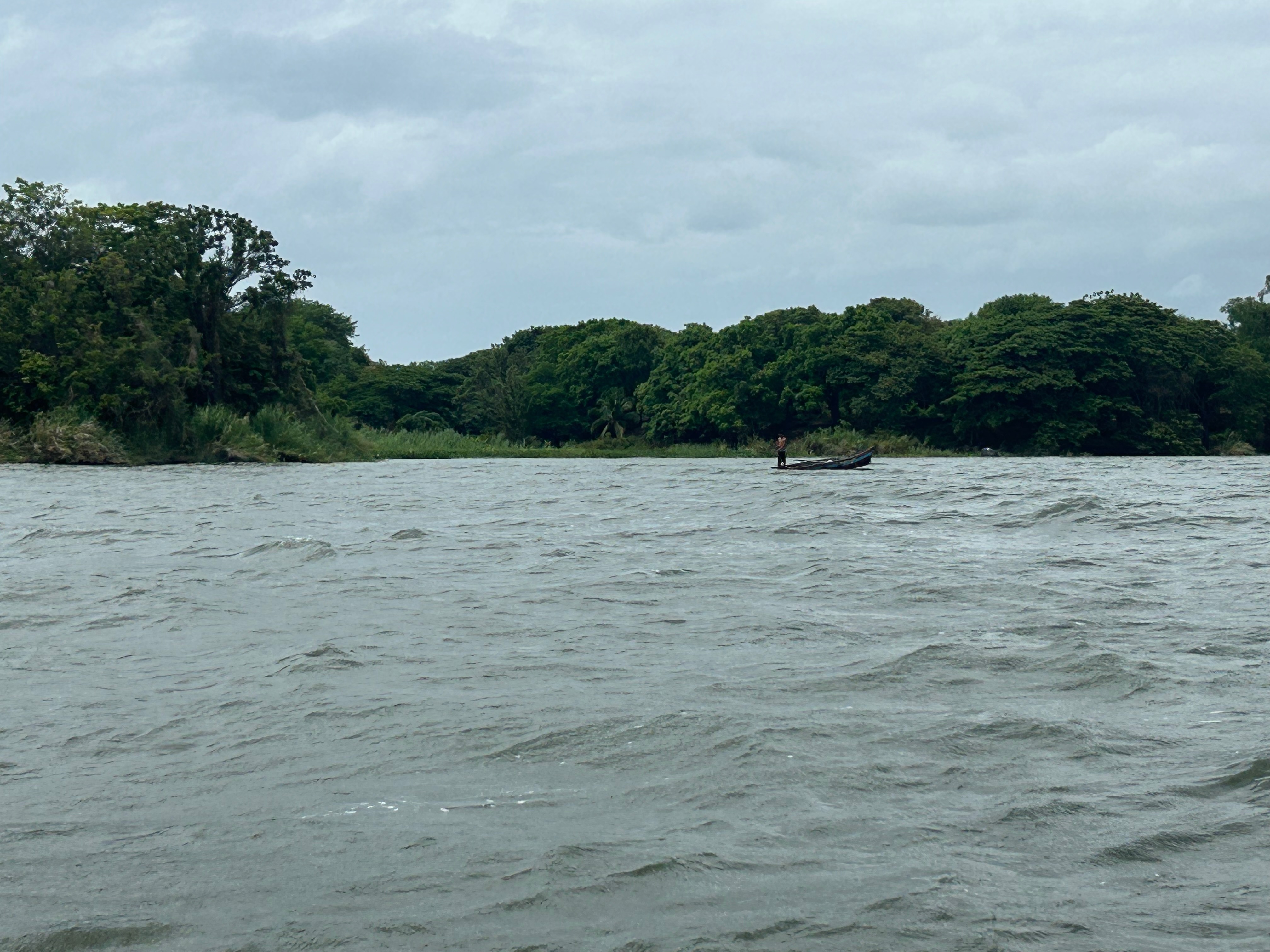
Our last stop on this part of the tour was Fort San Pablo, built by the Spanish to defend against English and French pirates who often raided the area.
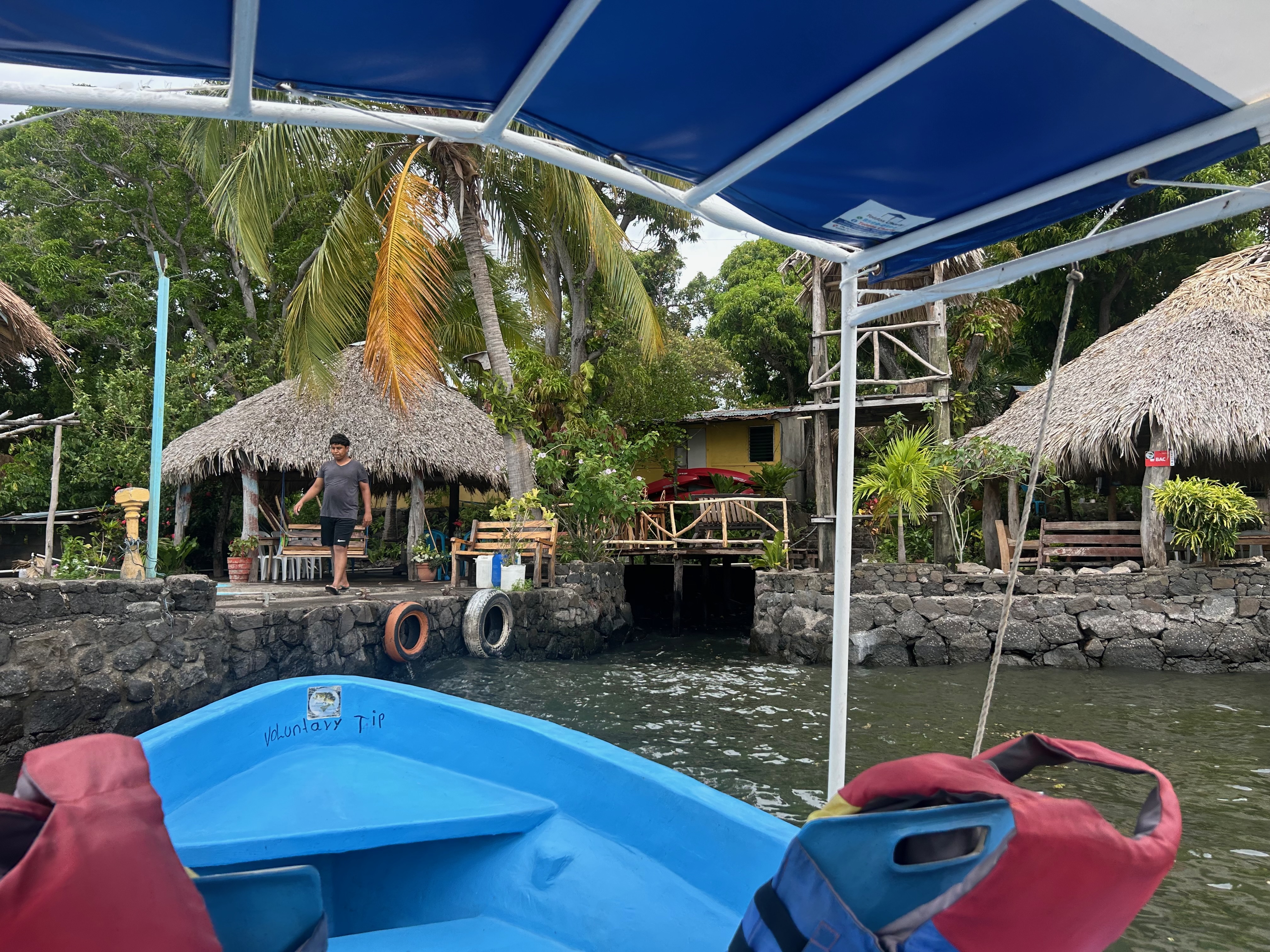
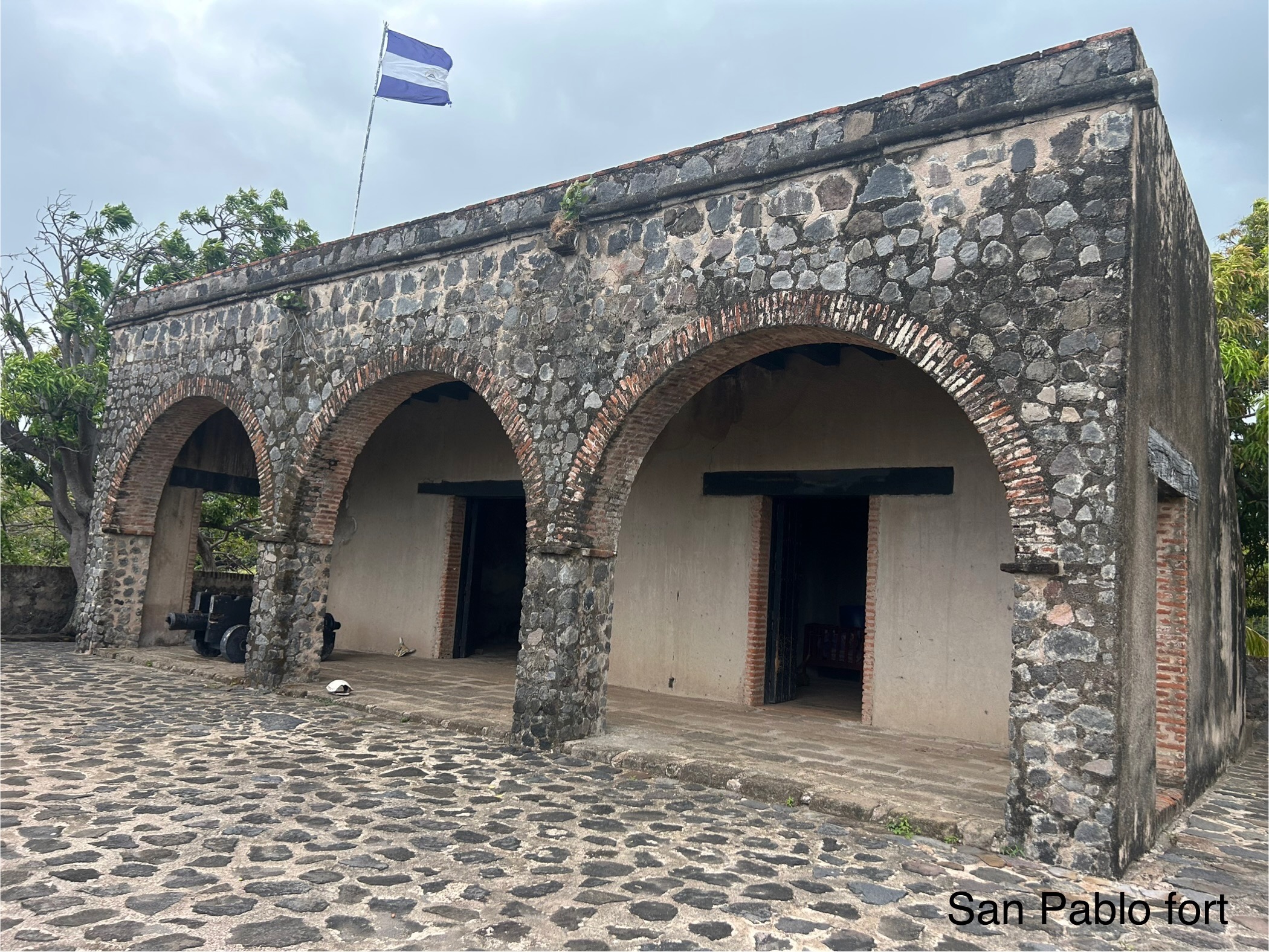
Our second stop was San Juan de Oriente, a village famous for its pottery artisans.
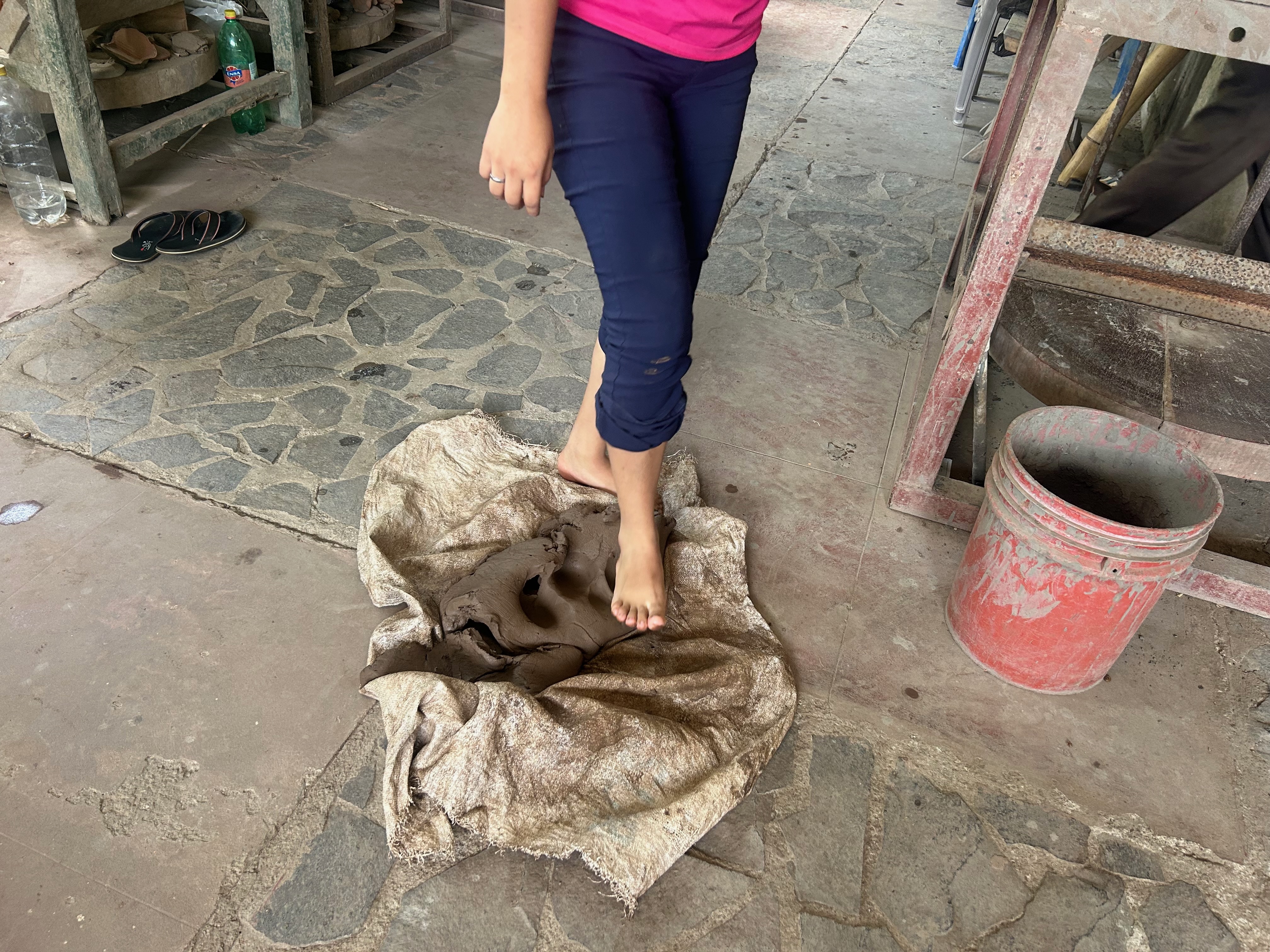
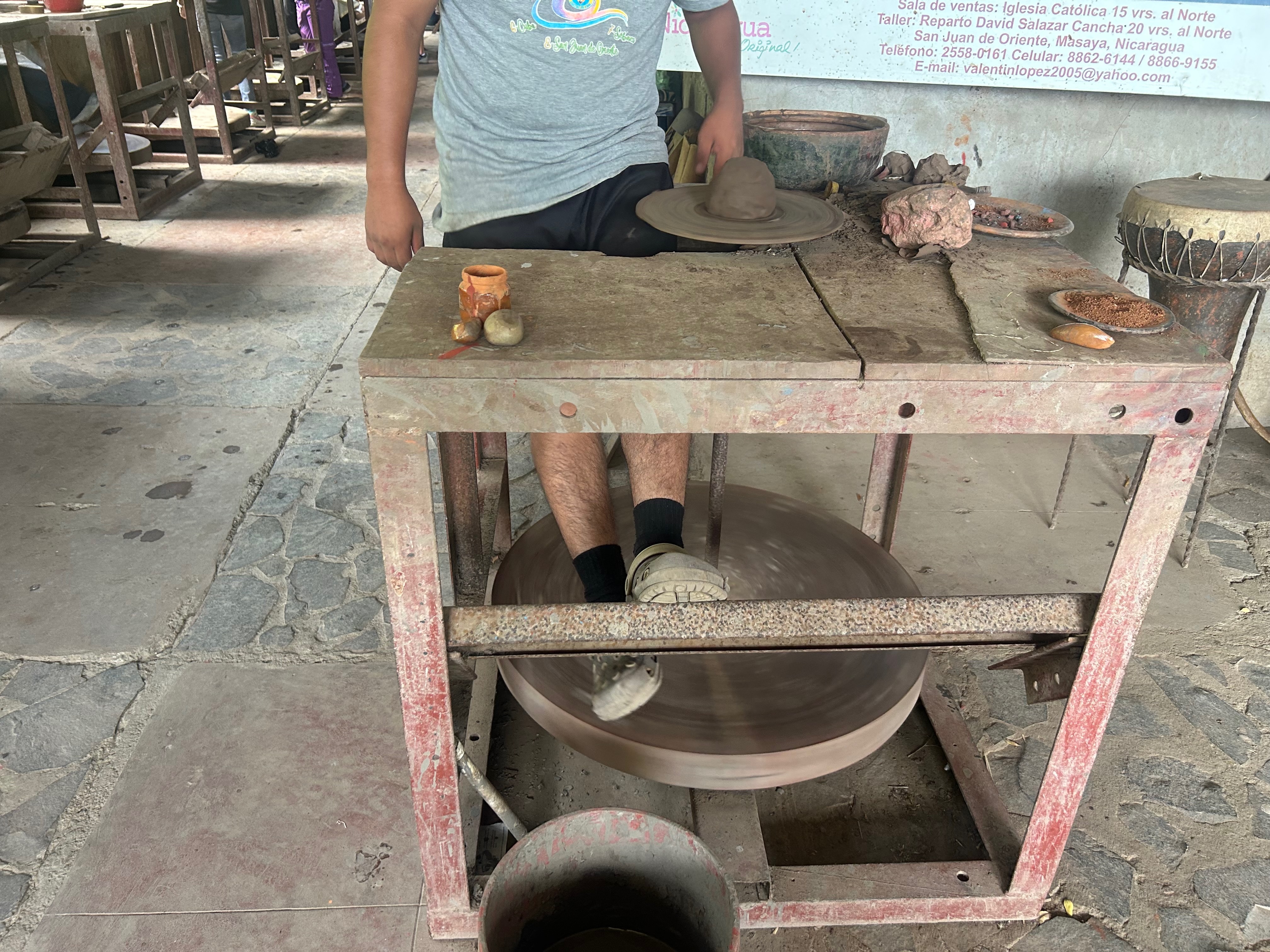
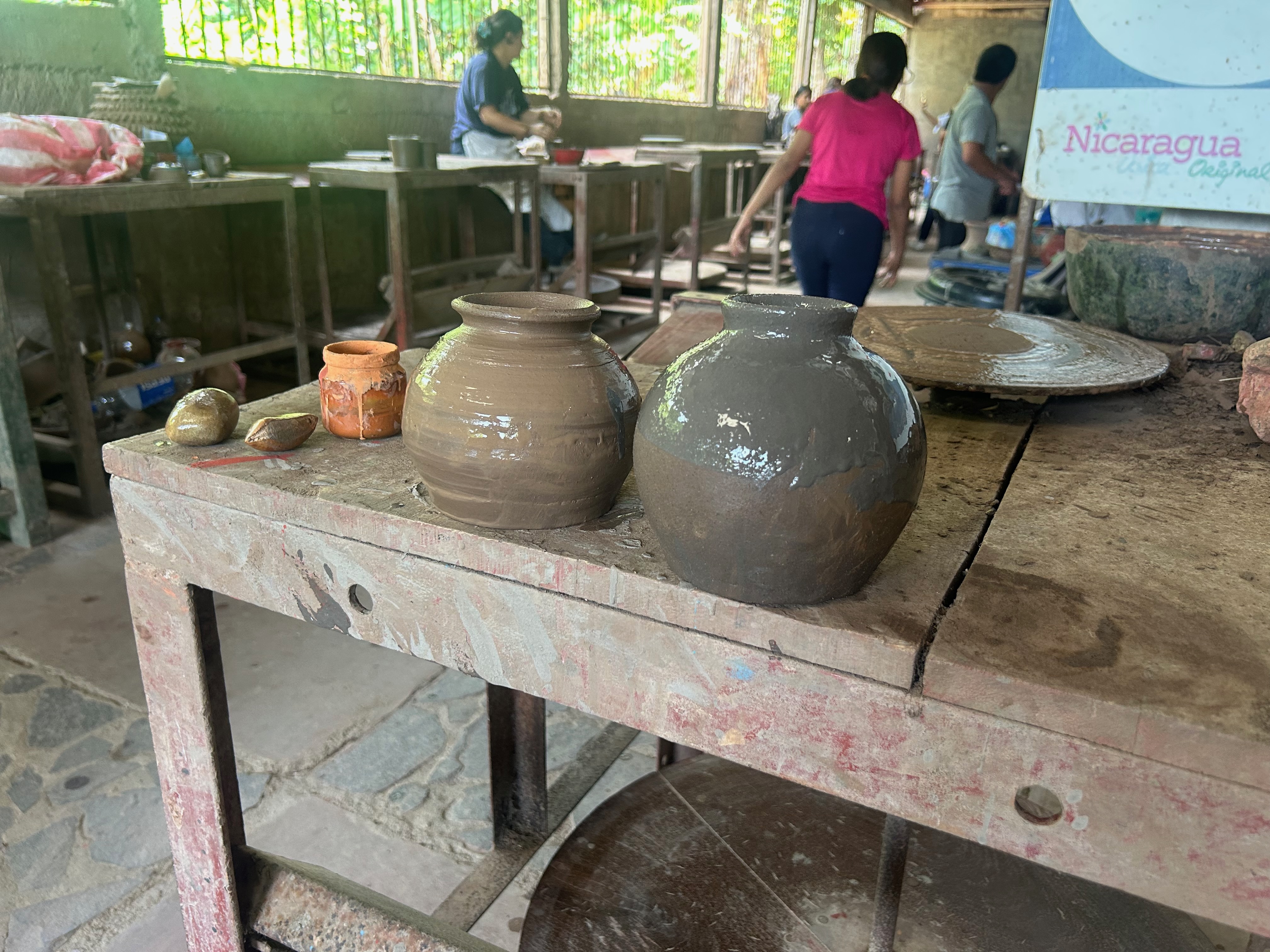
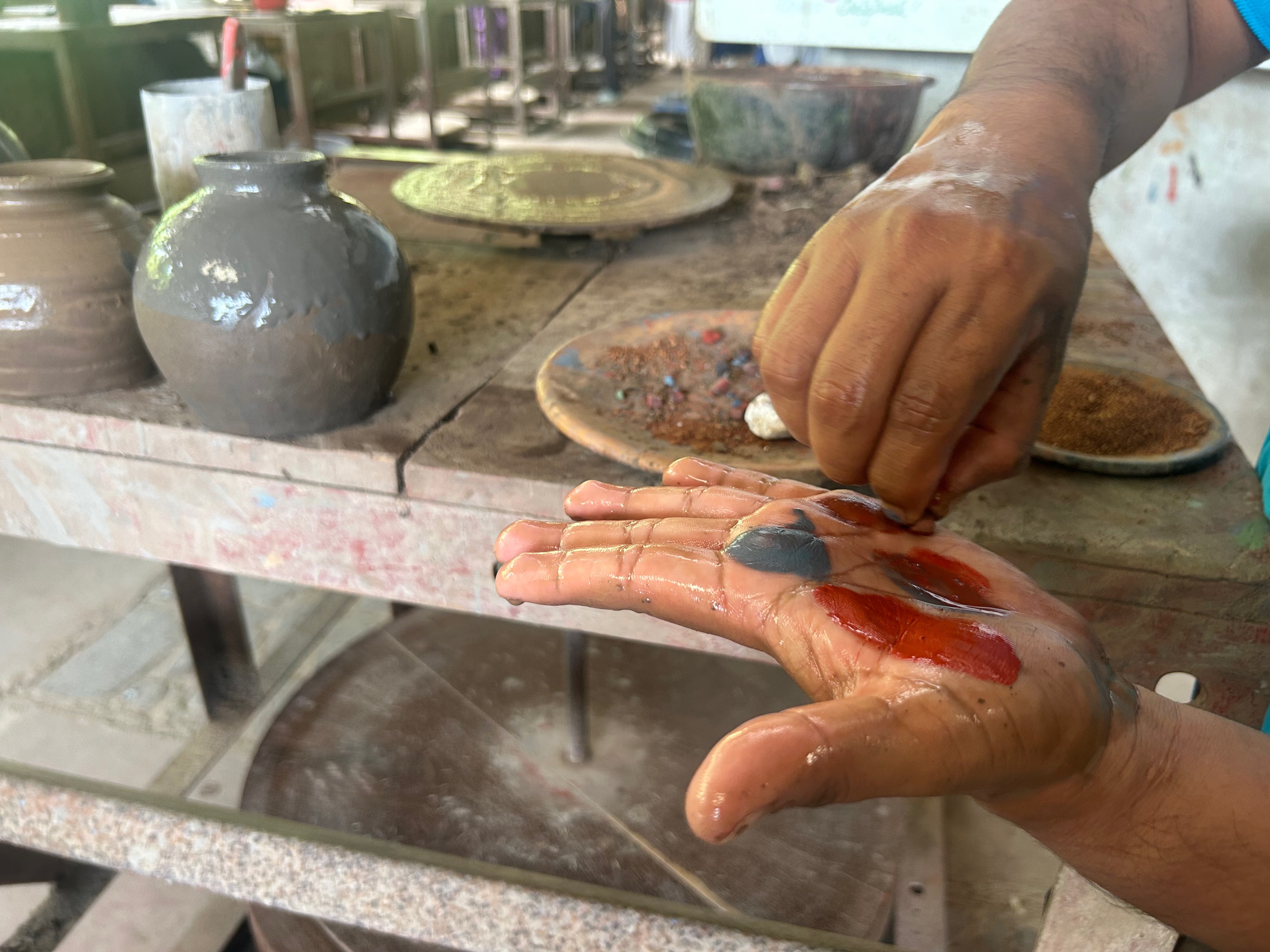
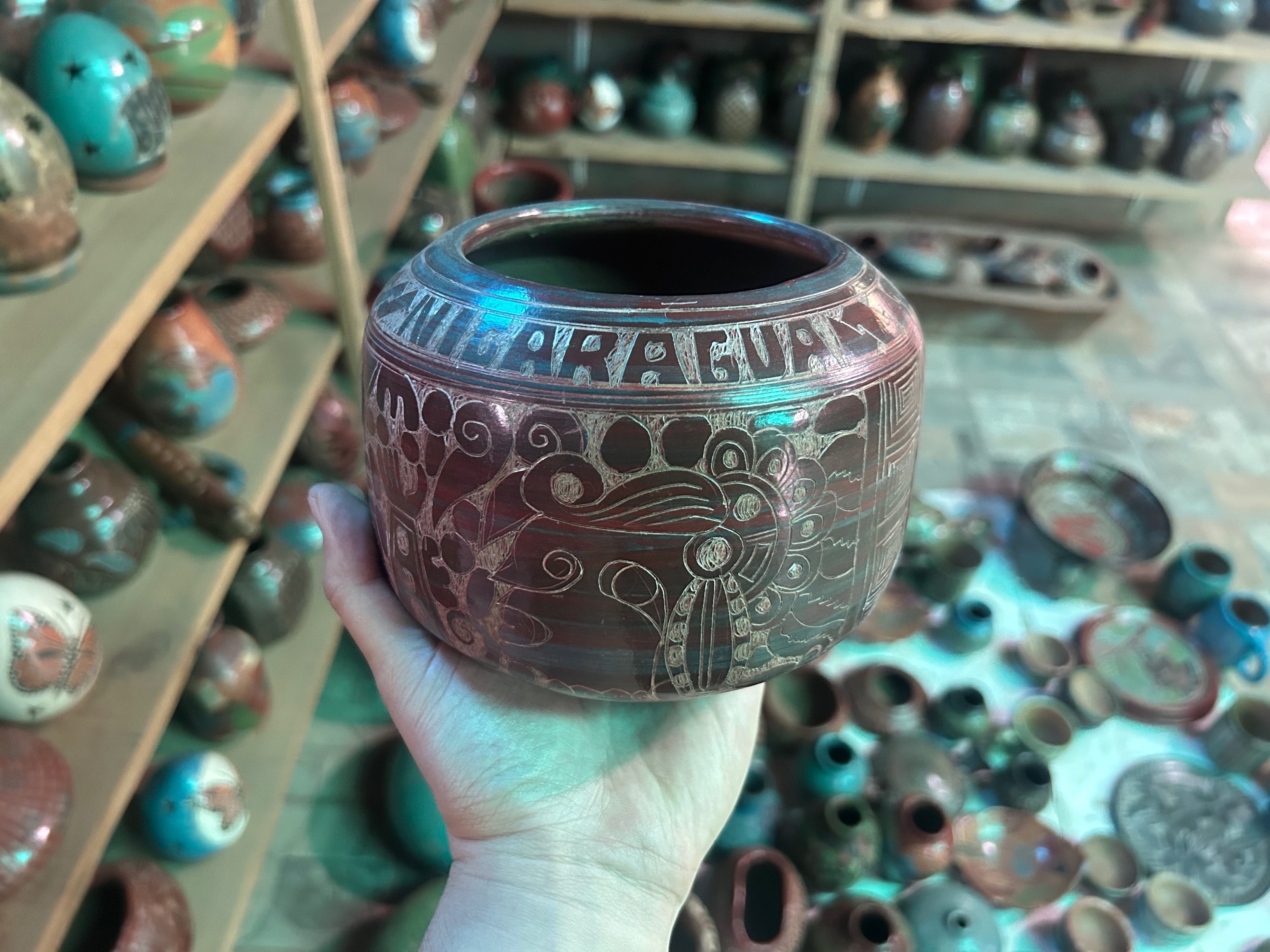
Our workshop included an end-to-end demonstration of the pottery process. We started with clay rocks that were ground down, moved to wheel throwing, then to coloring the pots with rock-based pigments, followed by etching with bone tools and polishing with seeds. The process concluded with about a week in the oven.
The end product was just beautiful, and I bought a traditional clay whistle as a souvenir.
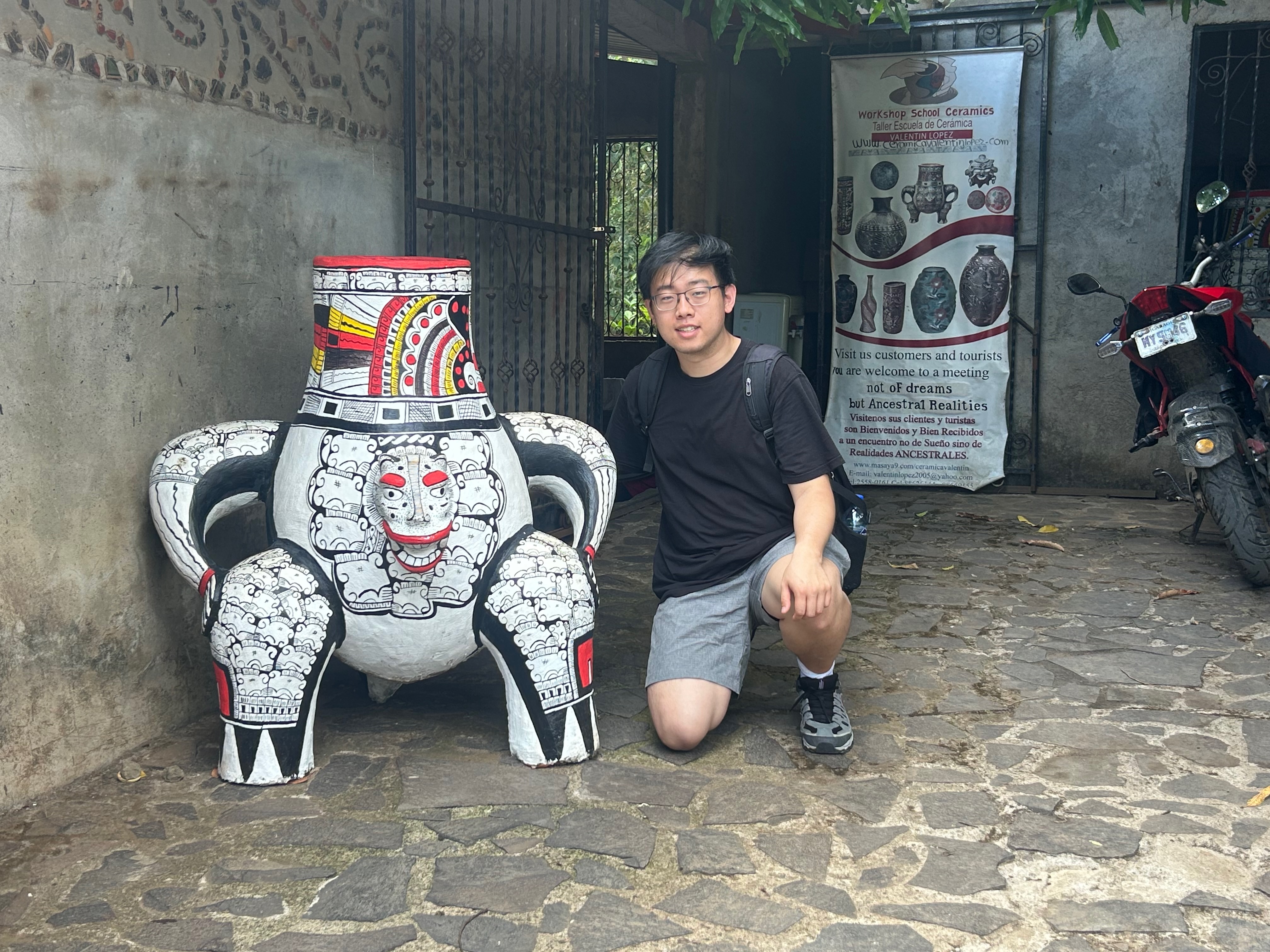
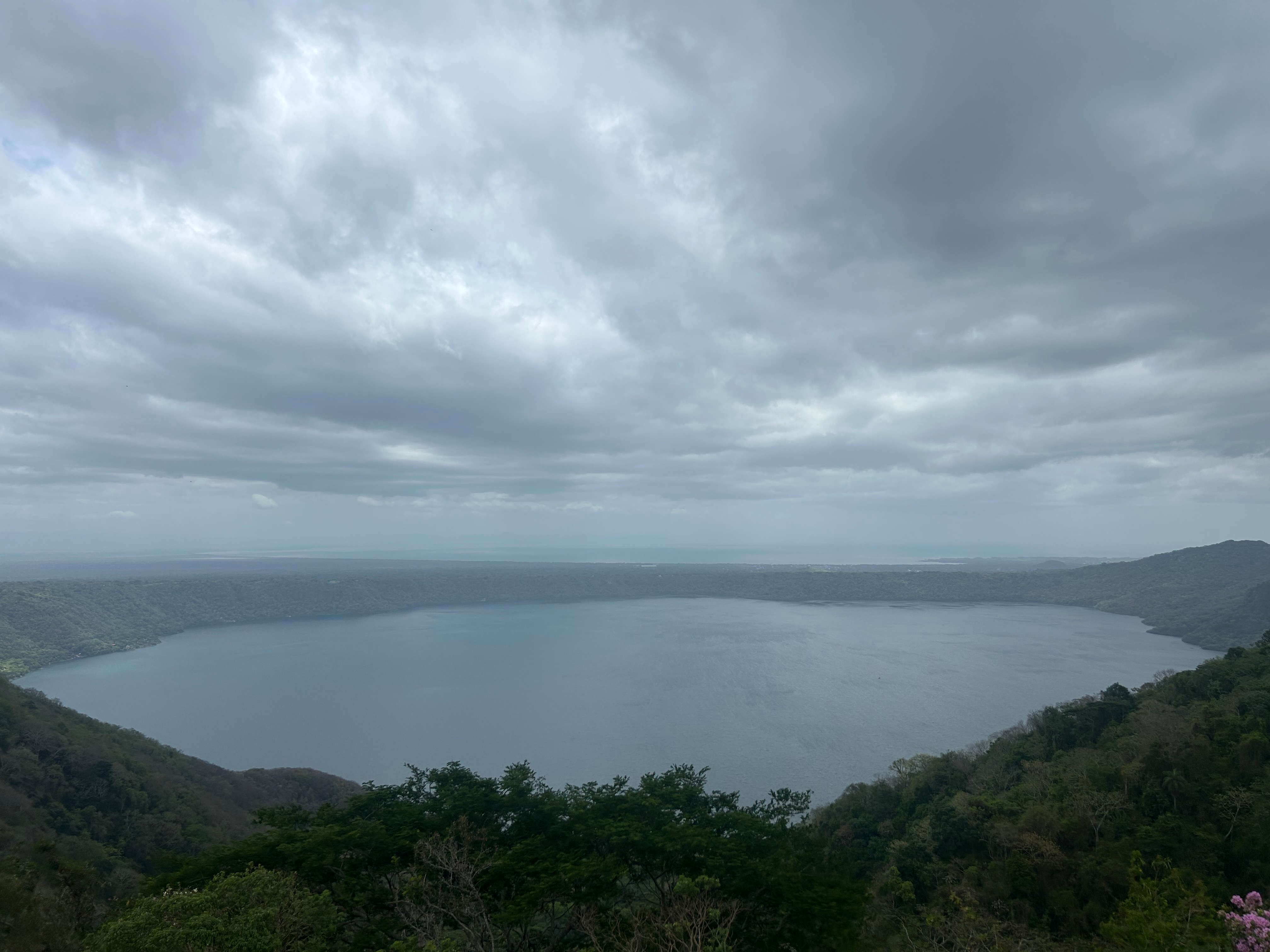
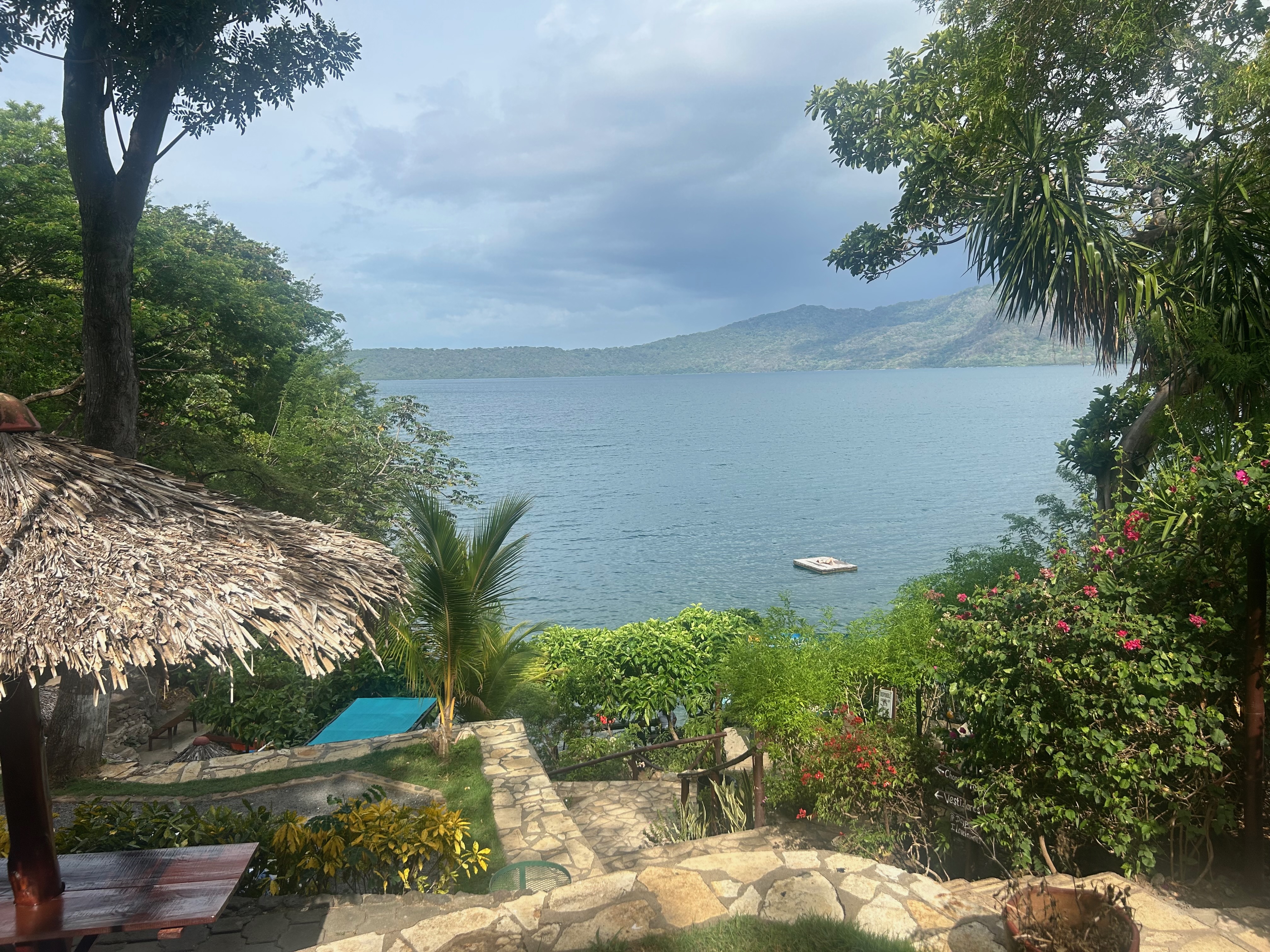
Our next stop was a town called Catarina, which had a beautiful view of Laguna de Apoyo. The lake is a brackish volcanic lake.
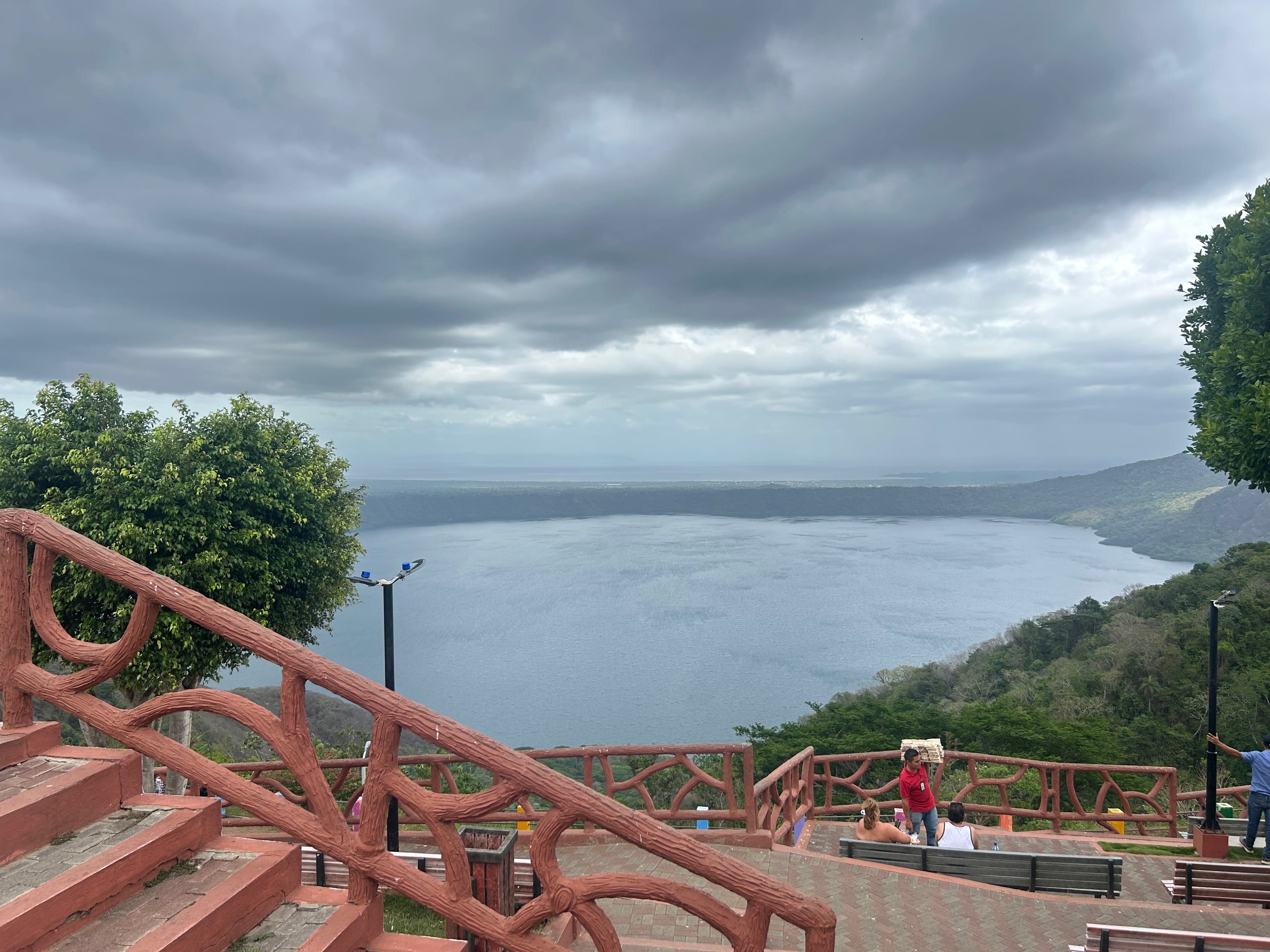
Just look at this view! I could see the whole Laguna de Apoyo in all its beauty.
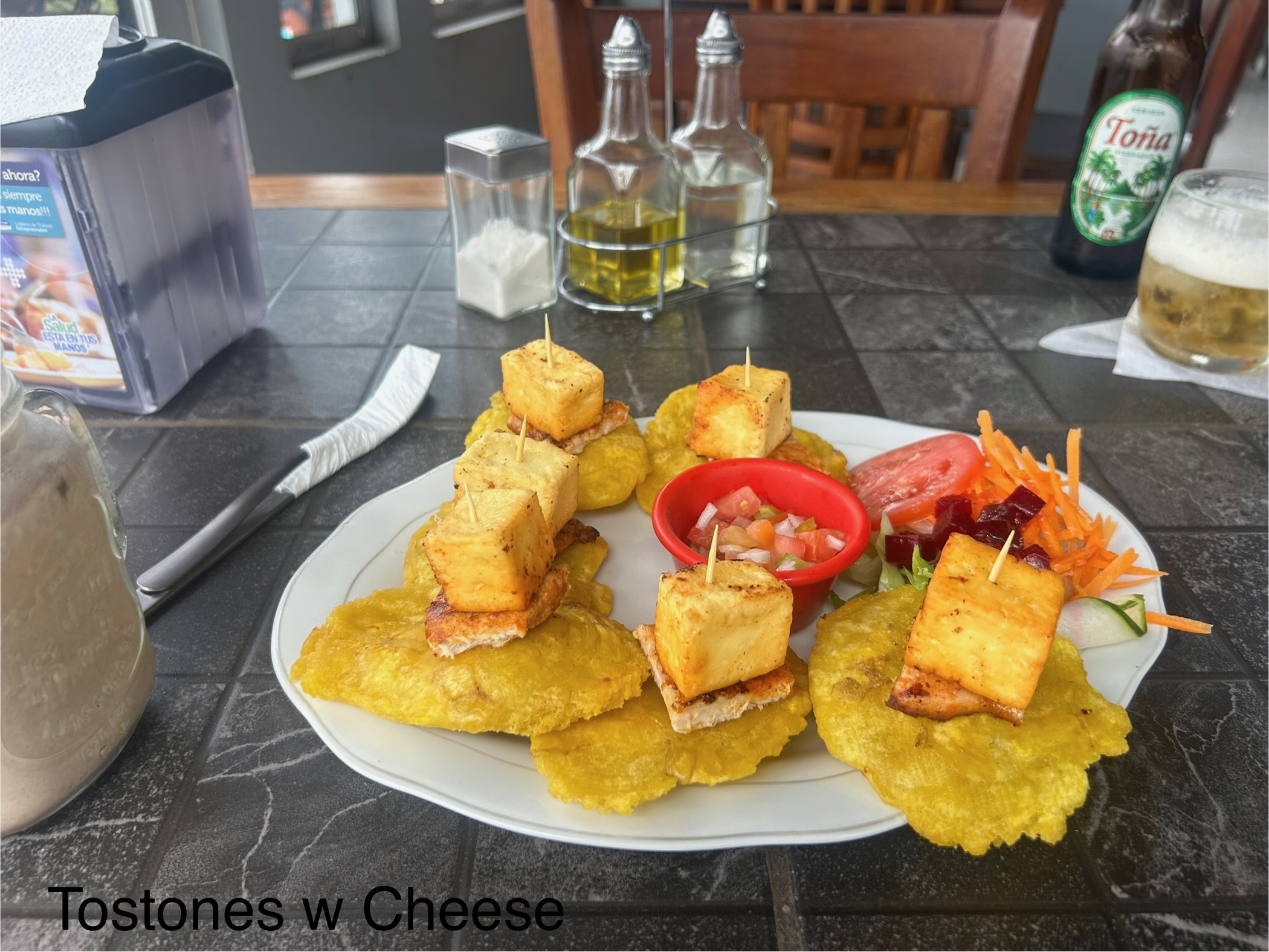
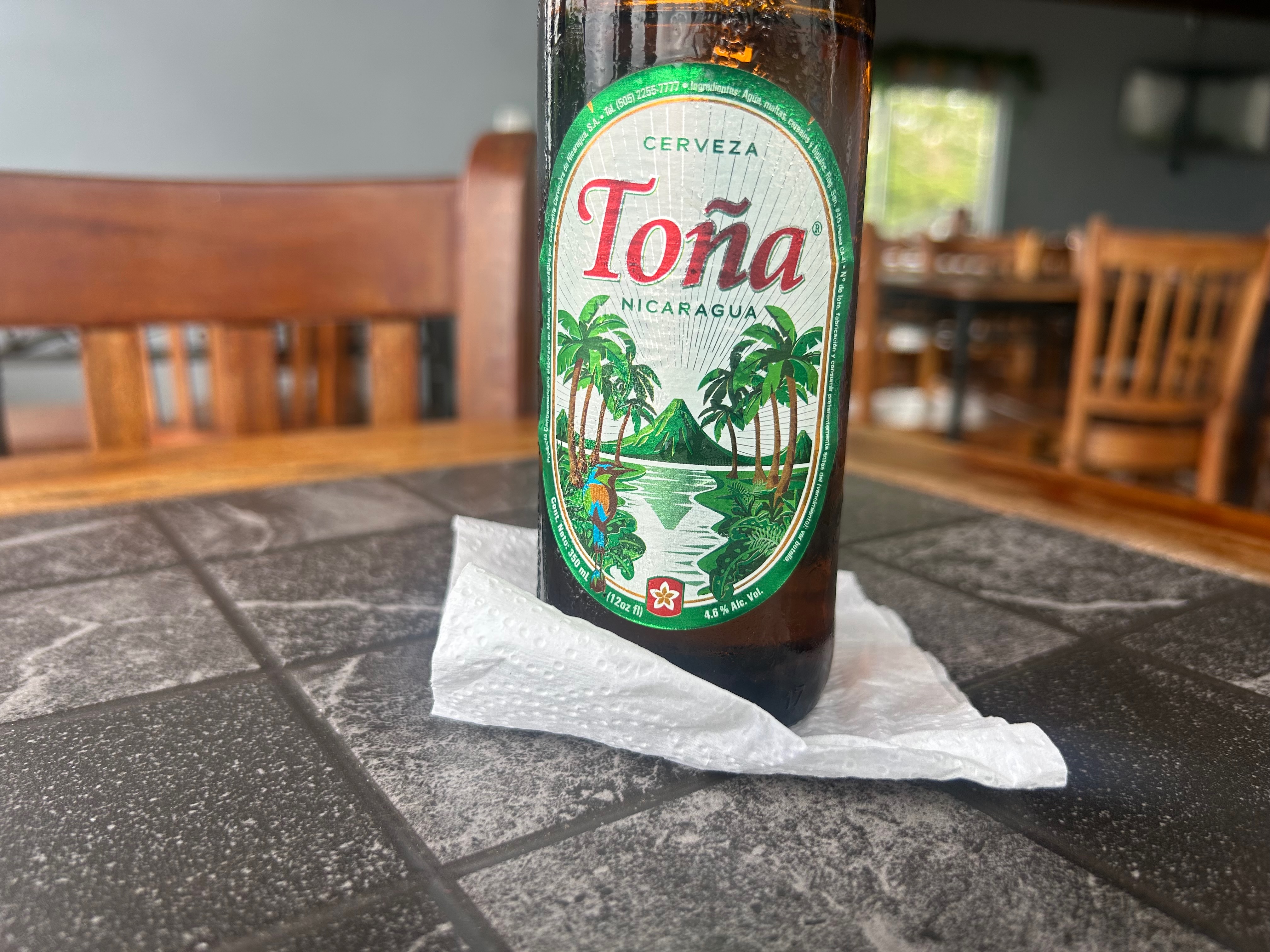 Lunch with my guide; I had the tostones, and he had the local Toña beer.
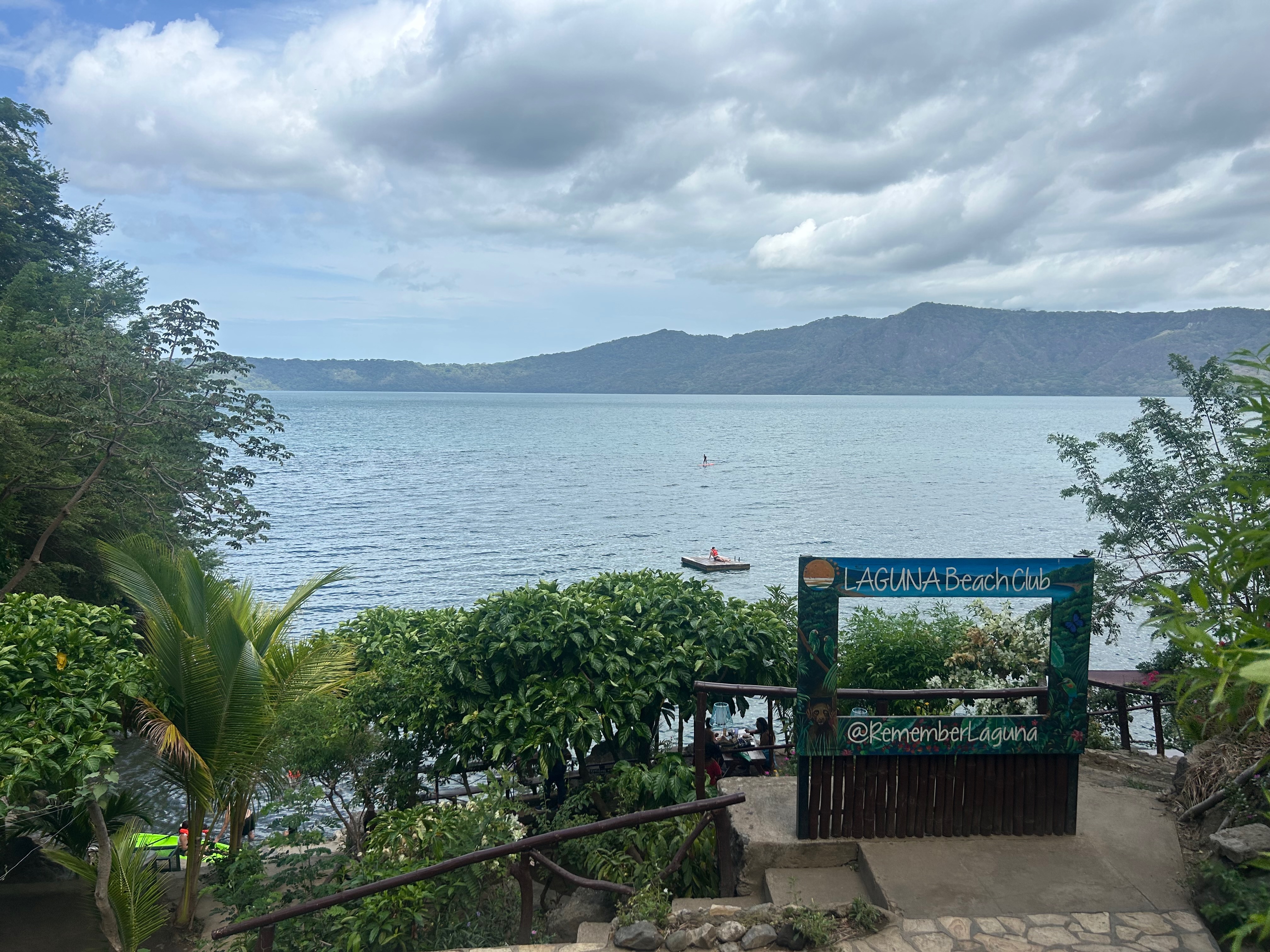
Our final stop of the day was the Laguna Beach Club, a hostel that also sold day passes for its water activities.
I spent the next two hours kayaking and sipping on the famous cacao drink (full of chocolate flavor). Seeing the volcanic smoke and the lush green mountainside was just incredible.
After saying goodbye to my guides, I climbed the Granada church’s towers as the sun was setting.
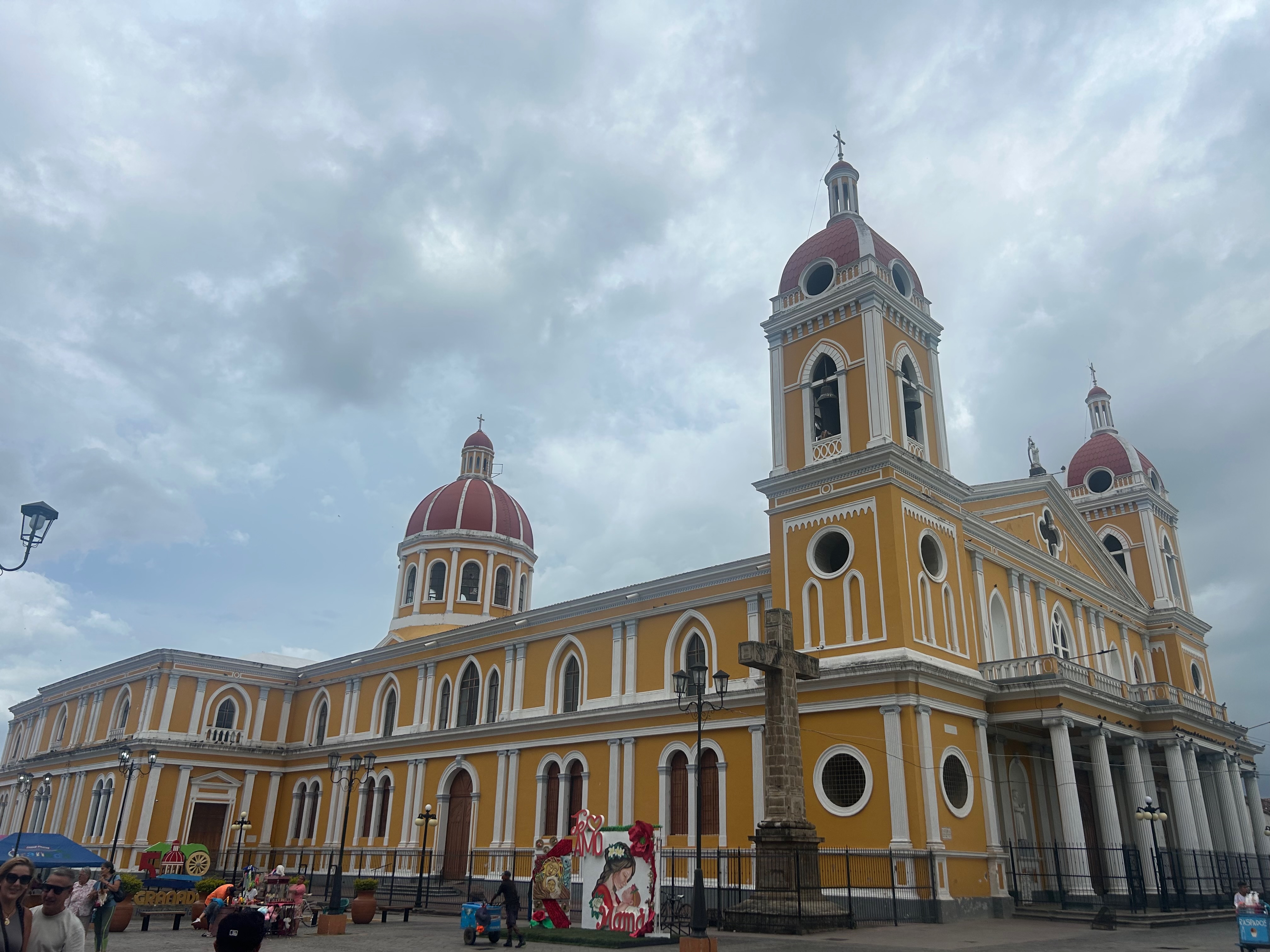
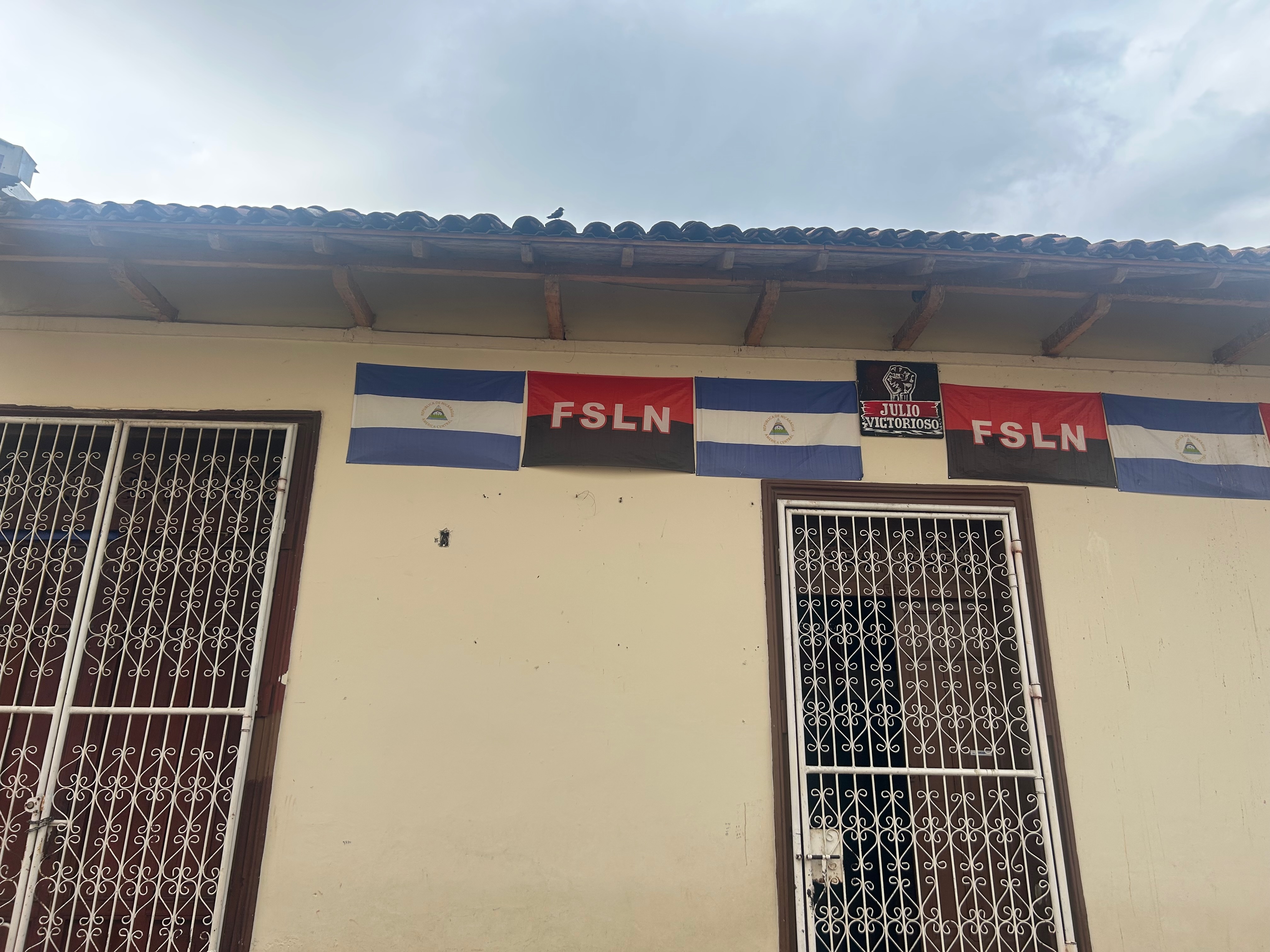 Interestingly, the political party had an office here
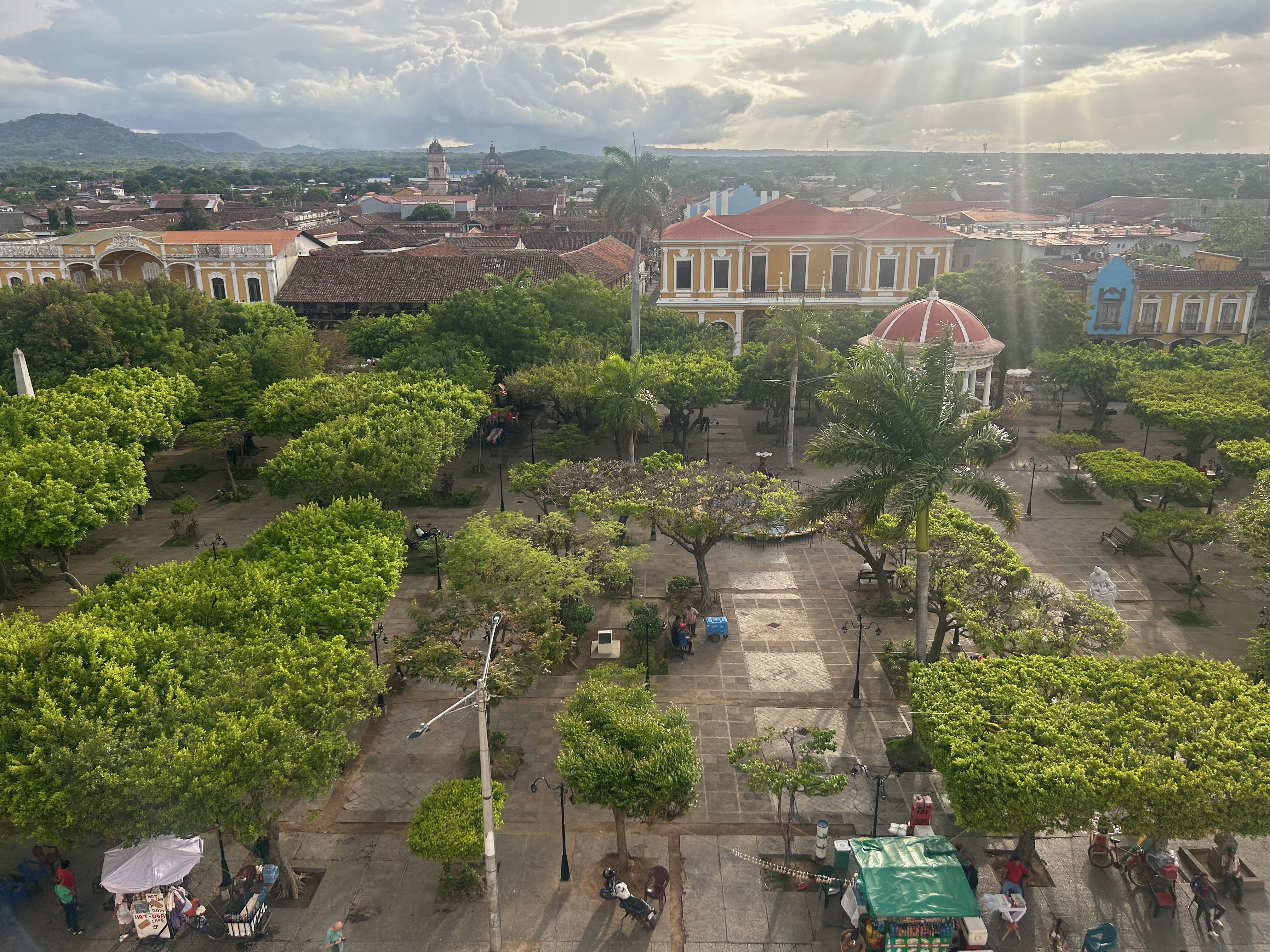
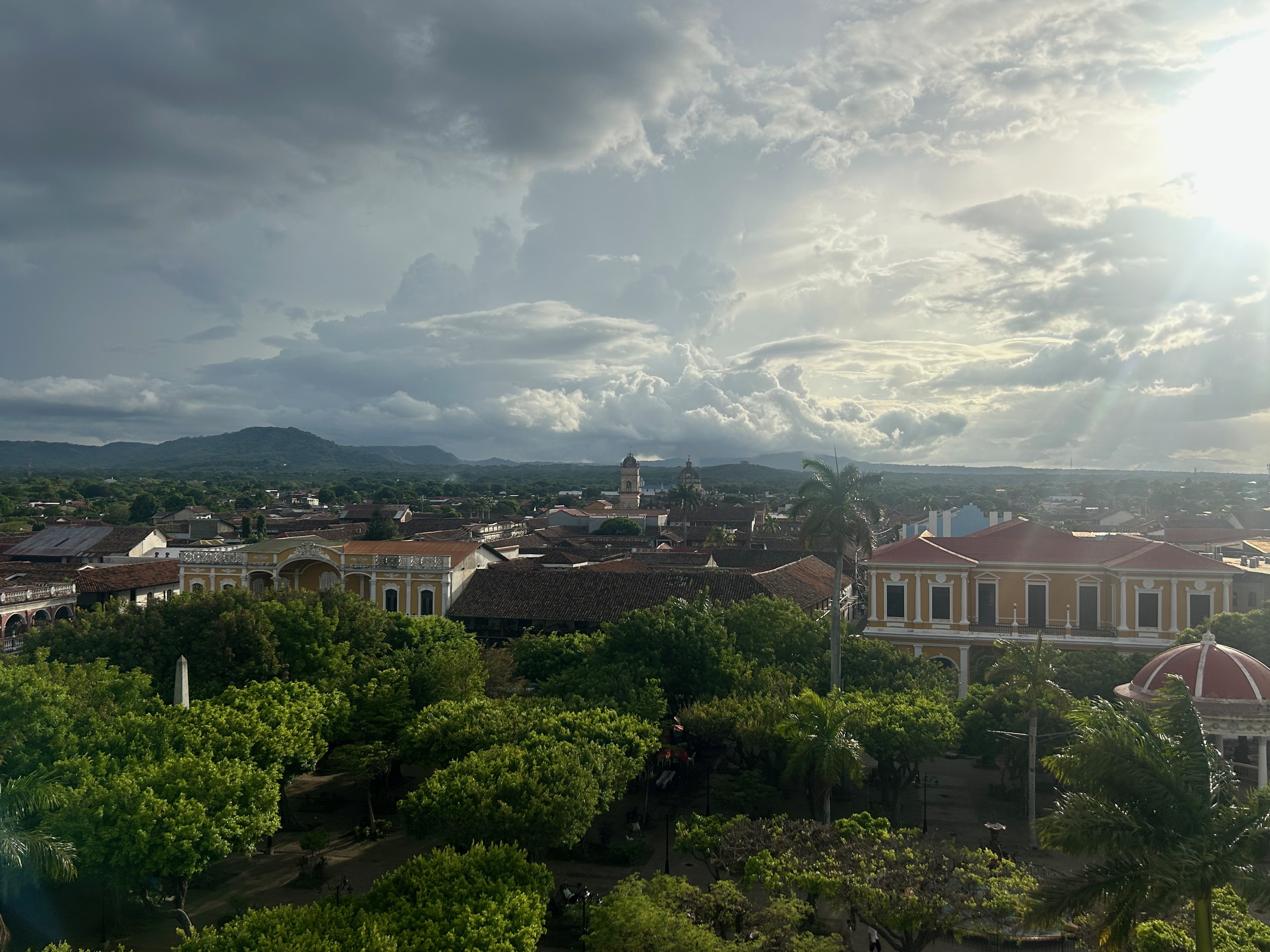
Granada city
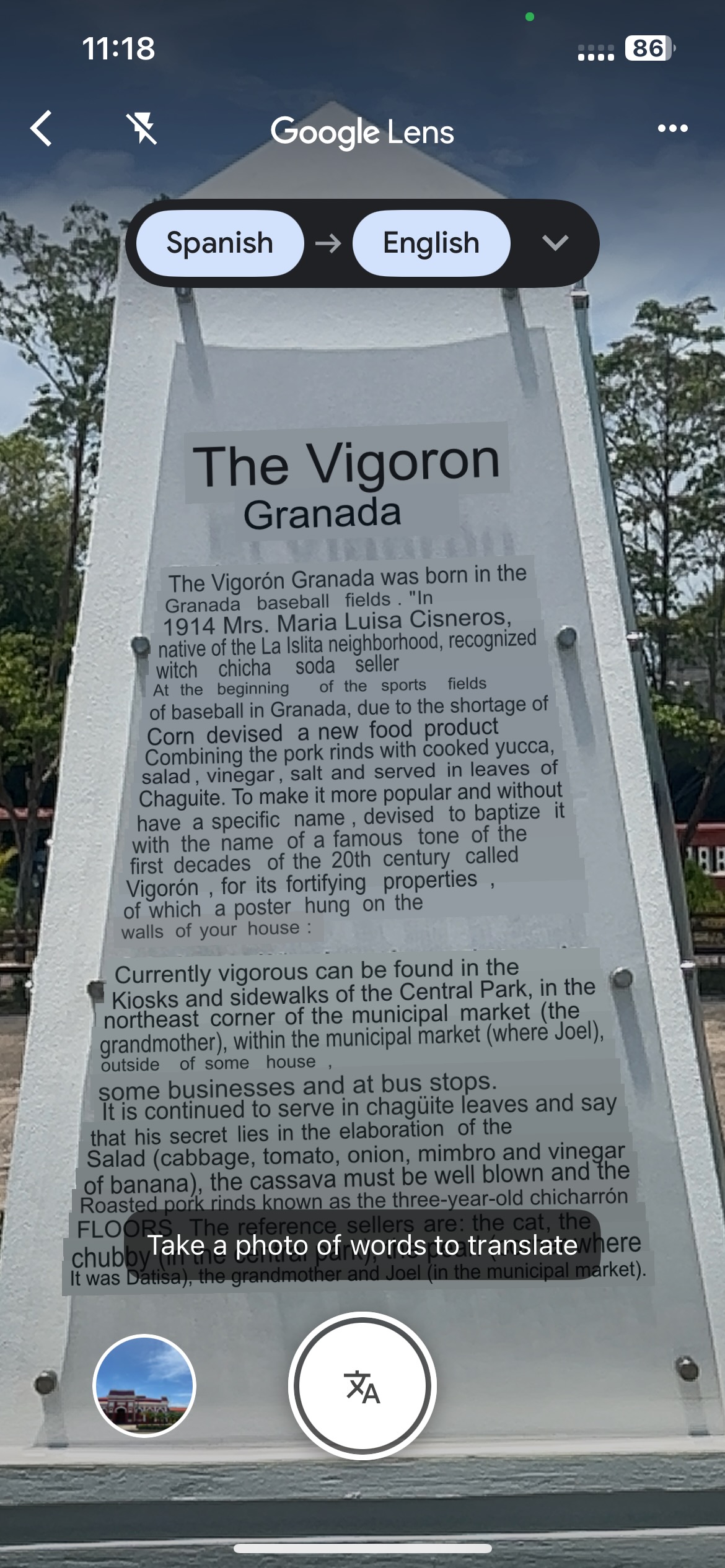
I started my third day by trying to join the walking tour yet again. As fate would have it, I was the only one who showed up. My guide, Enrique, and I had a good laugh. Being a great guide, he offered to show me where to find the best Vigorón (a local delicacy).
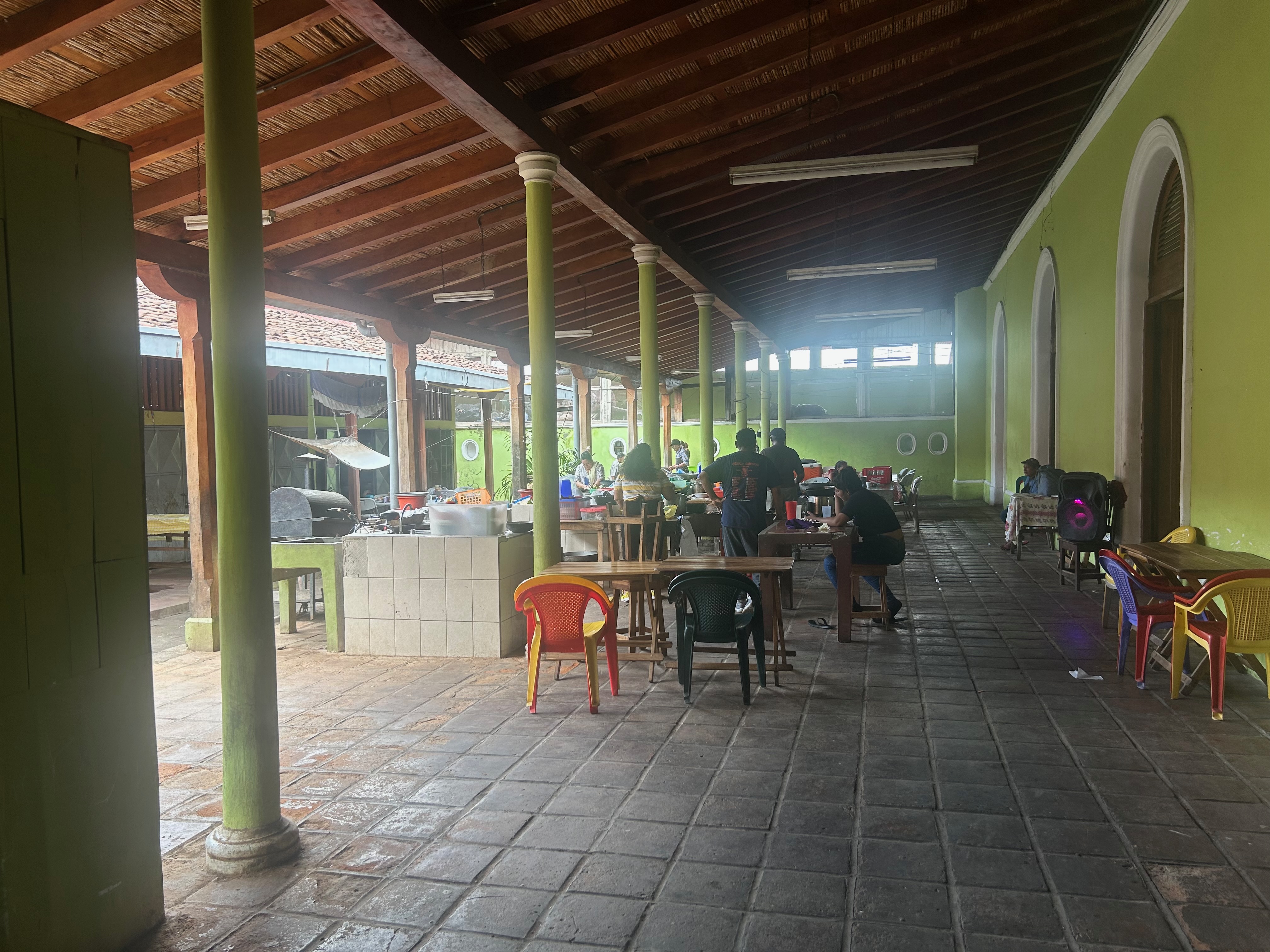
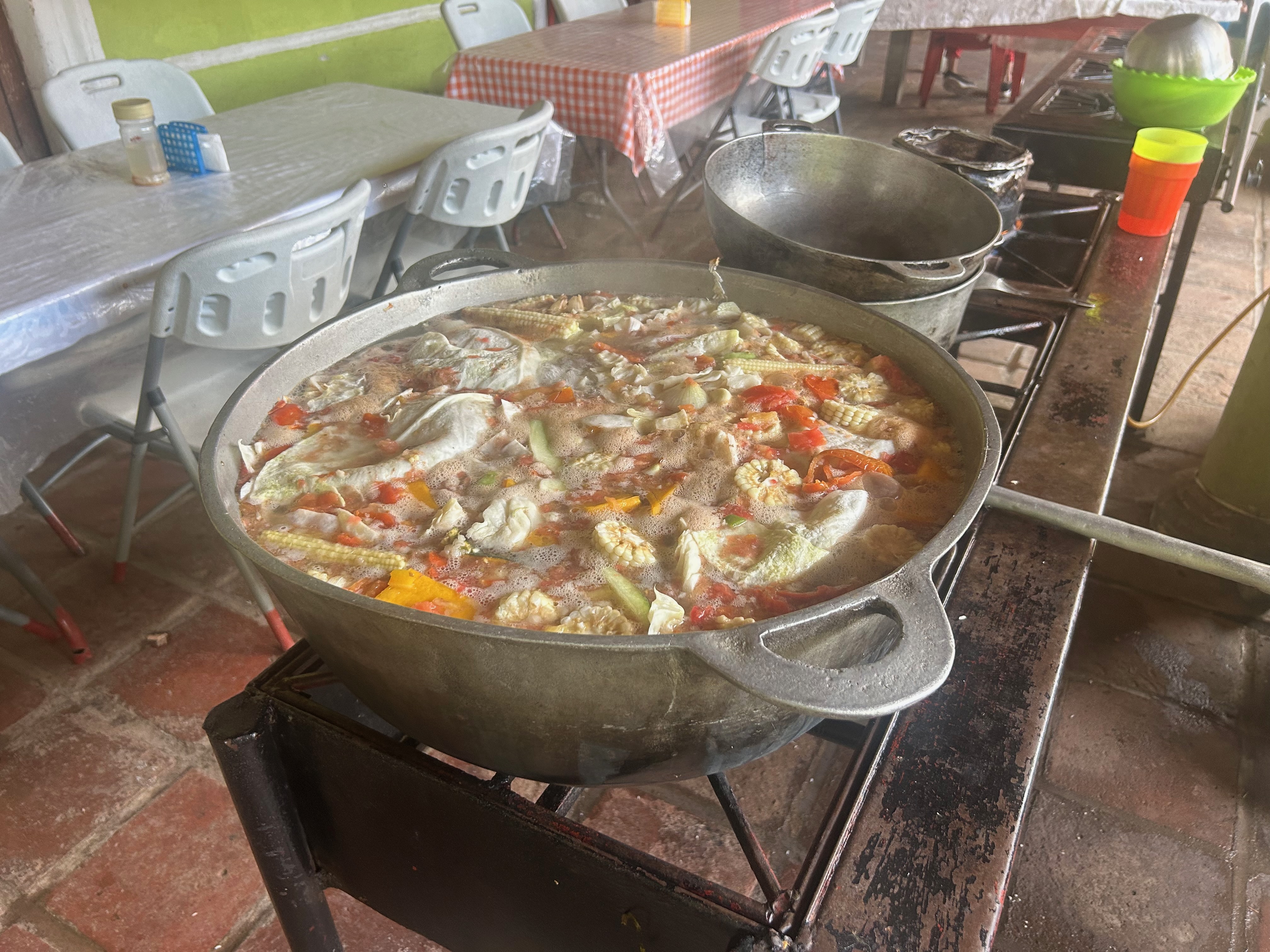
Our search led us to the local market. In the food section, we chatted with an amazing elderly man who was making his signature oxtail soup.
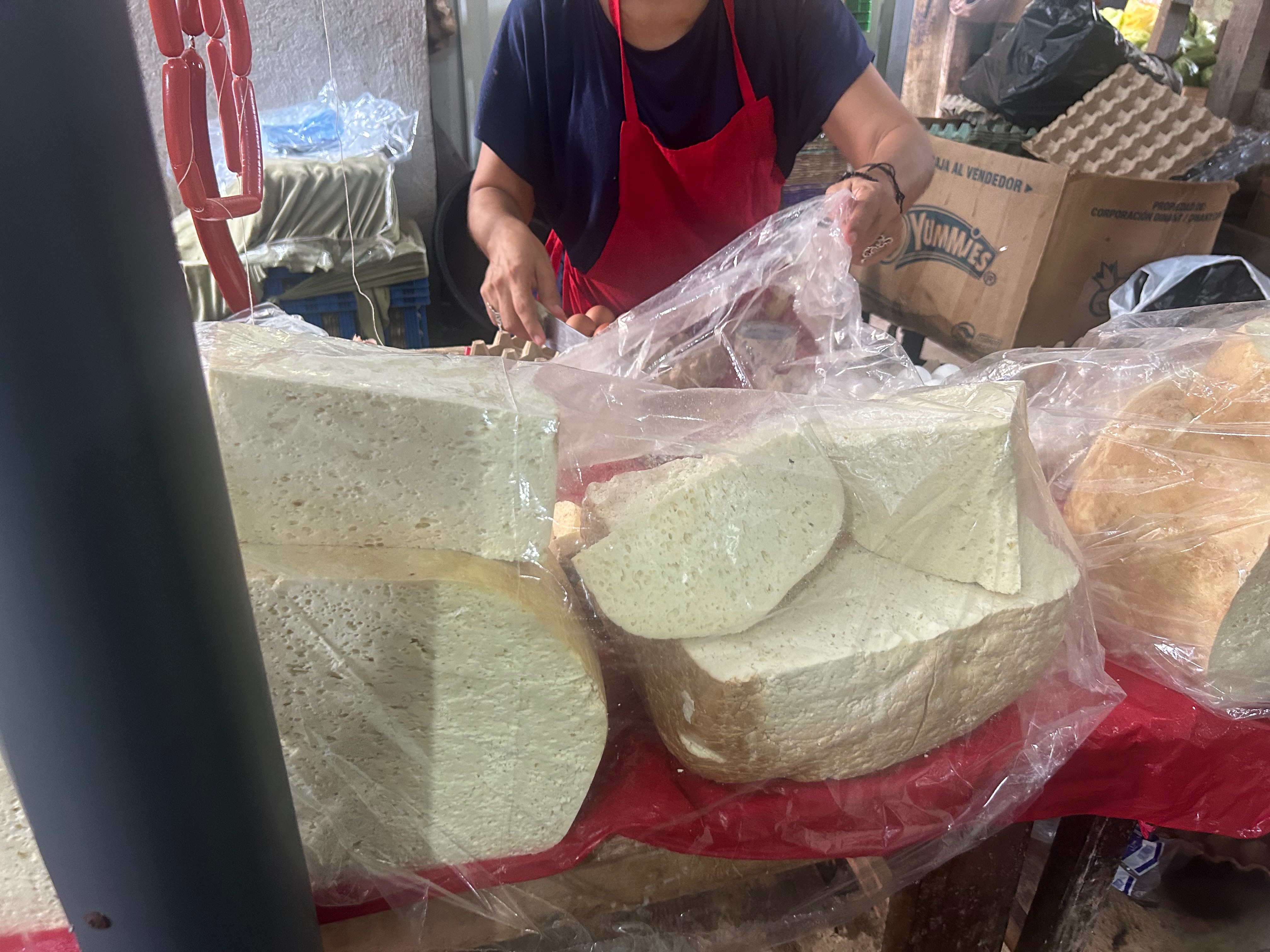
We continued deeper into the market and stopped at a cheese vendor to try some salty cheese. Out of nowhere, Enrique introduced the vendor as his girlfriend, and she playfully started to punch him – it was hilarious.
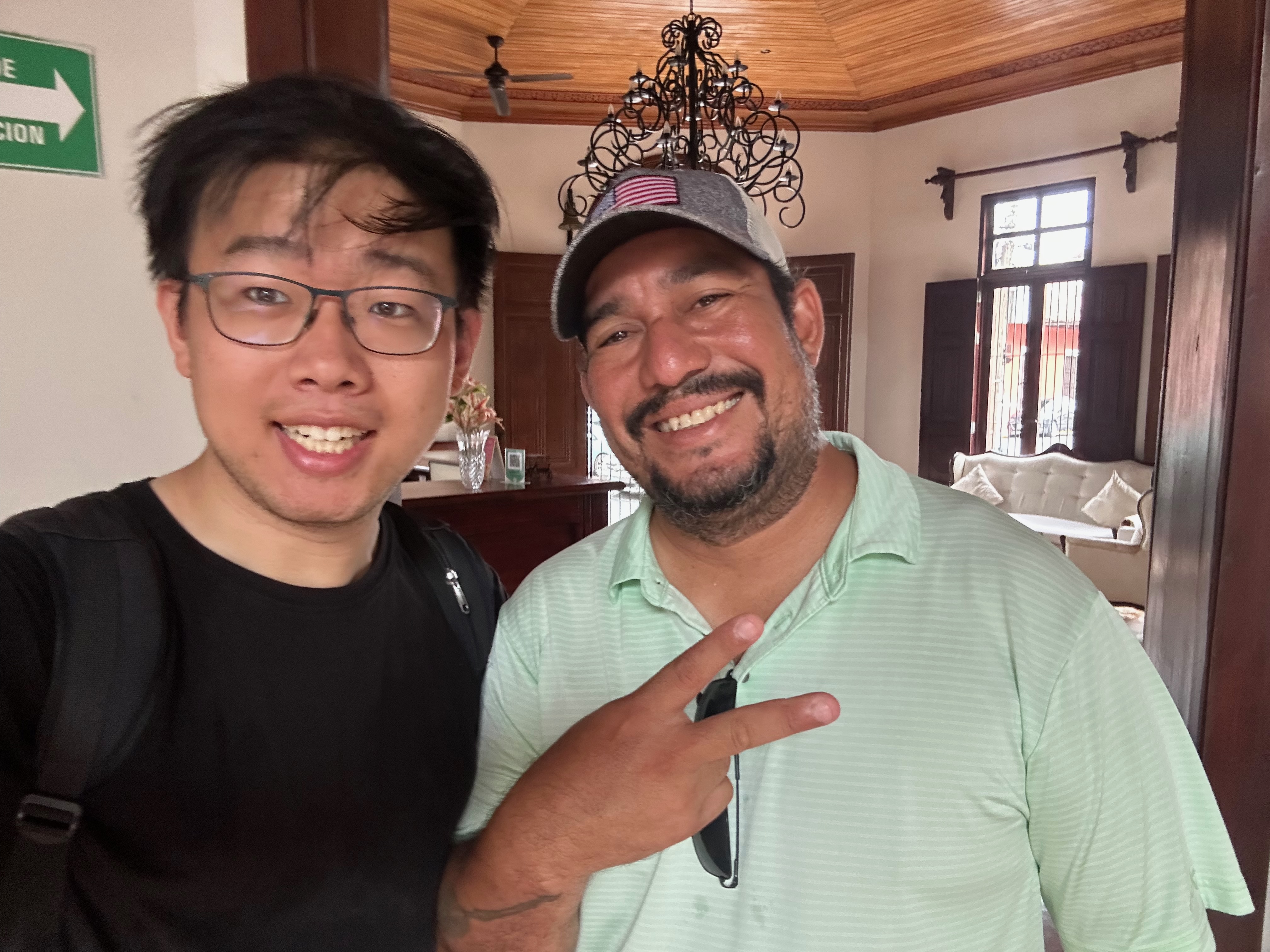
He spoke in-depth about the surrounding fancy colonial buildings, discussing their history of abandonment and restoration.
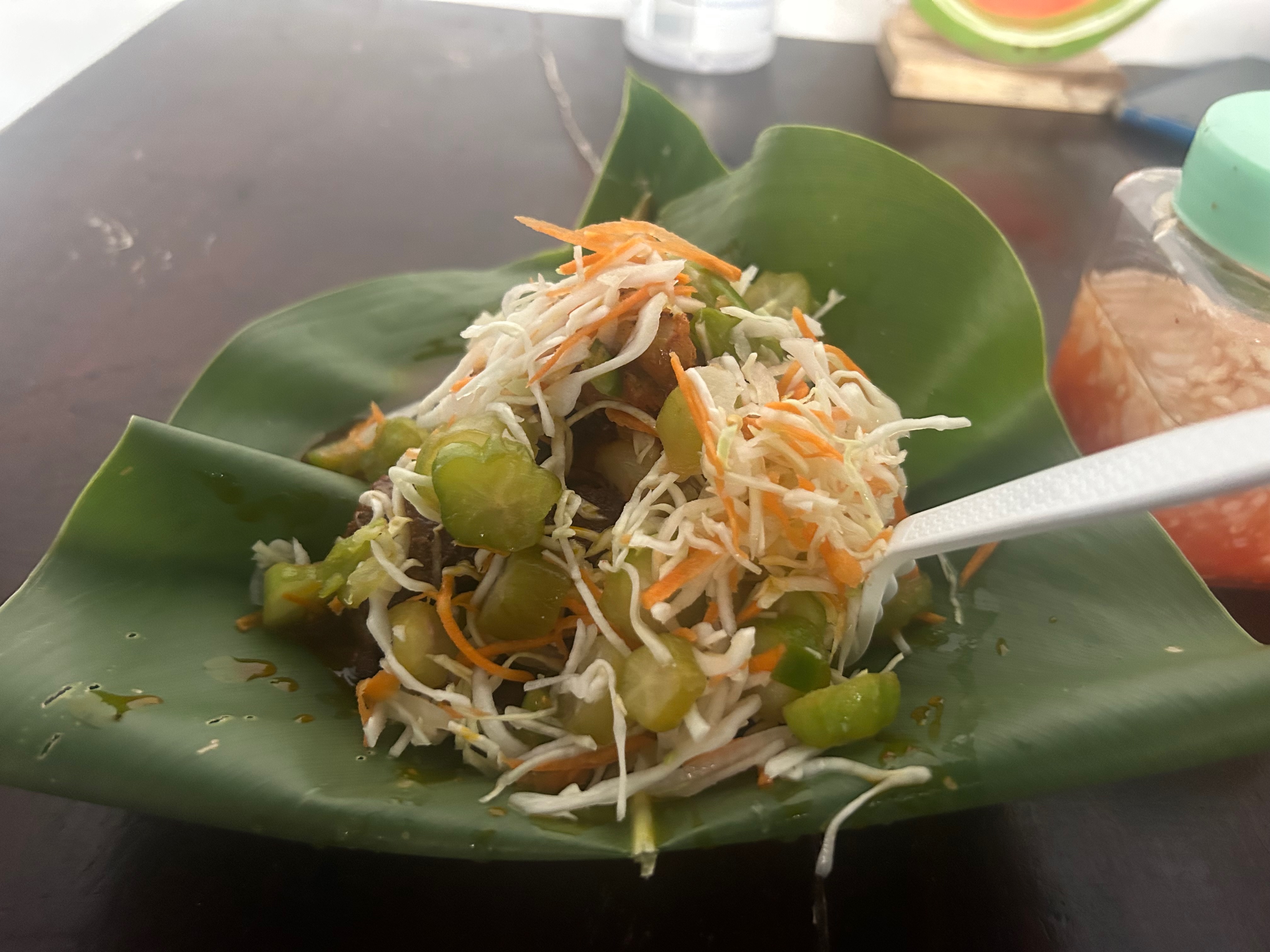
True to his word, we grabbed the most delicious Vigorón, an amazing combination of tender beef, steamed cassava, and a sour salad.
We walked some old streets. There was a building on a street formerly nicknamed “yo-yo street” as it was once part of the red-light district. He mentioned that one of the houses there was still original clay and wood, with no steel bars or foundation. He hoped the house would remain original for the rest of his (he was 42) lifetime.
As fate would have it, the night after my tour with Enrique, I stumbled upon a YouTube video about the Masaya volcano from three years prior, and there he was!
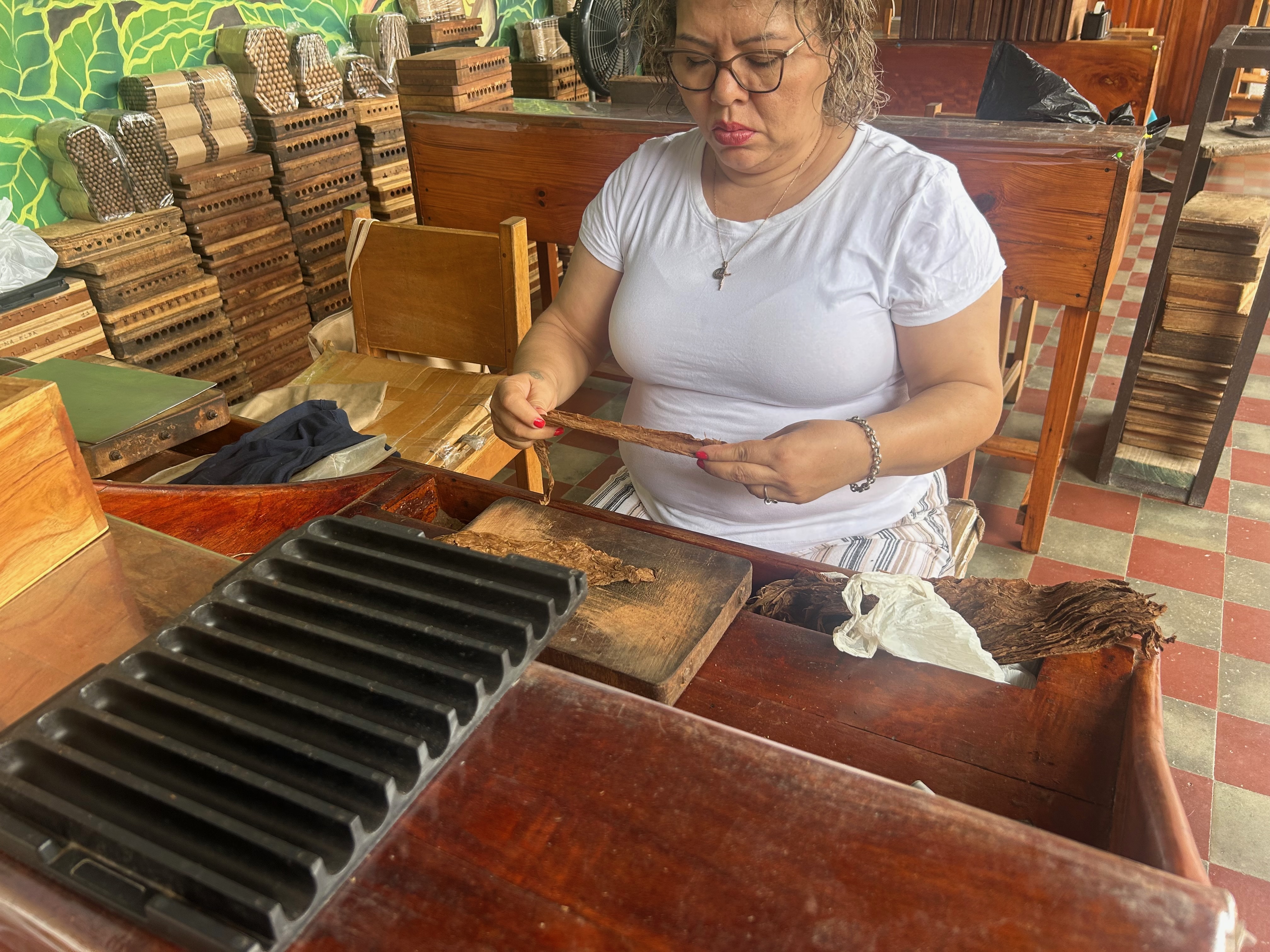
I continued the day on my own, walking to parks and churches, and then went to a cigar factory for a tour of cigar making.
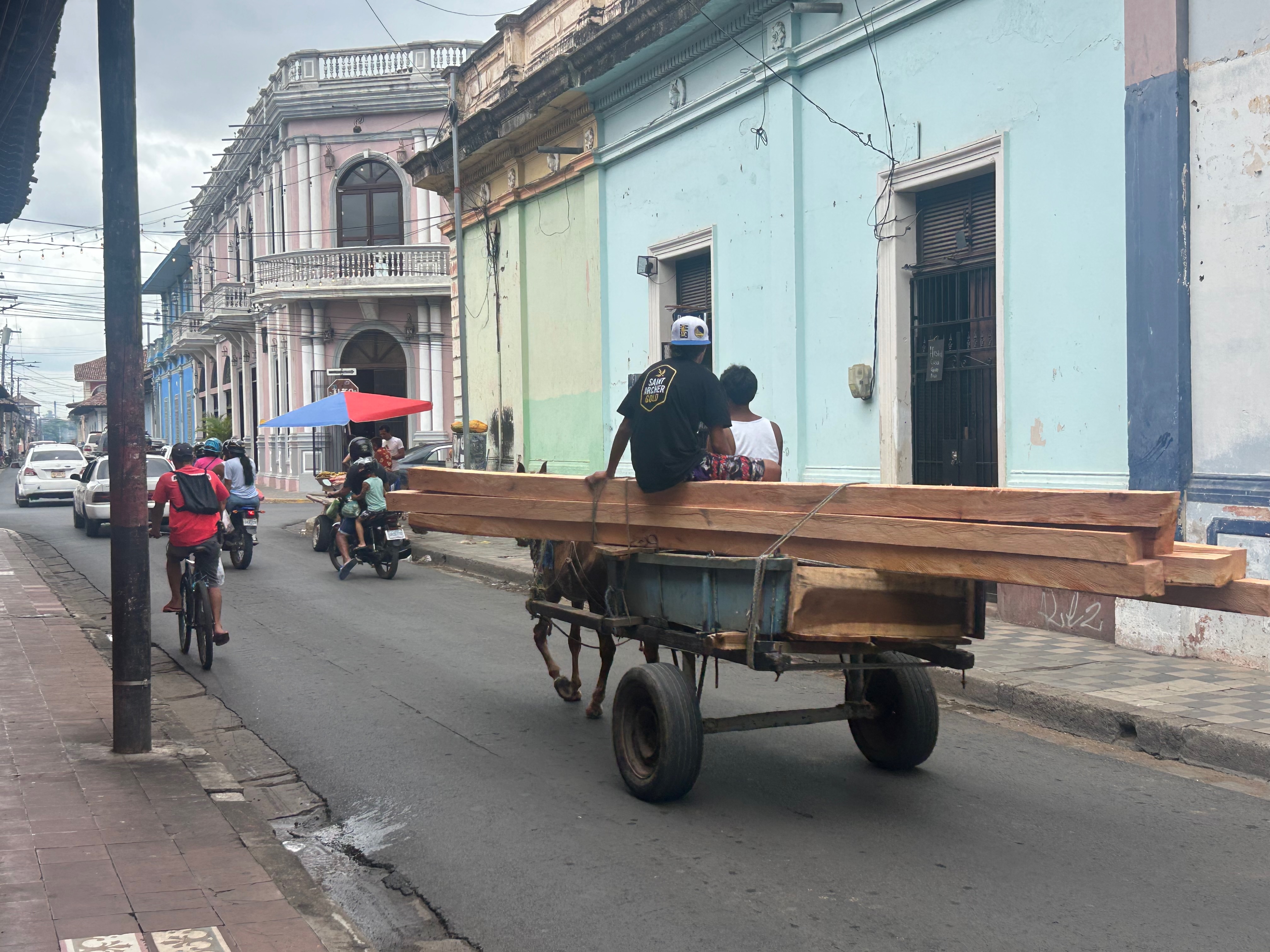
 Horses are everywhere in the city as a means of transportation; I don’t think I had seen this sight since my 2022 Guyana trip.
In the afternoon, I got a haircut (200 Cordobas) and picked up a Toña shirt with a Güegüense mask on the sleeves.
Then I waited patiently to learn the secrets of chocolate making at the museum.
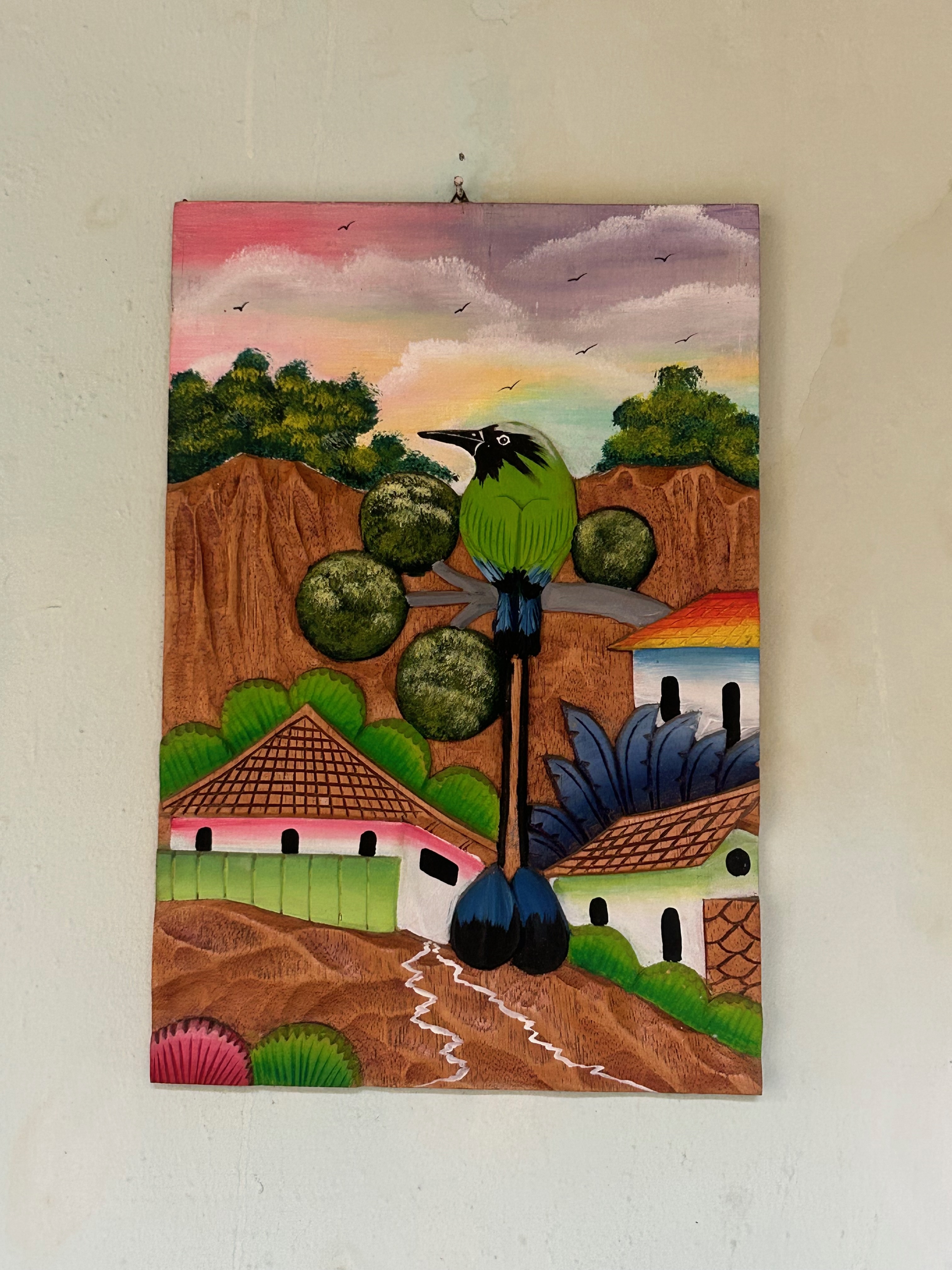
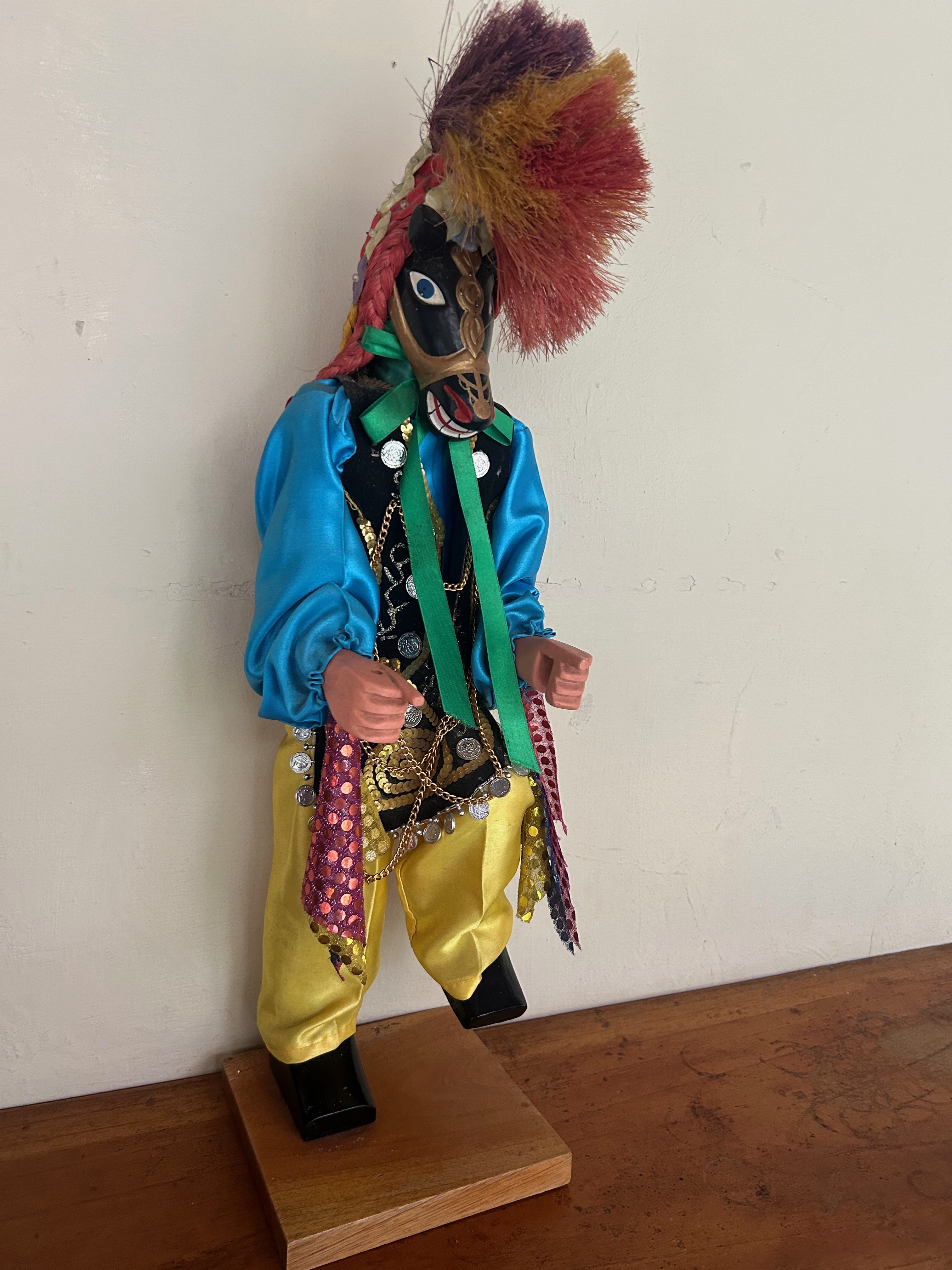 Some cultural tidbits from the Museum decor, featuring the national bird (shared with El Salvador) and the El Güegüense masks
Antony was my teacher, and he made the two hours fly by. He was very interactive, and we spoke about his time in Germany and Costa Rica.
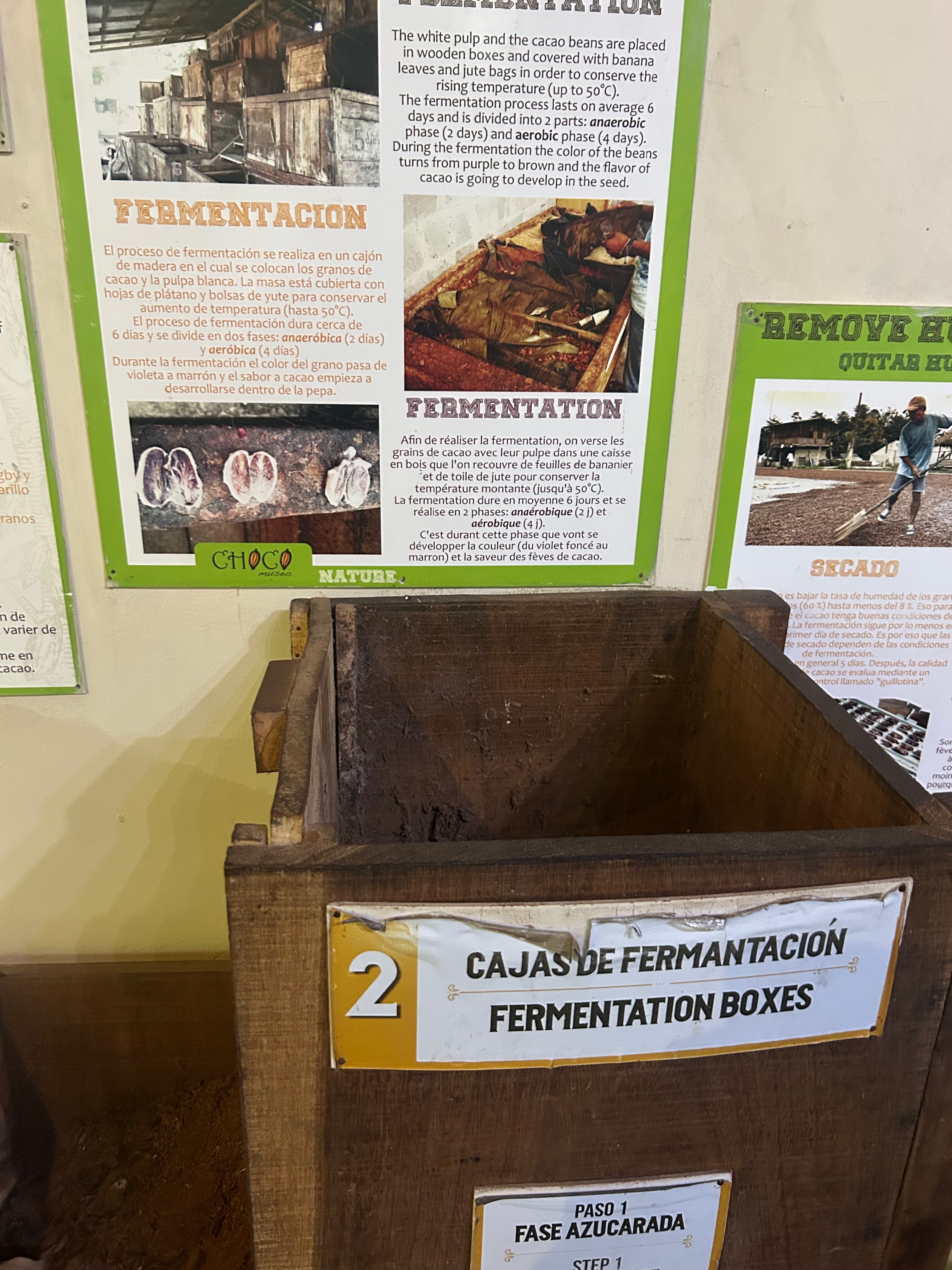
We started by picking the cacao fruit from the mini plantation and talked about the fermentation process that turns the seeds from white to dark brown.
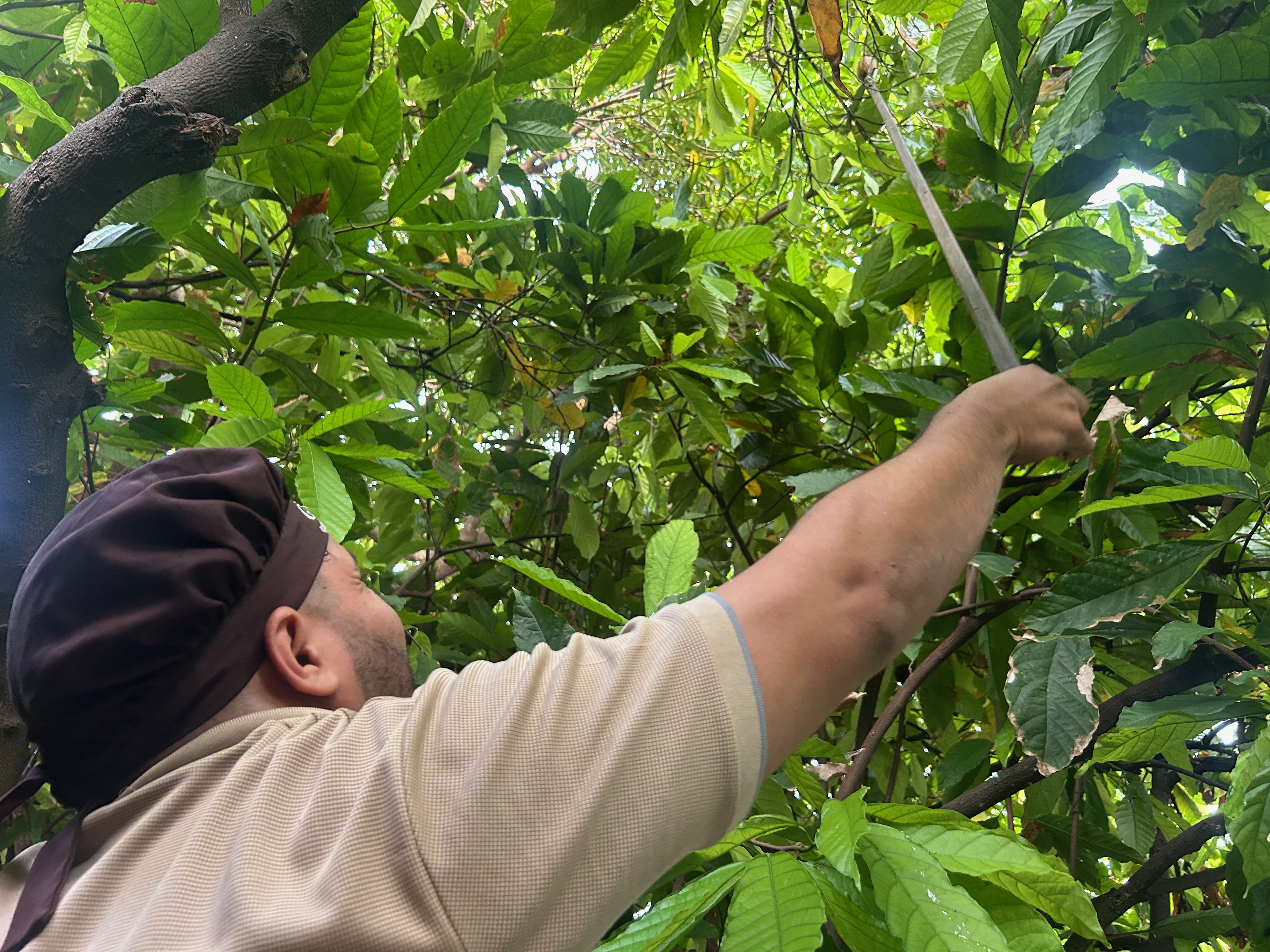
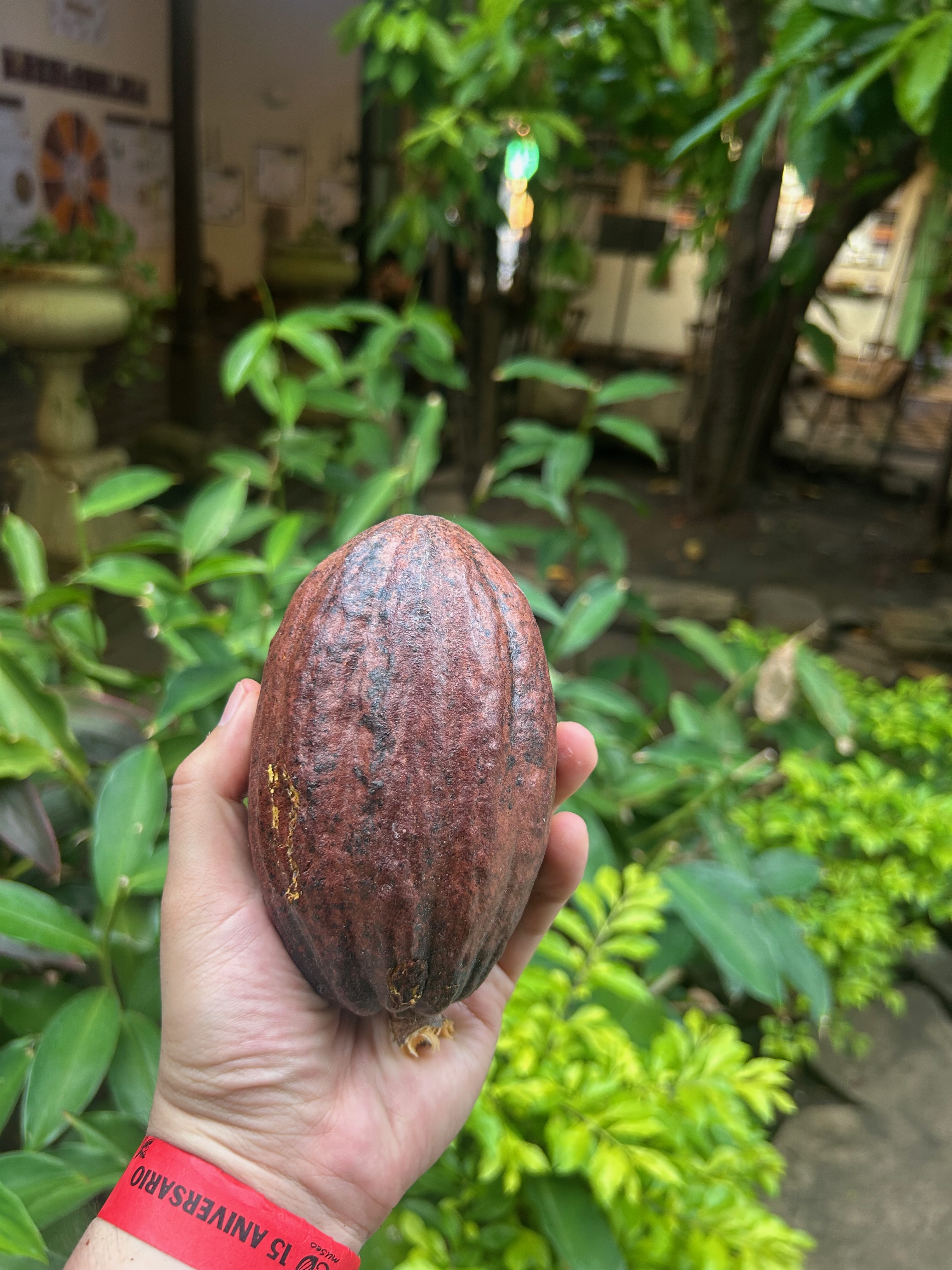 Because we were past the optimal harvest season, the seeds were already sprouting inside.
We then started roasting the seeds, which made noises like popcorn.
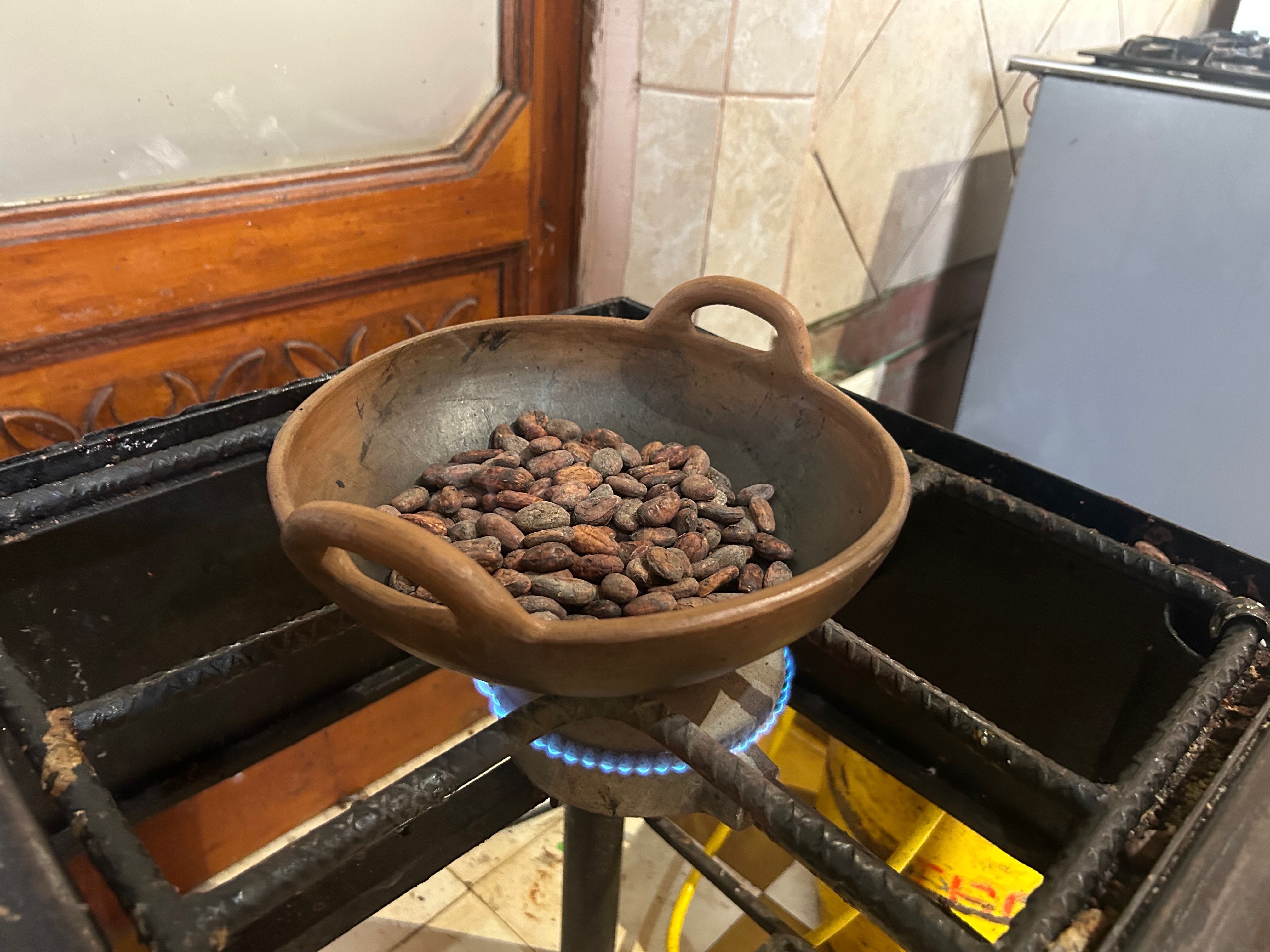
After they cooled a bit, we peeled the cacao beans and took the core to a mortar and pestle to grind them into cacao nibs.
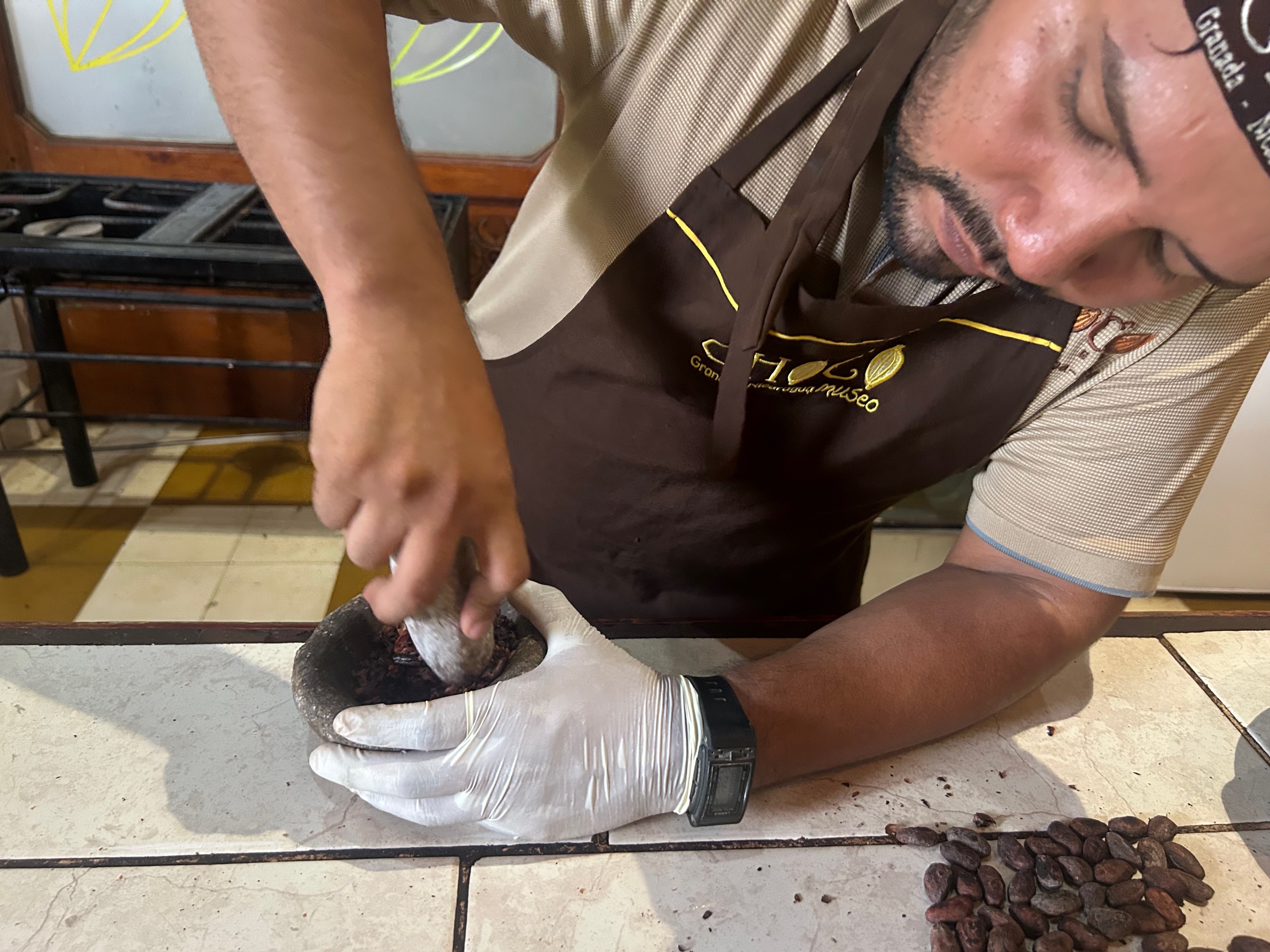
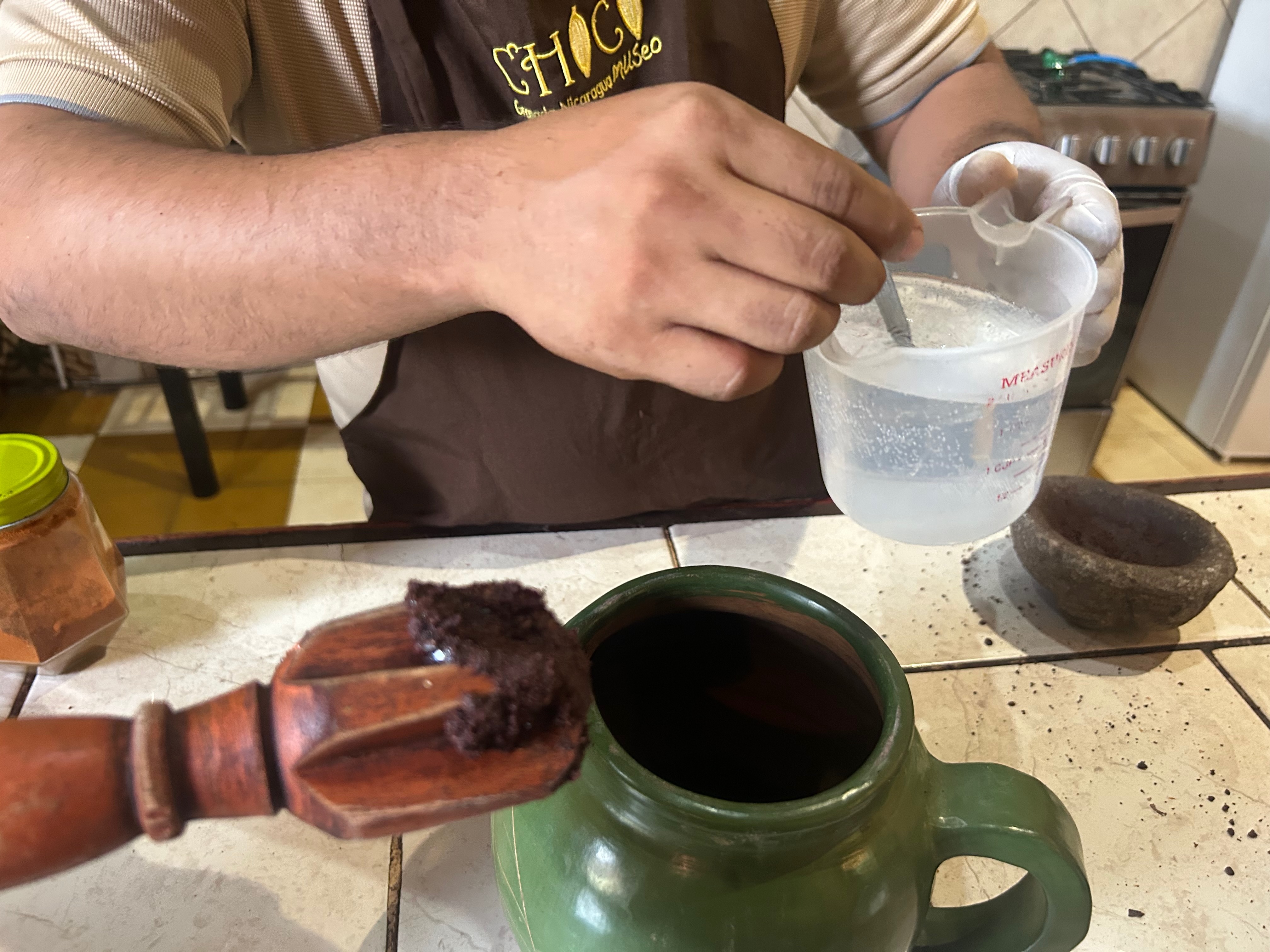
We adjusted the mixtures with water and milk, and after filtering a few times, we had some basic cacao drinks. Because of the time it takes to make chocolate, we did a time skip to the next steps.
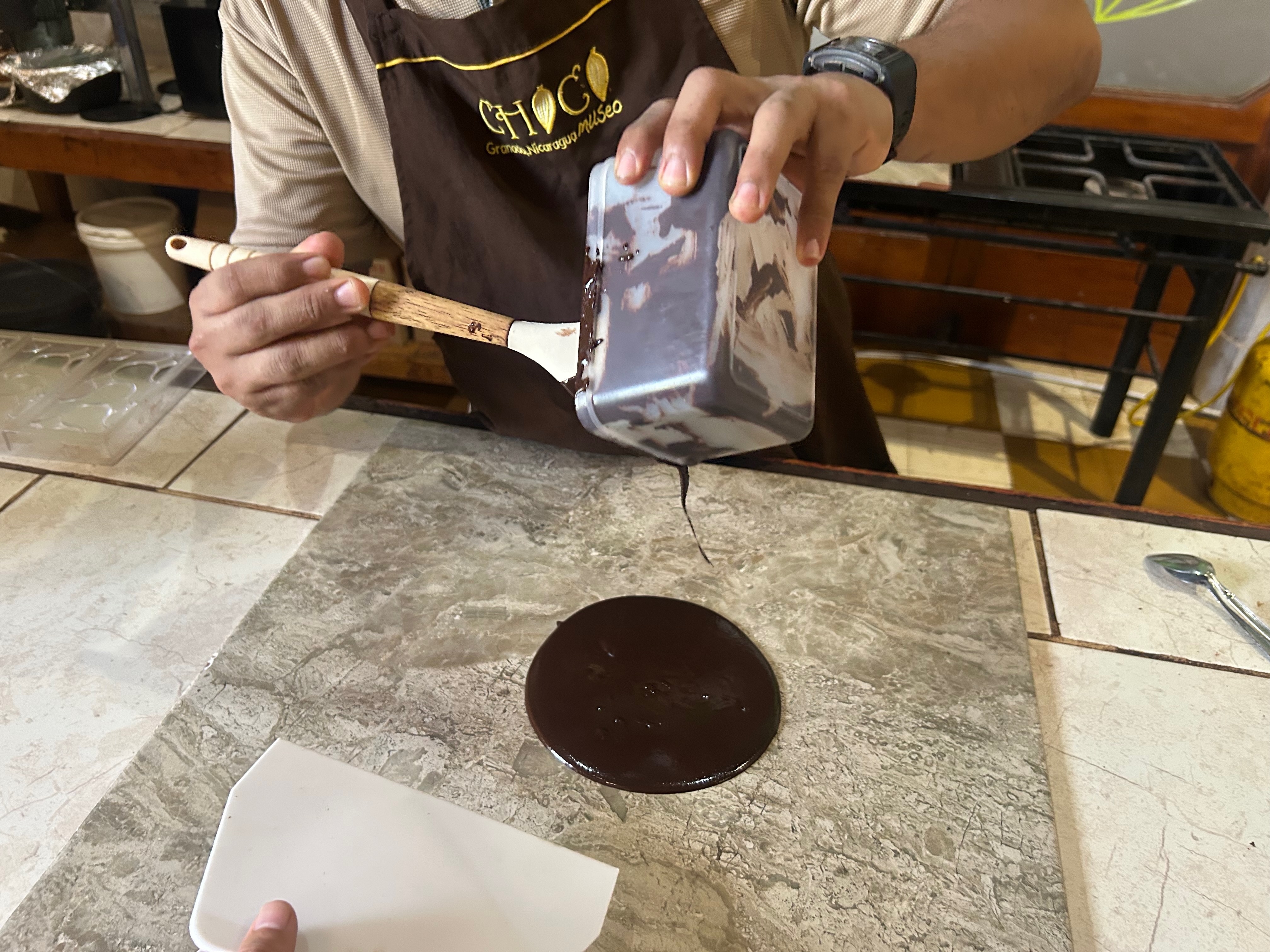
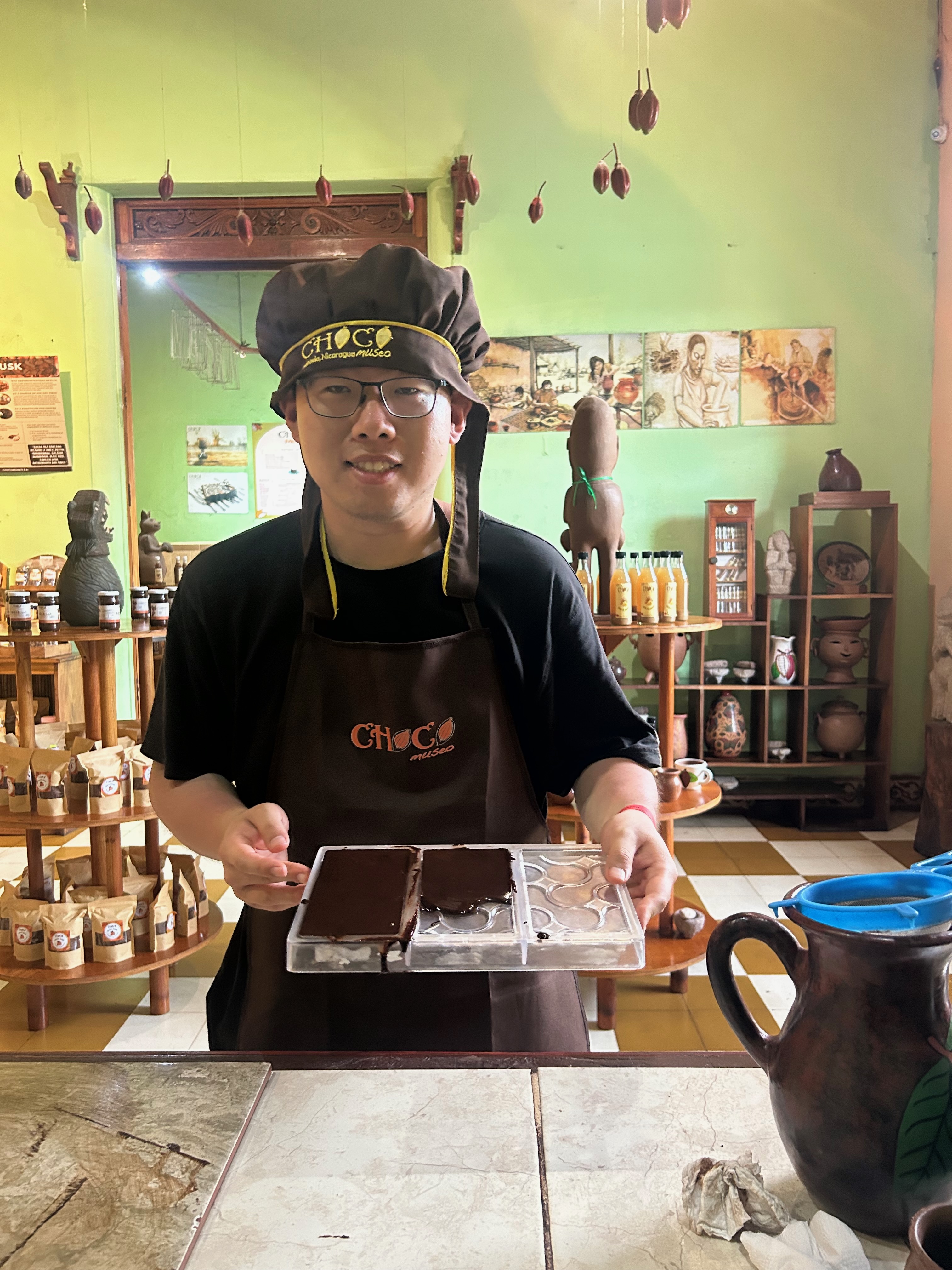
Due to limited storage, I skipped taking pictures of spreading out the chocolate paste mixture and mixing it repeatedly, horizontally and vertically.
The final result was a mold of chocolate liquid that went into the refrigerator.
Some random observations to end the day:
- Gallo Pinto for almost every meal might make you gassy.
- Stray dogs are everywhere here and often friendly.
- The humidity and heat are not something my skin is used to.
- Many family businesses here, like my hotel or the tour guides.
Mombacho Volcano and Masaya
Mombacho is always in the background of Granada, much like Mt. Rainier is for Seattle. I had my Gallo Pinto breakfast and headed out to visit this volcano.
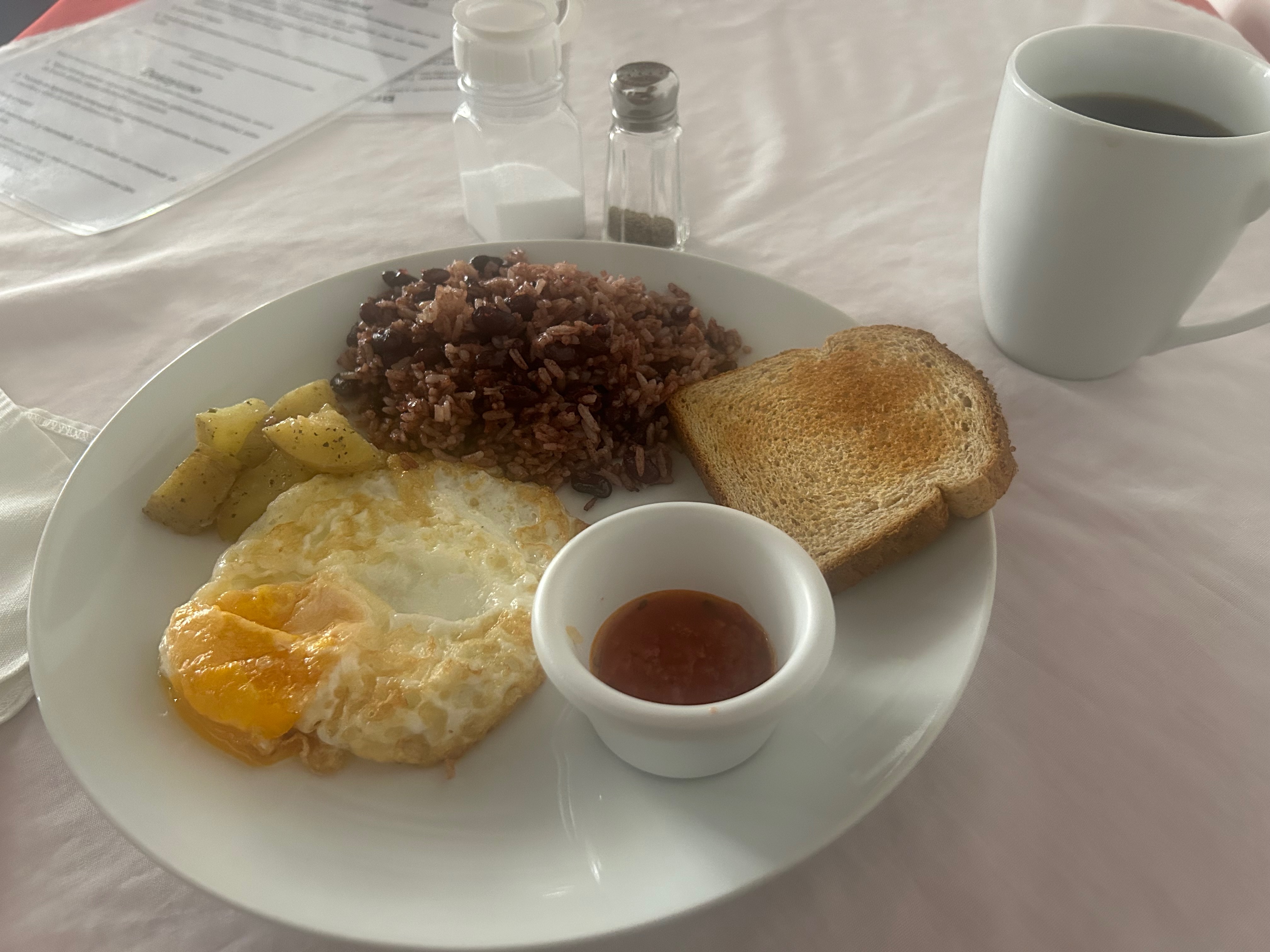
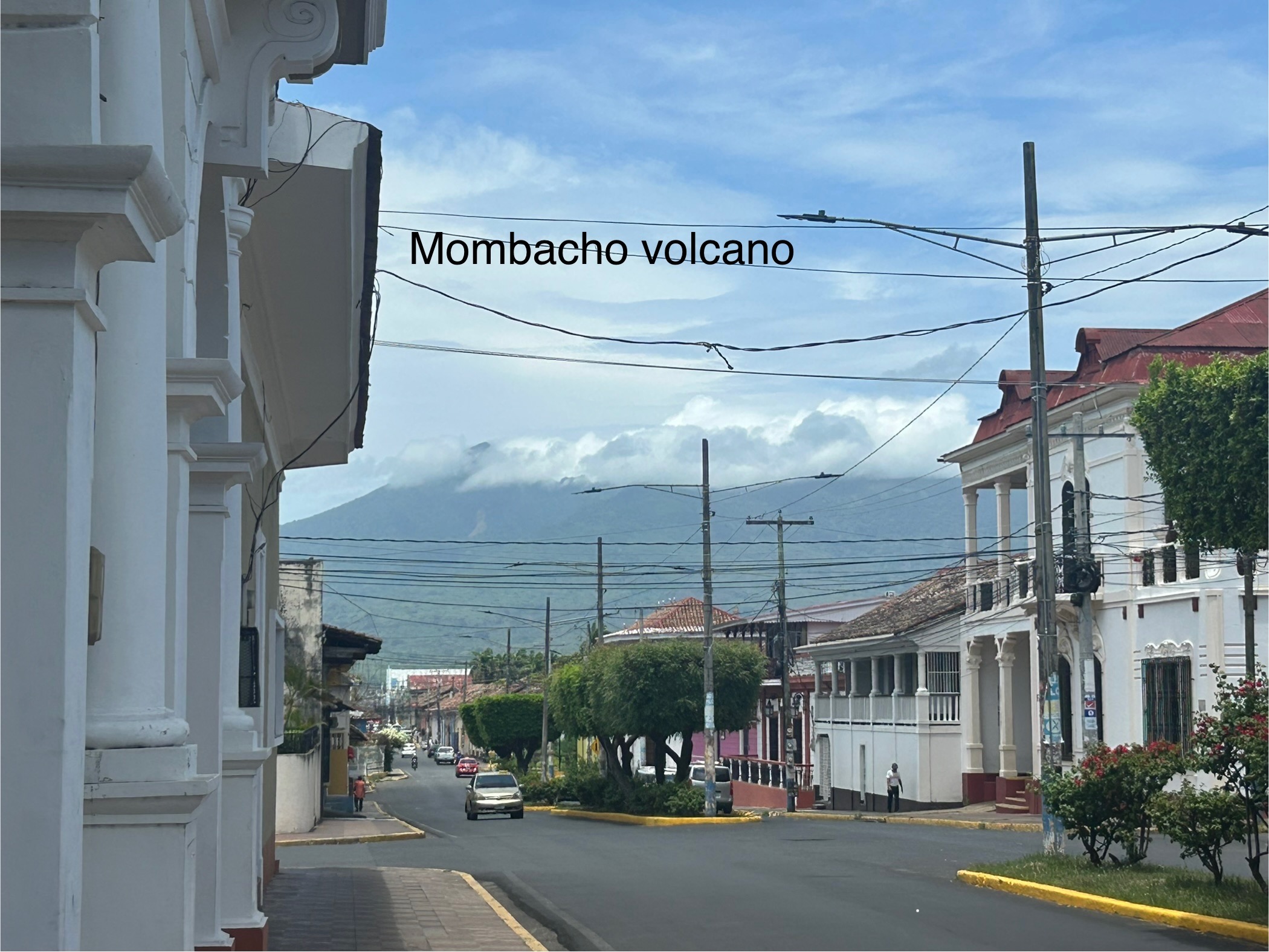
On the way there, my guide Manuel told me about the farmers who cultivate cacao and papaya in the fertile volcanic soil. Manuel also mentioned he was building a guesthouse on the Isletas using bamboo, a technique the Taiwanese taught them in 2015, as bamboo matures in just five years.
We stopped briefly at the entrance and waited to be taken up to the hiking trail in the back of a pickup truck. The ride was bumpy but totally worth it. We heard motmots, the national bird, as well as the occasional screams of howler monkeys.
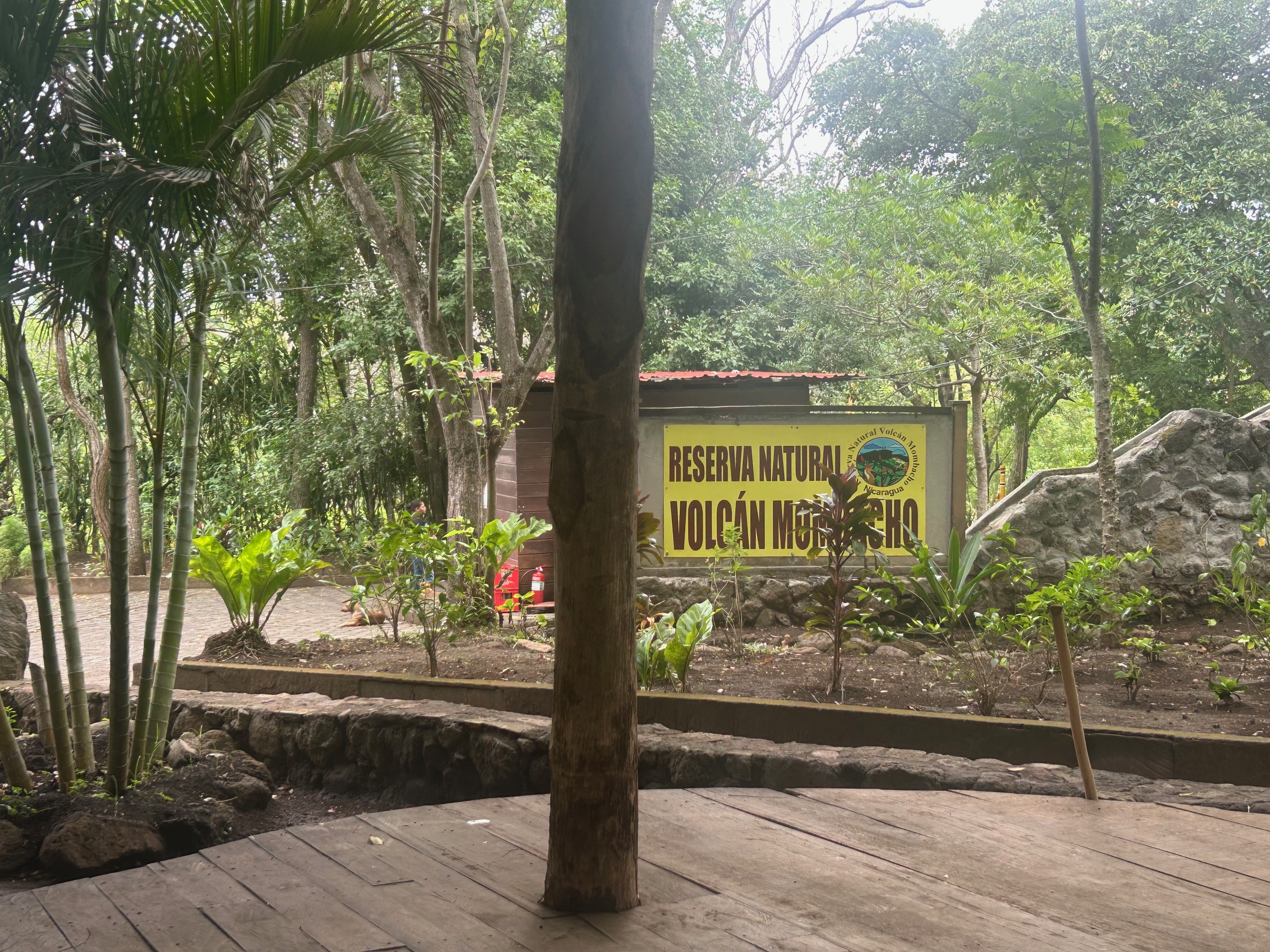
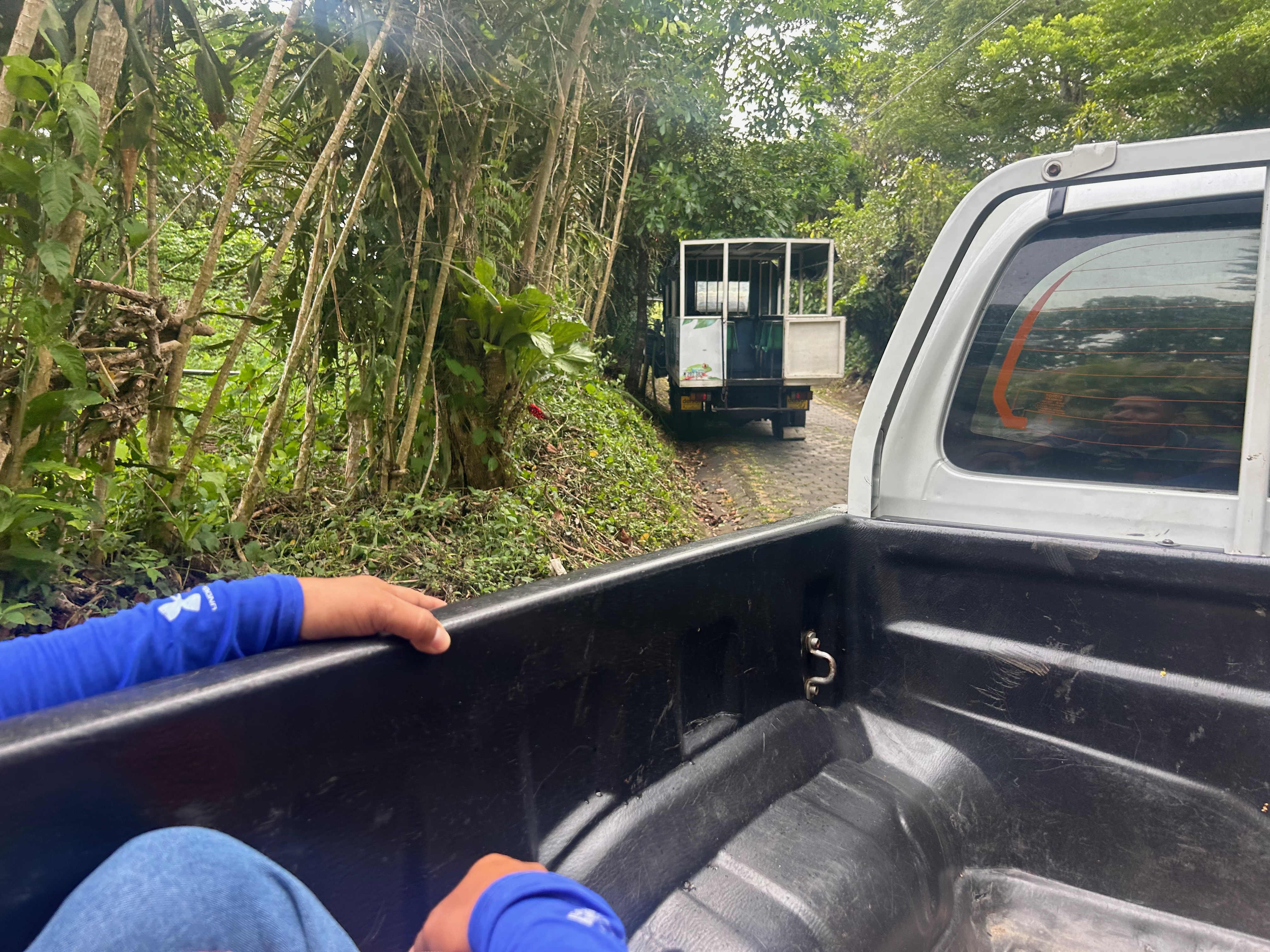 Four people were squeezed into the back of this truck.
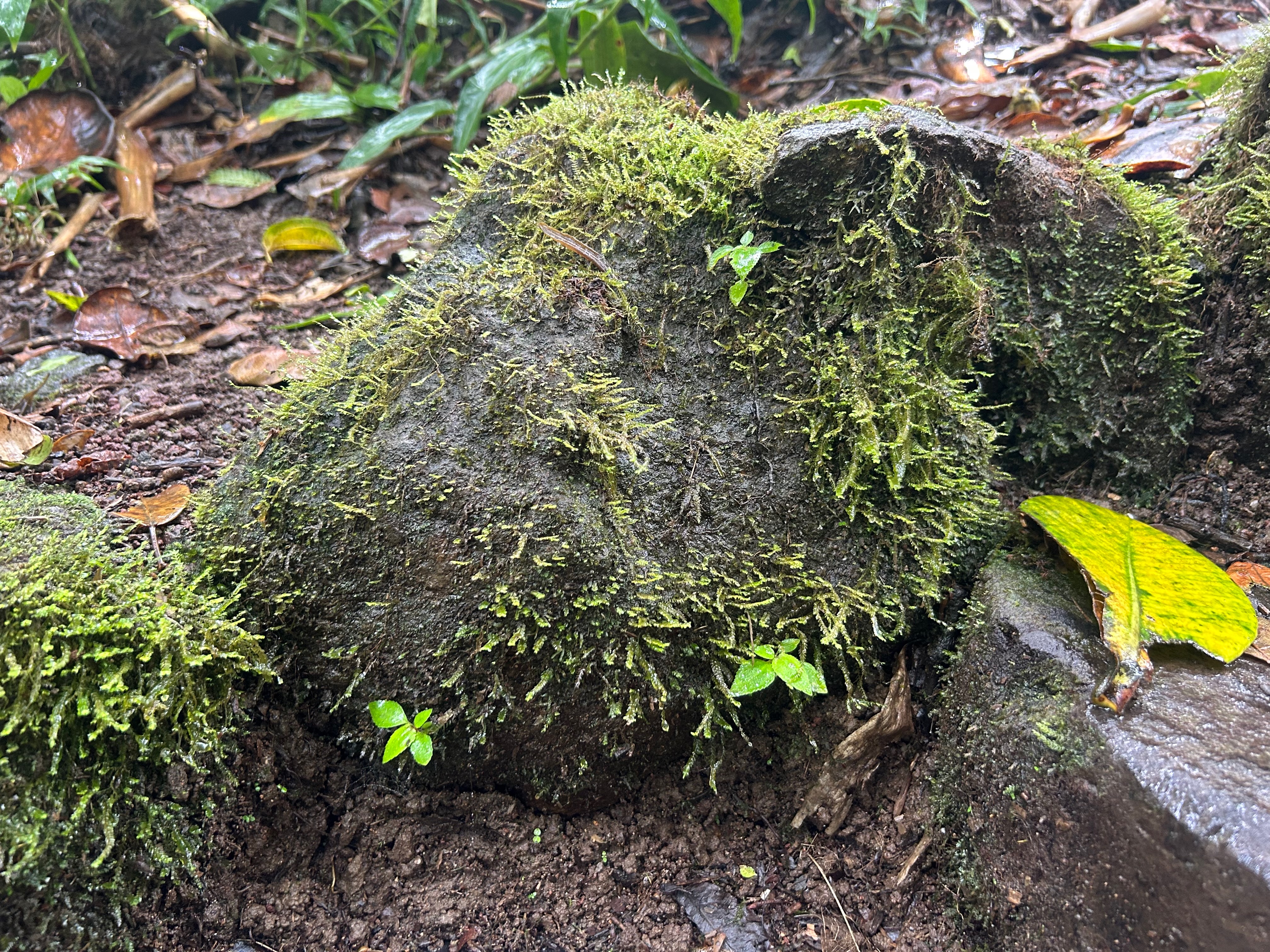
The fog that day was relentless. With some drizzle and low visibility, we trekked the 1.5km basic trail. There are many plants unique to Mombacho.
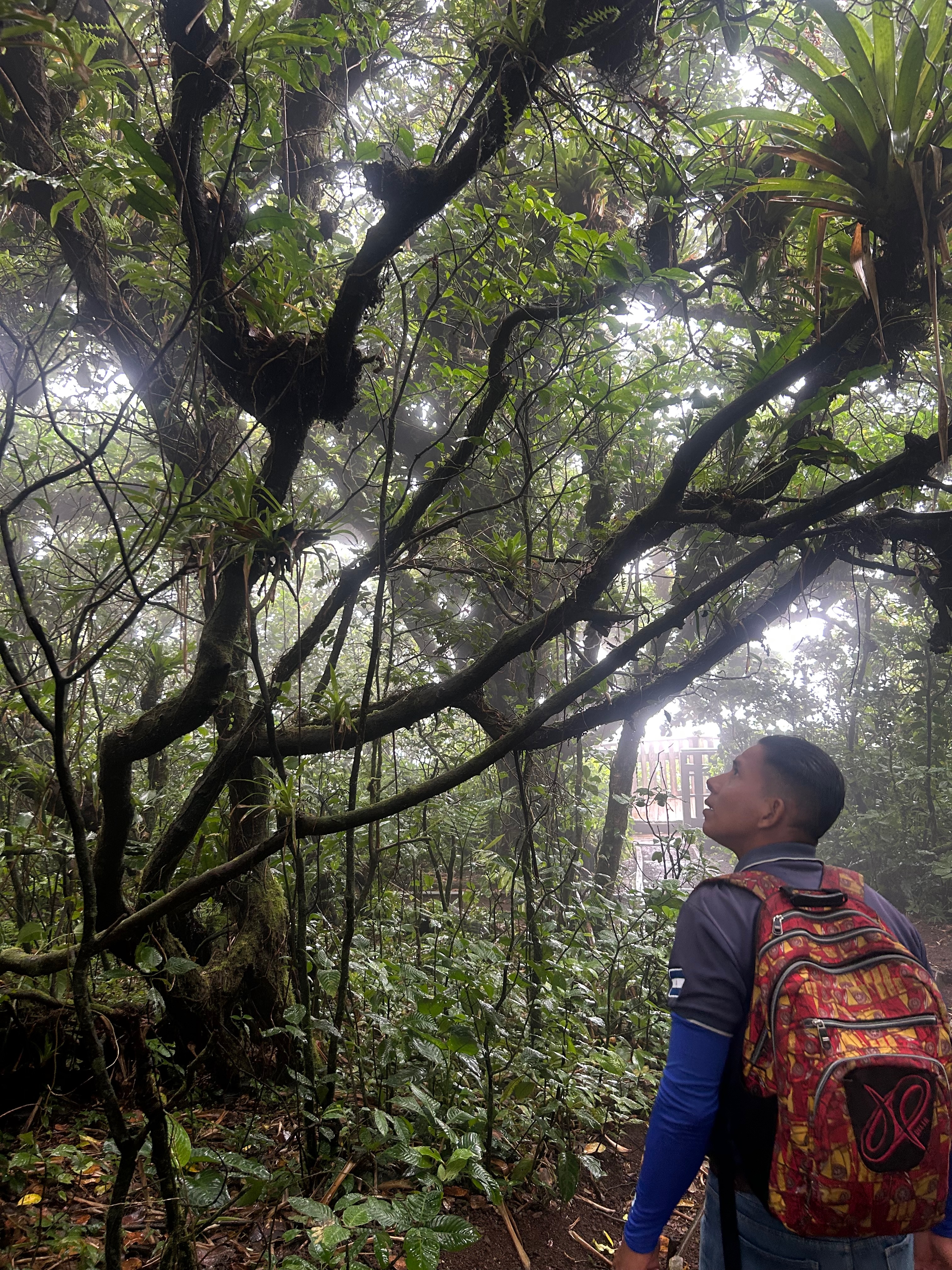
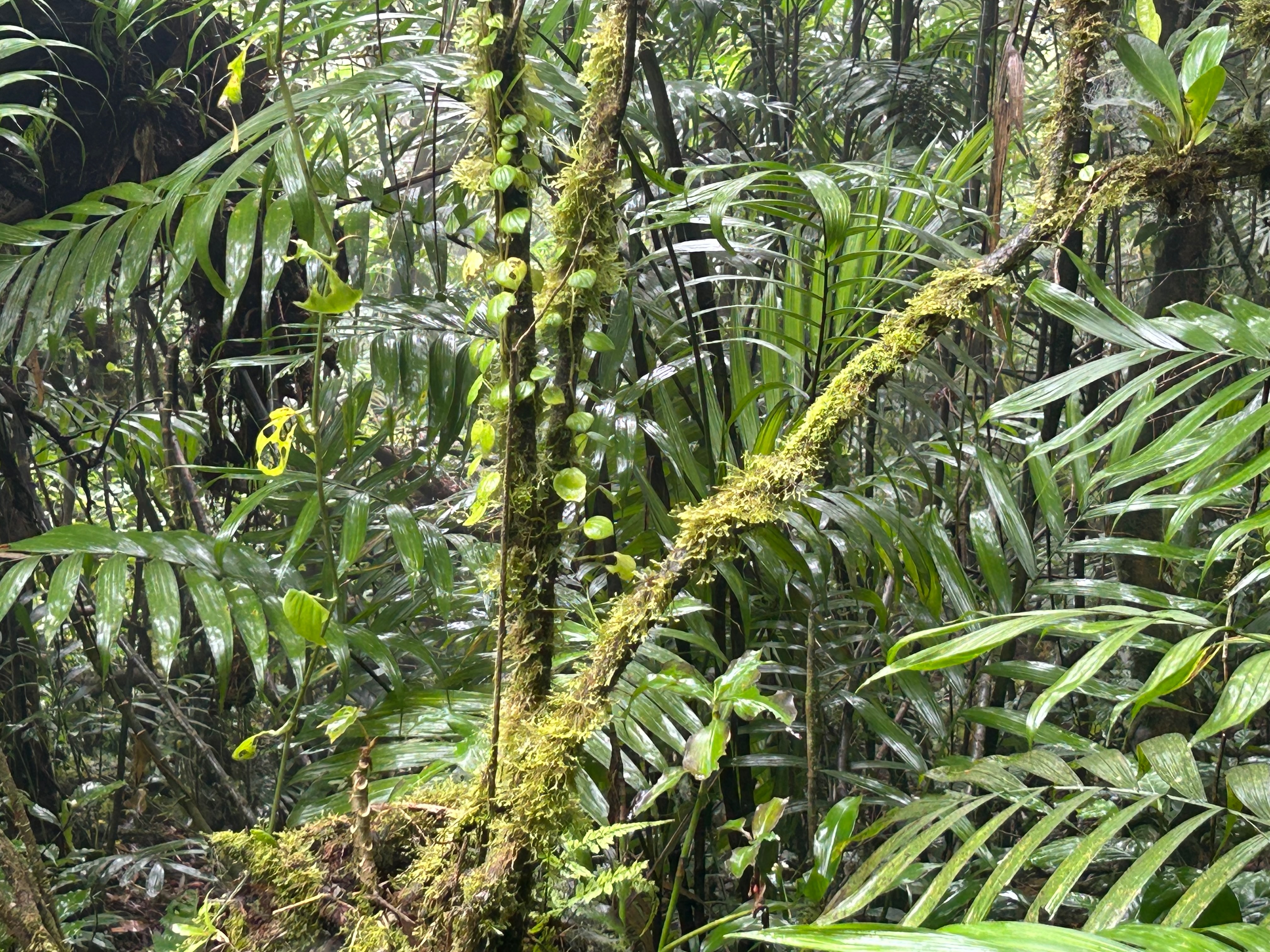
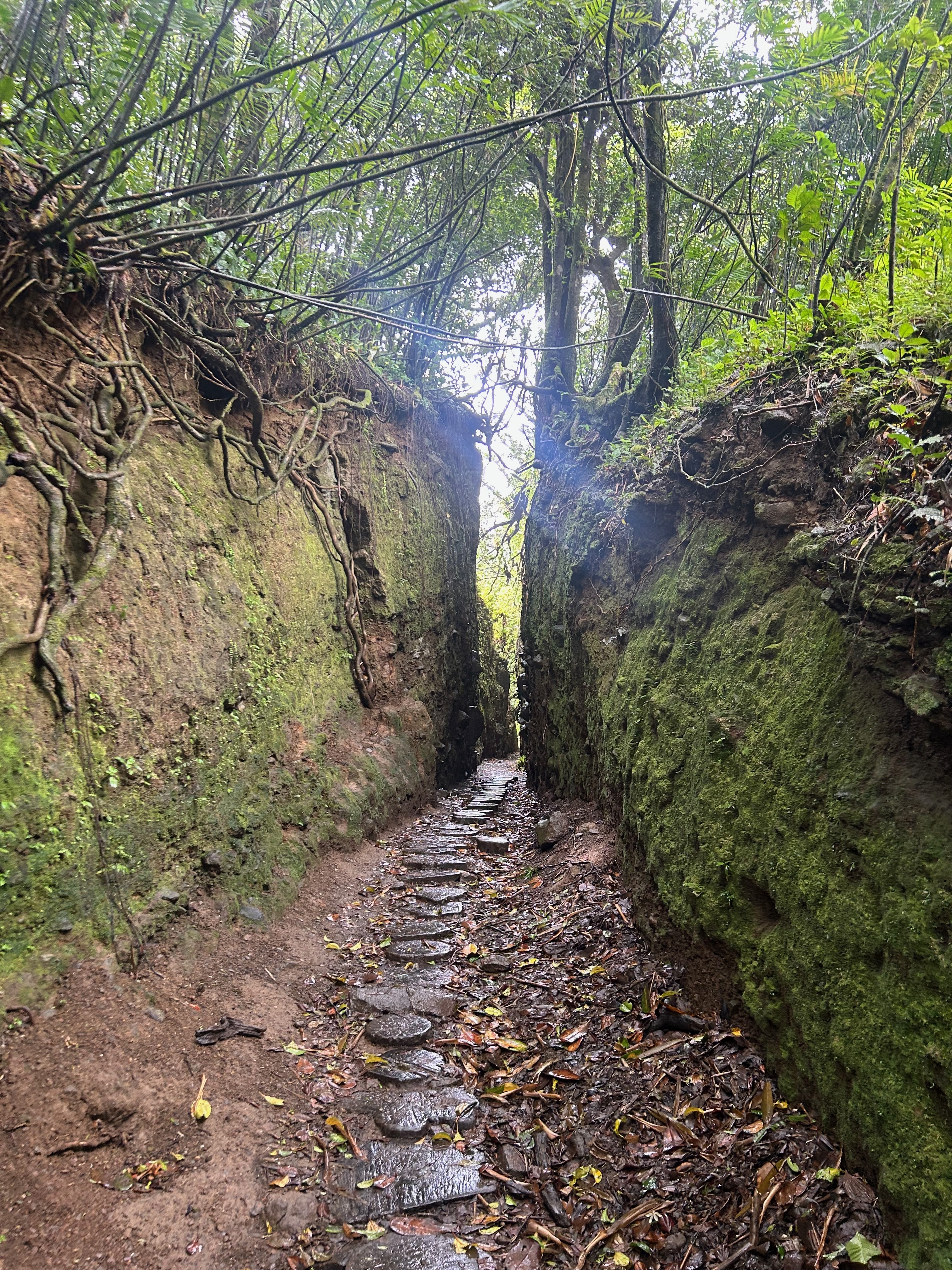
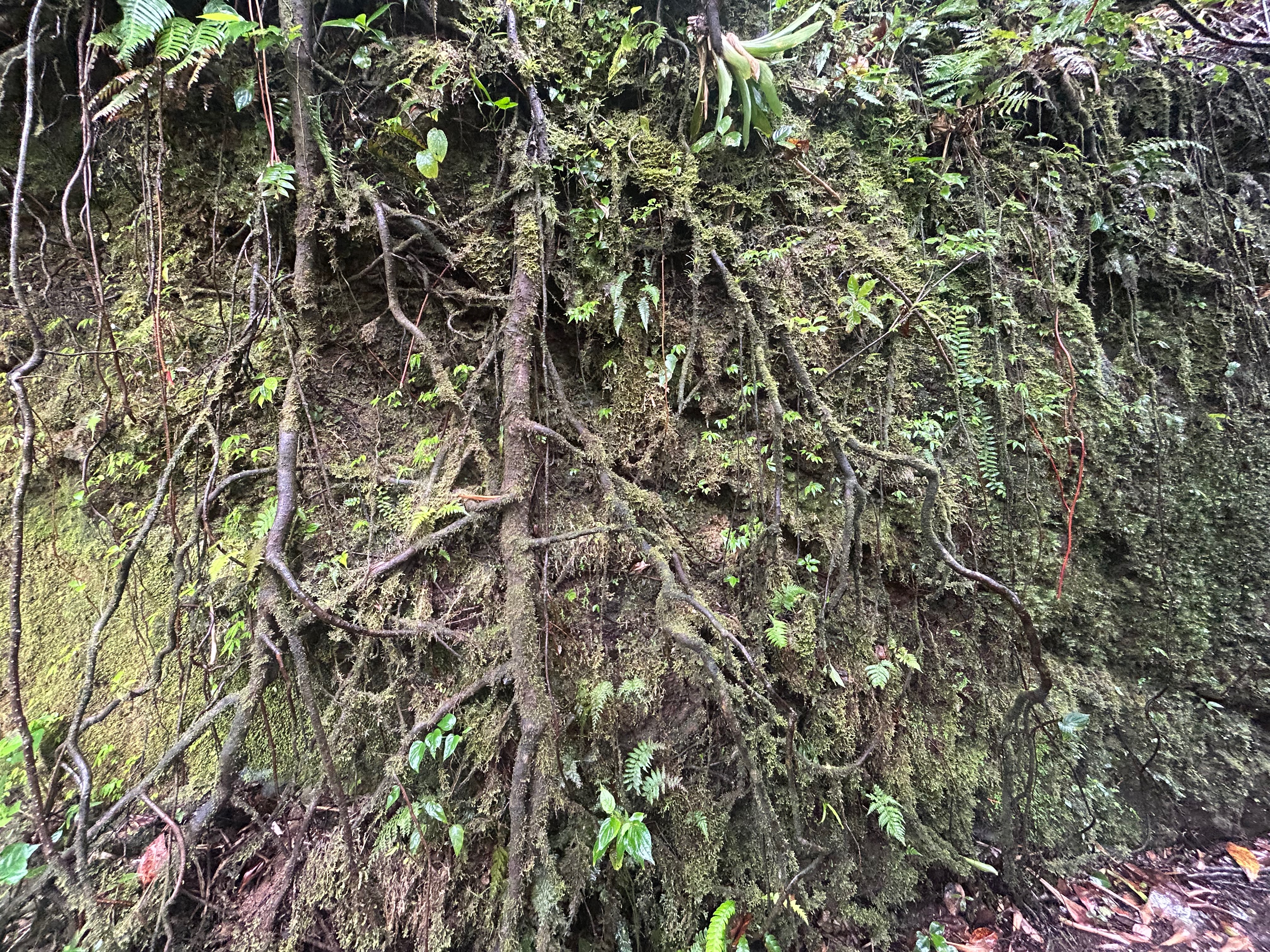 Left: Tunnel. Right: A parasitic plant that grows on trees but is beneficial as it acts as a net to prevent landslides during the wet season.
After (not really) “seeing” the first crater lake, we continued our journey. We saw much fauna and gas holes (fumaroles) resulting from water heating up from the magma, which also prevents trees from growing in those areas.
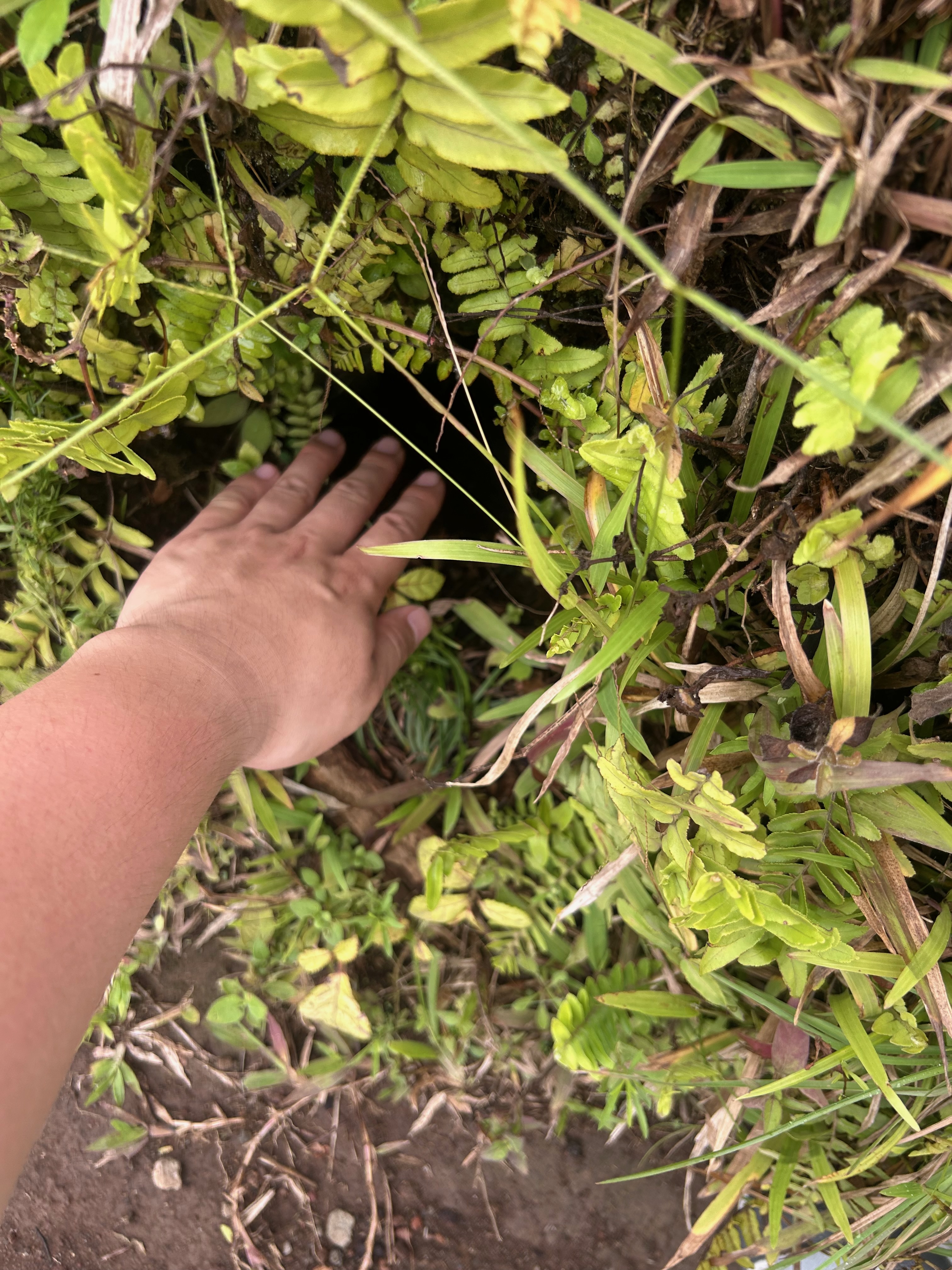
 Left: You could put your hands there to feel the warmth or use your nose to smell the sulfur.
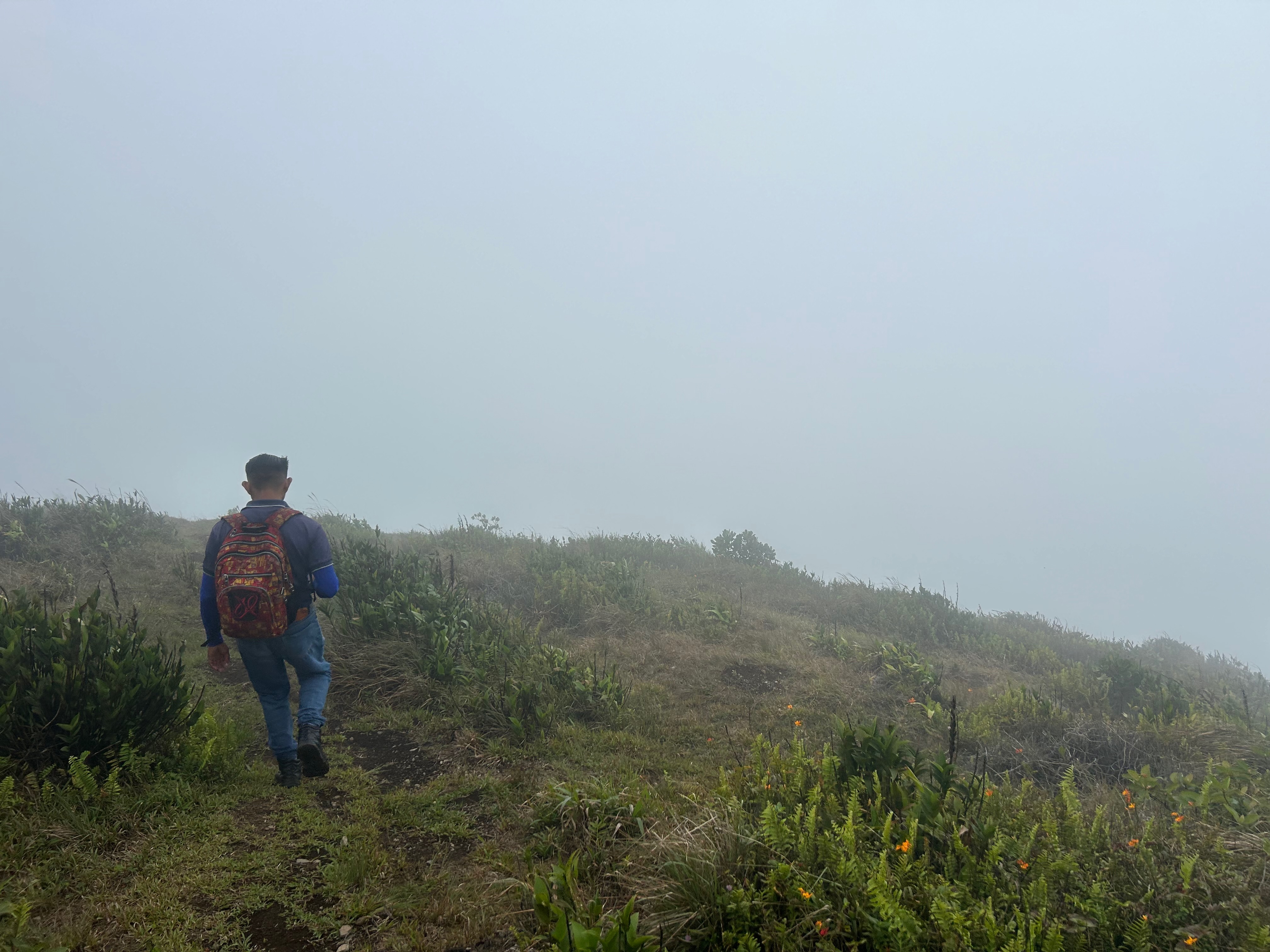
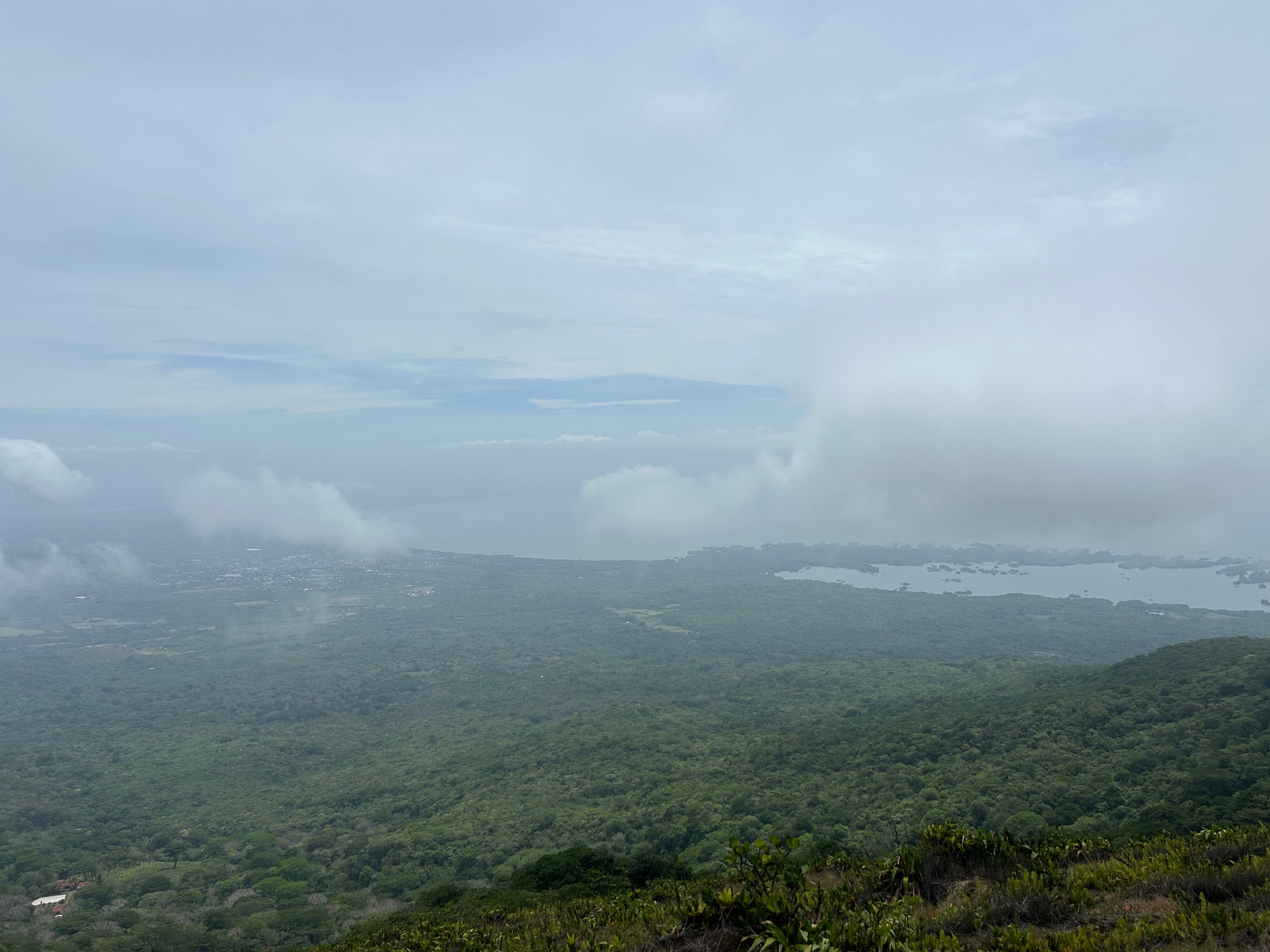
At the last viewing point, we were completely enveloped by fog. As luck would have it, after about five minutes of resting, the fog cleared, and we were treated to a gorgeous view of the Isletas (created by Mombacho thousands of years ago), with Granada visible in the distance.
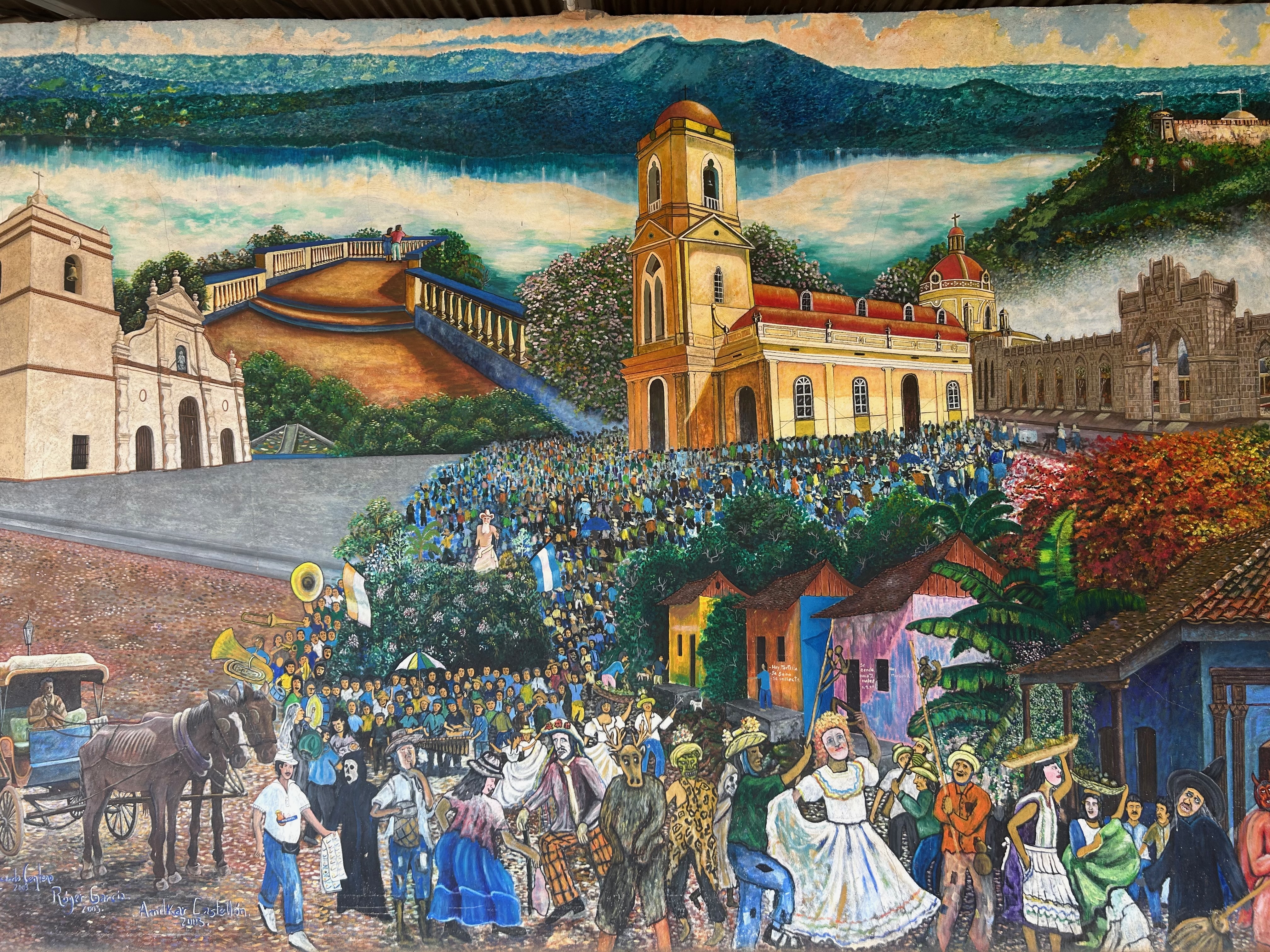
I asked to be dropped off at Masaya’s local market. This town is famous for its artisans and is the cultural capital of the country. When approaching the town, we saw many more locals roaming about; my guide mentioned that you could tell the people here were of Mayan descent due to their shorter stature.
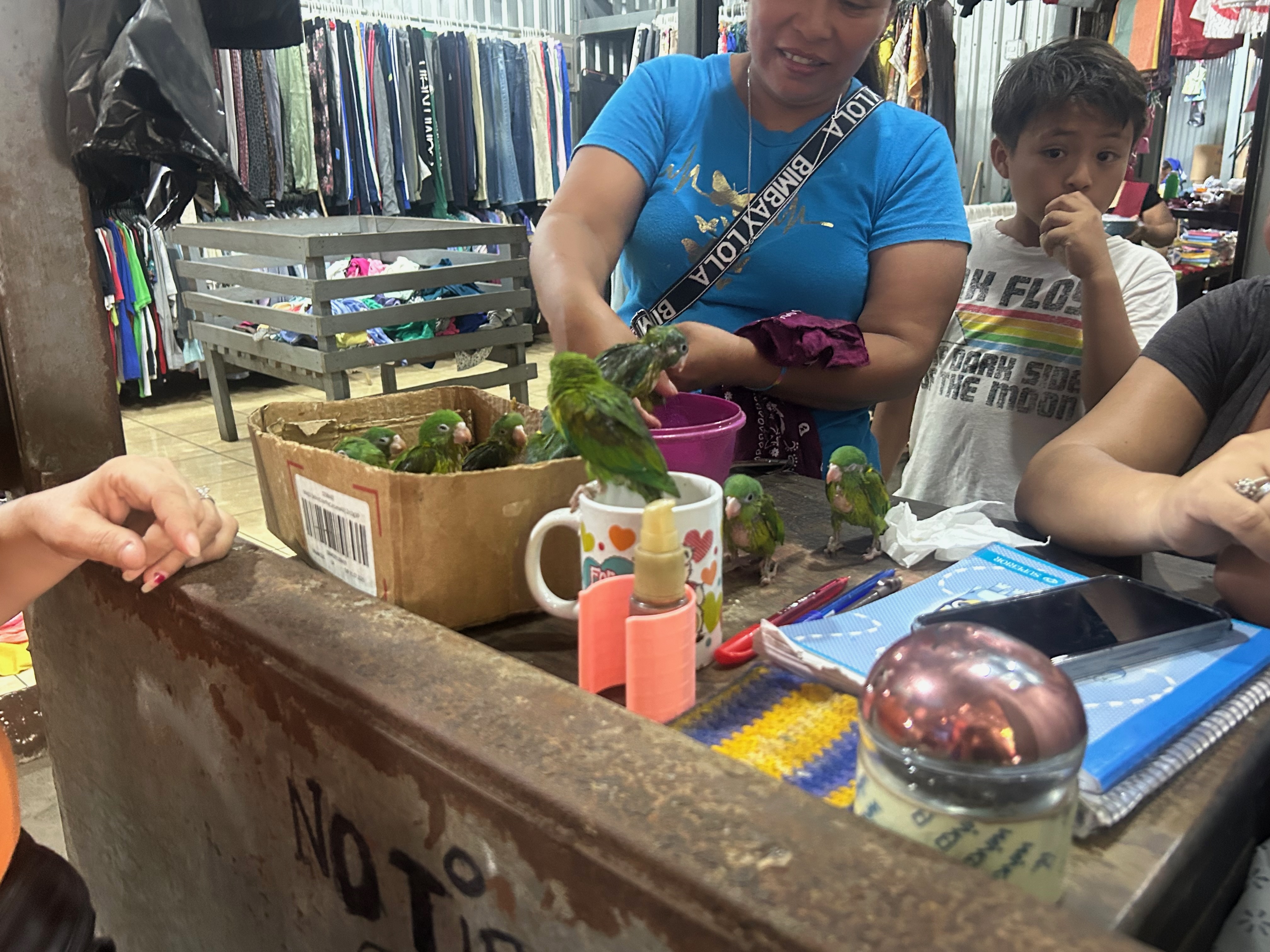
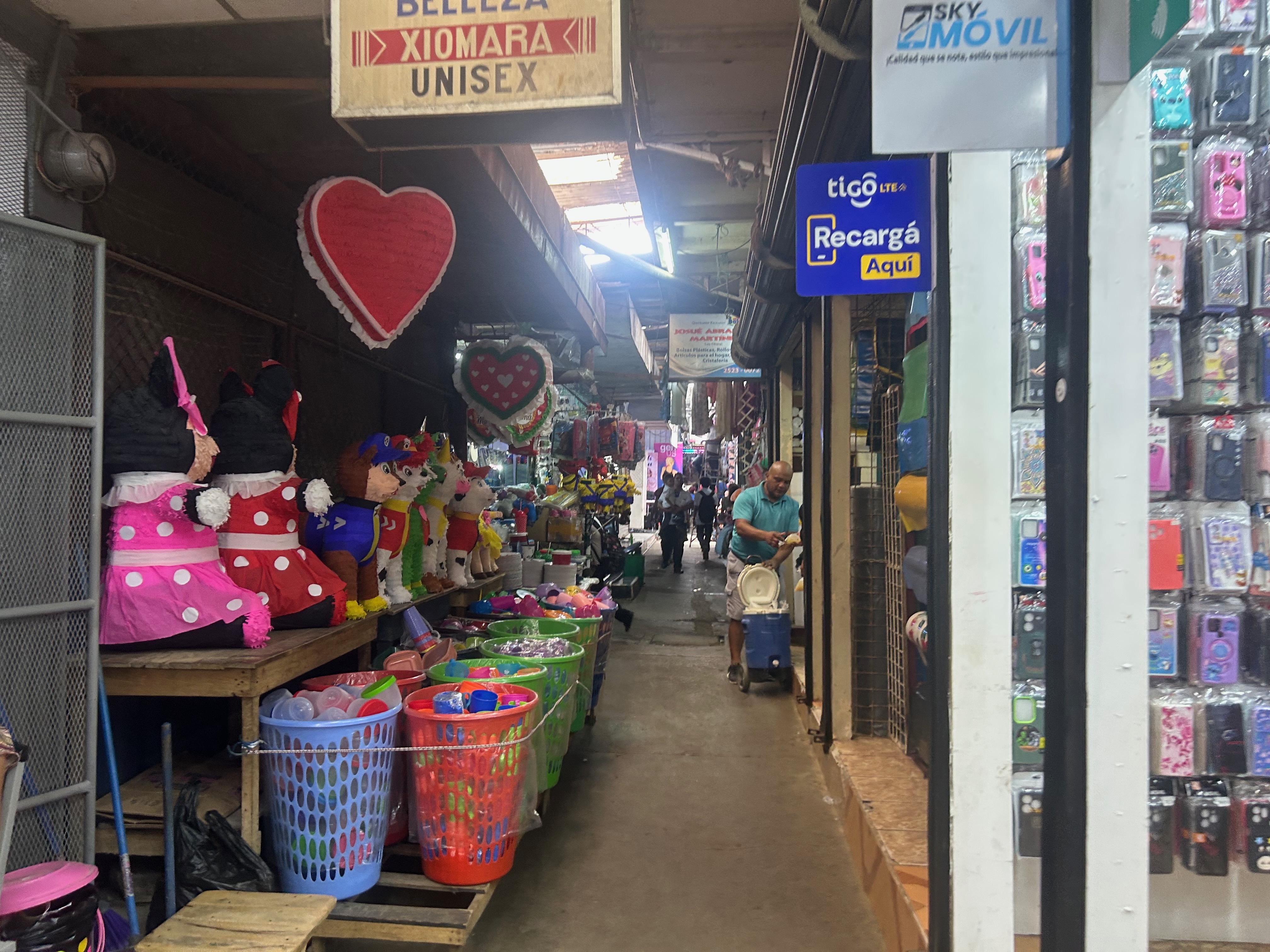 Left: Baby parrots being sold. Right: Piñatas for kids’ parties?
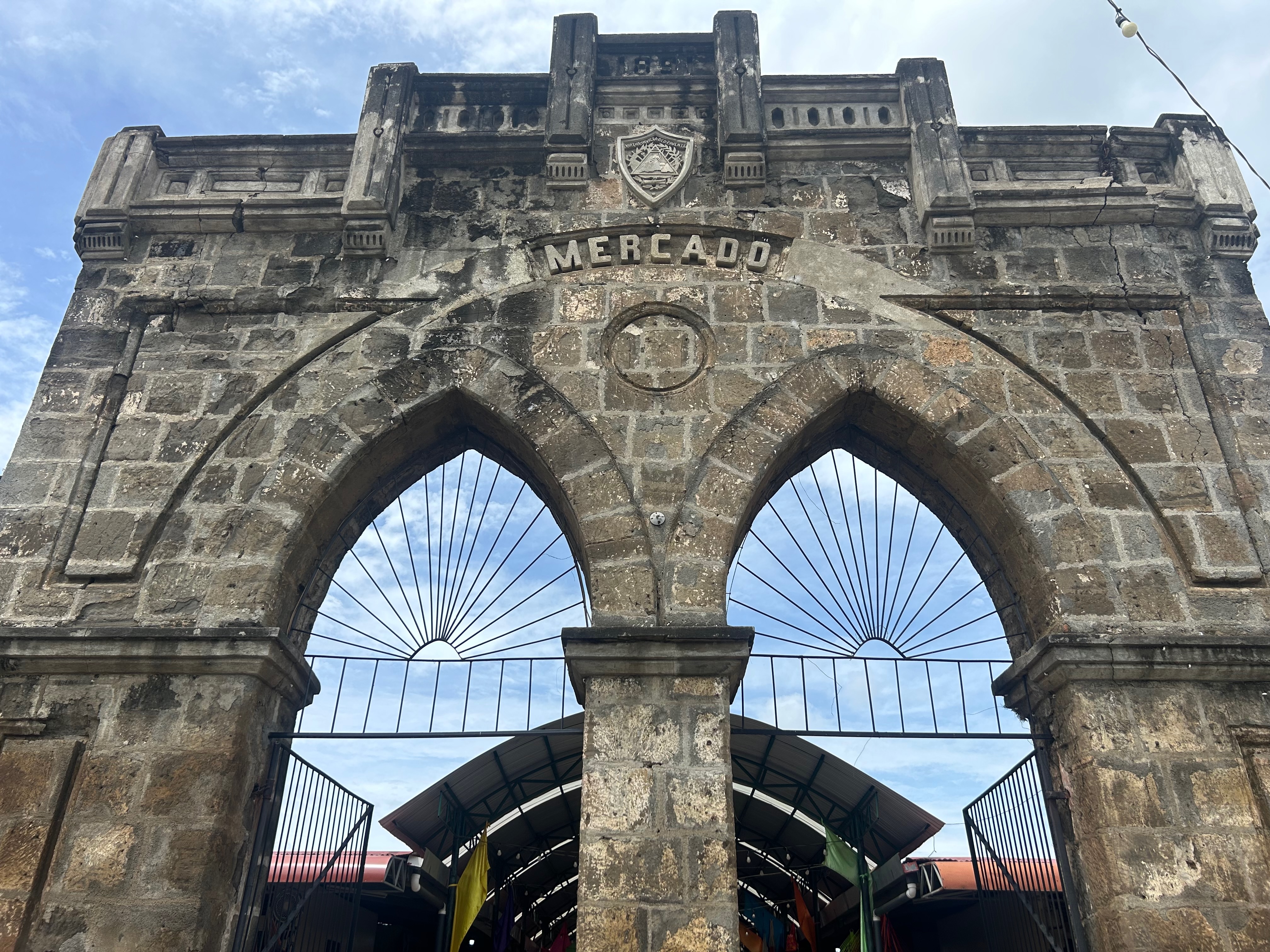
The market was sprawling, by my estimates, about four streets by four streets in size. There were sections for souvenirs, clothes, produce, repairs, etc.
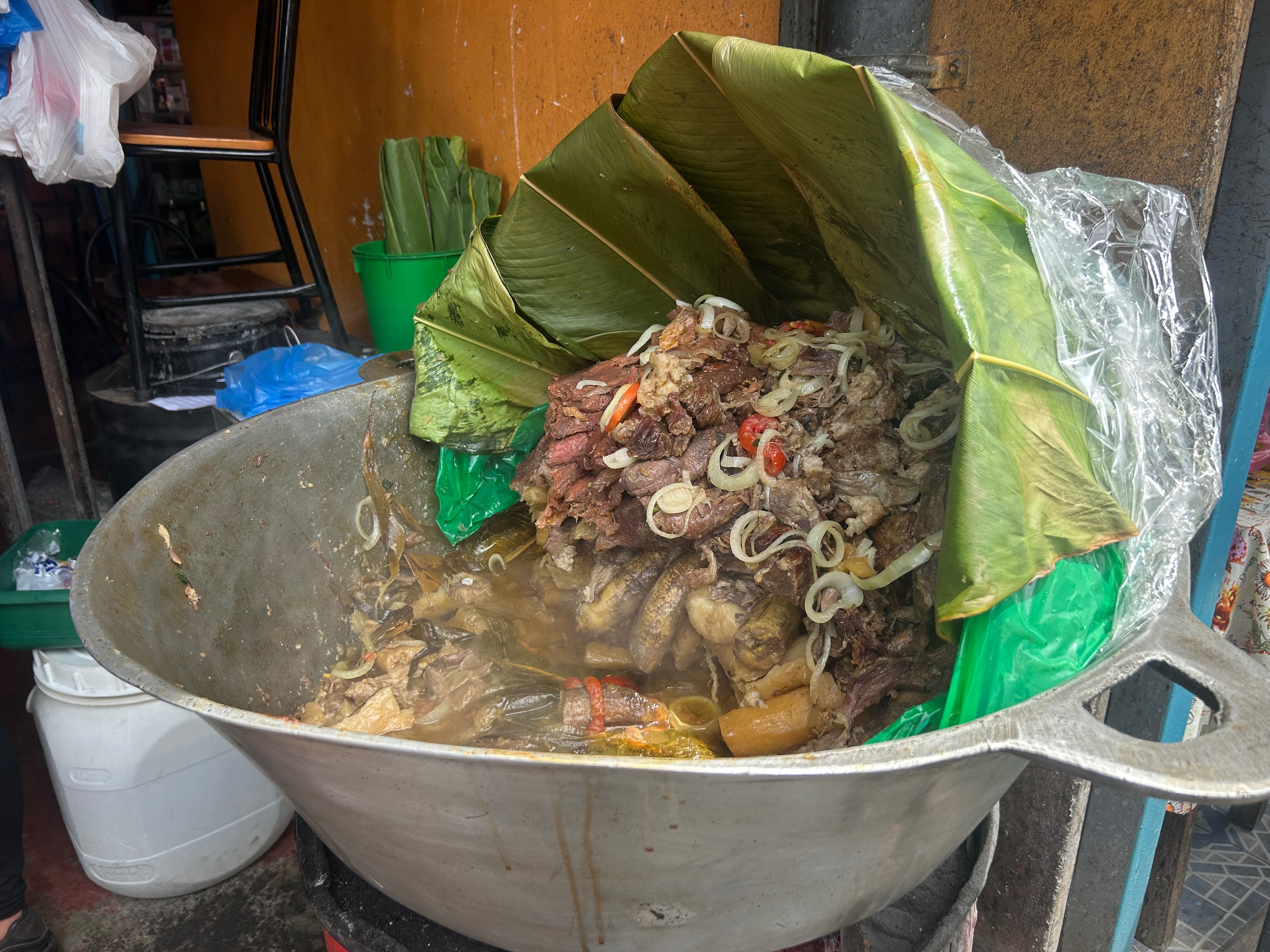
However, first, I had to eat. I finally had the famous Baho, very similar to Vigorón, but involving slow cooking with heat and pressure.
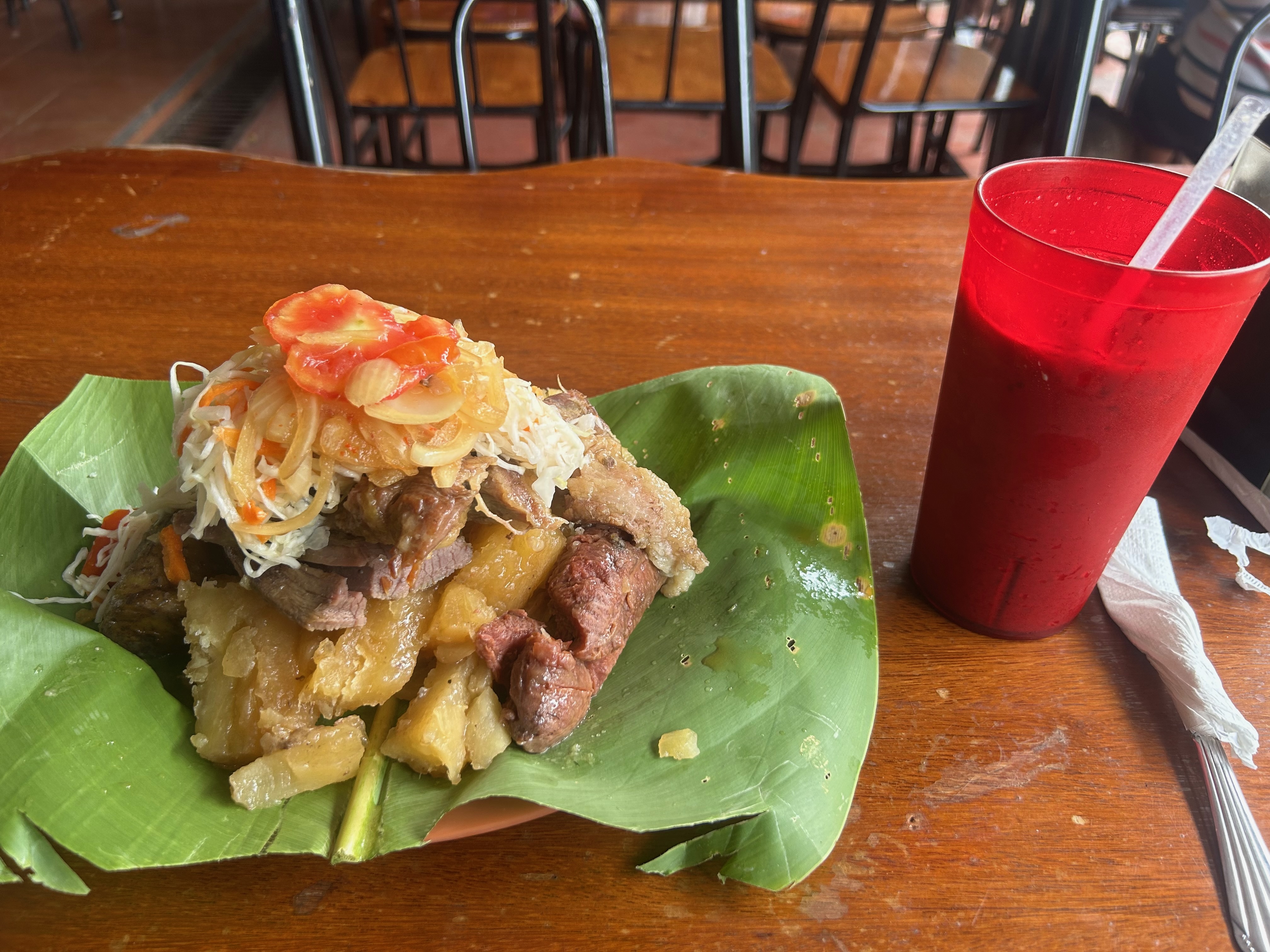
After lunch, I wandered my way to the artisan market. There were very few tourists but many shops. The quality was definitely very high, featuring beautiful hammocks and other crafts.
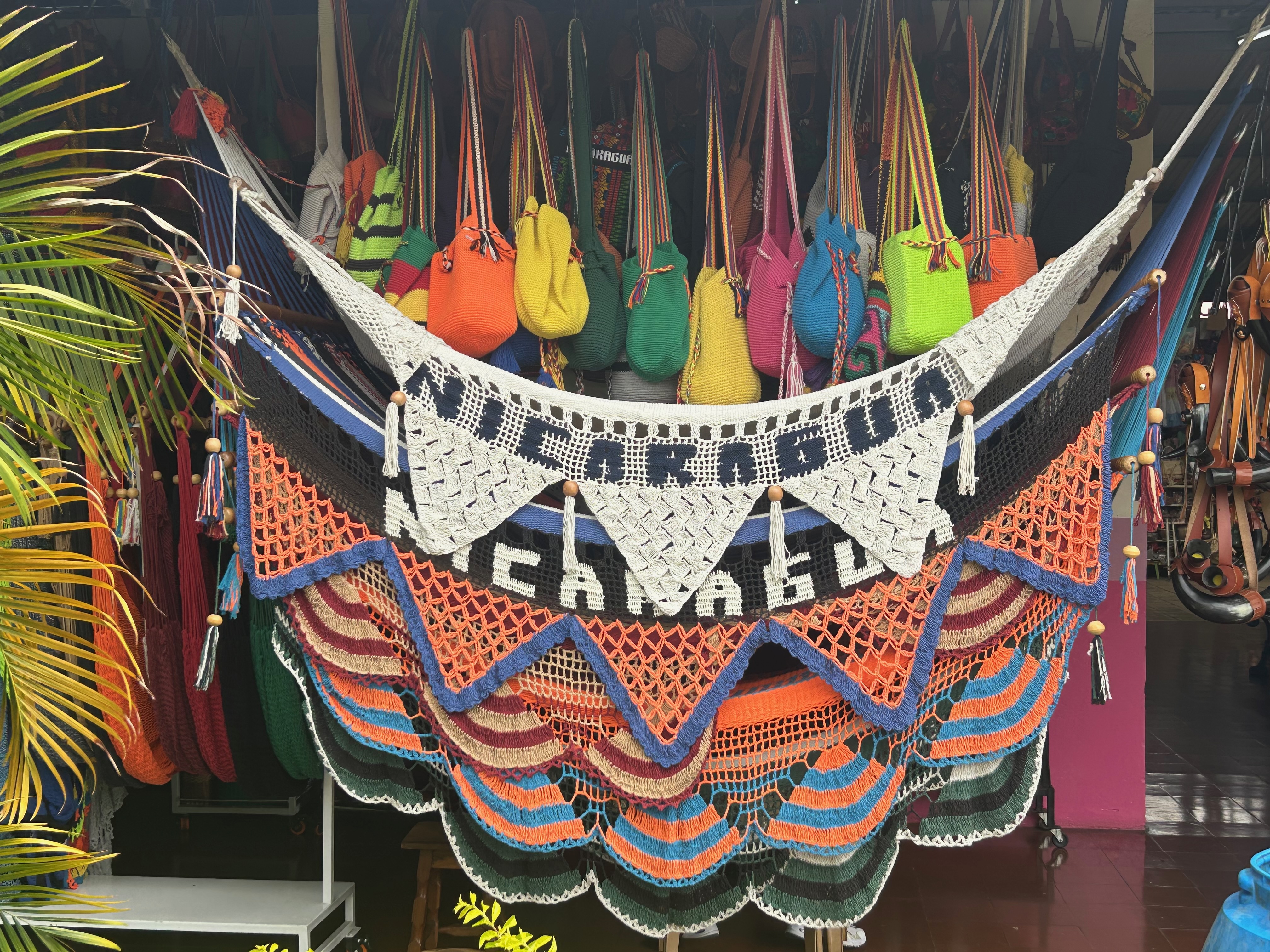
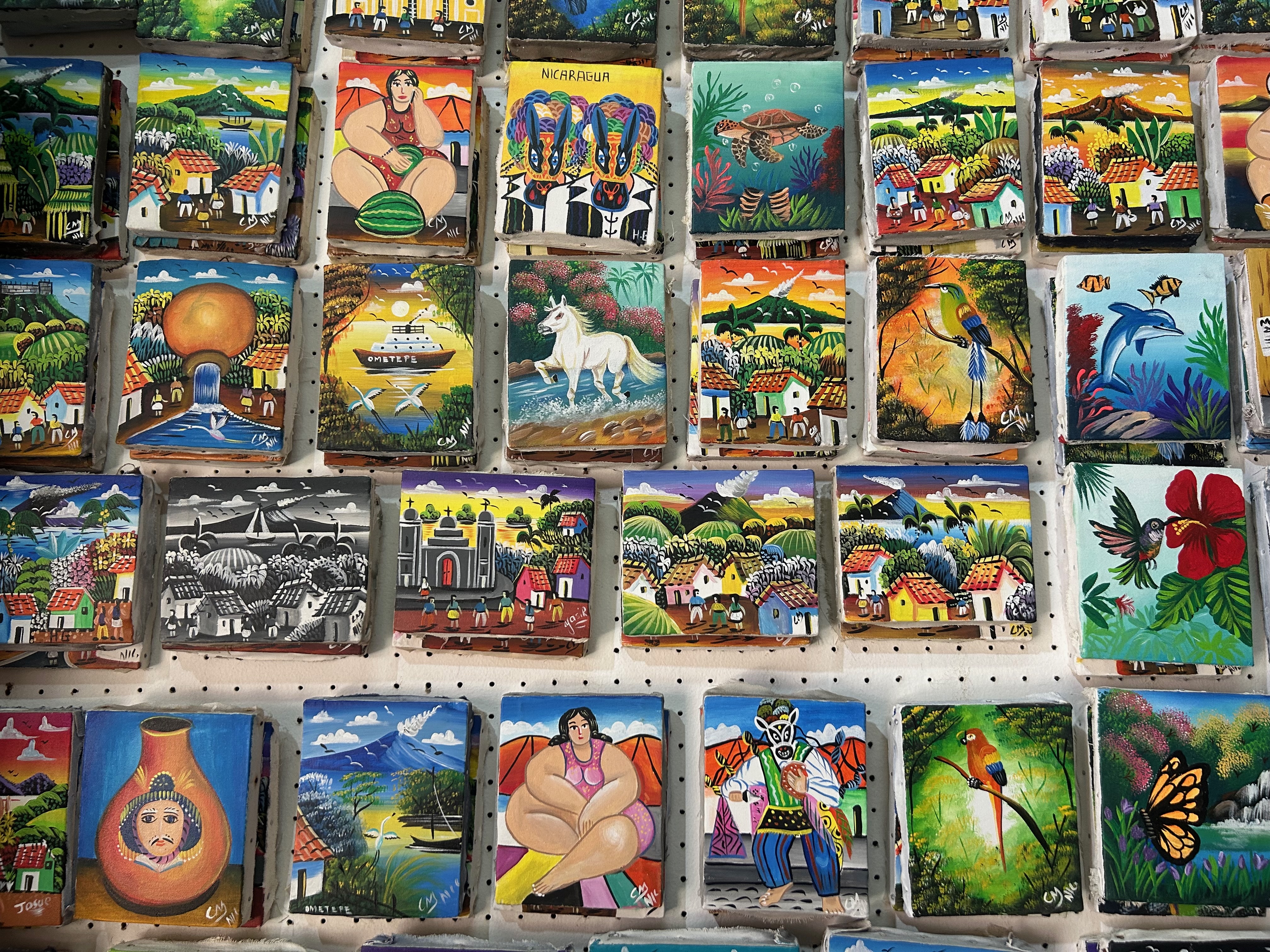
Everything was beautiful and crafty. I almost pulled the trigger on a chess set, if not for the price discrepancies between the local market and the artisan market.
After the art market, I went to the central market of Masaya.
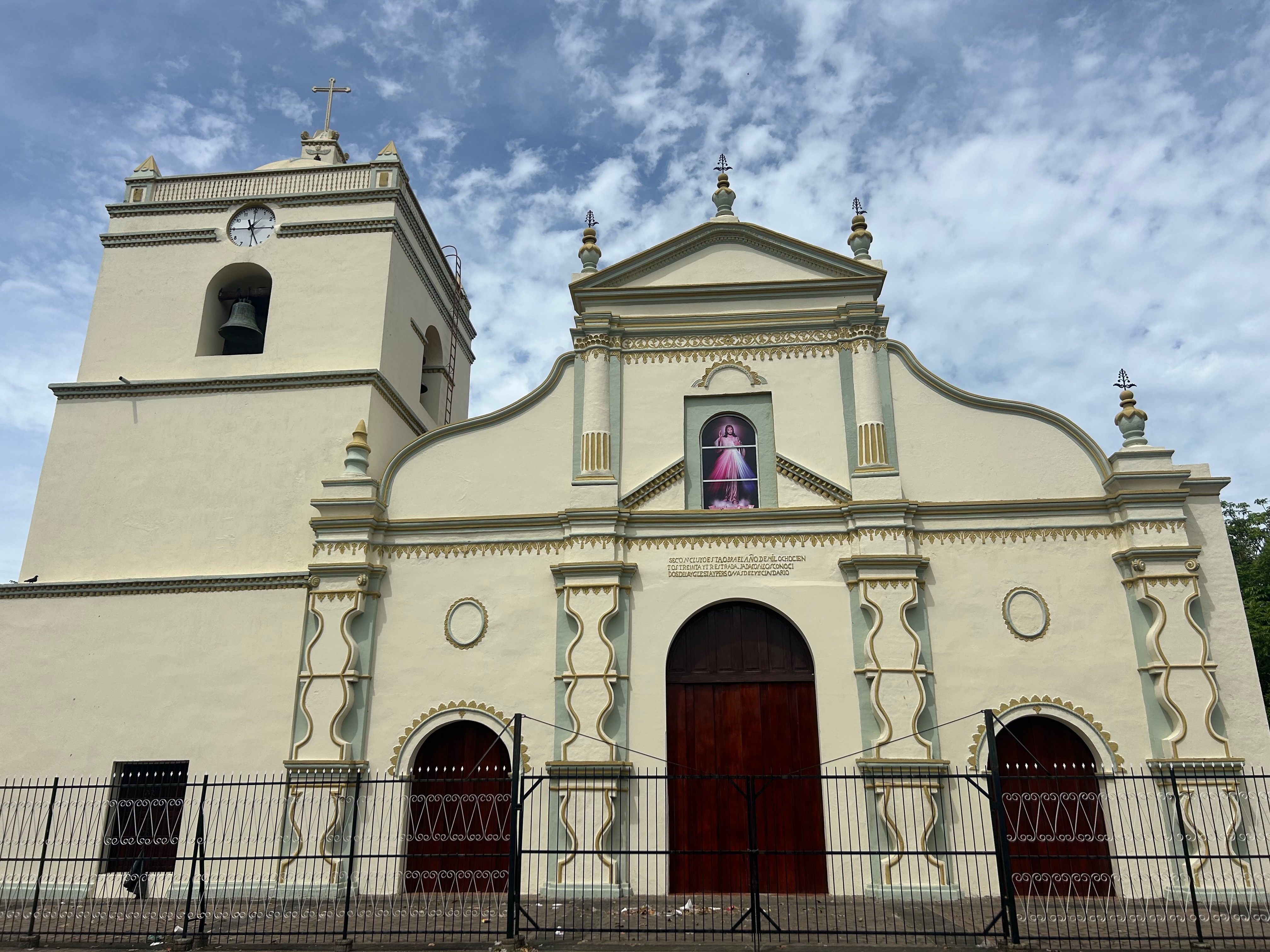
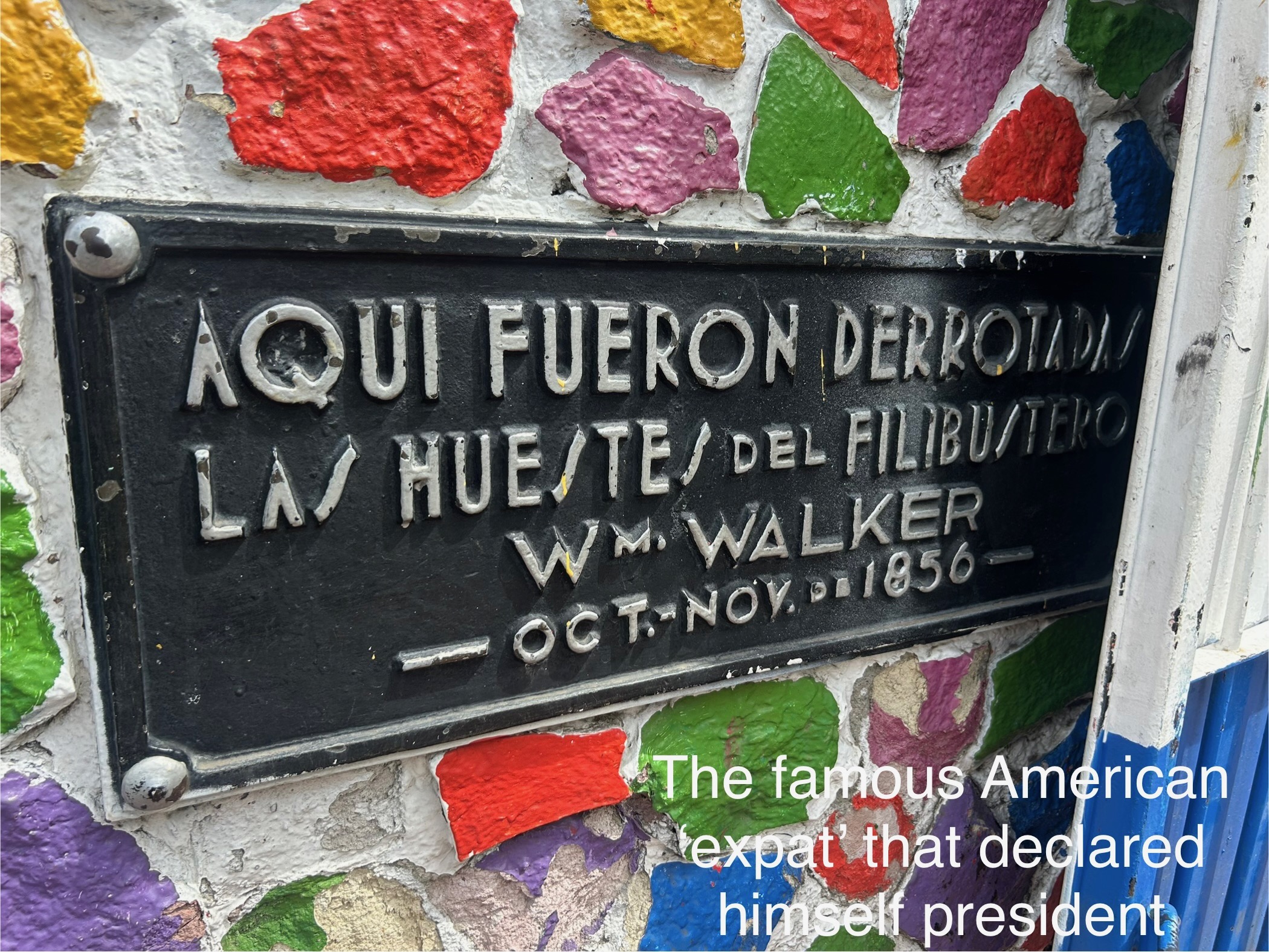 This is a much bigger central park than Granada’s and has a plaque dedicated to Nicaragua’s favorite American ‘expat.’
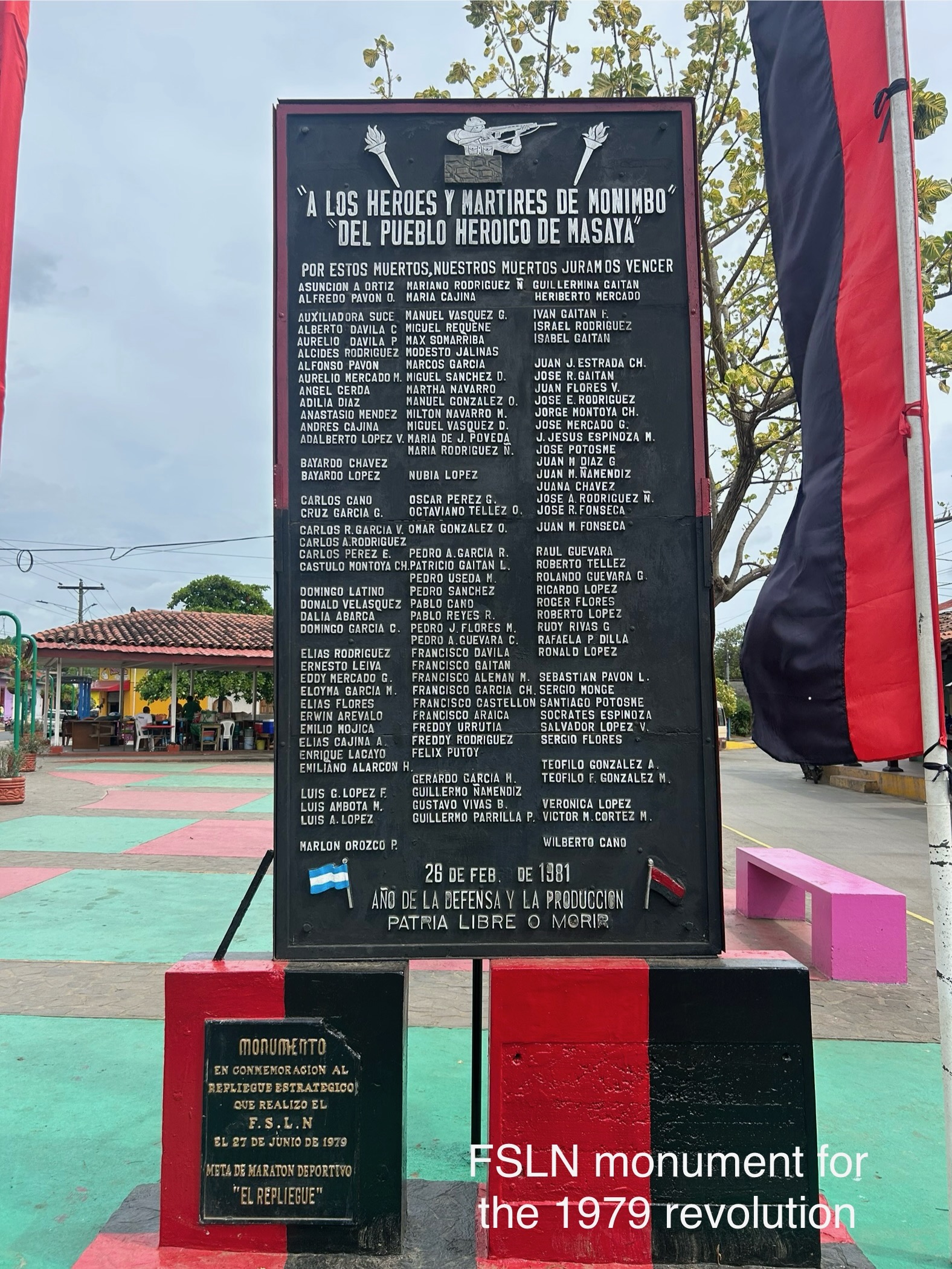
I then walked south from the town center and saw a museum and plaque commemorating the FSLN revolution. There was a museum; however, unfortunately, it was closed that day.
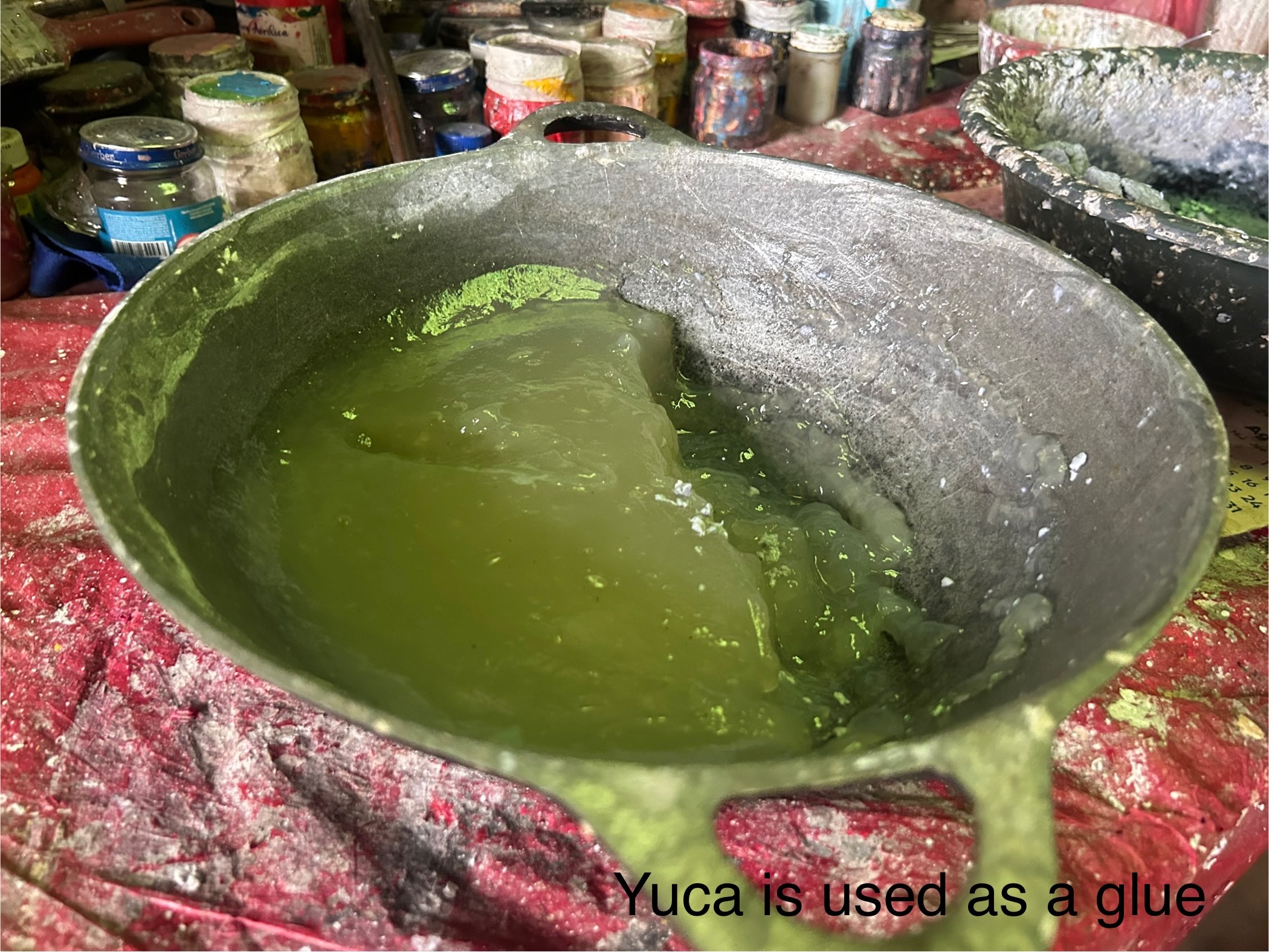
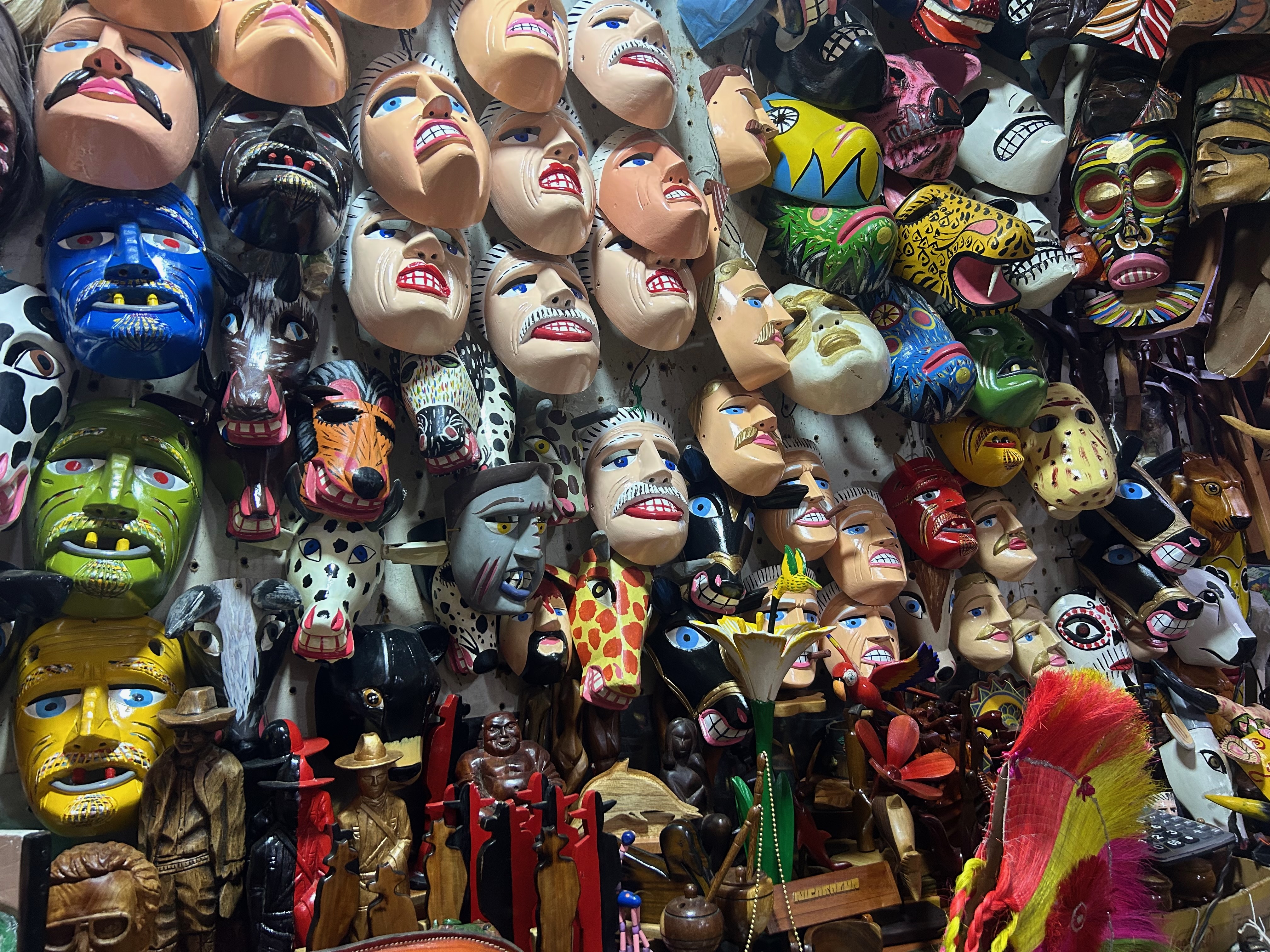
For the next 30 minutes or so, I attended a workshop on mask making, a tradition central to El Güegüense and other Nicaraguan customs. The masks were made from paper bits, yuca glue, and paint. They were lifelike and incredible.
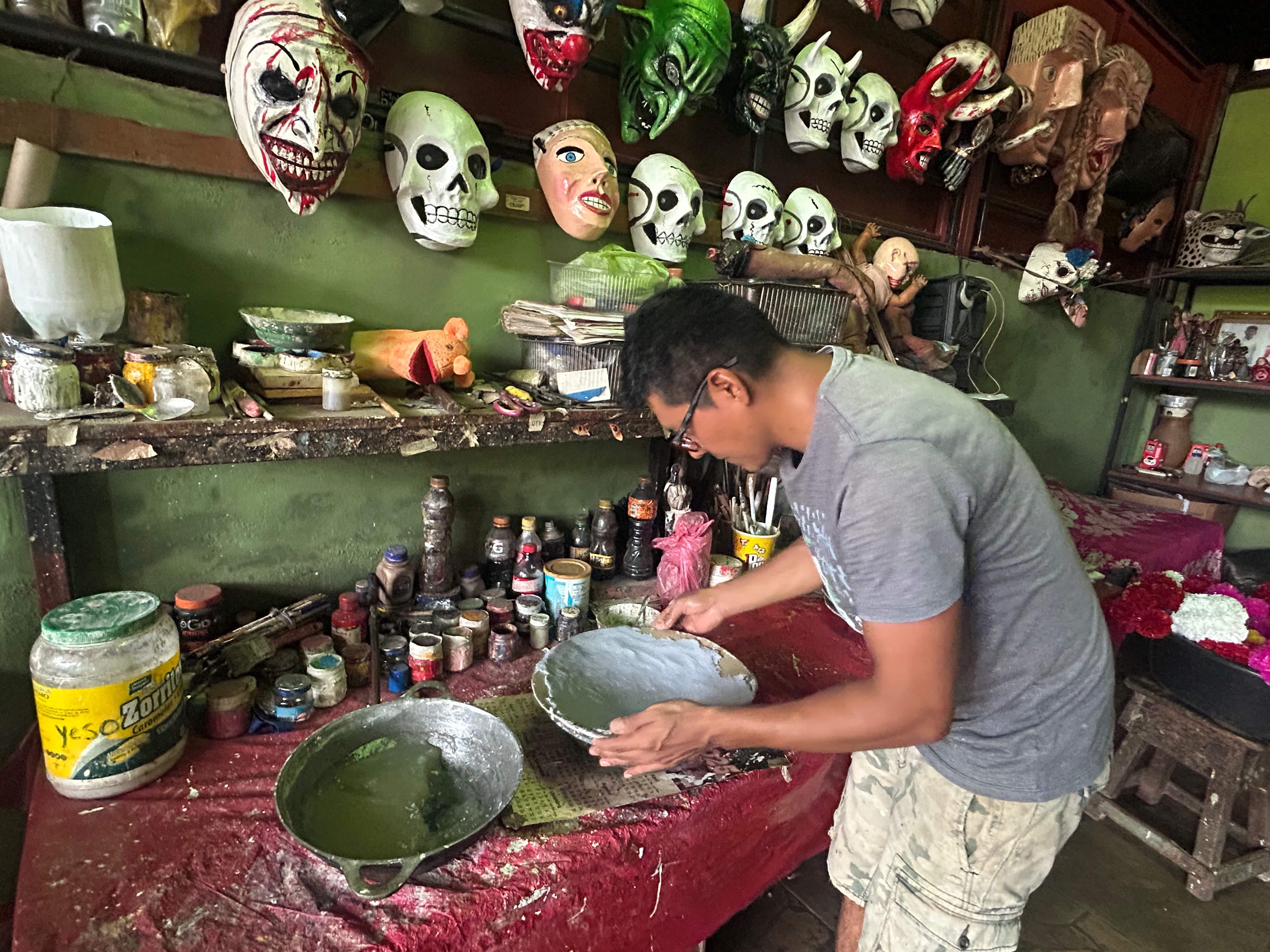 If only I had known more Spanish; he (all three generations, from grandpa to grandchild, actually) was incredible in the workshop.
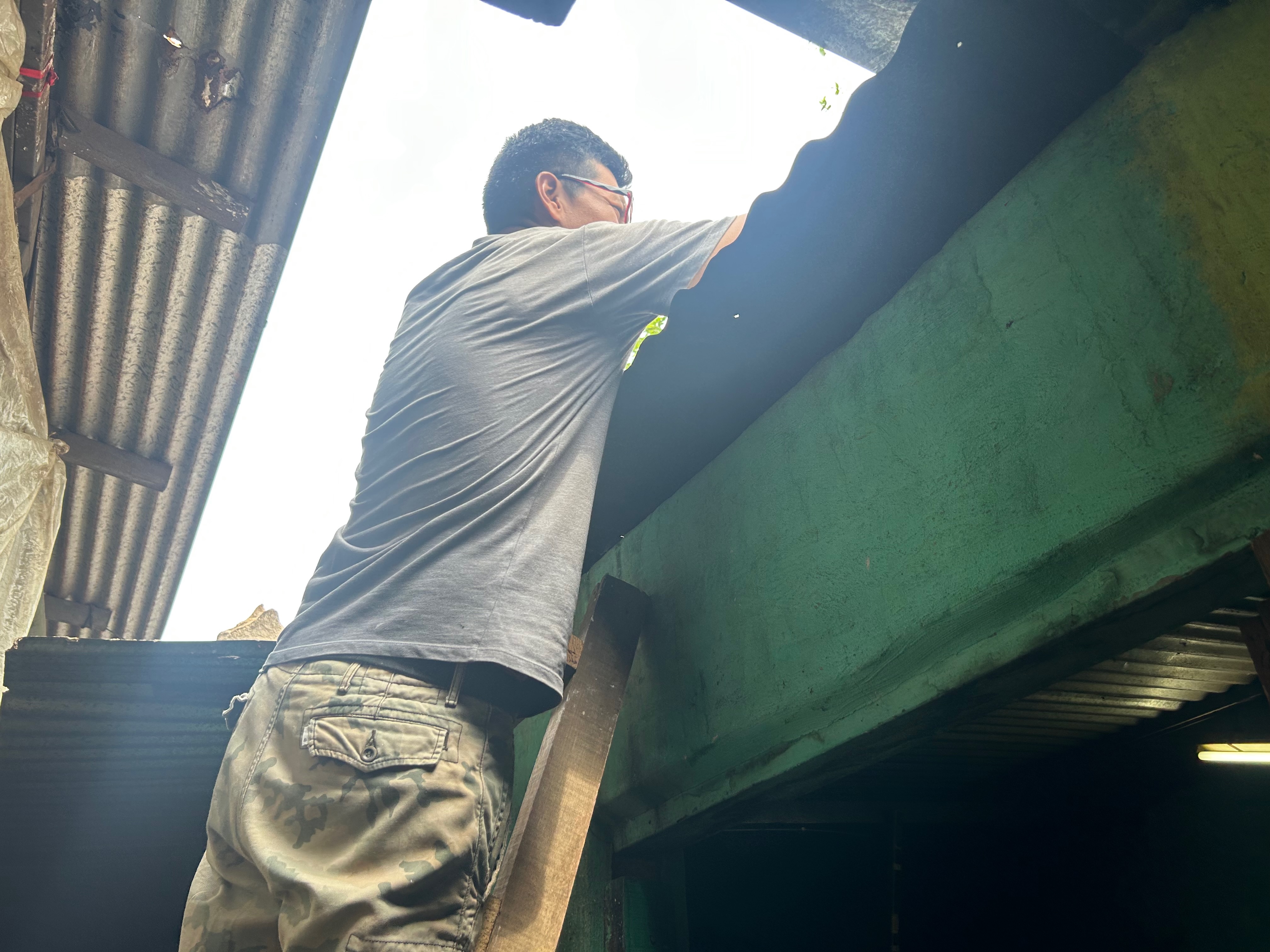
About five minutes after he put the masks on the roof for drying, he brought them back down… It was raining.
I took my leave and made my way, hiding from the rain, back to the local market (only getting about half wet…).
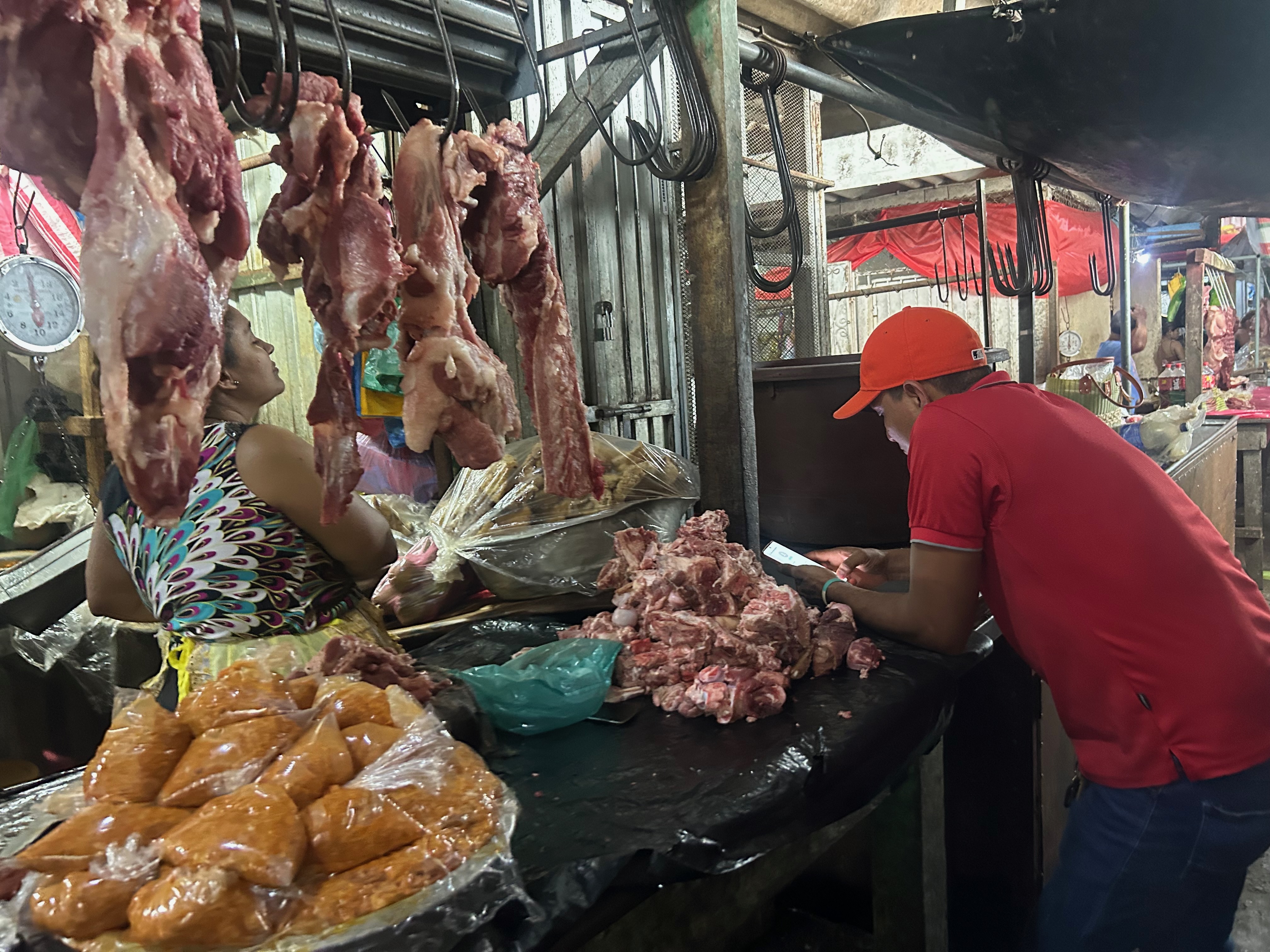
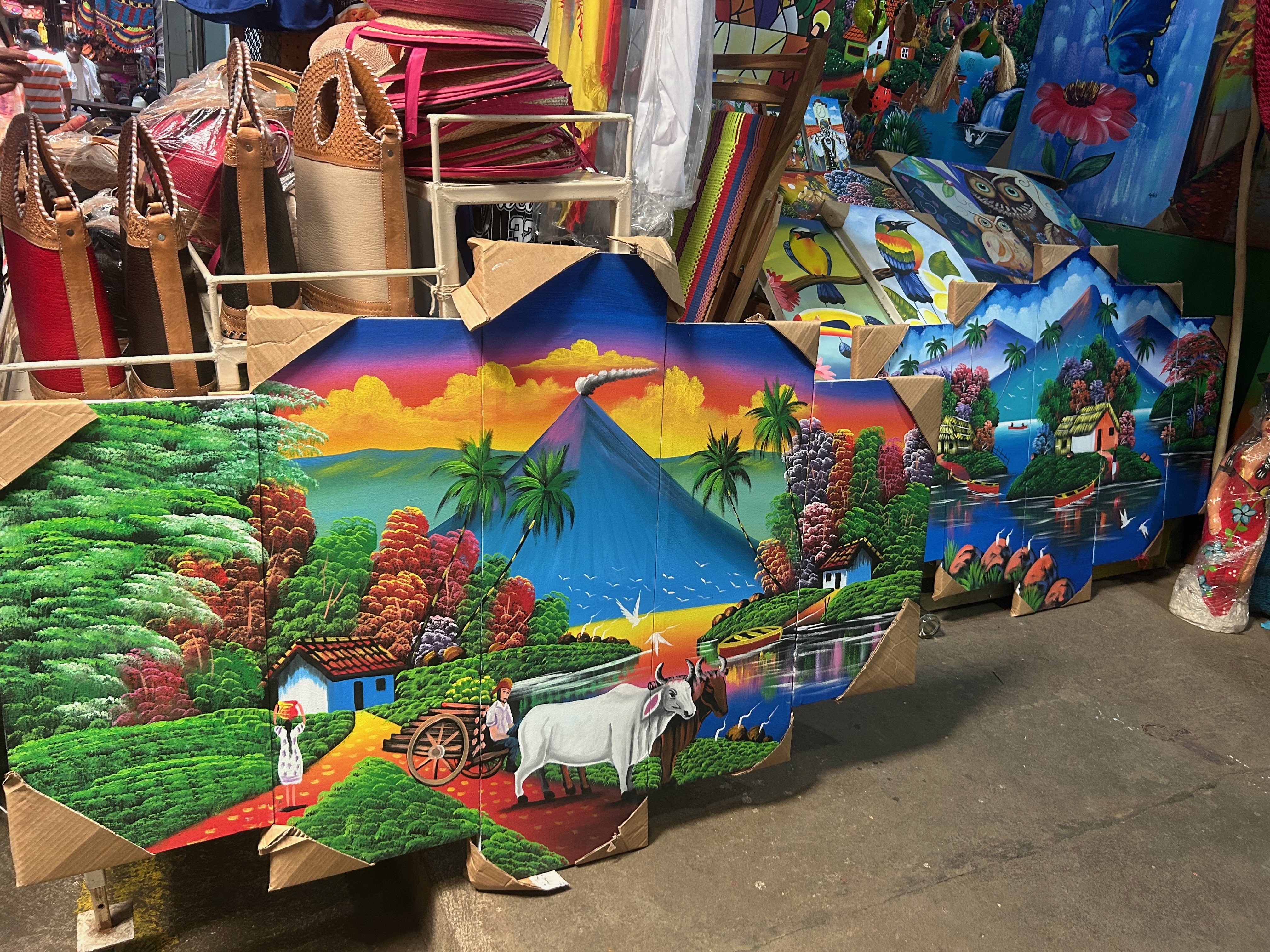
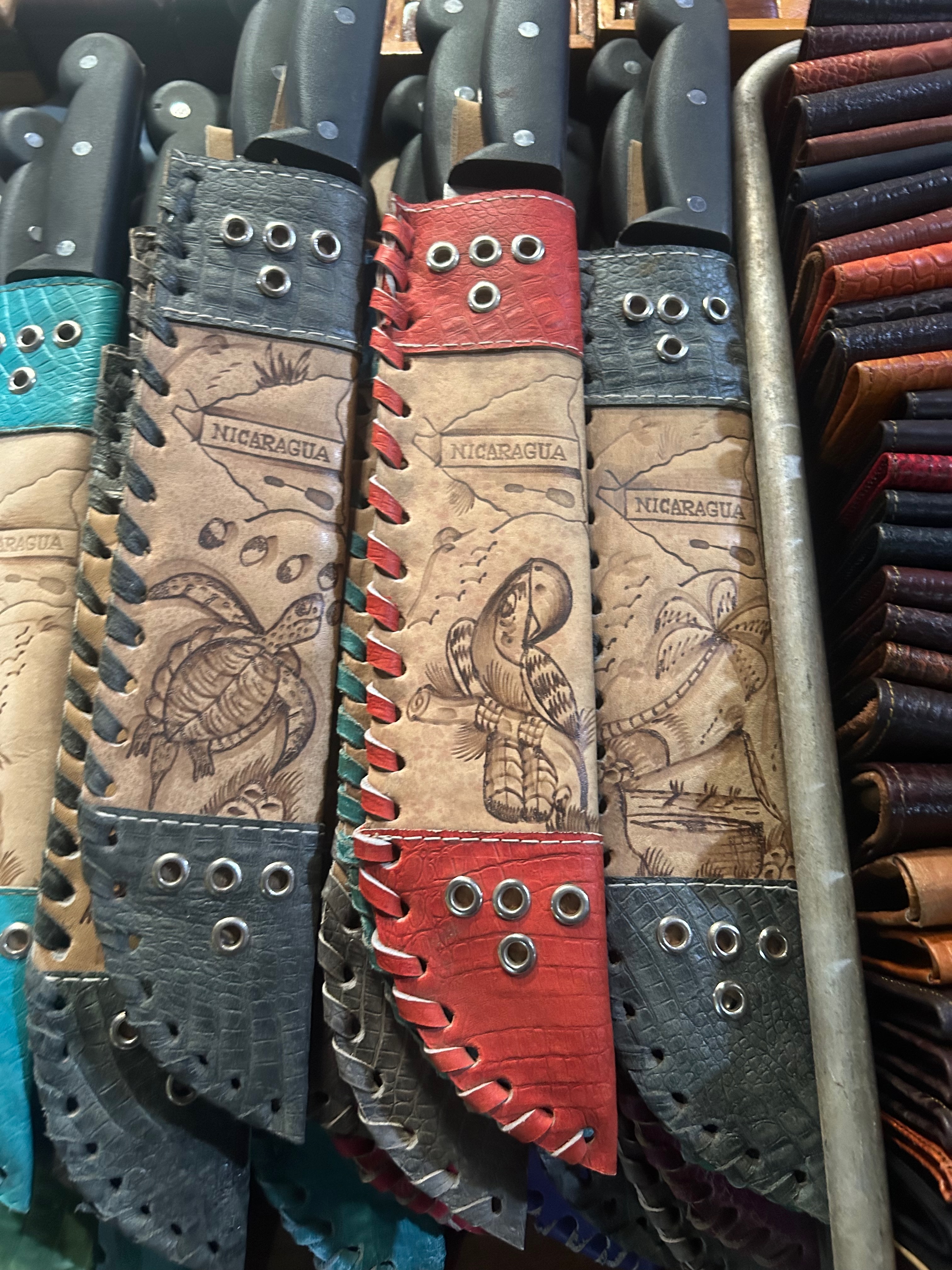
Inside the market, the air was humid, and rain drizzled down from the open spots in the market ceiling (of which there were many).
The energy of such a big market was incredible. I checked out almost too many shops and came away with the El Güegüense masks I had been thinking about since before coming to Nicaragua.
As I was leaving Masaya, I had a funny experience where I boarded the wrong bus. It was a shocking realization as we reached the outskirts of Masaya. I then had to wait for a bus to Granada from the other side… What a real chicken bus experience for me!
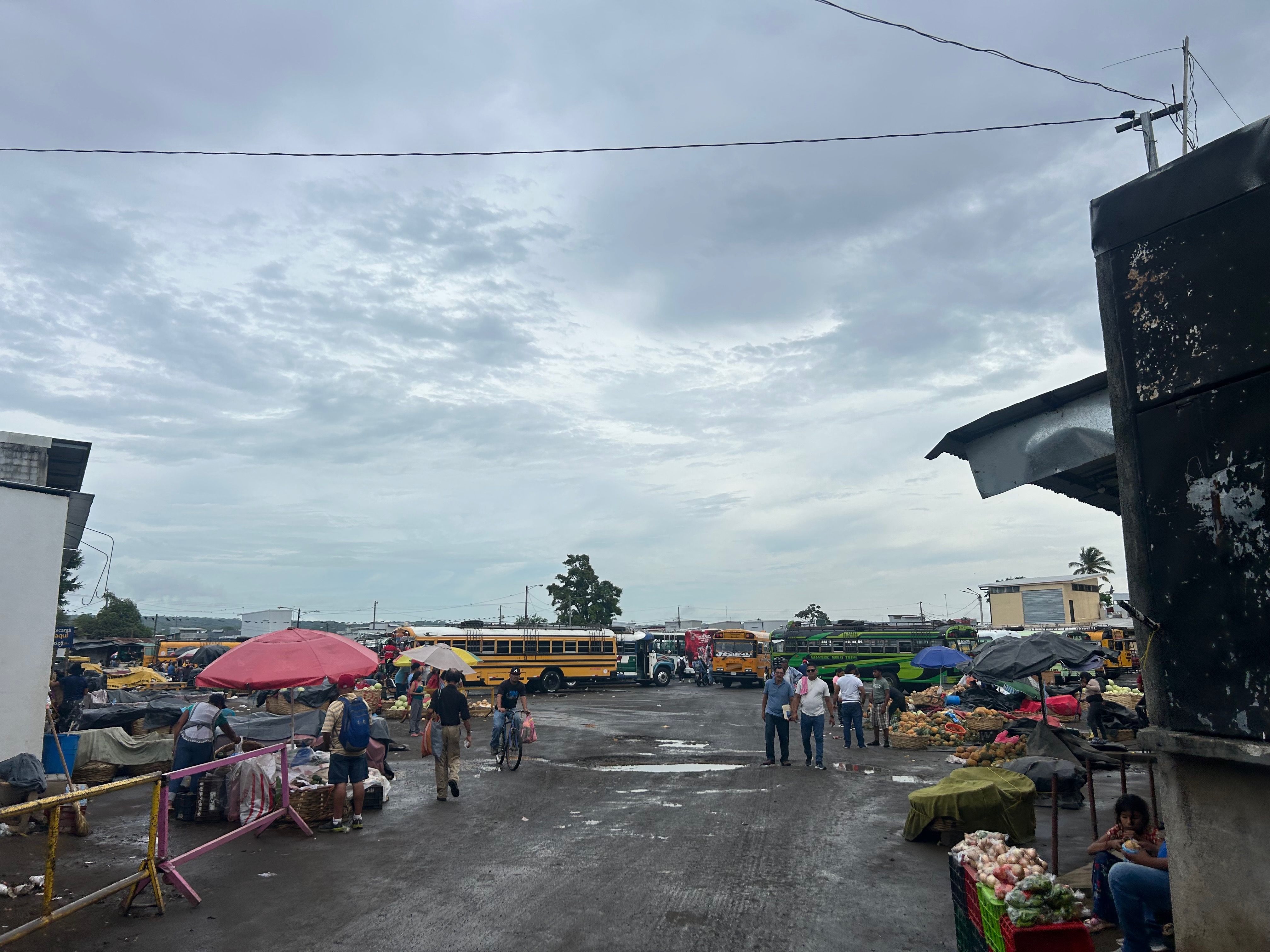
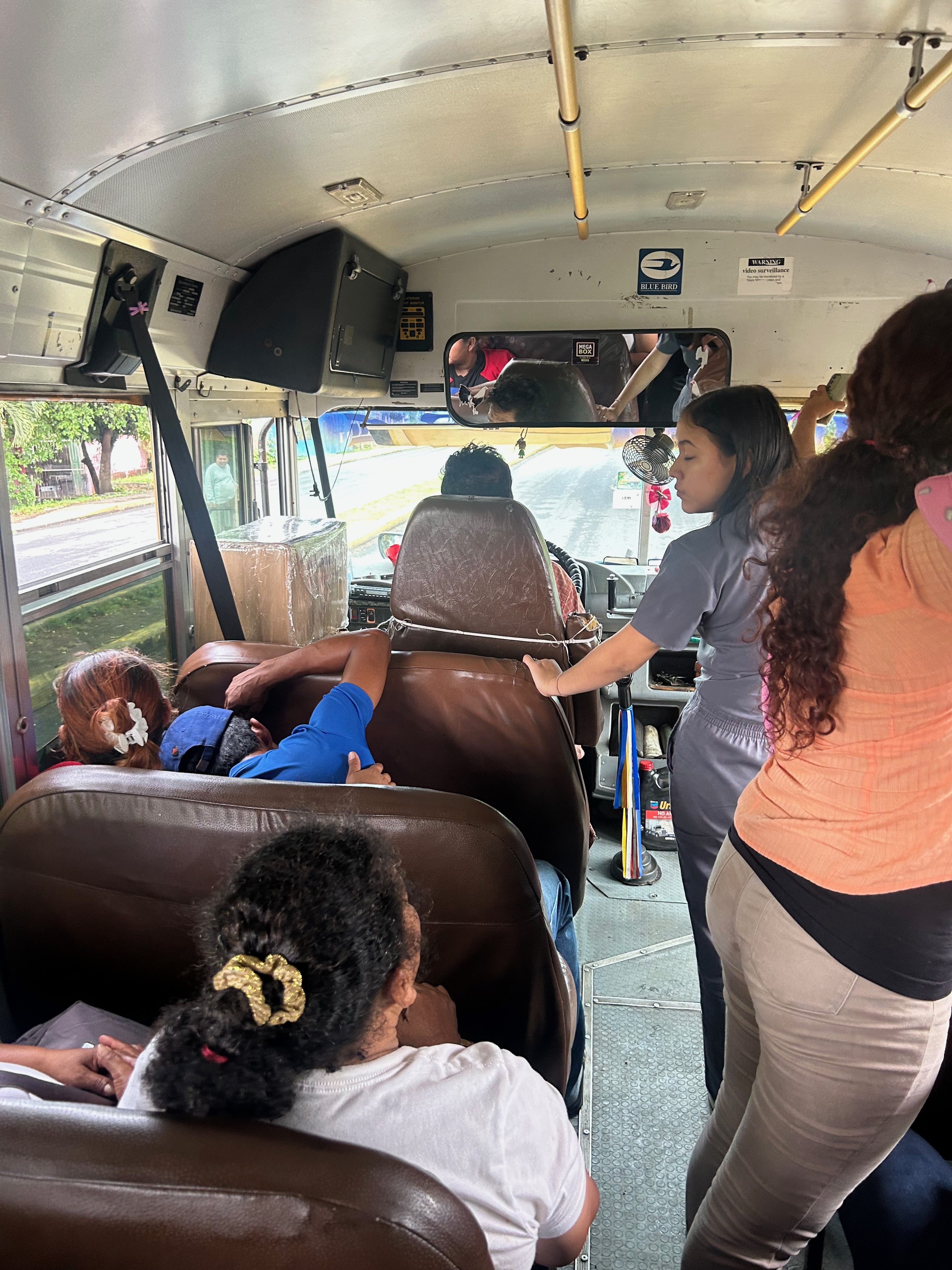
The energy on the bus was incredible. Everyone rode the bus: people with merchandise to sell, grandpas going home, young Latinas chatting with their boyfriends. Vendors would come on the bus, make their way through the whole vehicle, and jump out from the back door. There was also a fare collector, to whom you’d pay 20 cordobas (about 60 cents) upon exiting.
I was finally back in Granada but witnessed a scene where people from a church flooded the streets, carrying a coffin that blocked all the roads.
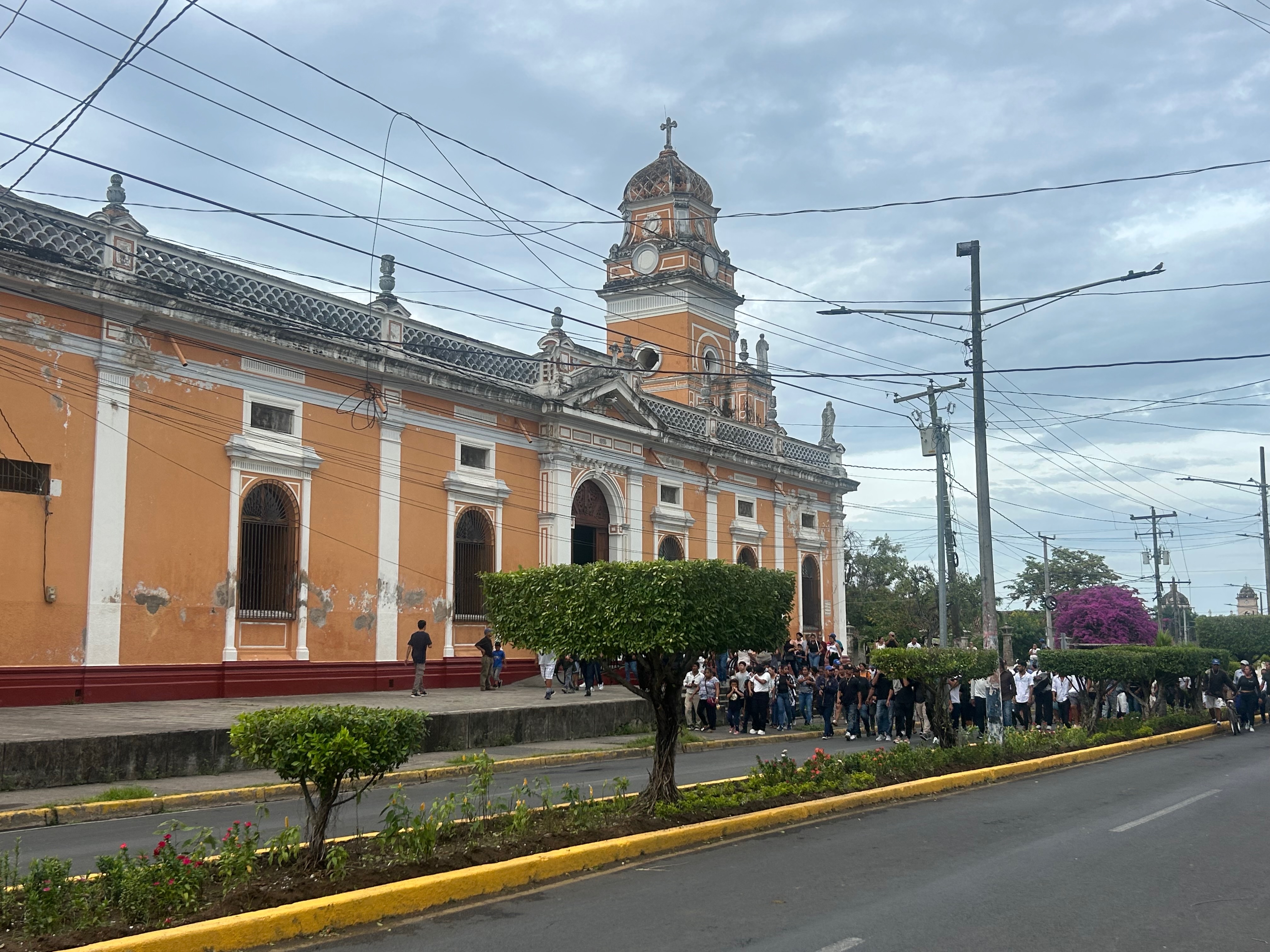
Xalteva Church with the funeral
With this, my second-to-last day in Nicaragua was drawing to a beautiful ‘sunset’ close.
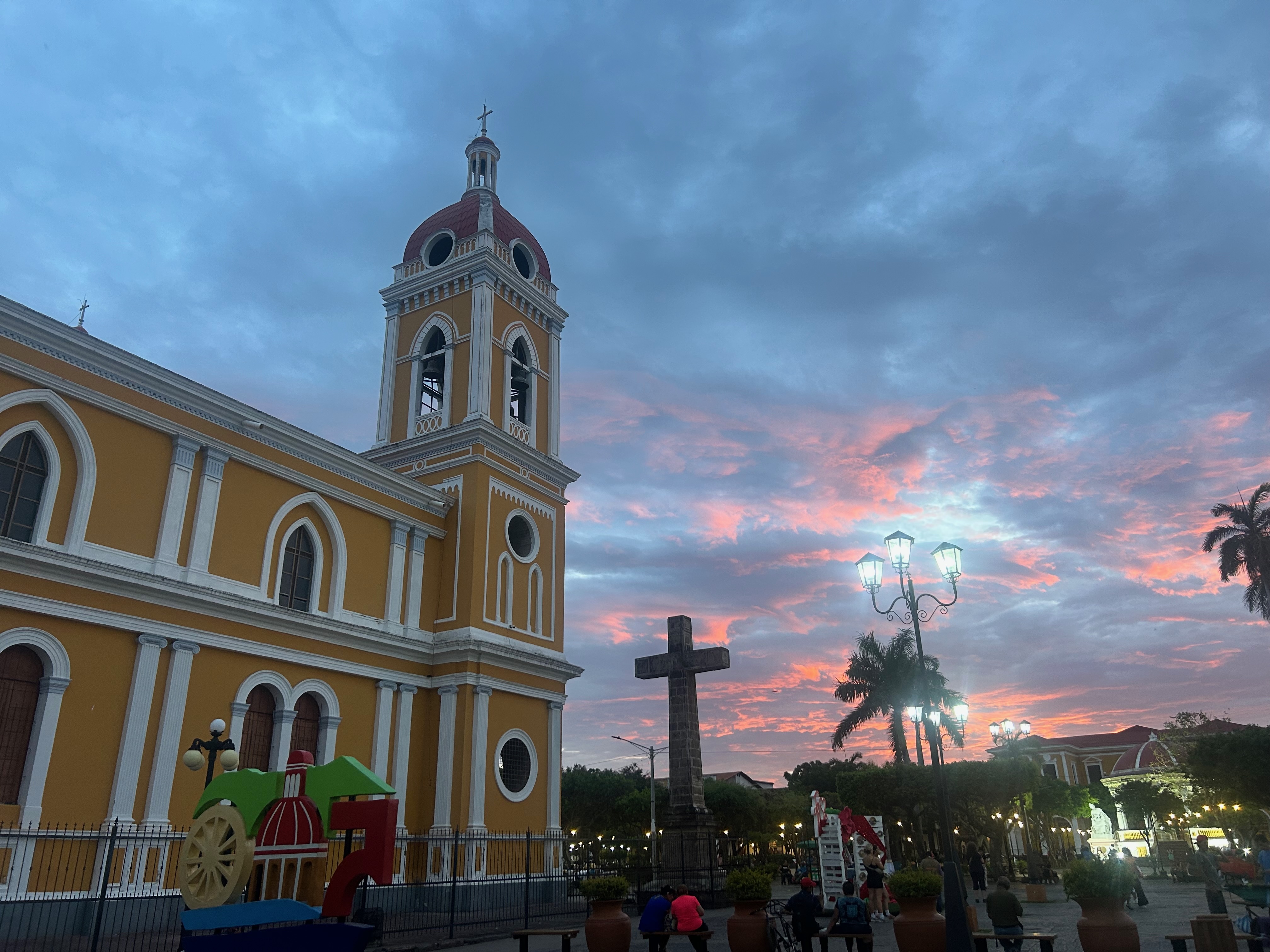
Goodbye Nicaragua
On my last morning, I walked the square and markets for the last time.
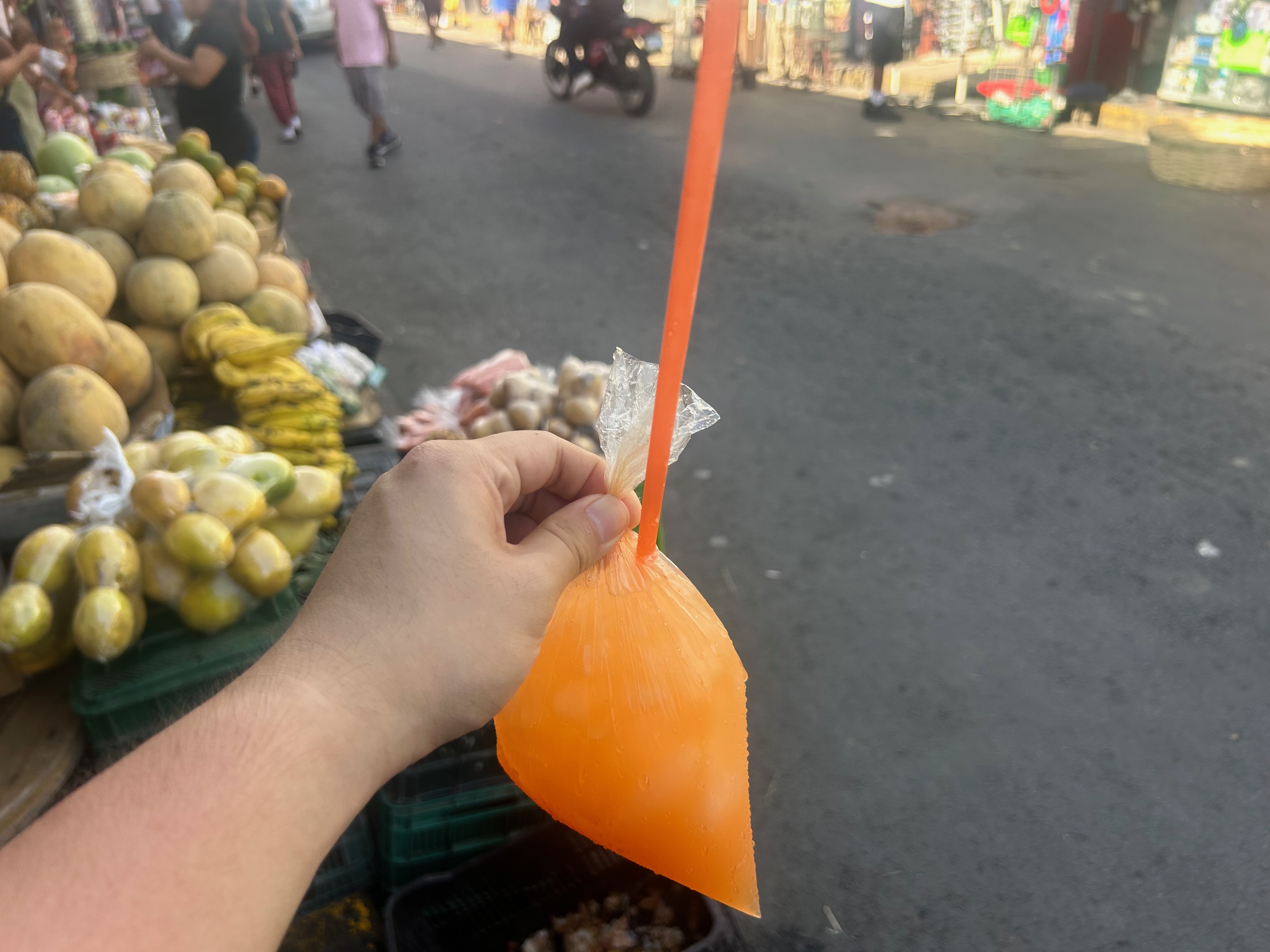
The sun was blazing, and I cooled myself down with this wonderful drink in a bag of ice.
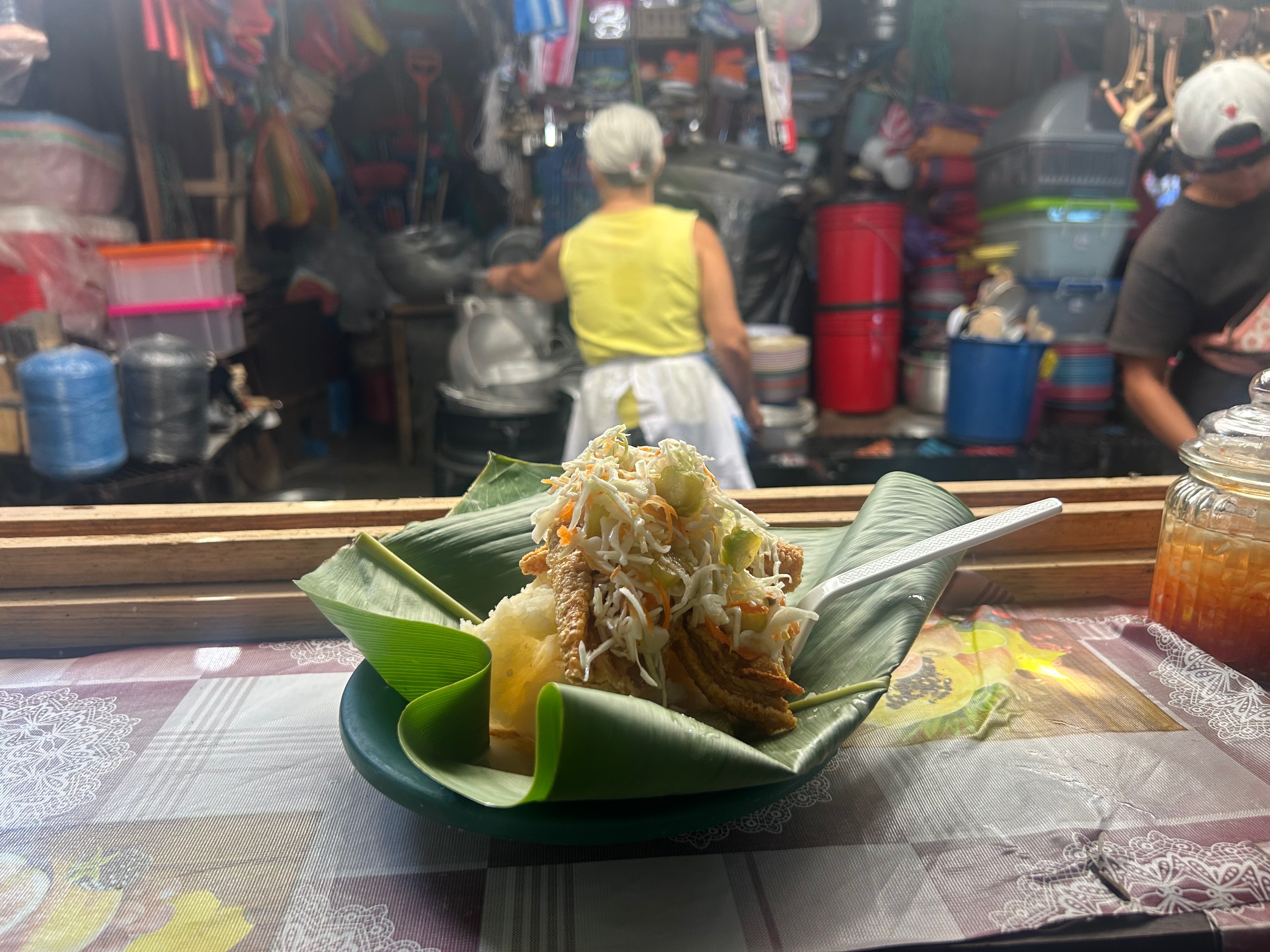
After circling the markets, all their sections of meat, fish, and vegetables, I ate my last baho (the one that Enrique showed me).
I finally said my goodbyes to beautiful Granada. Nicaragua, so different from what I expected, in so many wonderful ways.
[Receive future updates]