Senegal Stranded on Goree
 Senegal | Country 37 | 7 day |
This was my first country in West Africa, and all my travels had prepared me poorly for this region of the world.
- As many have warned, West Africa is expensive, harsh and rough for travelers. Fortunately, Senegal is one of the safest countries in the region.
- French and Wolof are the main languages of the region. Senegal was the capital of French West Africa, and it has maintained close ties with France.
- Islam is the dominant religion, particularly the Sufi Mouride Brotherhood popularized by Amadou Bamba of Touba. His image is everywhere in this country—on cars, on buses, etc.
- Gorée Island is a symbolic site of the transatlantic slave trade. While not the region’s largest embarkation point, it was one of several West African ports linked to the trade.
- For breakfast, the locals like to eat a French baguette with meat and fries inside. And attaya (Senegalese mint tea) was everywhere.
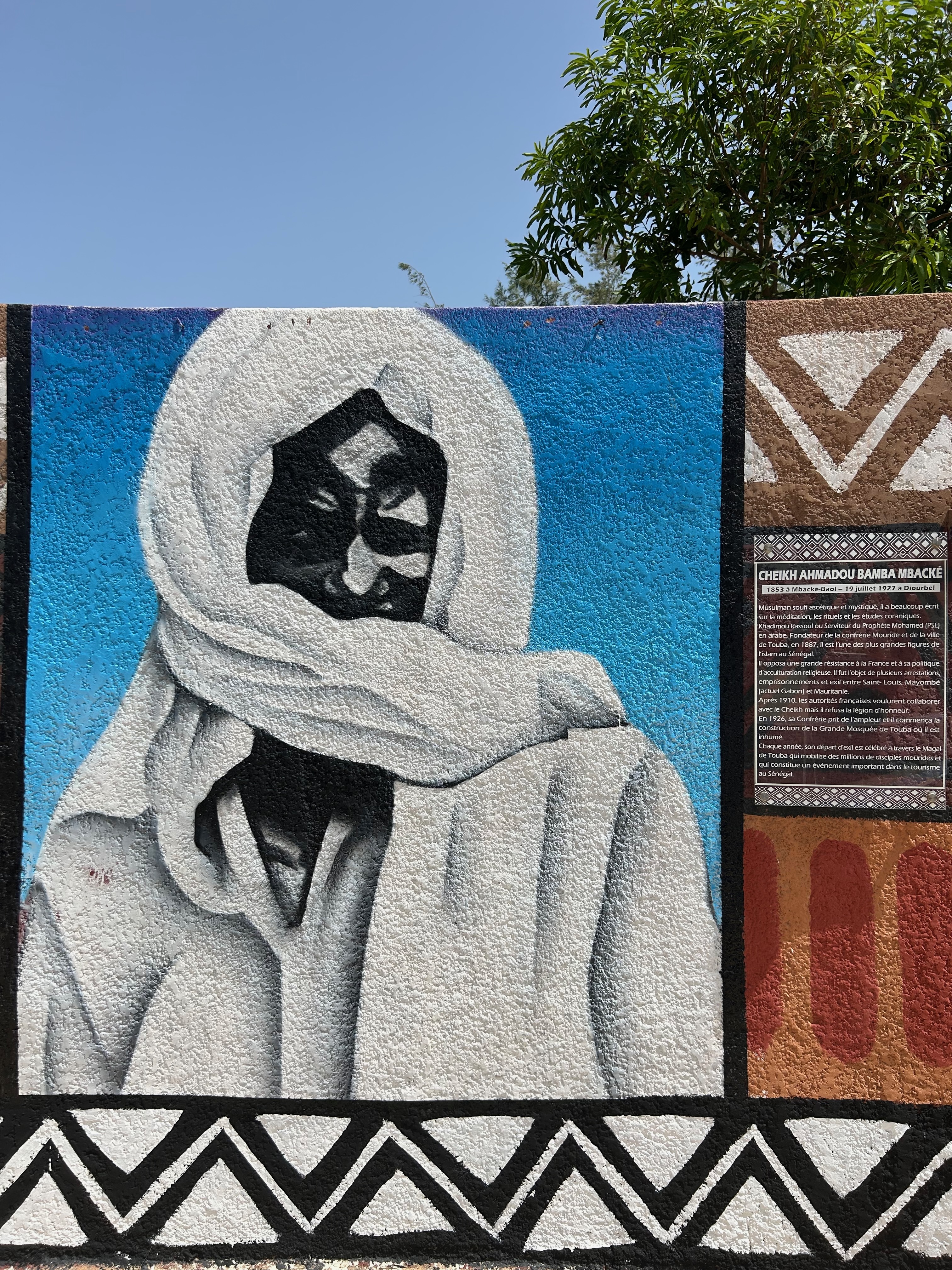
Bamba of Touba
Day 1: Layover and Central Dakar
I arrived in the early morning with a 10-hour layover. My guide, Becaye, is taking me around from the airport for a day tour.
We stopped briefly for a gas station breakfast, and began the hour-long ride into Dakar.
Becaye is an older gentleman who works as a translator for his day job. He spoke great English and would sometimes say “comment dit-on” when an English word failed to pop up.
He signaled to me multiple times that quite a few guarded places in Dakar are French military bases; the French are vacating some of them.
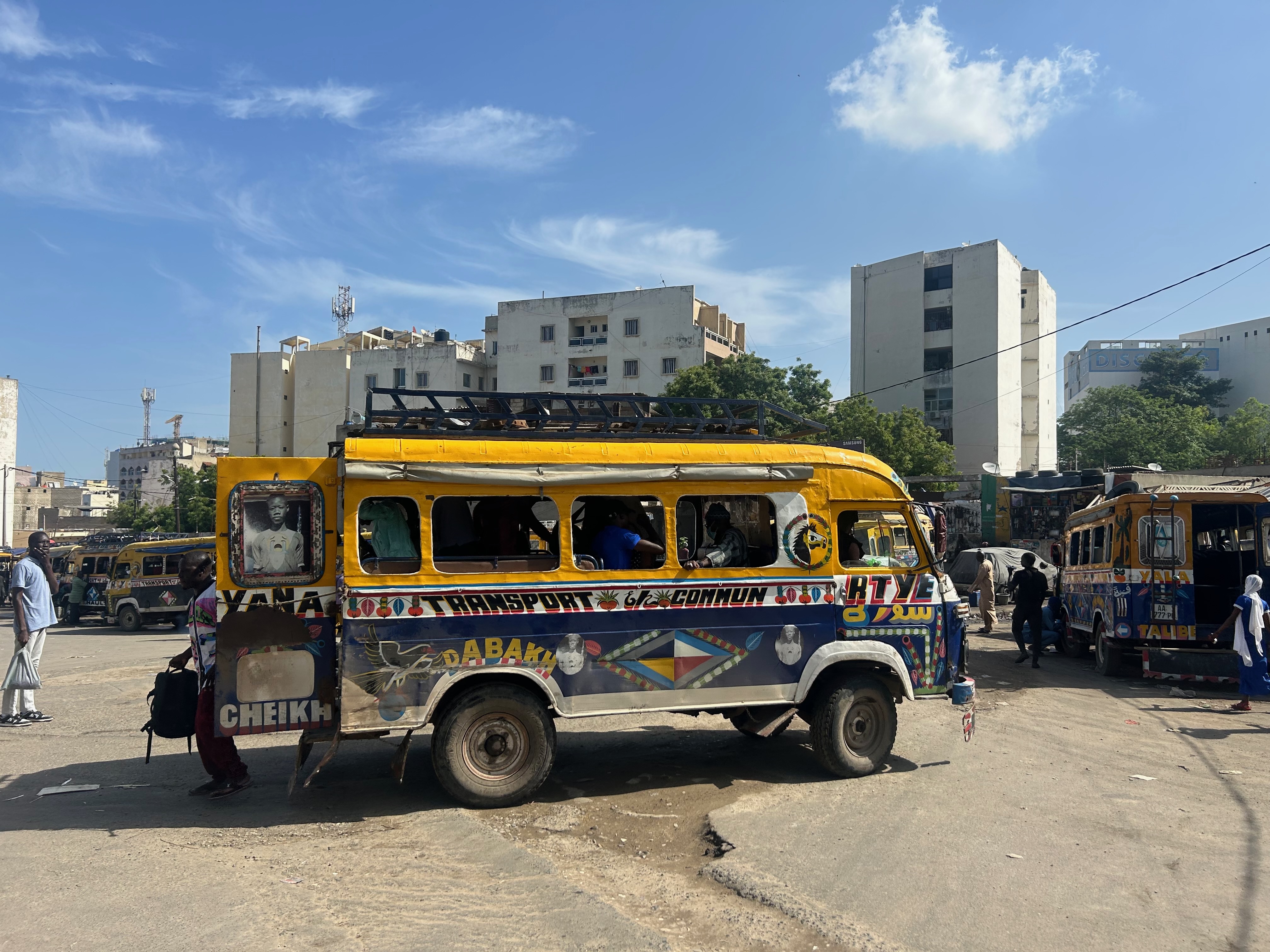
There are many colorful minibuses 🚌 here with bright yellow, blue, white colors, and folks are wearing African robes (long sleeves and pants) in the very hot and humid weather.
We saw the Mosque of the Divinity in Dakar, with two bright red towers.
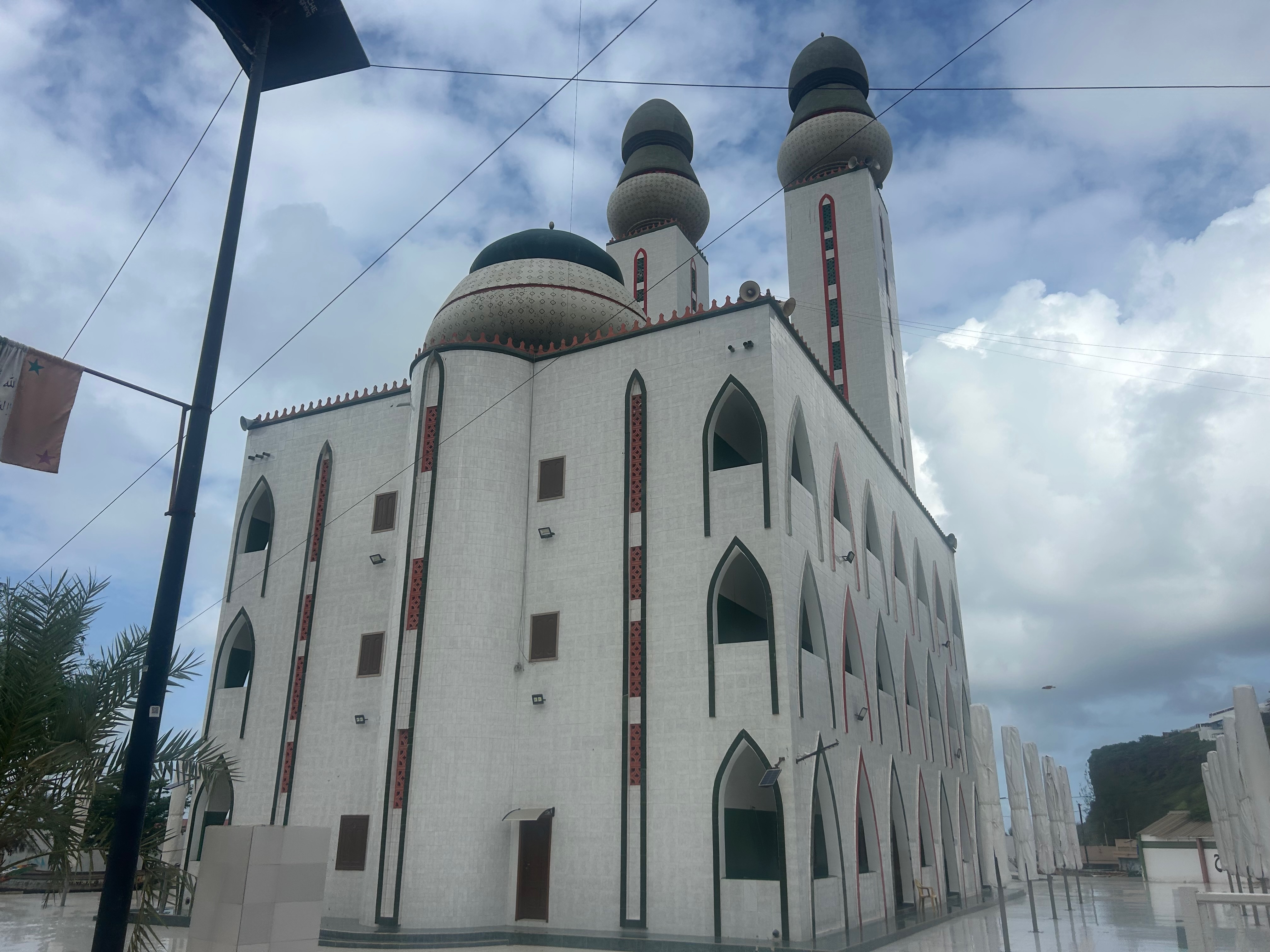
Very close to the Mosque is the towering African Renaissance monument. You can see it from very far away.
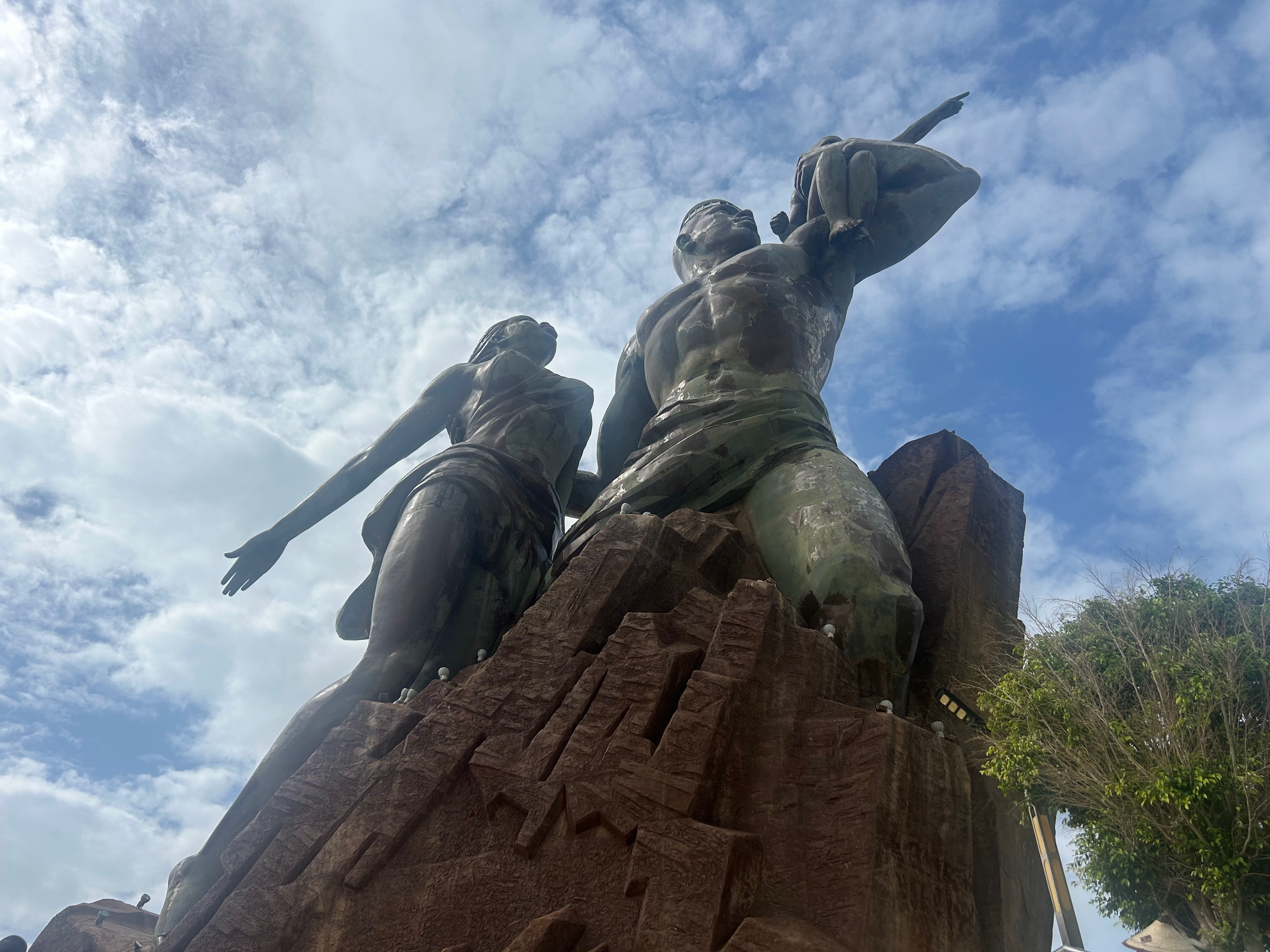
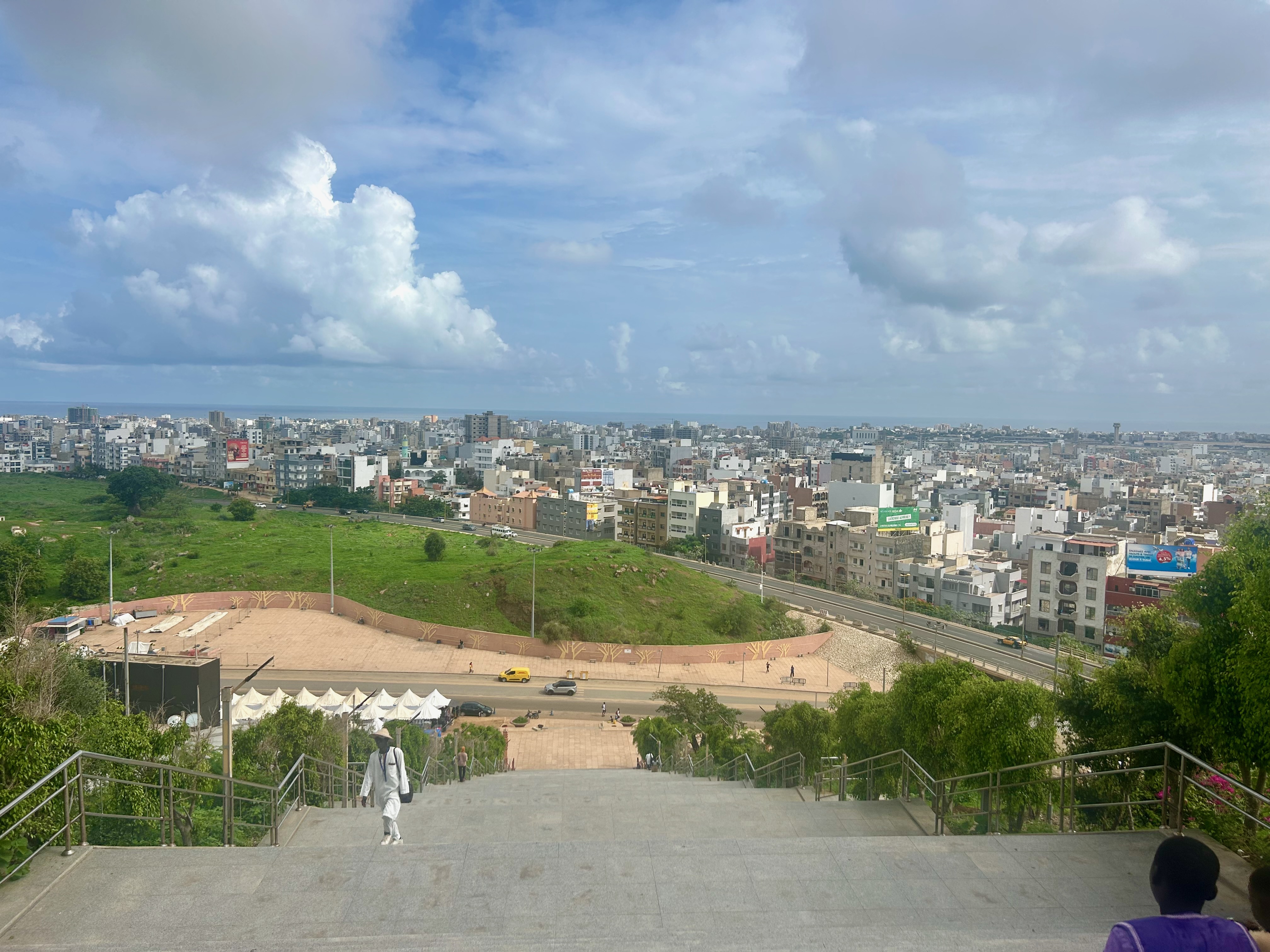 The monument is a man, woman and child pointing towards the future; there are many steps to get to the monument
This is a symbol of Africa’s rise in the 21st century, designed by Senegalese architect Pierre Goudiaby Atepa and built by North Korea’s Mansudae Overseas Projects.
After waiting a bit and taking in the view of Dakar and the ocean, we went up inside the African Renaissance Monument via a narrow elevator to an upper viewing level.
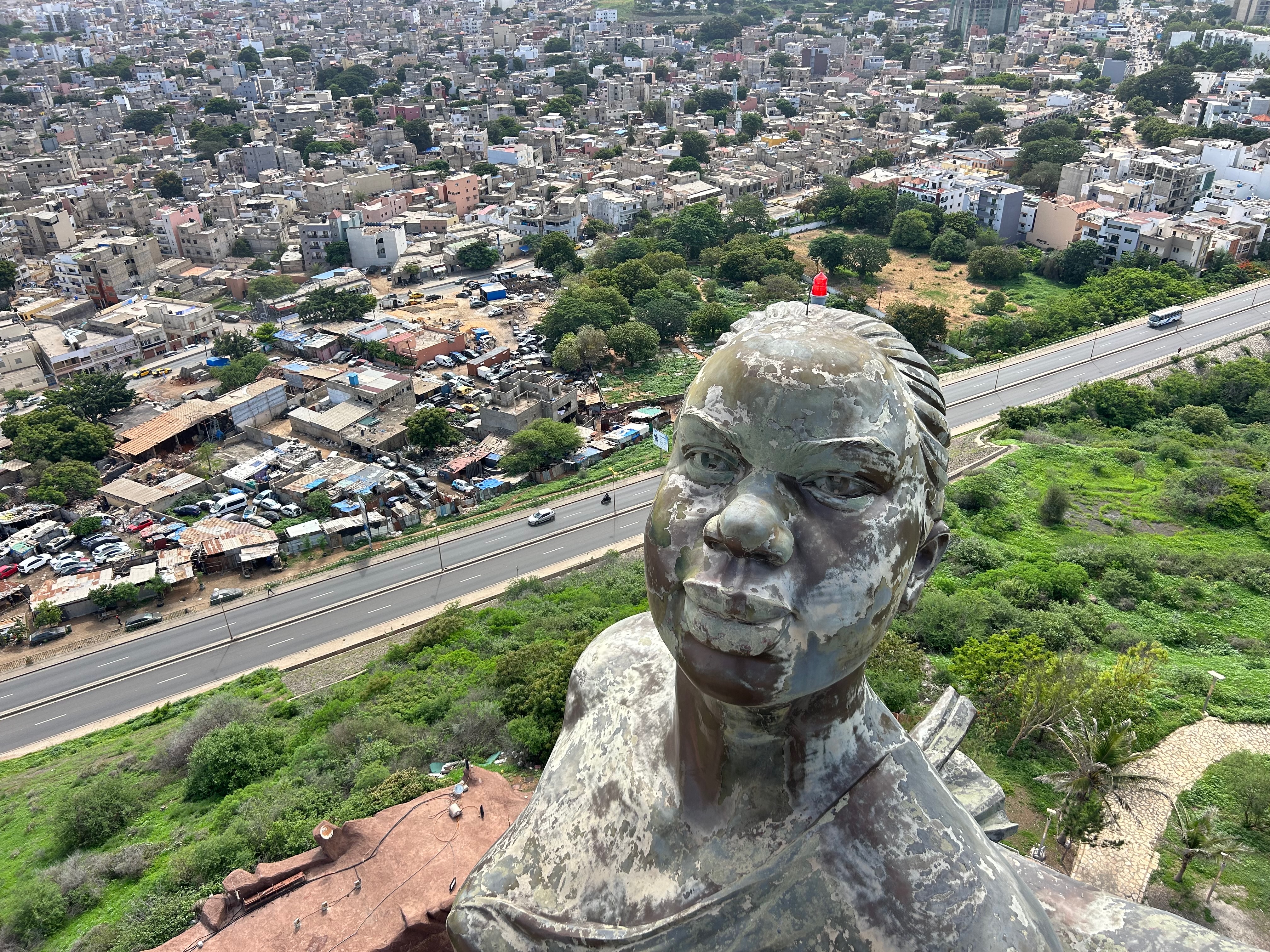
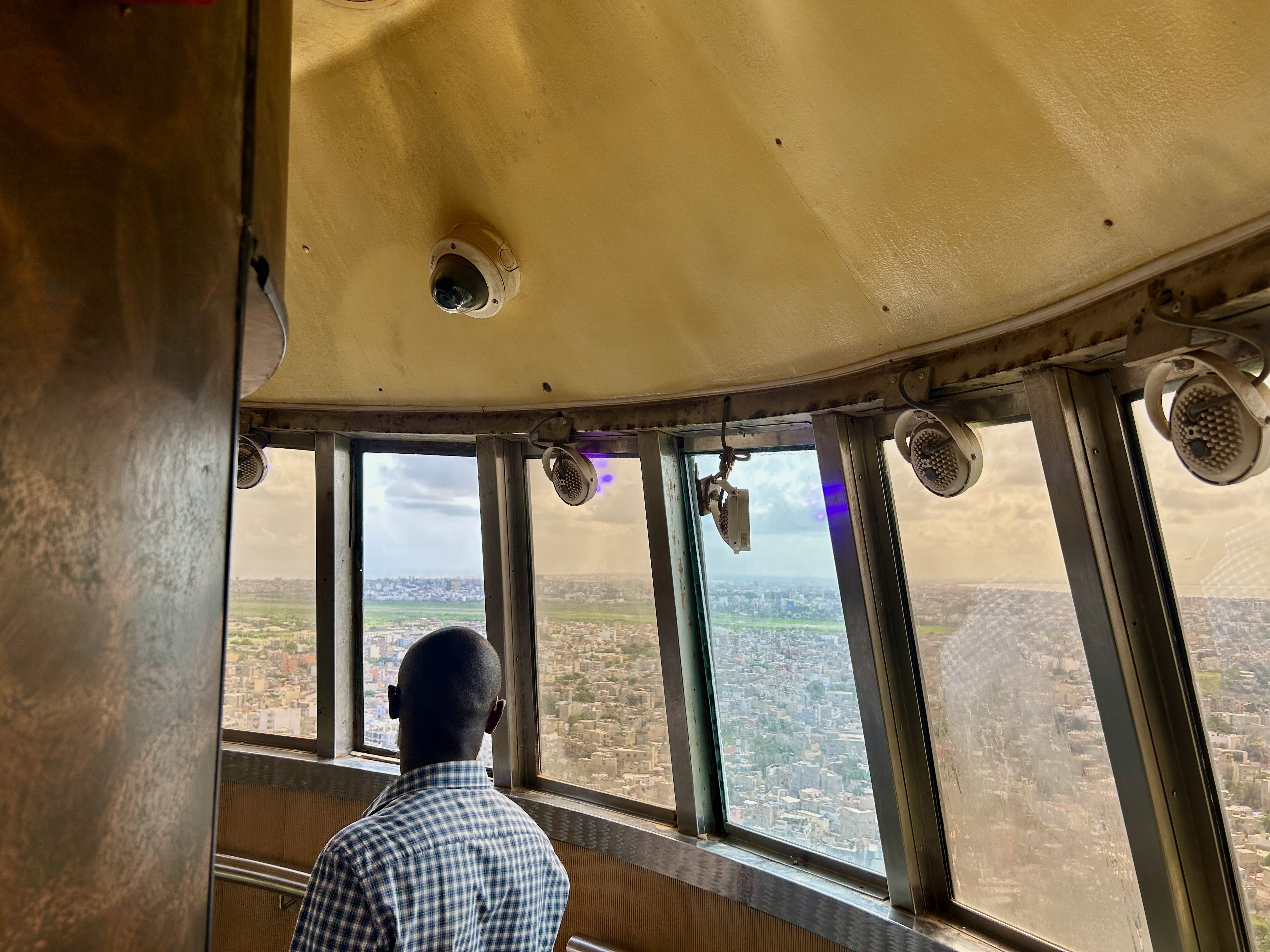
At the very top of the statue, we were inside the man’s head, and could see the mother and child from a completely different angle. There is room to walk around in the circle around the elevator.
On the bottom three floors, we saw many African countries’ traditional masks and symbols, given to the monument when it was completed in 2010.
I then went with Becaye to the fish market and bought an attaya from a walking vendor. After the fish market, we also visited the art village for some light souvenir shopping.
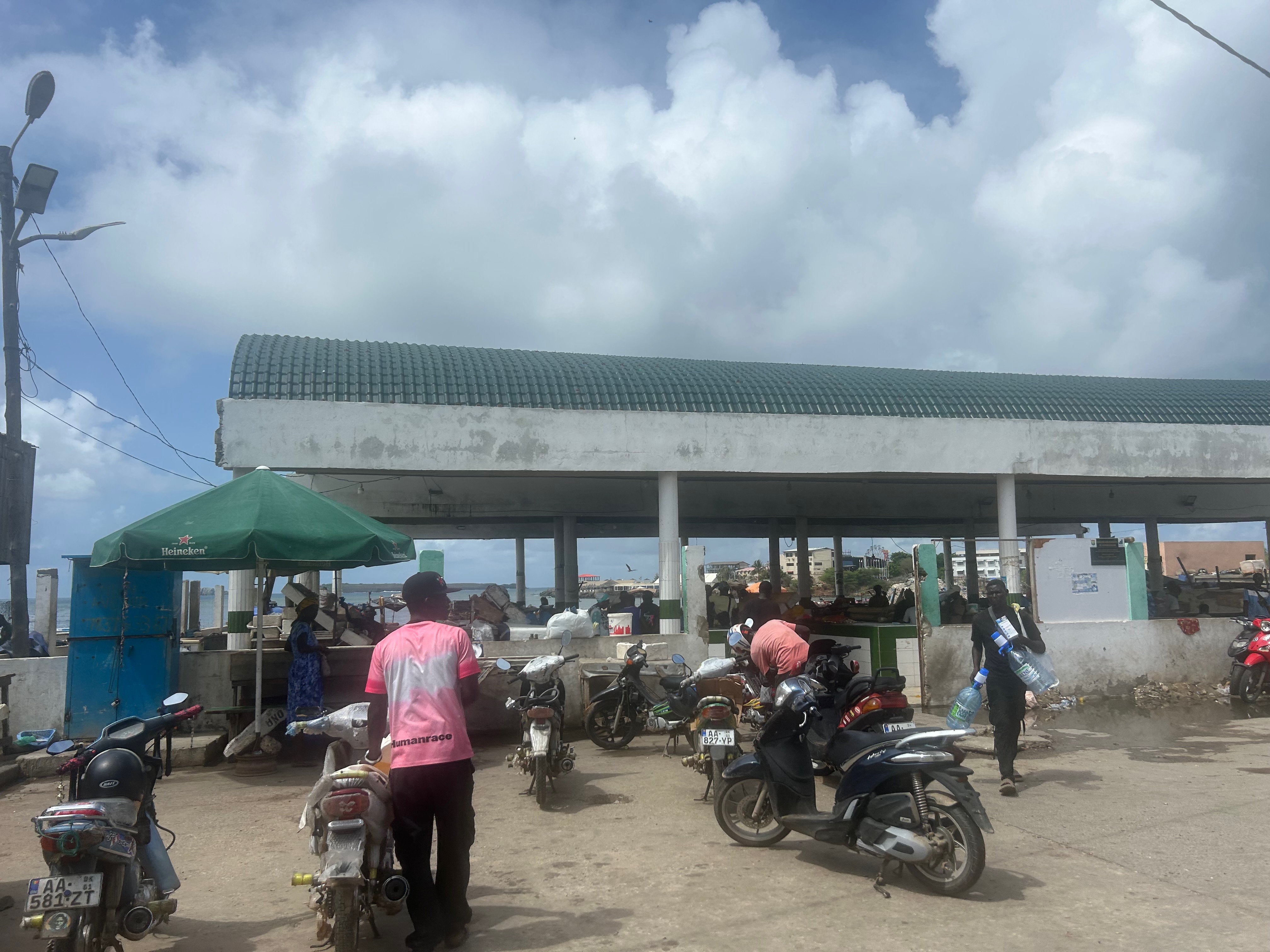
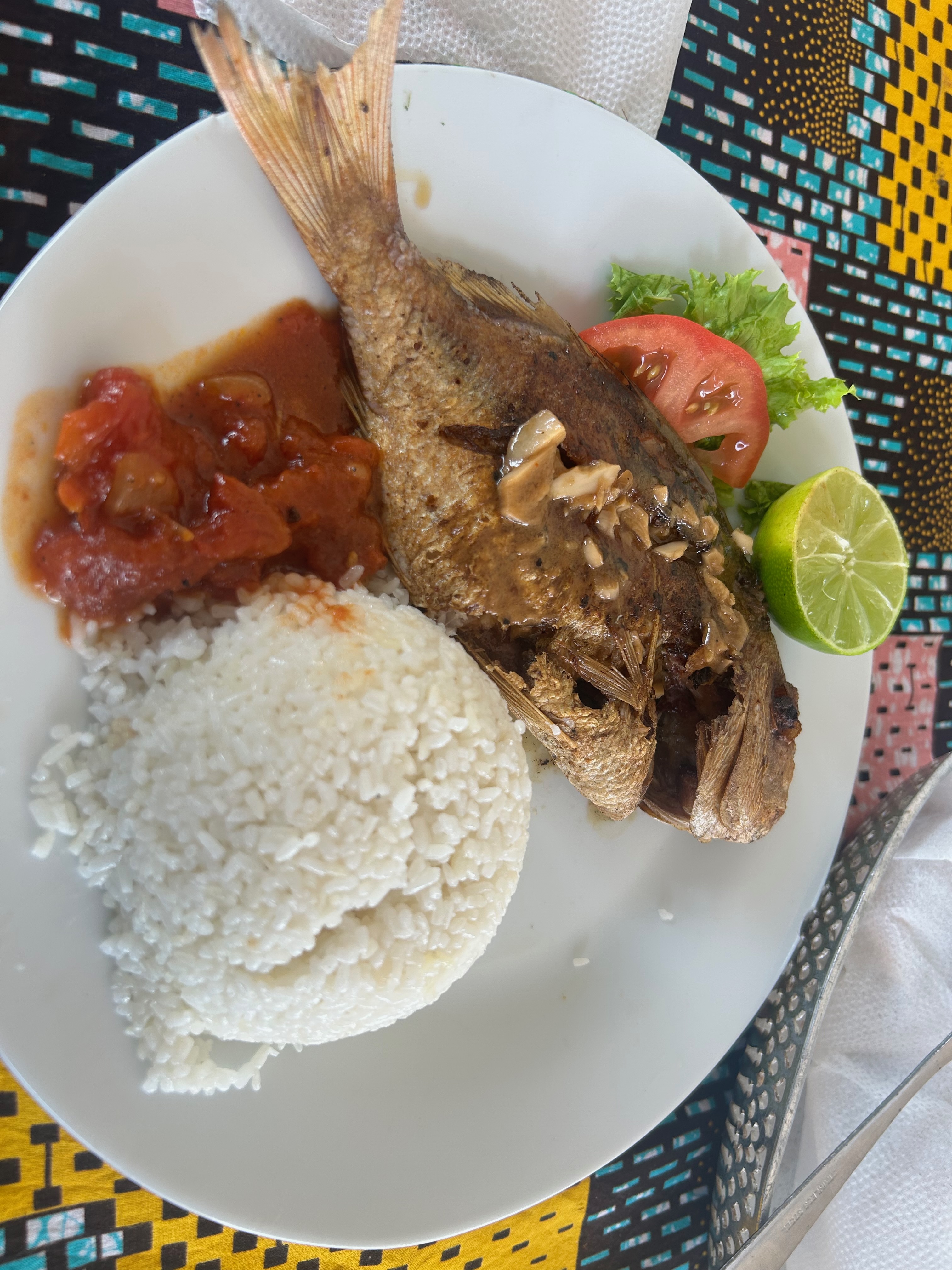
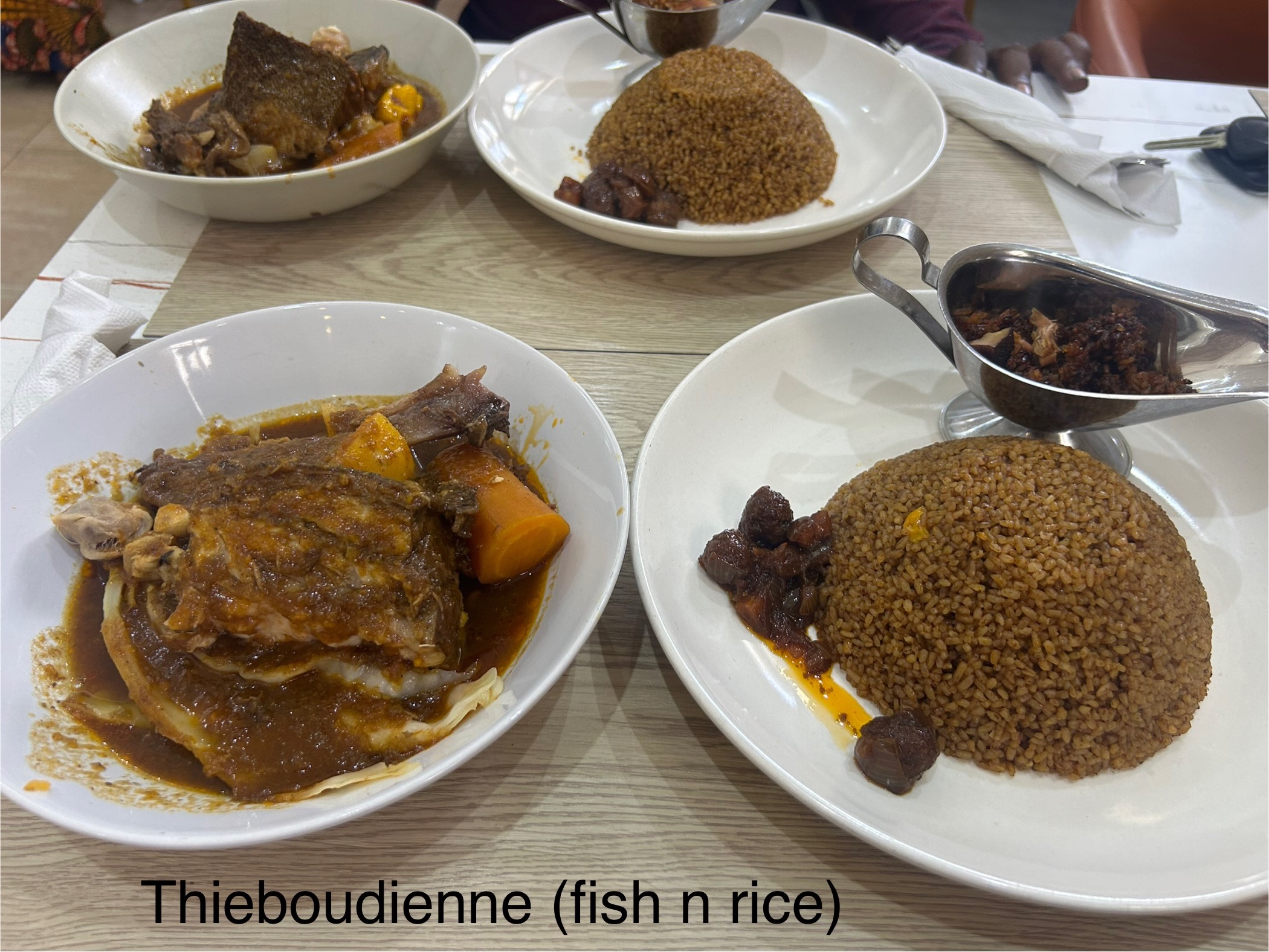 Thieboudienne in Wolof means fish and rice.
After spending a while to exchange my USD payment for XOF (they were unhappy with the newer $20 USD bills), we went to have lunch with, of course, the national dish, Thieboudienne.
It is composed of spiced rice (ceebu jën—the ancestor of jollof rice), fish, cassava, African eggplant (garden egg) and more. You can taste the mixture of sweet and savory, balancing the spices and the fish. Along with the Thieboudienne, we drank the baobab drink, which comes from the fruits of the baobab trees here.
We arrived at the Dakar port to try to get to Goree Island. Unfortunately, Becaye didn’t know the ferry schedule, and we couldn’t make it this time due to my next flight.
We drove back to the airport for my flight to The Gambia as it started to rain. My first impression of Senegal was fantastic!
Coming back to Dakar, staying in Ouakam
The good impression was, unfortunately, very quickly wiped away as I came back to Dakar two days later.
At around 2 a.m., a driver and I agreed on the price to get to Dakar. However, as we drove five minutes away from the airport, in the middle of nowhere, he stopped and said that he had misunderstood where I was going, and that the price was actually three times what it was.
This was crazy stressful in the pitch-black early morning, being extorted for more money by a stranger. I insisted that we go back to the airport, and he finally agreed.
Fortunately, I had a much better experience with a different driver. After a very long ride, I called my poor Airbnb host, who had his brother sleep at the unit, and he gave me the keys at around 4:30 a.m.
Day 2: Gorée troubles and getting an Orange phone plan
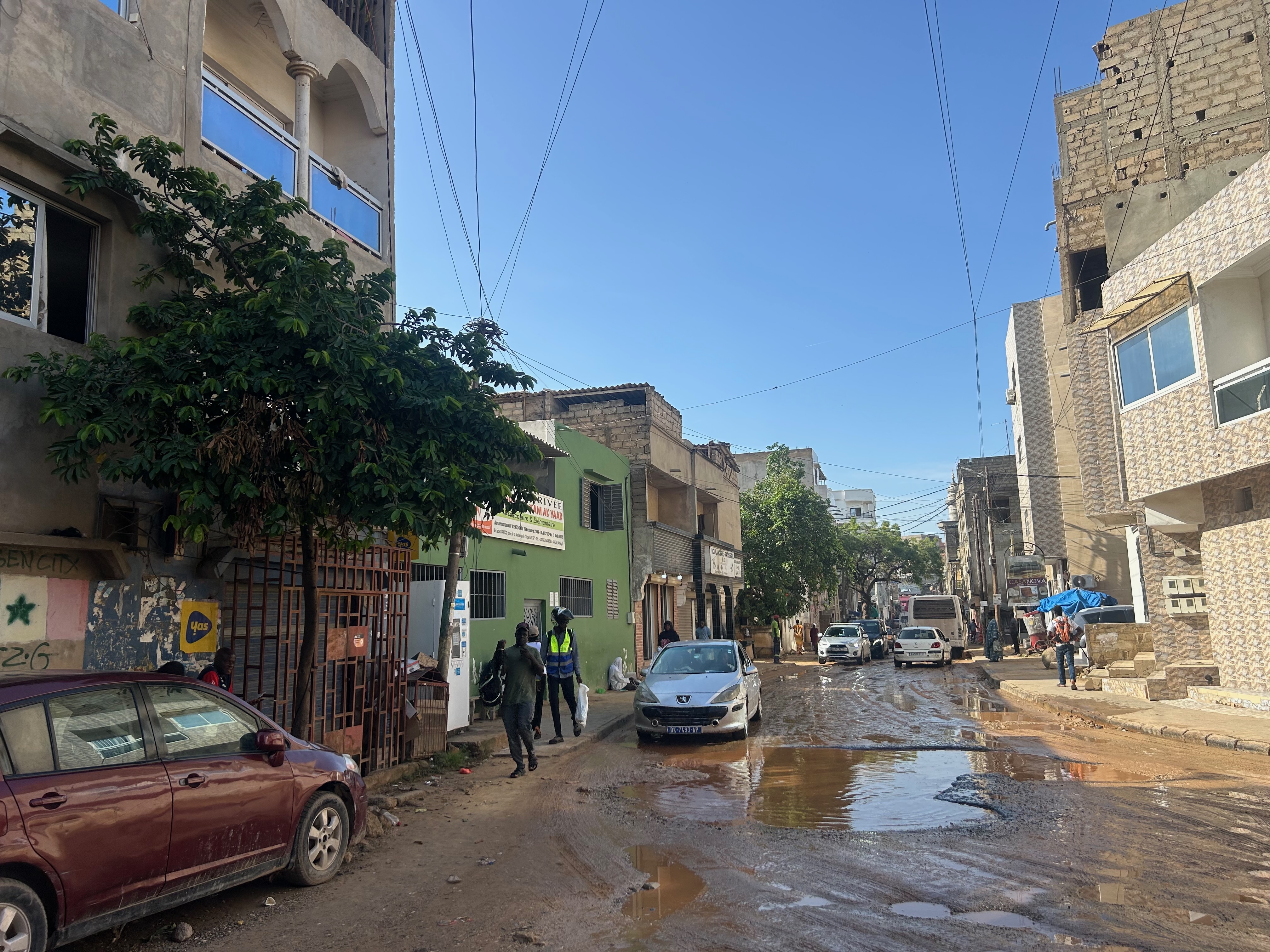
Thanks to my employer, R, who provided me with the wonderful flexibility to explore Senegal. Unfortunately for me, I realized that I had VPN issues with the apartment Wi-Fi.
My first order of the day was to get a phone plan with data to access VPN. Through a Yango ride, I came to the Sea Plaza, where after about one hour of trying, I had an Orange phone plan for the week.
Close by to the plaza is the Place du Souvenir Africain, celebrating African leaders and heritage.
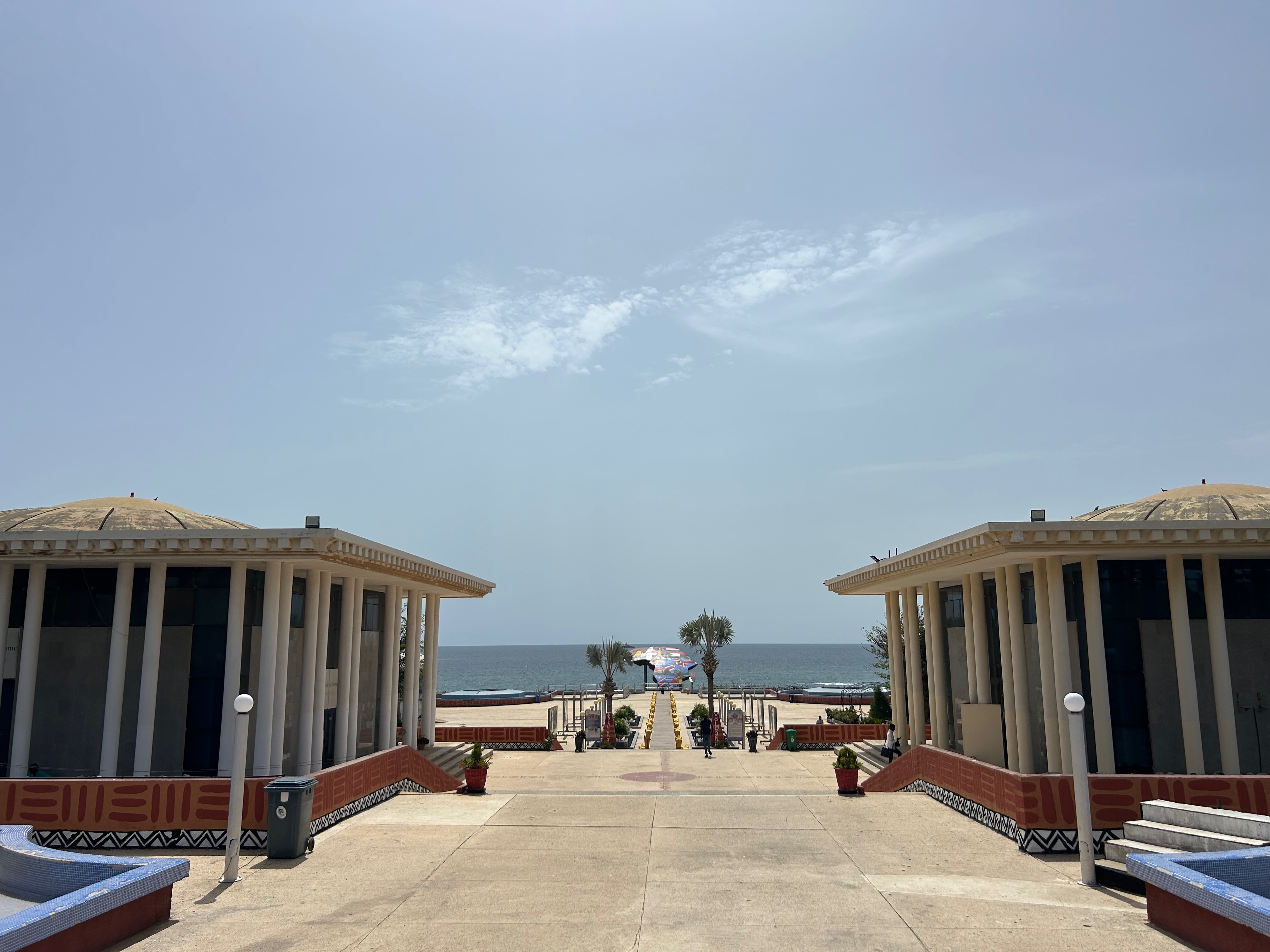
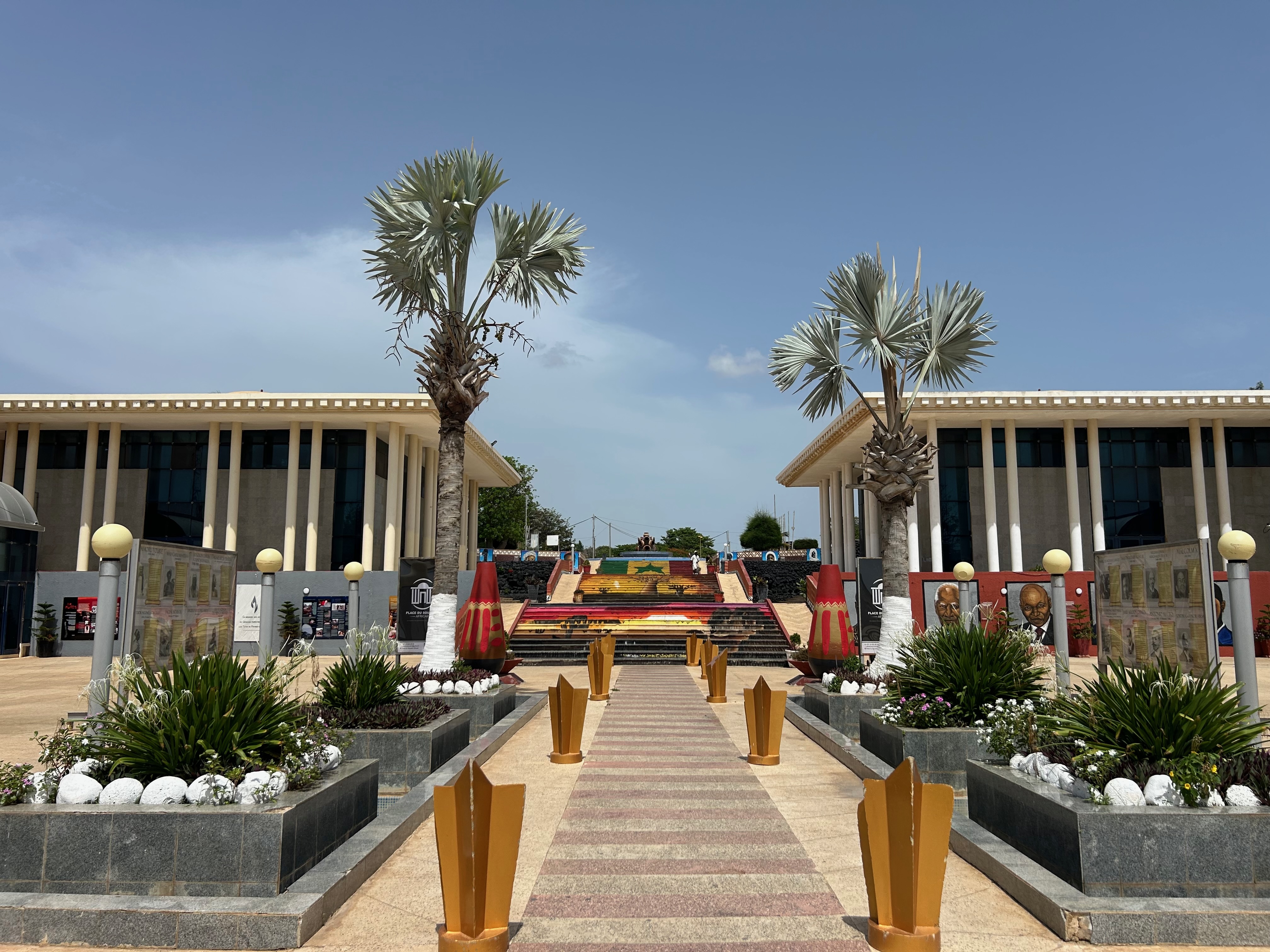
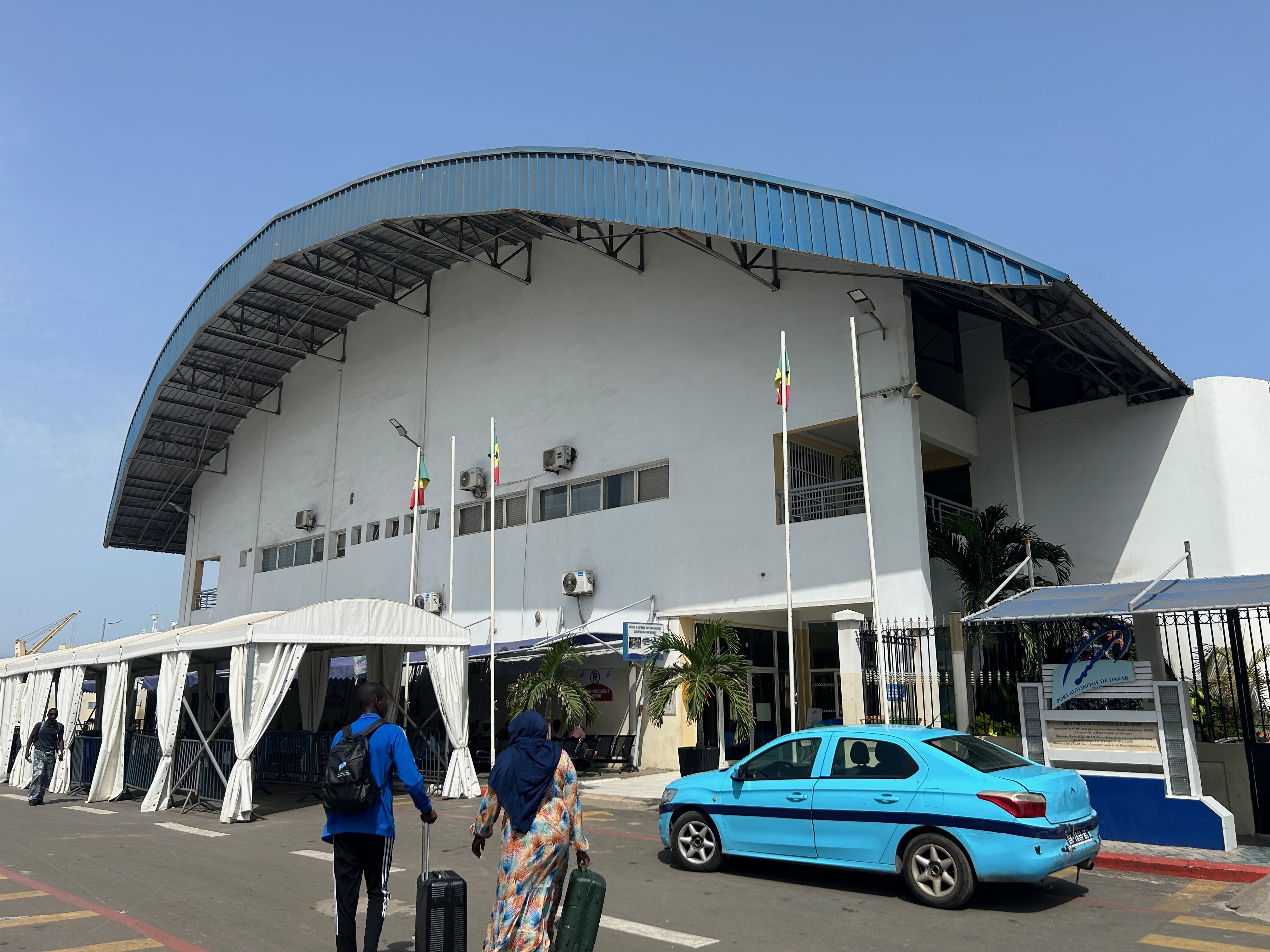
I then visited the Dakar port again to finally visit Gorée Island.
At the ferry ticket office, I heard someone yelling repeatedly, “Where is ticket?” I bumped into a fellow Chinese traveler, Leo, who had been to 130+ countries and is very experienced. Leo is from Hong Kong but living in New York, and currently traveling his way south.
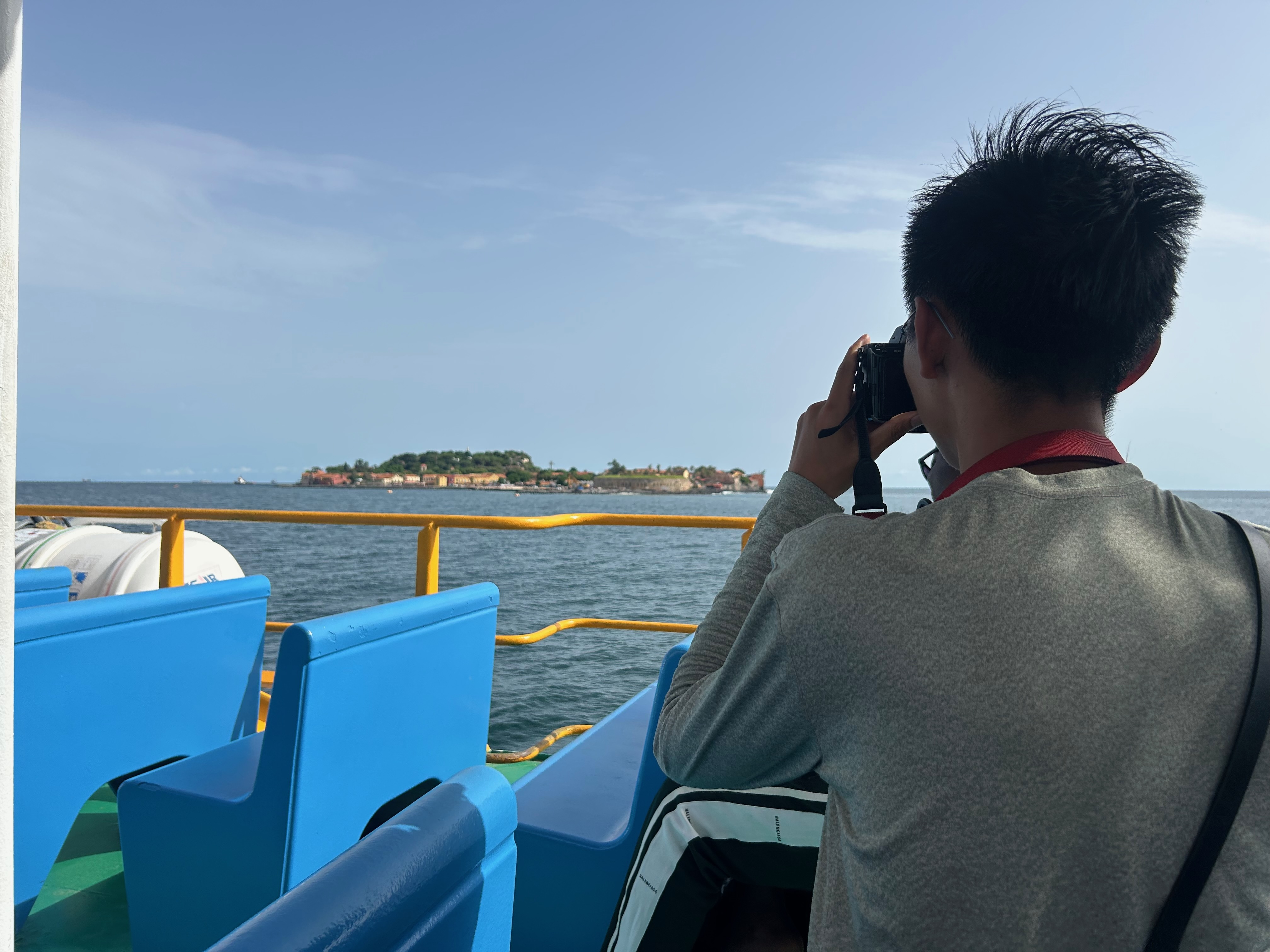 Leo had this whole chicken from Auchan, a popular grocery chain. And he was eating the chicken whole on the boat :)
We buddied up and explored the island together.
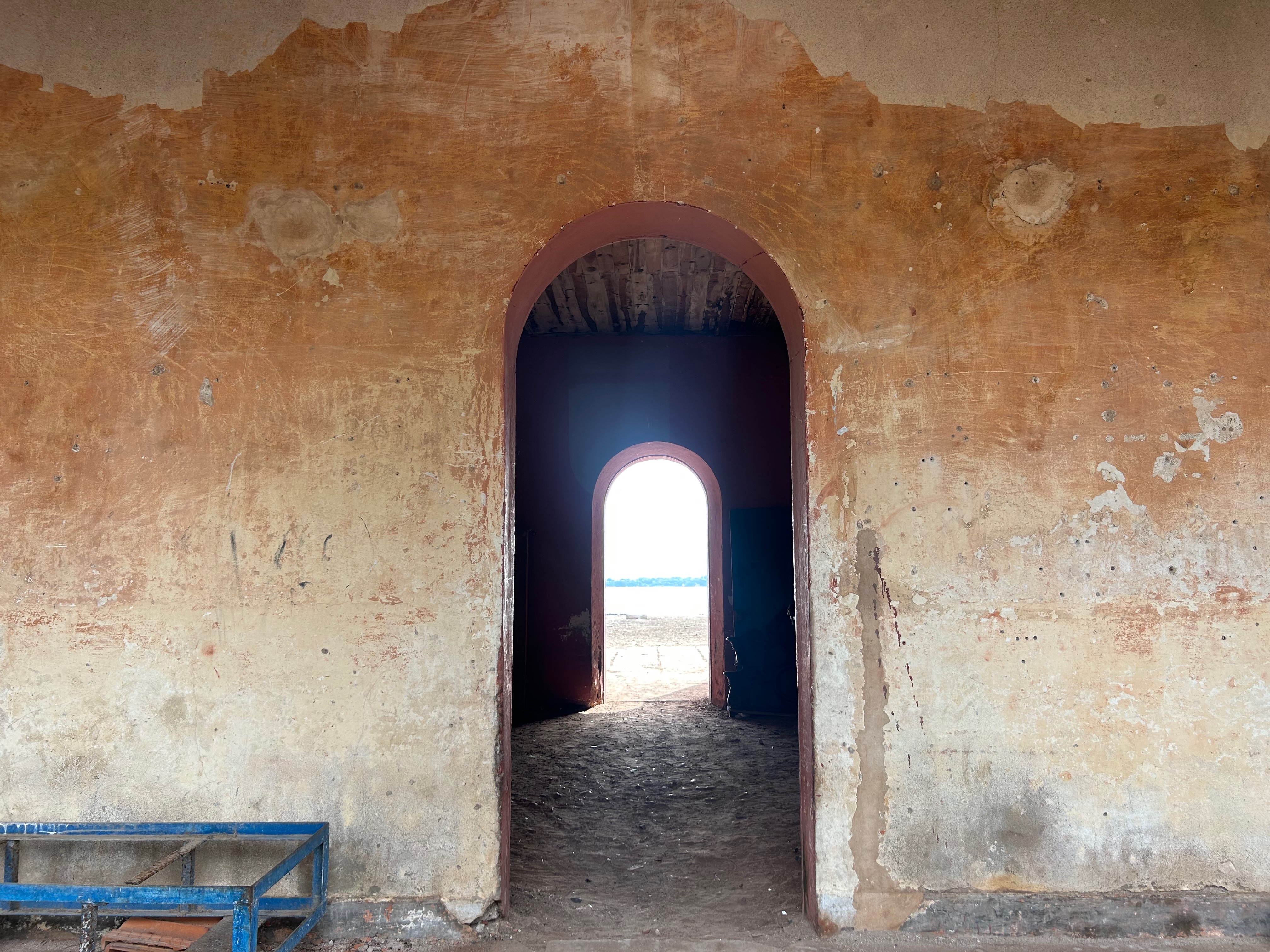
There are many goats and cats on the island
Gorée Island is a famous memorial site of the transatlantic slave trade. It’s a small island with about 1,000 inhabitants working largely in local tourism. It was one of the first UNESCO world heritage sites actually.
I estimate that rim to rim is about a 30-minute walk. We walked up to the famous House of Slaves, but it was unfortunately closed.
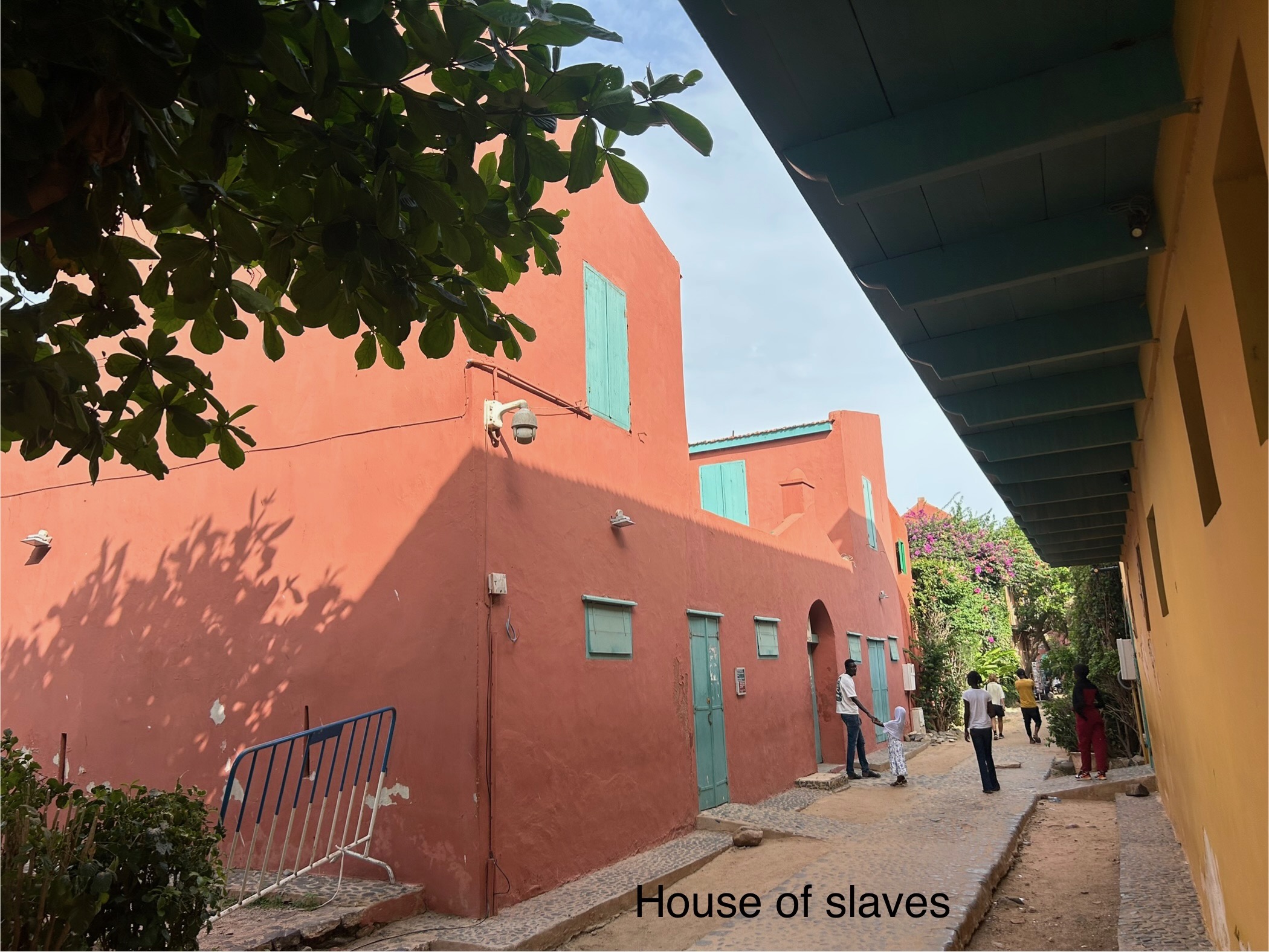
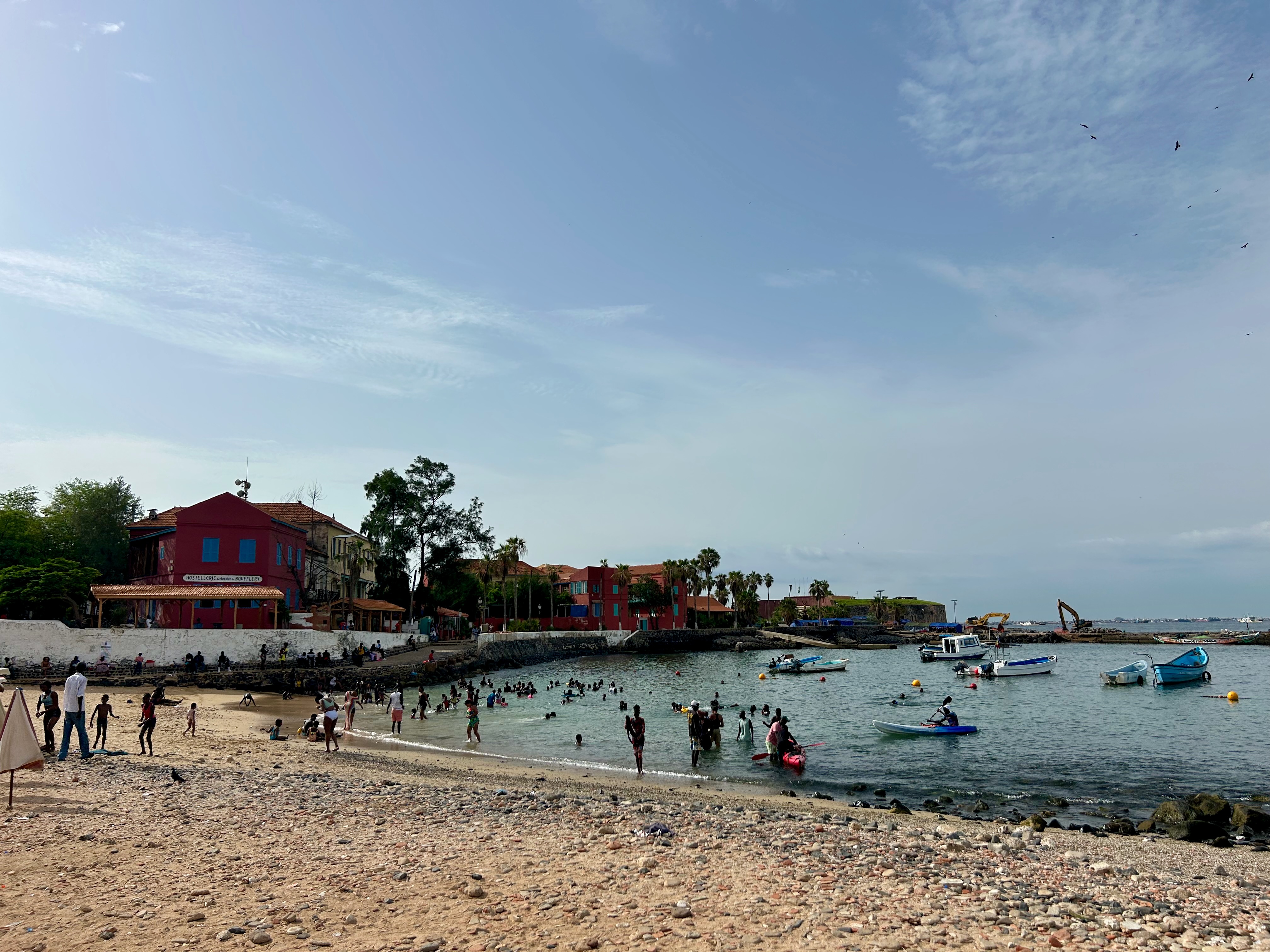
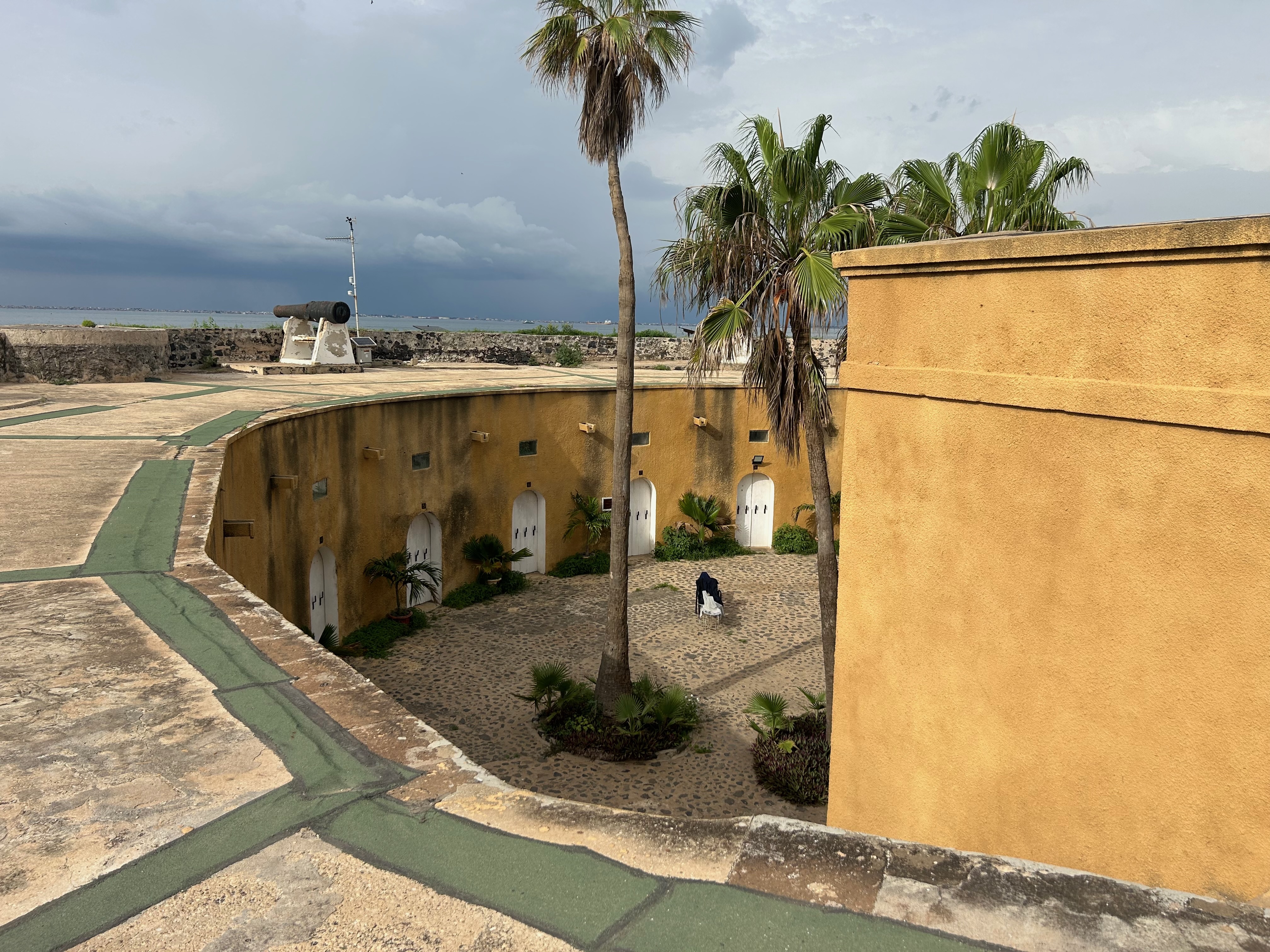
We also visited the fort, which had a museum about the slave trade here from the 1600s to the 1800s. There were so many countries and traders involved around Gorée, all heading to the New World.
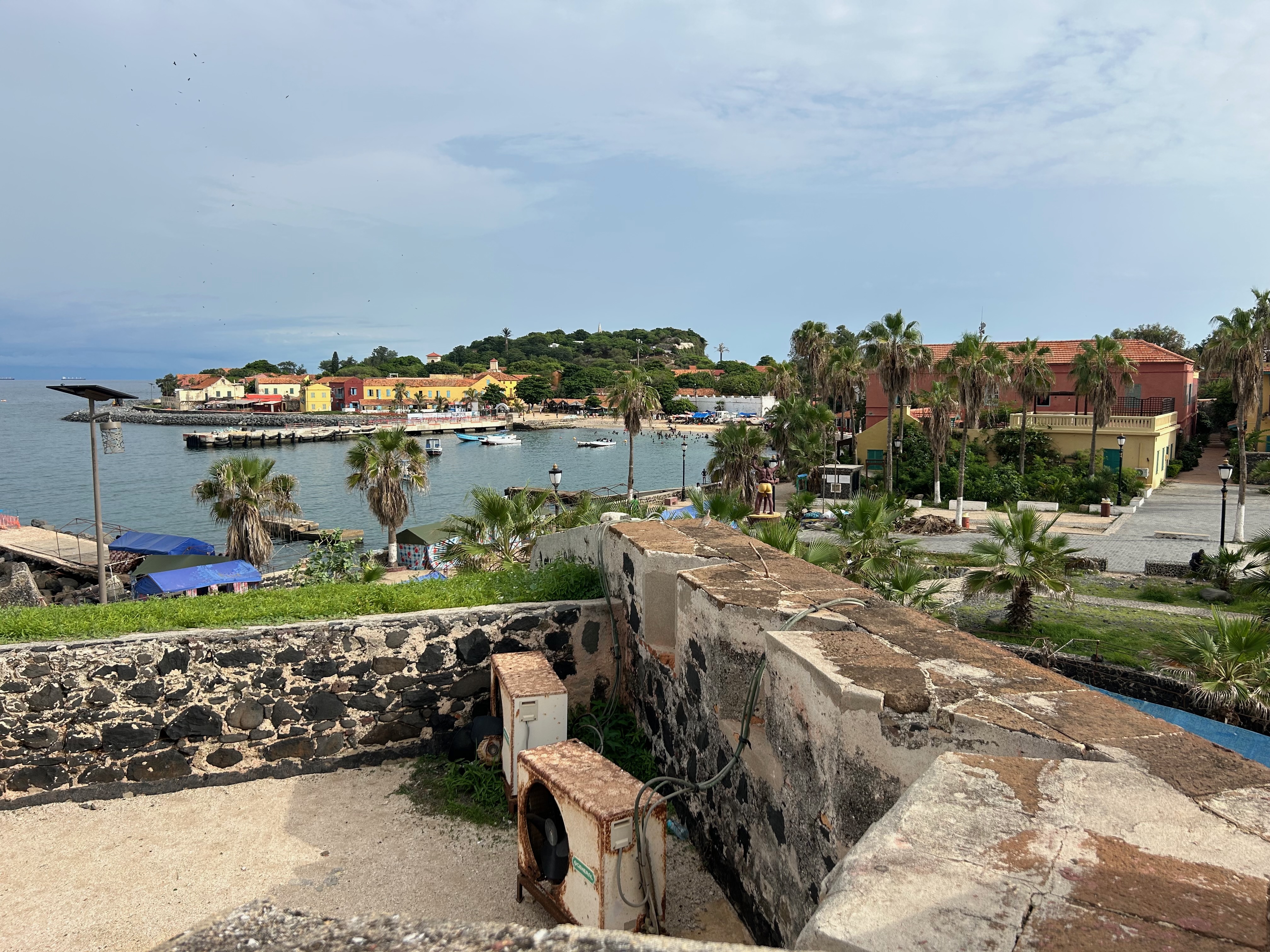
As 5:30 approached, we headed back to the ferry terminal. Then suddenly, huge clouds approached us at record speed. All the vendors and shops quickly packed up.
Leo and I ran behind a restaurant cover. Our initial plan was to wait for the boat to deboard and run for it. However, we were surprised that the boat was moving.
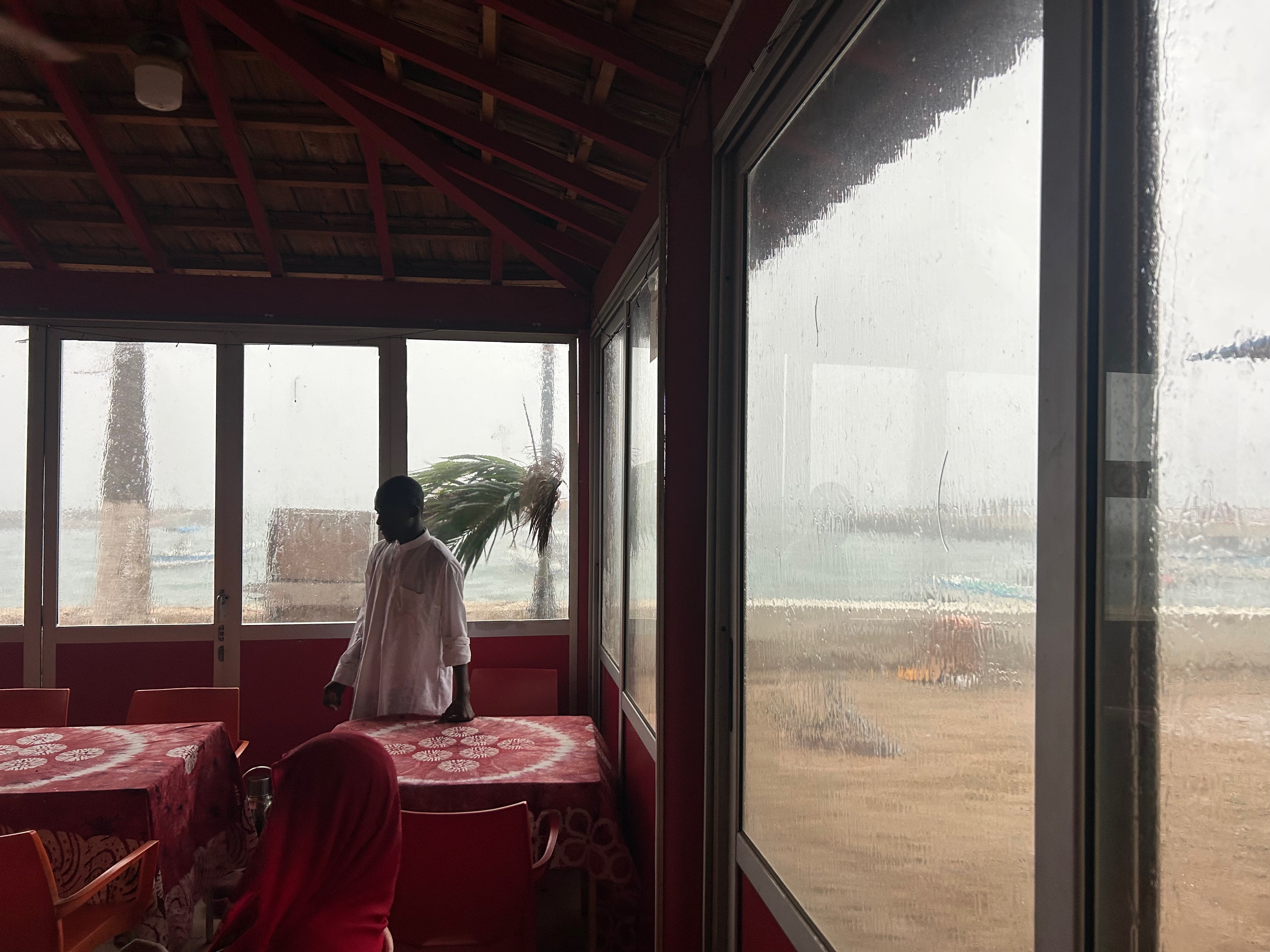
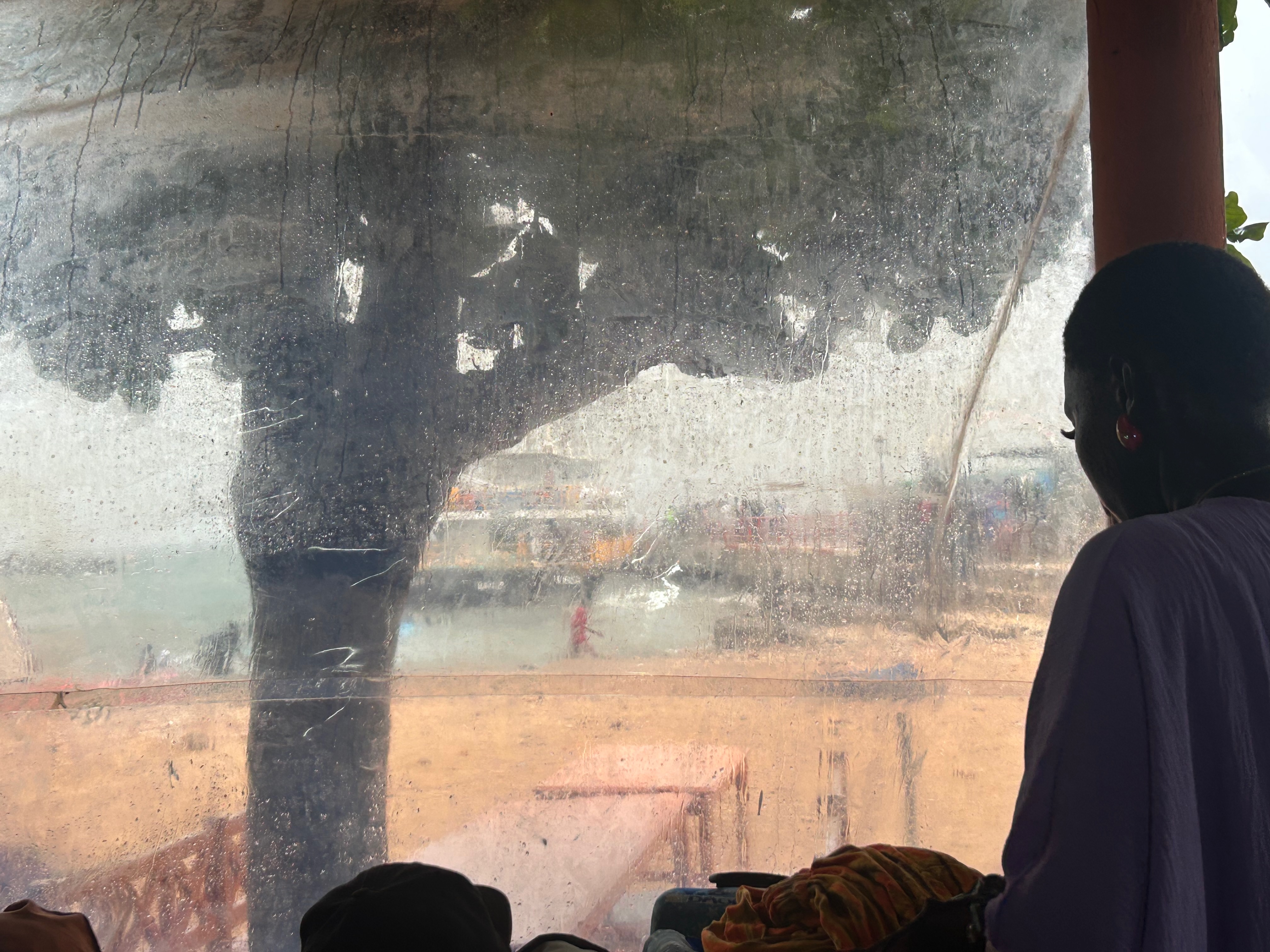
We ran toward it with all our strength in the crushing rain. Leo and I thought that we had missed the boat. Then we saw that the rope that the boat was anchored on had broken free.
The boat was desperately trying to anchor itself on the shore, but the winds were too great. Soaking wet, we hid under the restaurant cover by the beach, alongside many families, who were as cold and stressed as we were.
For the next few hours, the boat slowly disembarked; people and cargo were unloaded.
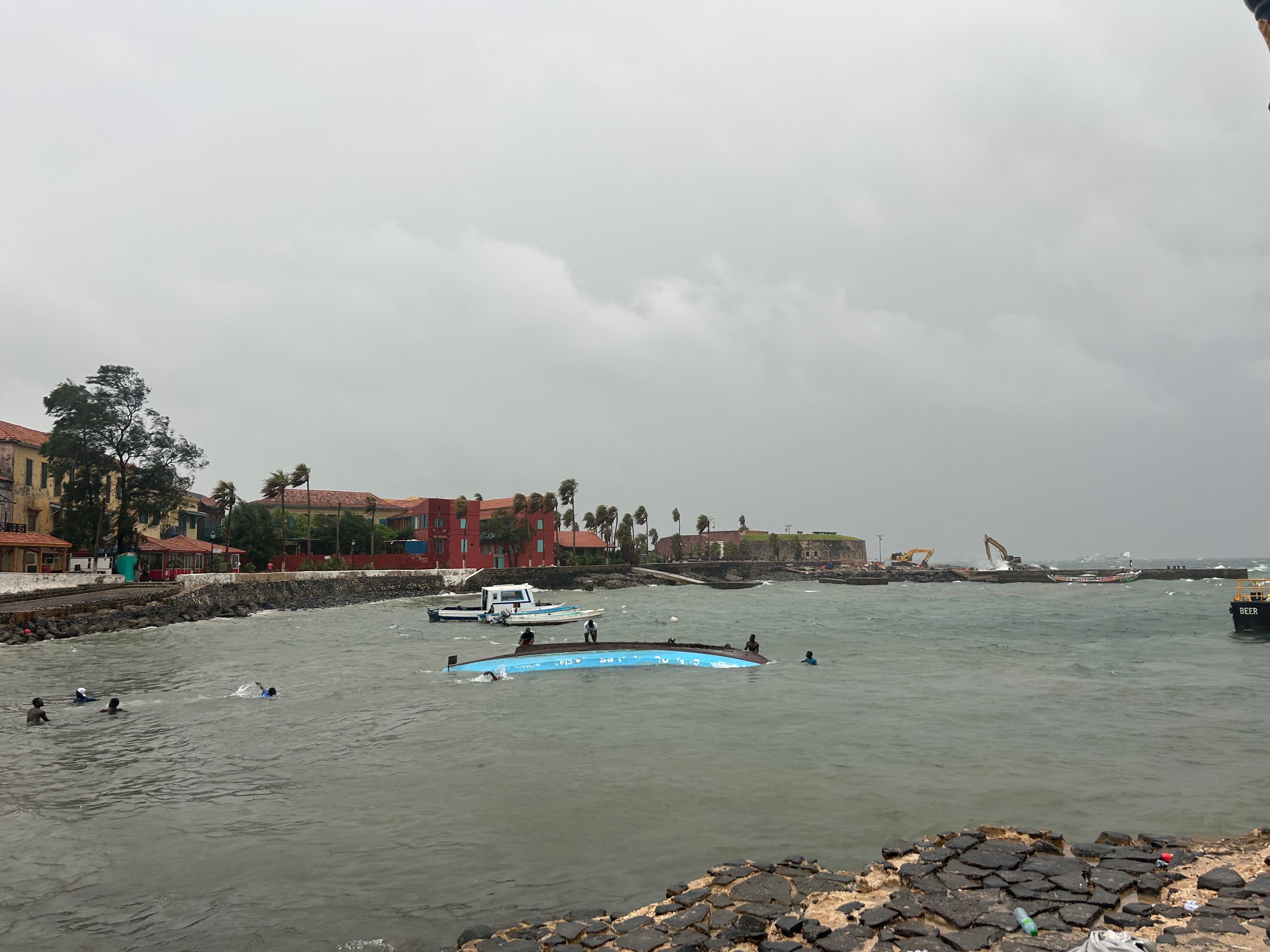
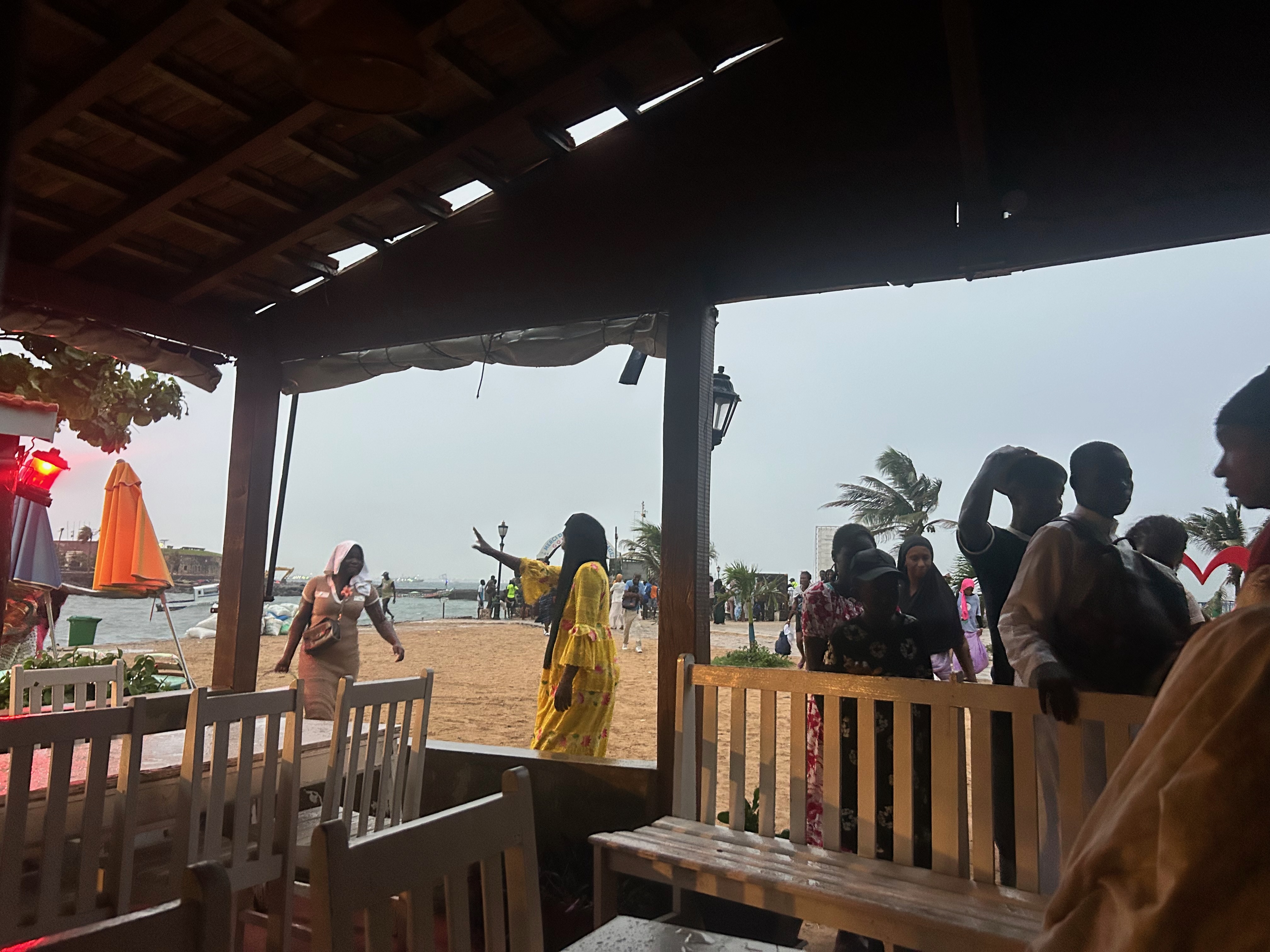
Three times that evening, everyone rushed to the port in the rain, only to be turned back because the boat wasn’t ready. It turned out that the boat had issues of its own.
At around 9 p.m., in the dark, we finally boarded the boat as the rain drizzled. The lines and people pushing in the lines were crazy. So many people speaking languages that we barely understood, pushing, rushing, skin-to-skin.
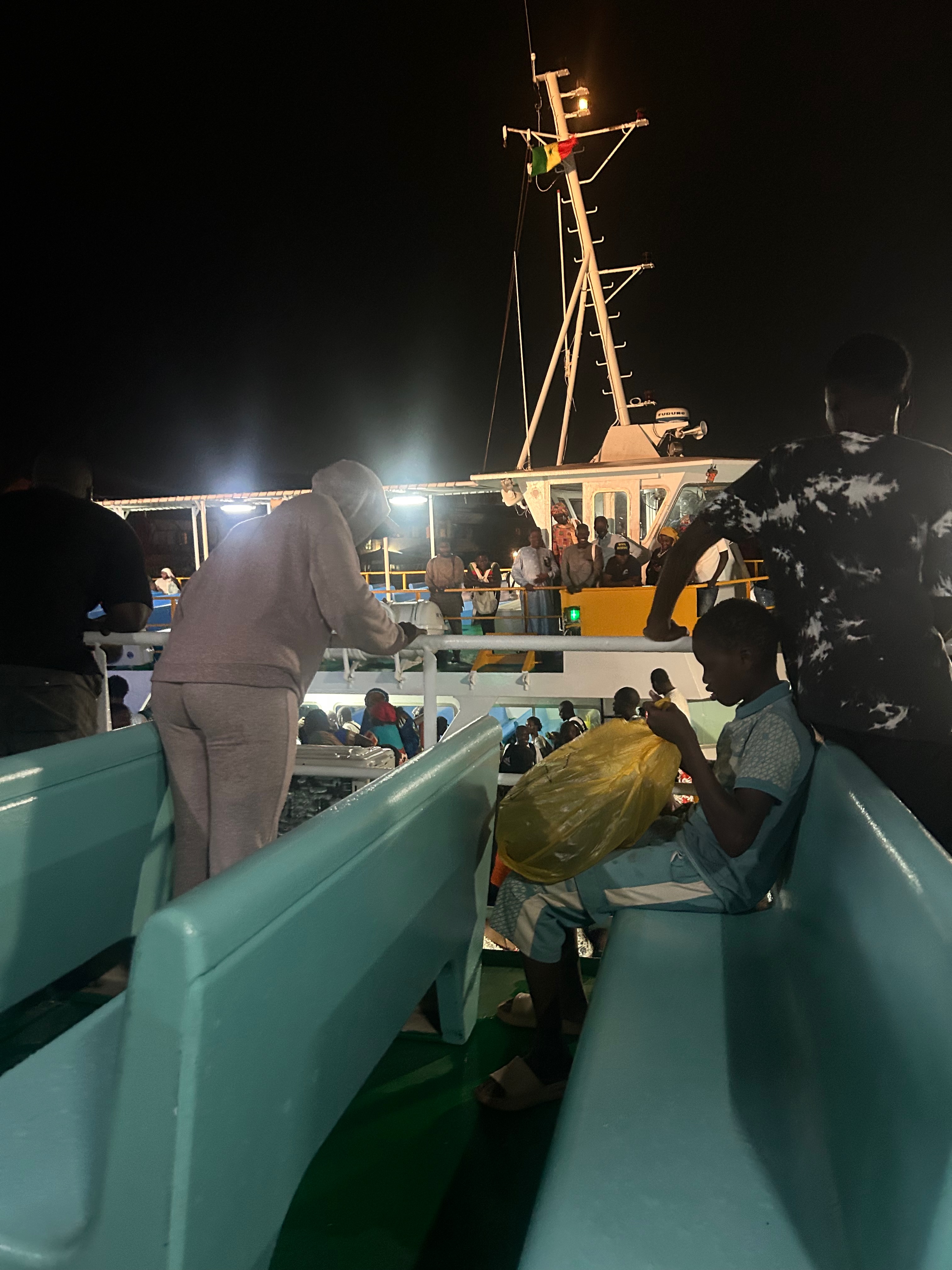
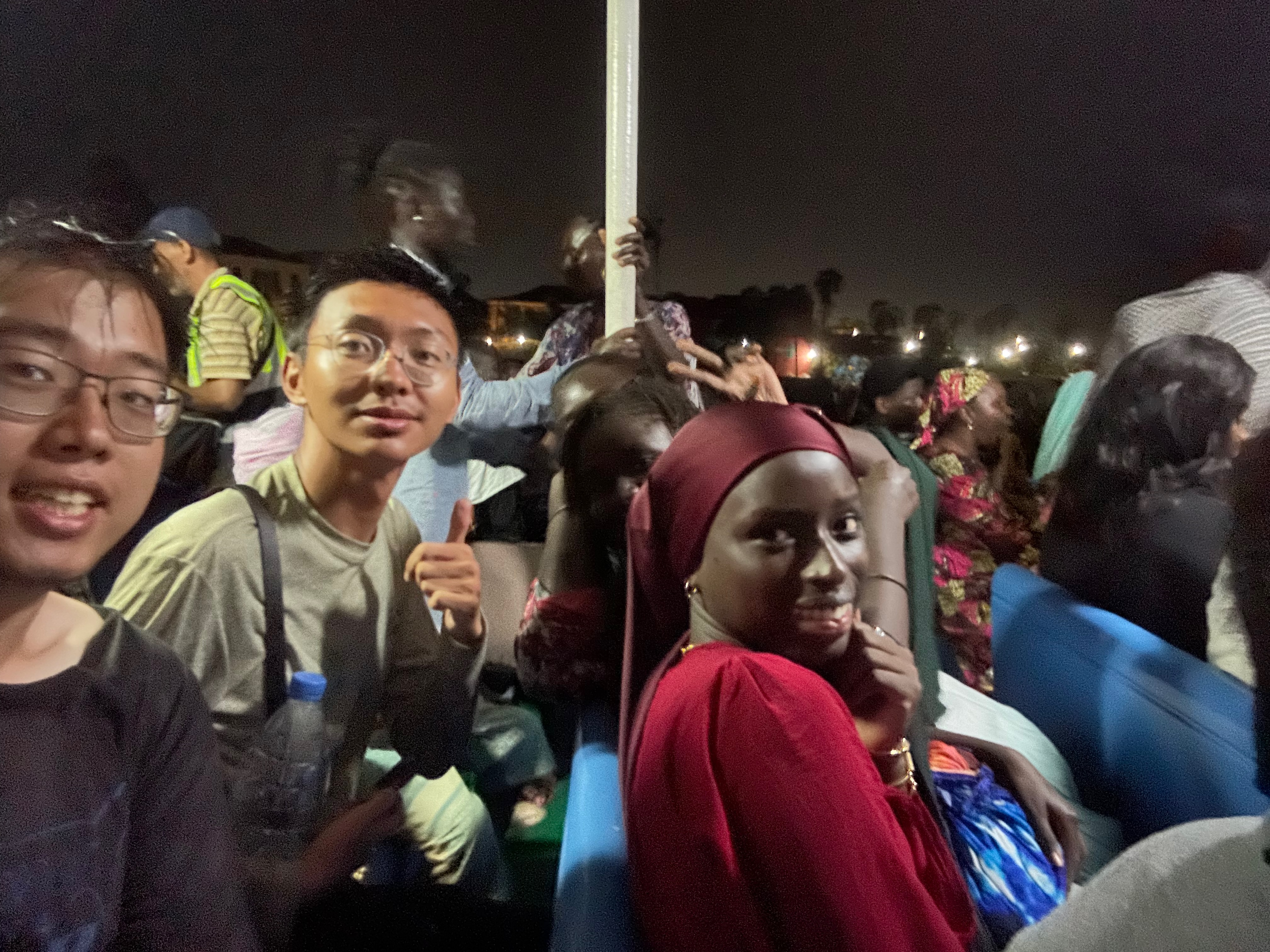
Through this, we met a really friendly group of young Senegalese women on the boat, who conversed with us in broken French and Google Translate. We exchanged WhatsApps and our group pictures, relieved to finally be going home.
And just as we thought that we were finally safe, there was an announcement that we needed to board a different boat, as the original one had sustained damage.
Fortunately, at around 10:30 p.m., we were finally back on the mainland.
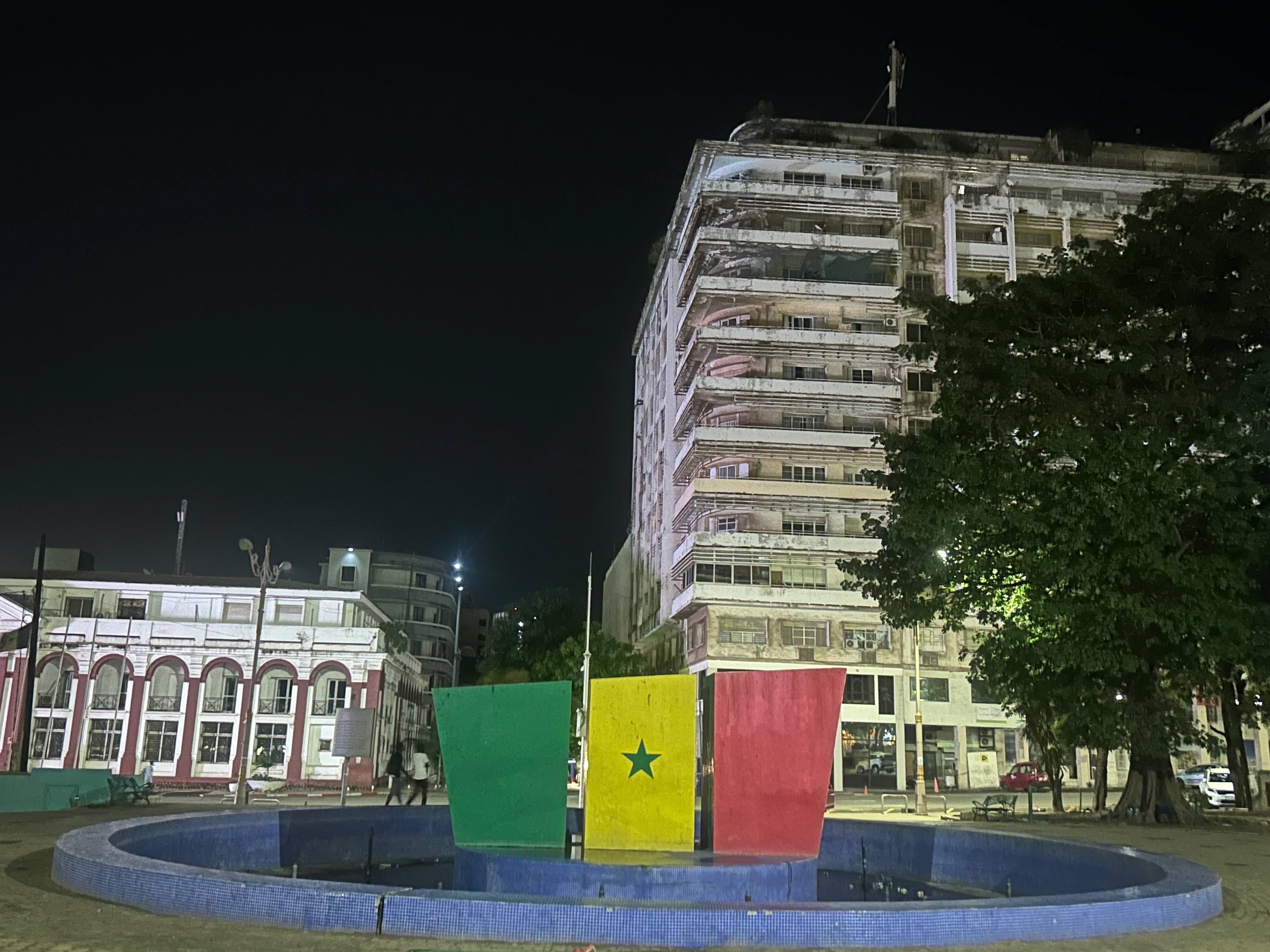
Leo and I walked to Independence Square and said our goodbyes. He was traveling to The Gambia via land border tomorrow. (Unfortunately, he was unsuccessful and had to fly to Ivory Coast instead, but that’s a different story.)
Leo’s last quote to me: niceness is weakness in West Africa.
Life in Dakar
From Tuesday to Friday, I walked the streets of Dakar—breathing in the hustle and bustle and experiencing what life was like in West Africa.
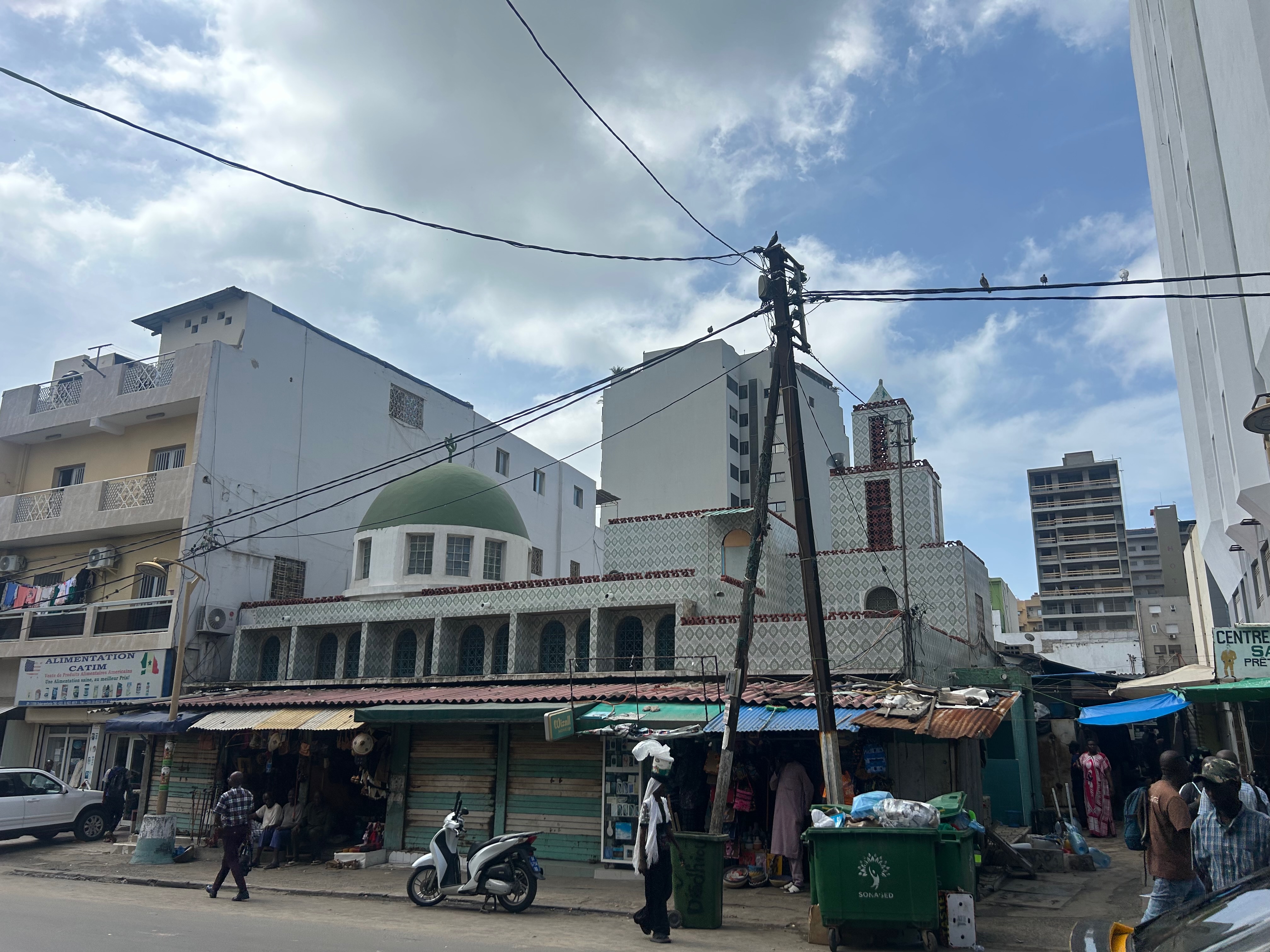
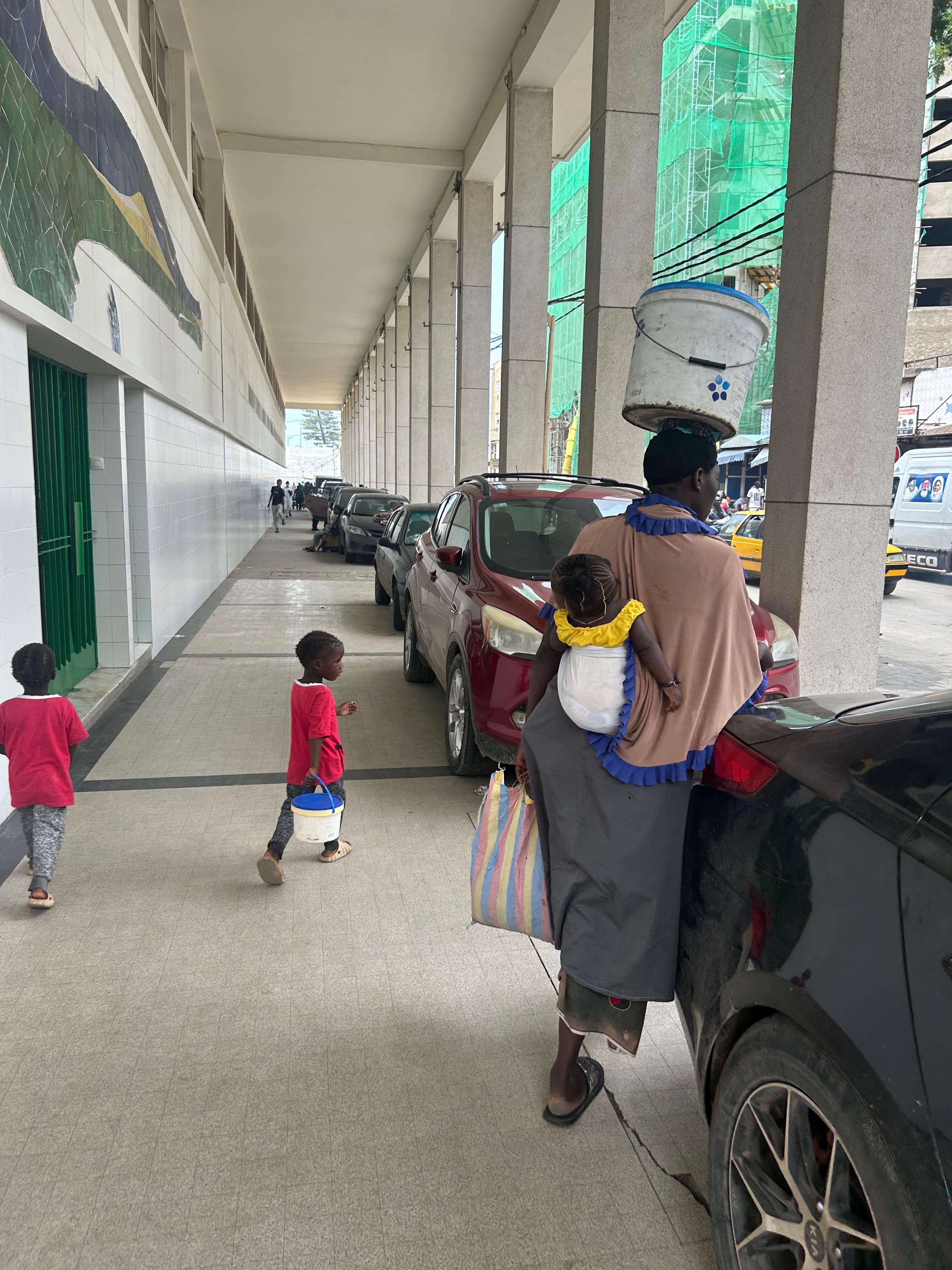
Dakar is actually a lot like Manhattan, with a core downtown area, but many suburbs.
I visited the biggest market, Sandaga Market, and saw many shops selling everything.
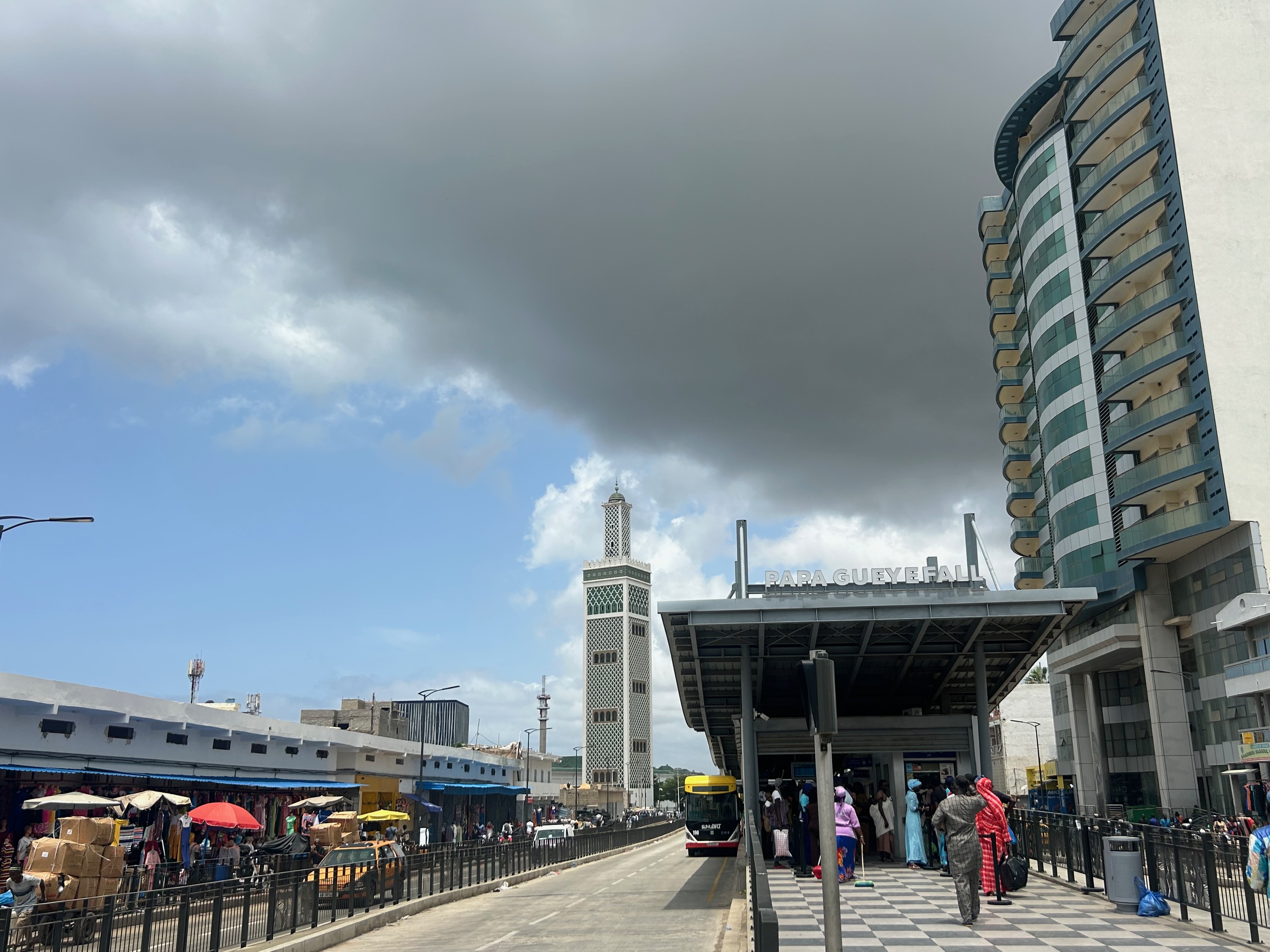
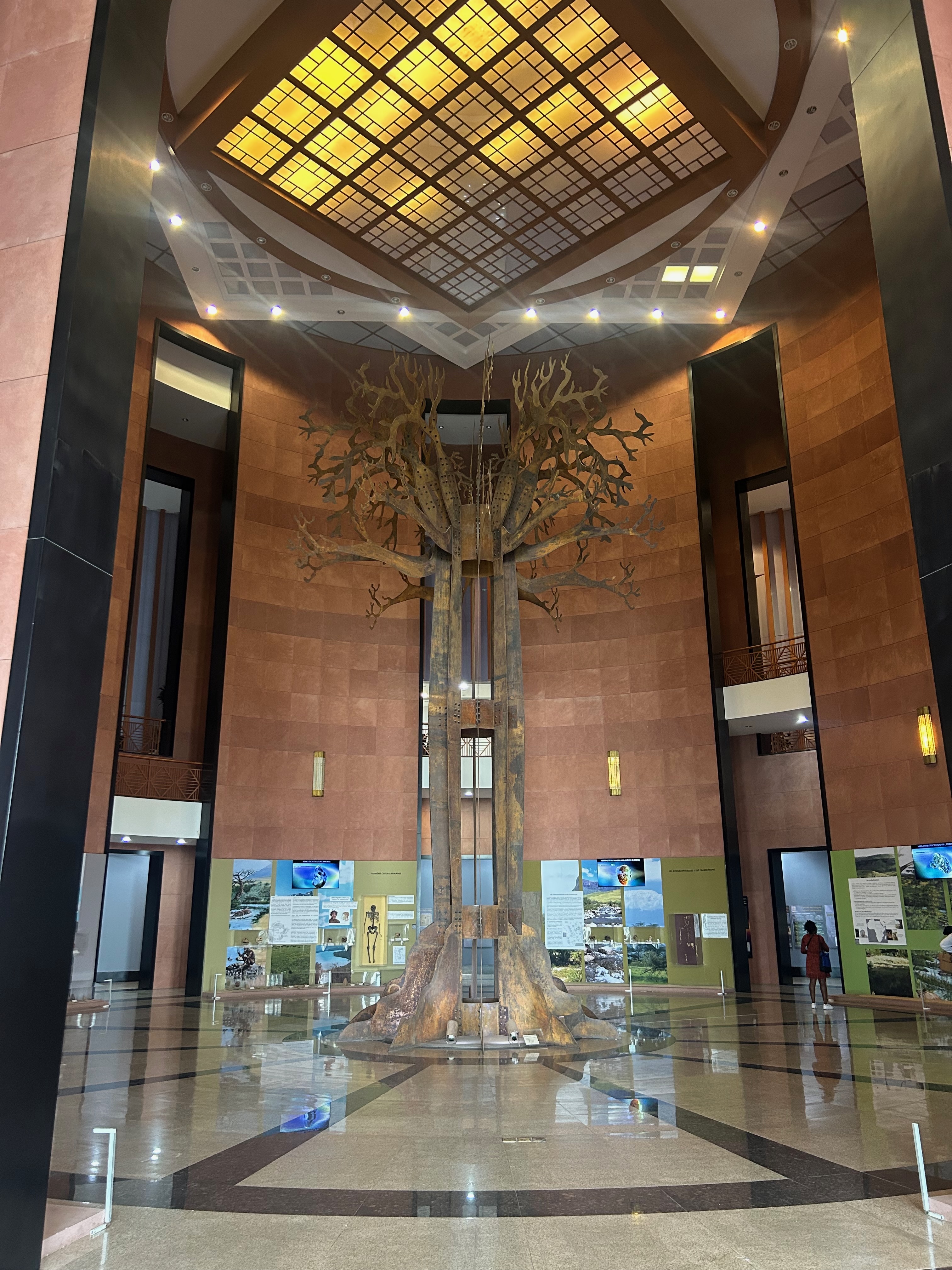 Left: Great Mosque of Dakar; Right: Museum of Black Civilisations
At the Museum of Black Civilisations, I learned about Cheikh Anta Diop, whose Afrocentric scholarship—developed during his years in France—argued for strong links between ancient Egyptian civilization and West Africa. The broader “Out of Africa” story of human origins is now widely supported by modern genetics.
The museum also had an exhibit dedicated to Faye, the country’s newest president since 2024.
I also visited quite a few beach places in the outskirts of Dakar.
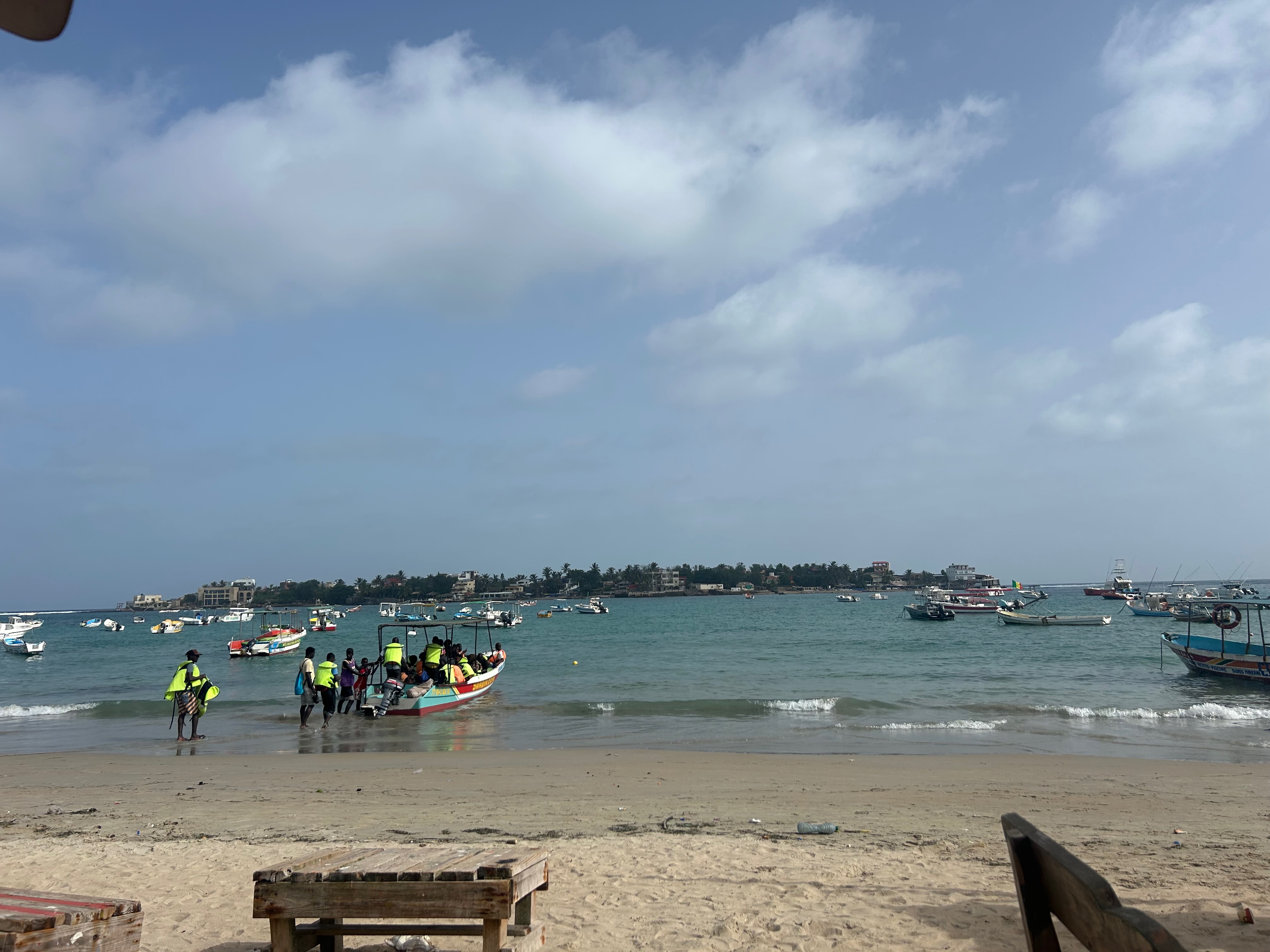
Ngor is an island about five minutes from the northern shore of Dakar. I bought a ticket at the beach and took a small boat there and back.
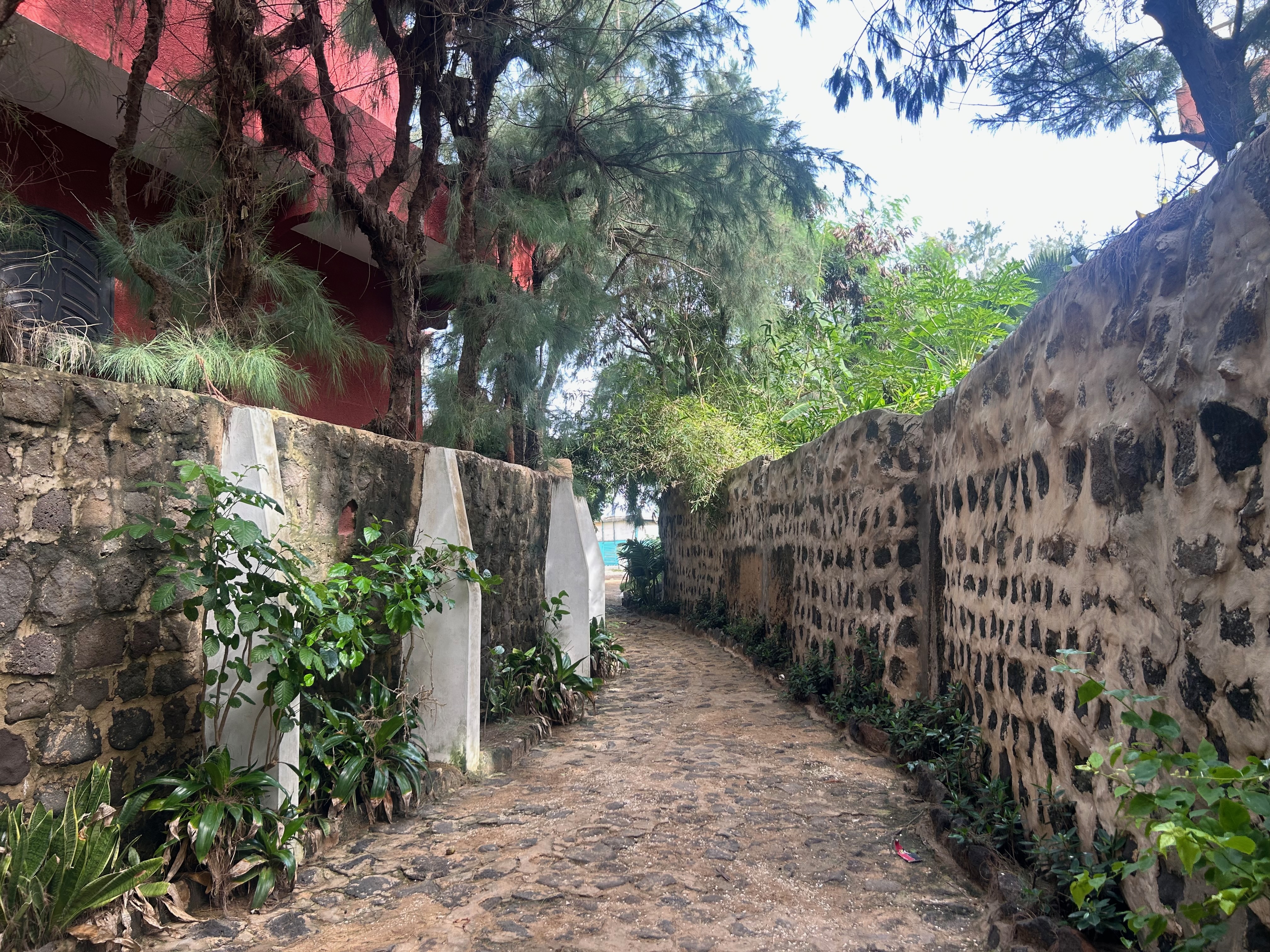
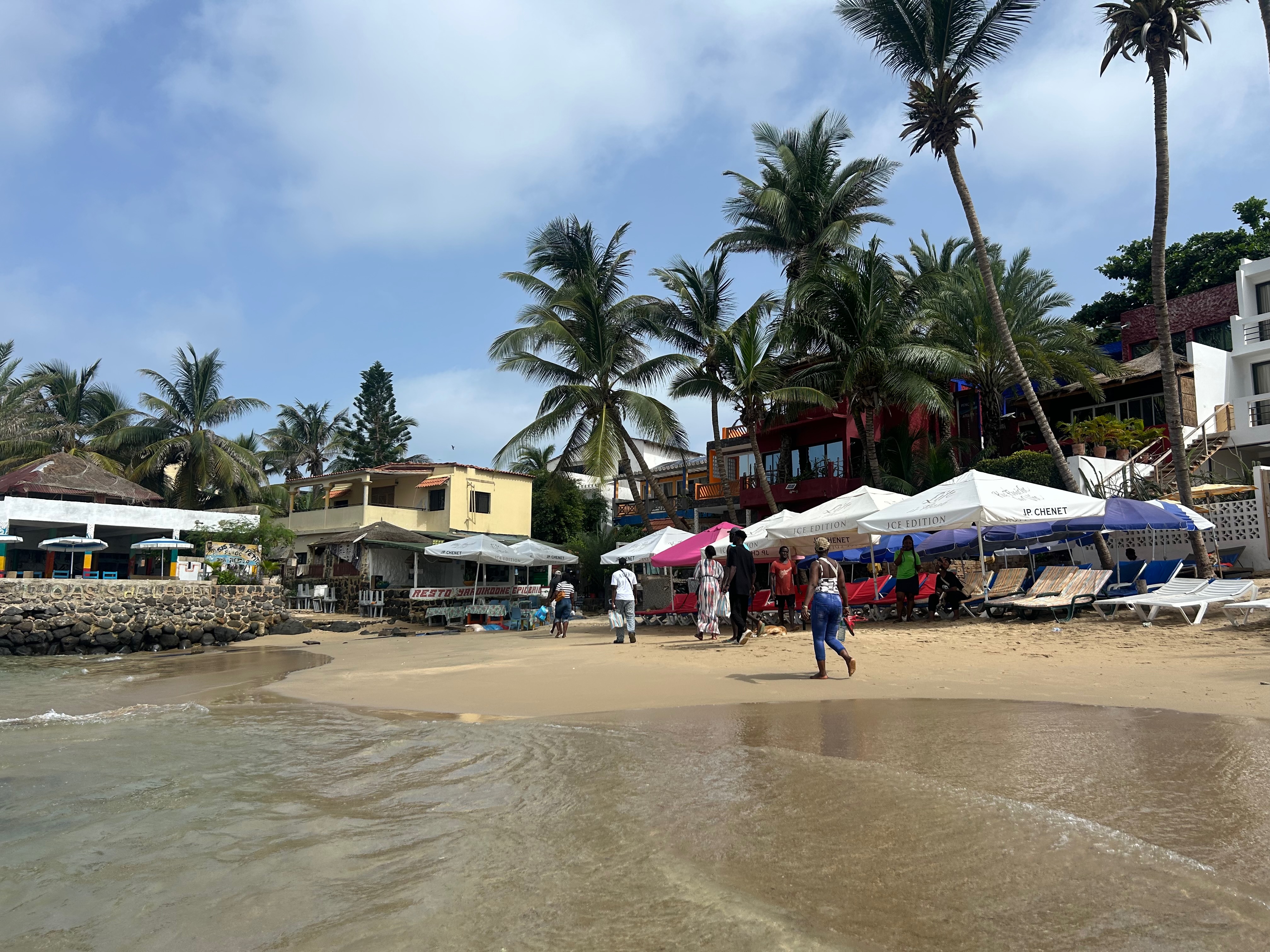
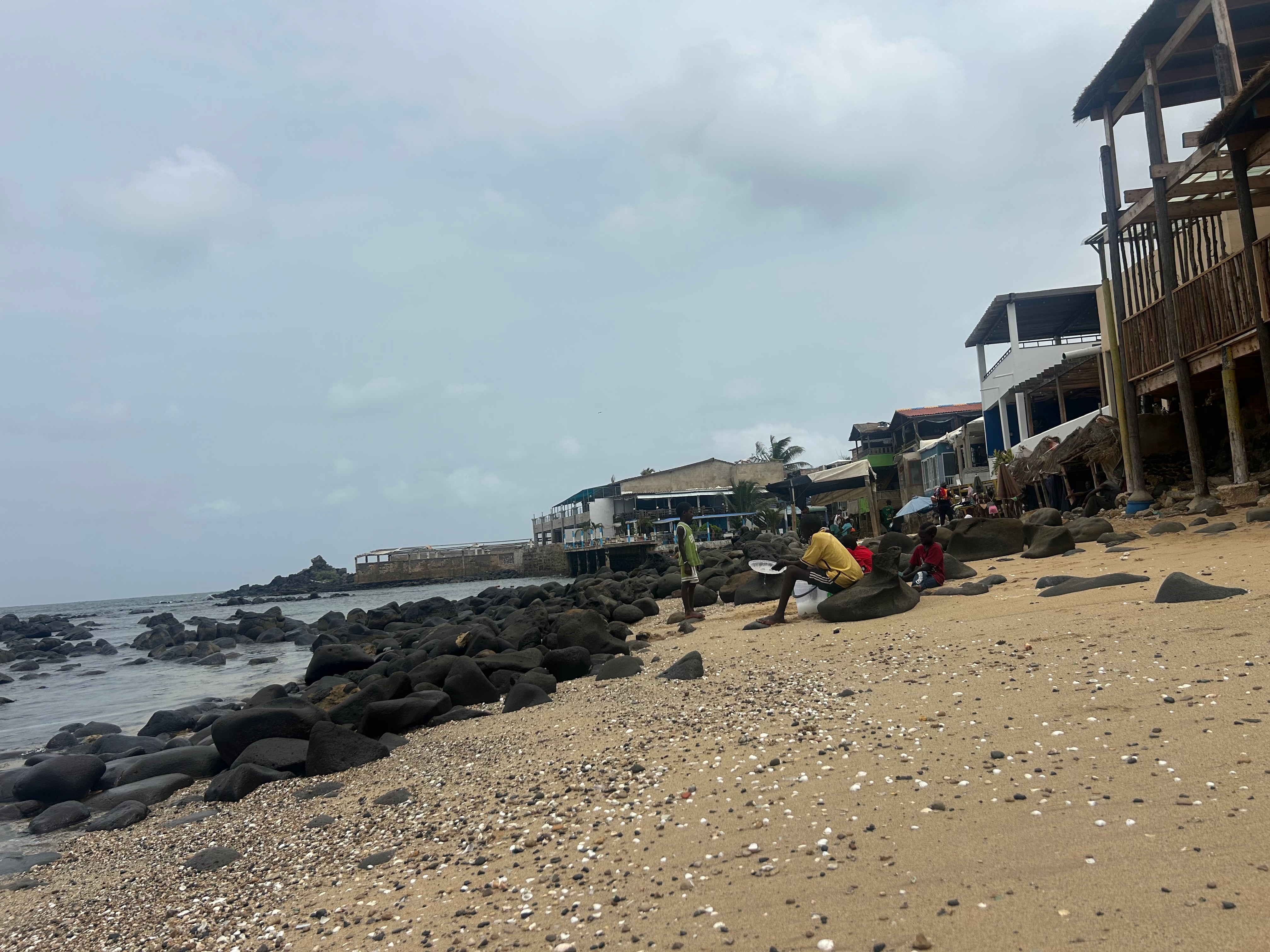
The island itself is about a 10-minute walk end to end with small meandering roads. There are many hotels and surf camps on the island, as well as many art galleries.
Right next to Ngor, I also visited the Almadies, where many expats and the wealthy live. This area of Dakar featured many white expats and small children on the sides of the roads asking for money. This is probably the only part of Dakar where I encountered these children, who would shake their buckets and follow you aggressively.
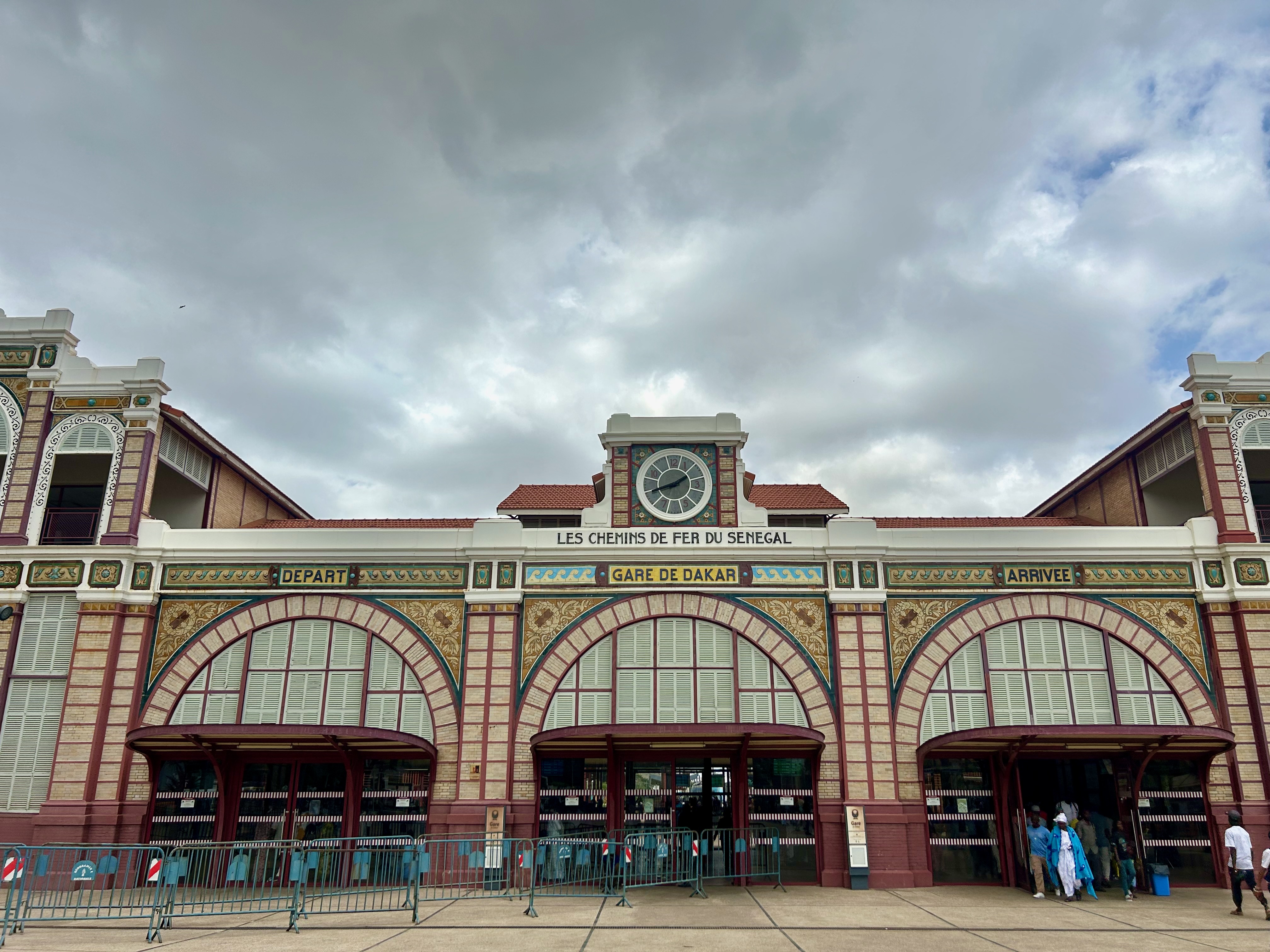
One fascinating fact is Dakar’s TER (Train Express Régional), a modern regional express system built with French partners. After a hot day in traffic, I was so relieved to rest and take a ride on the train.
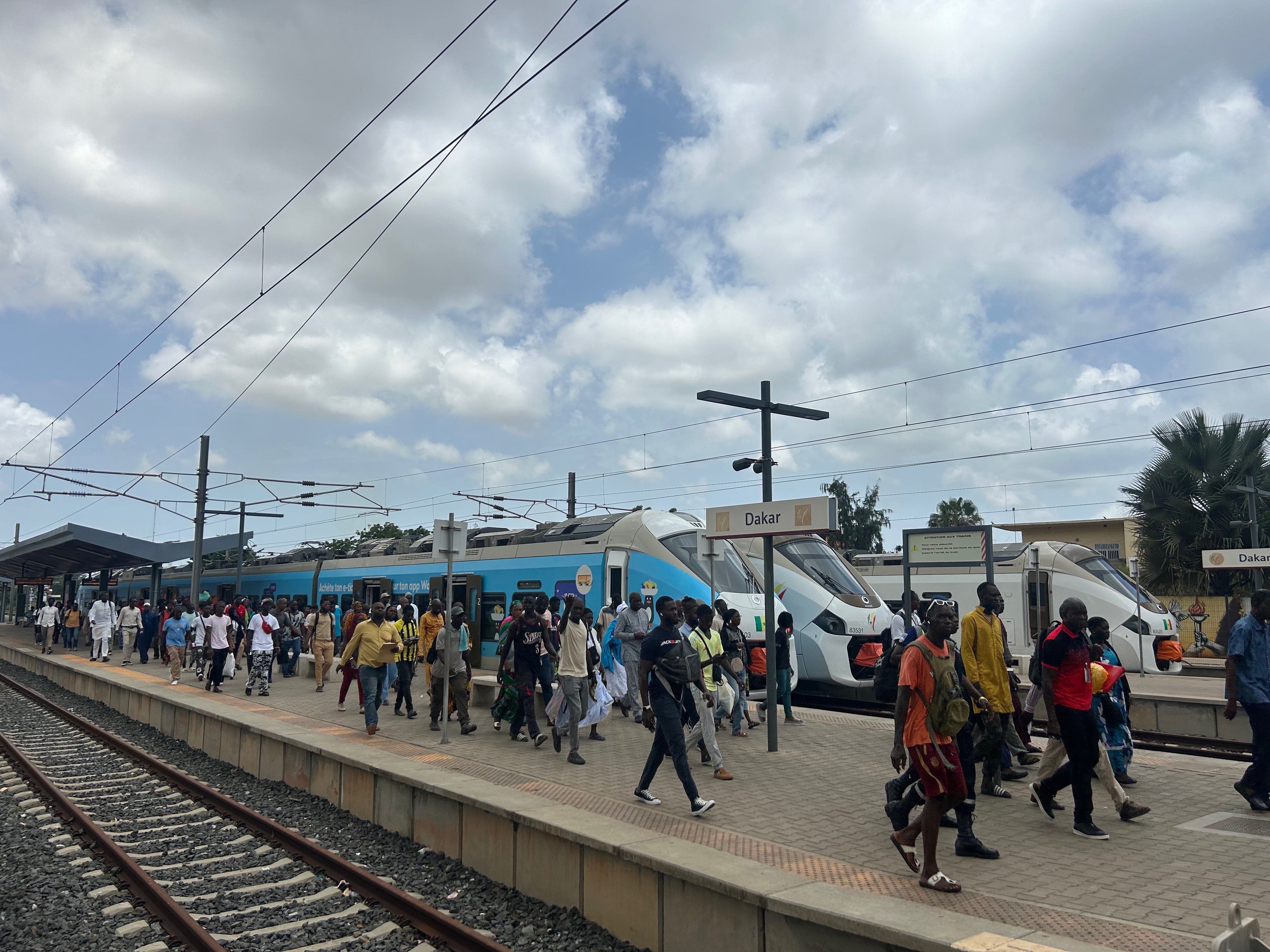
I really enjoyed the daily exploration of Dakar.
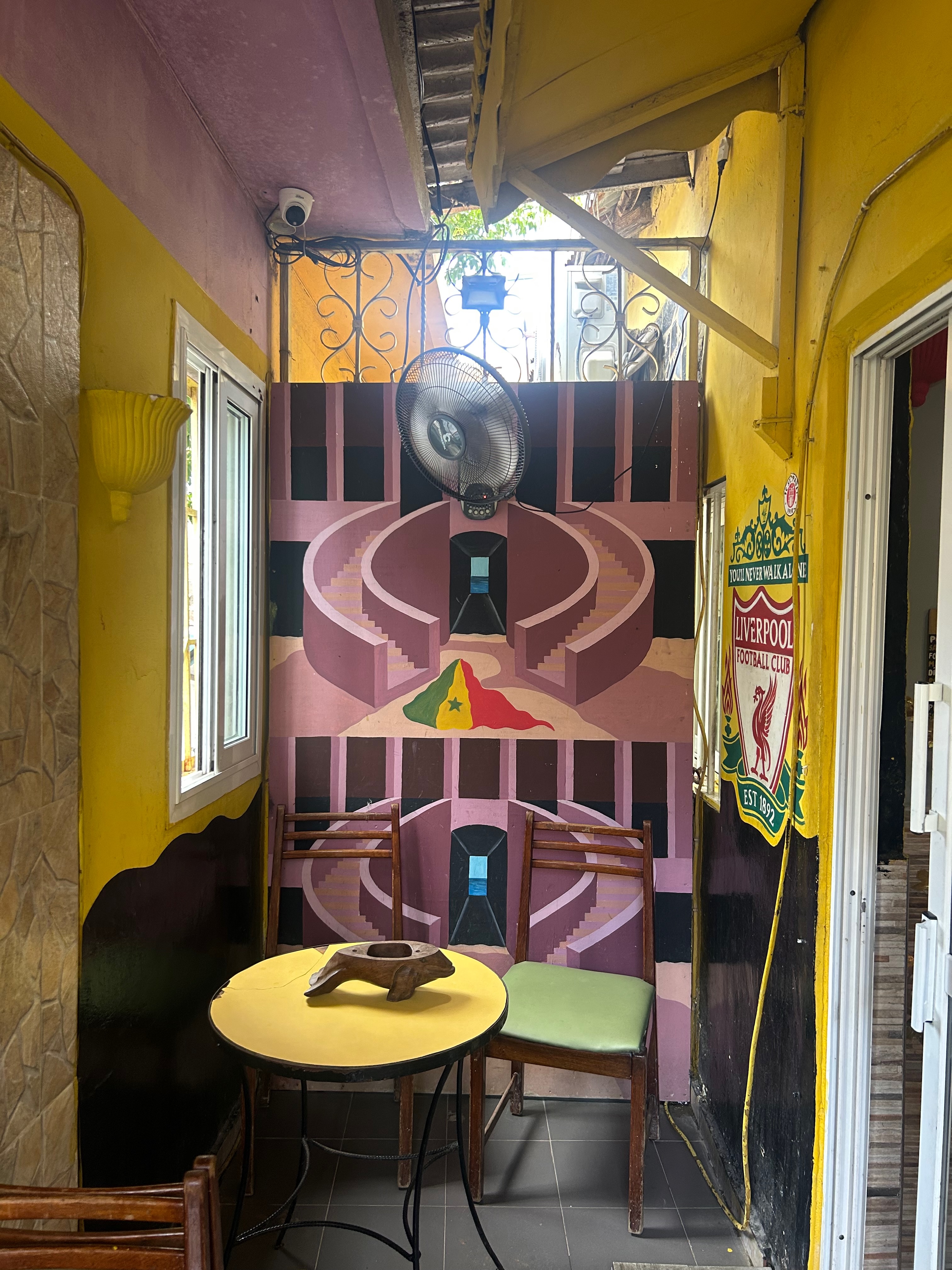
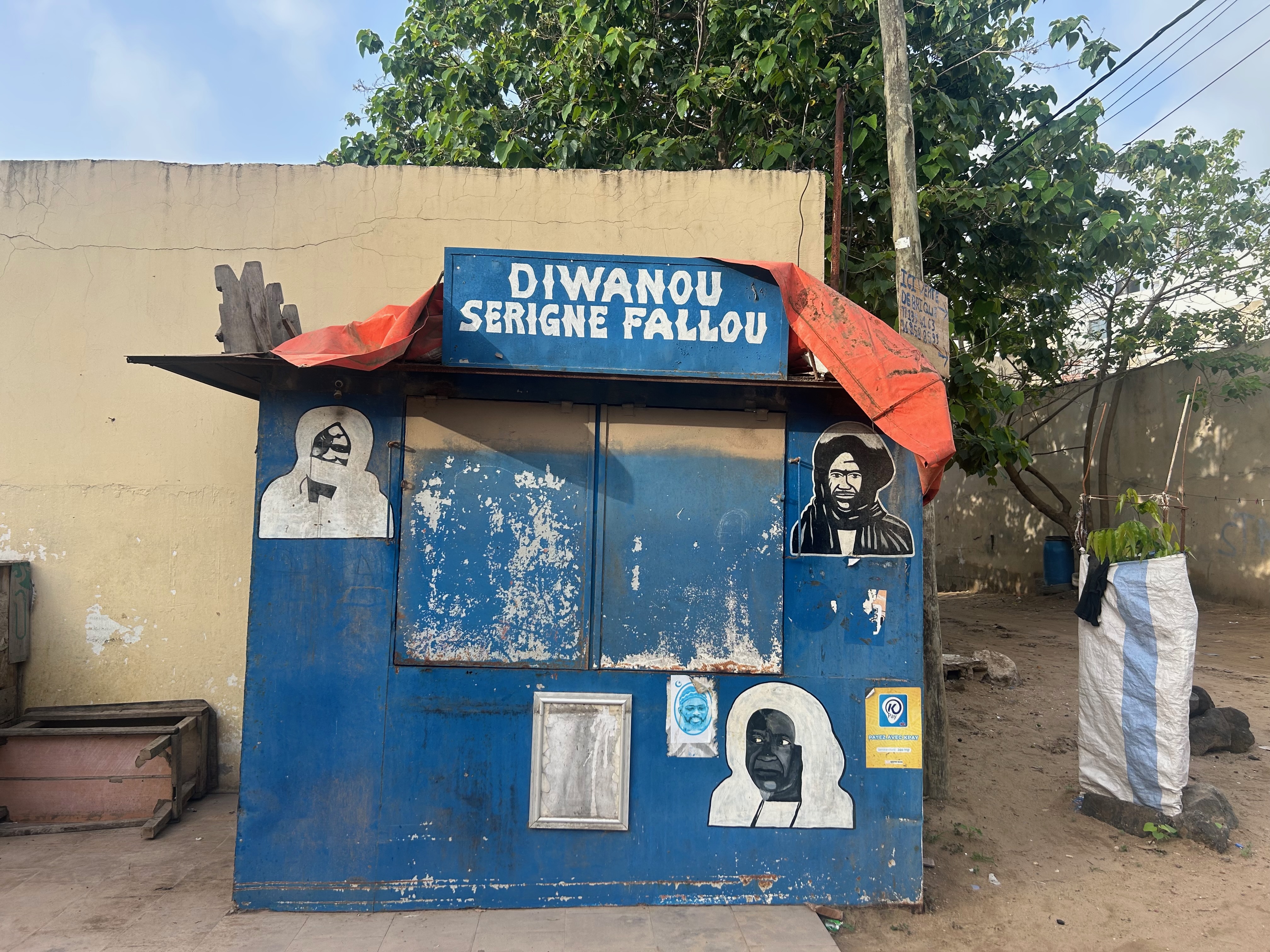 Left: drawing of the Door of No Return; Right: bus stop featuring Bamba
Throughout my time here, I had frequented this restaurant by my apartment. I always ask to get Thieboudienne, but the food is not always available.
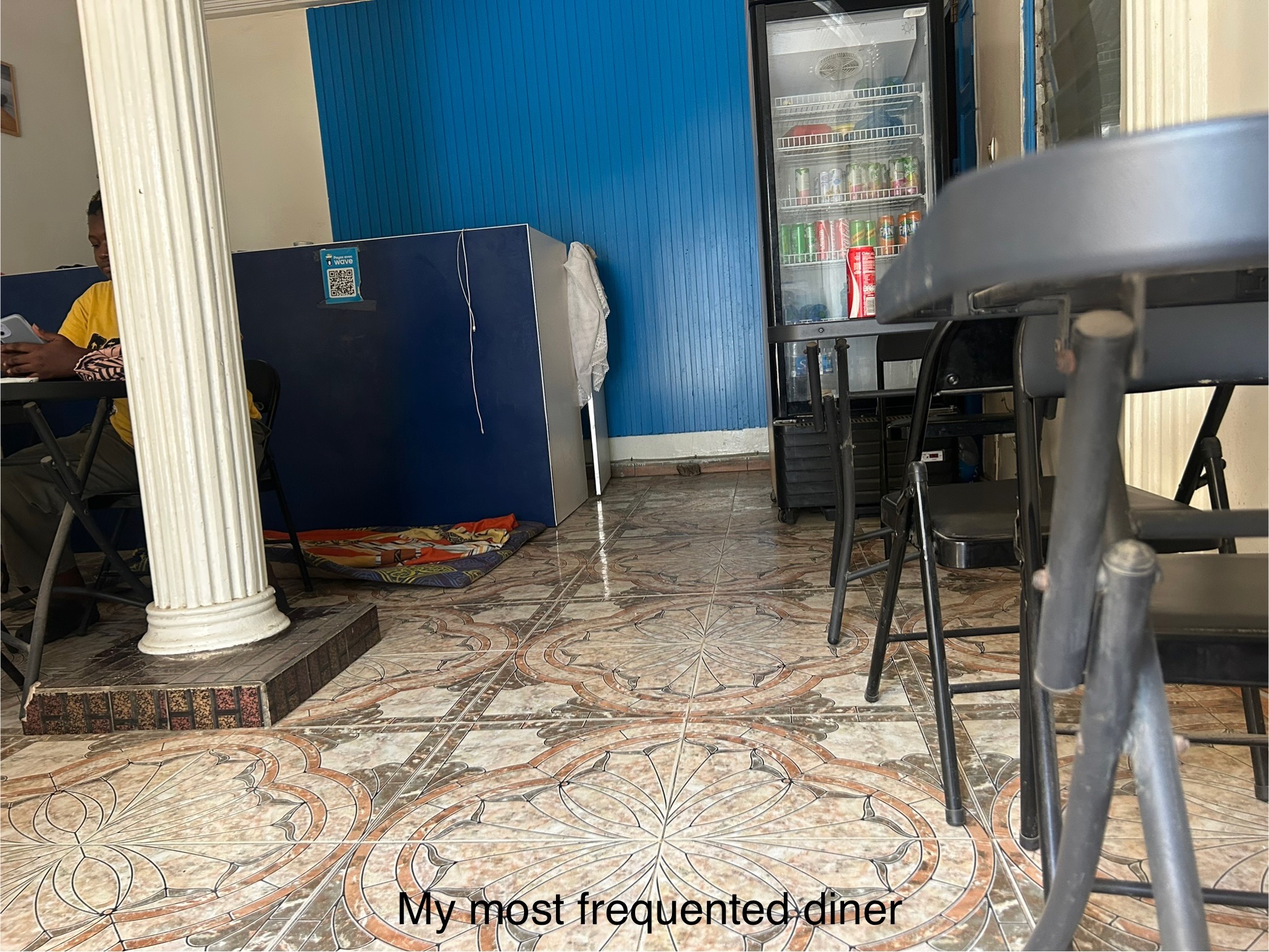
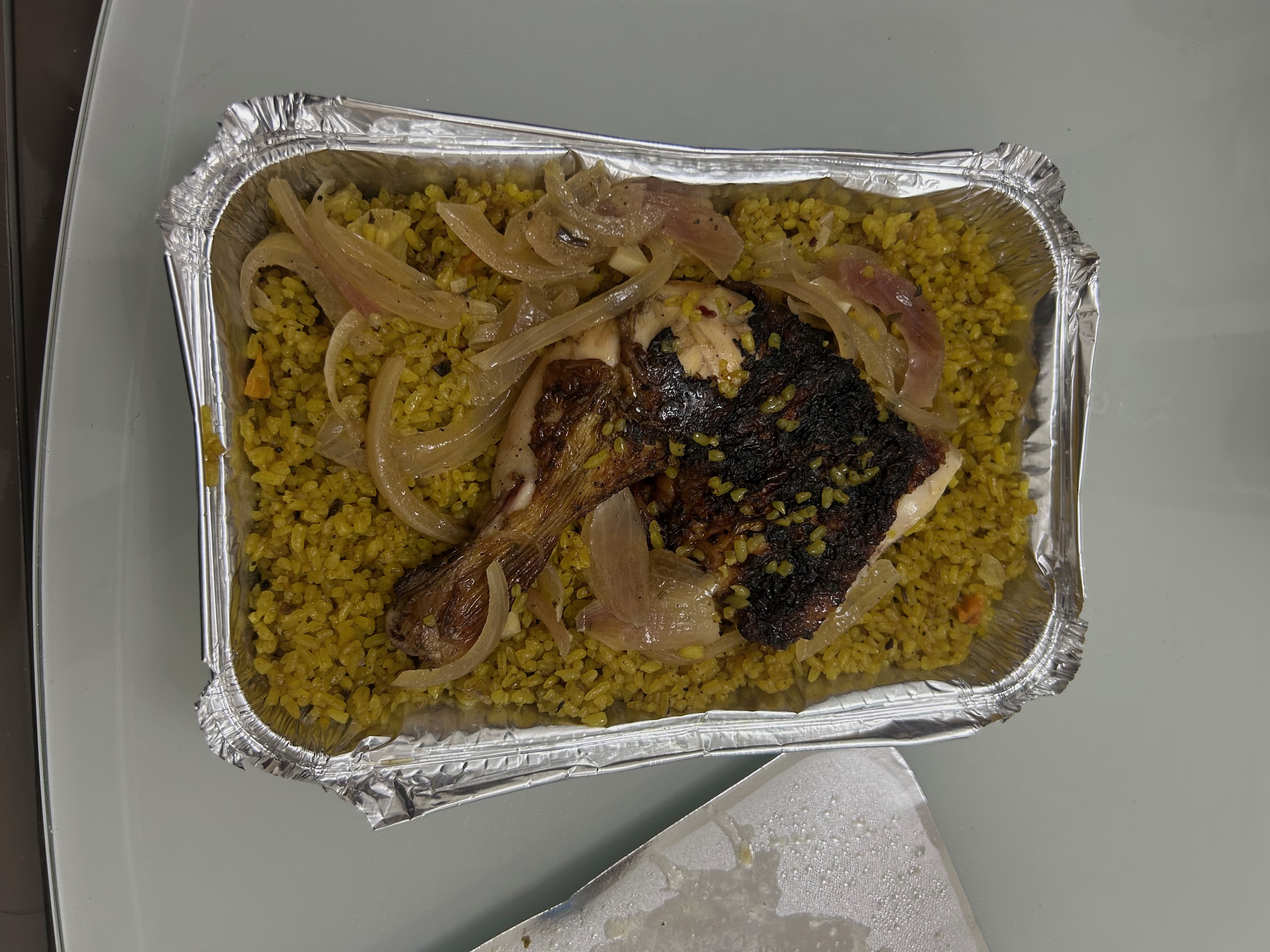 I had to refresh my French “A Emporter” for takeouts instead of dining in
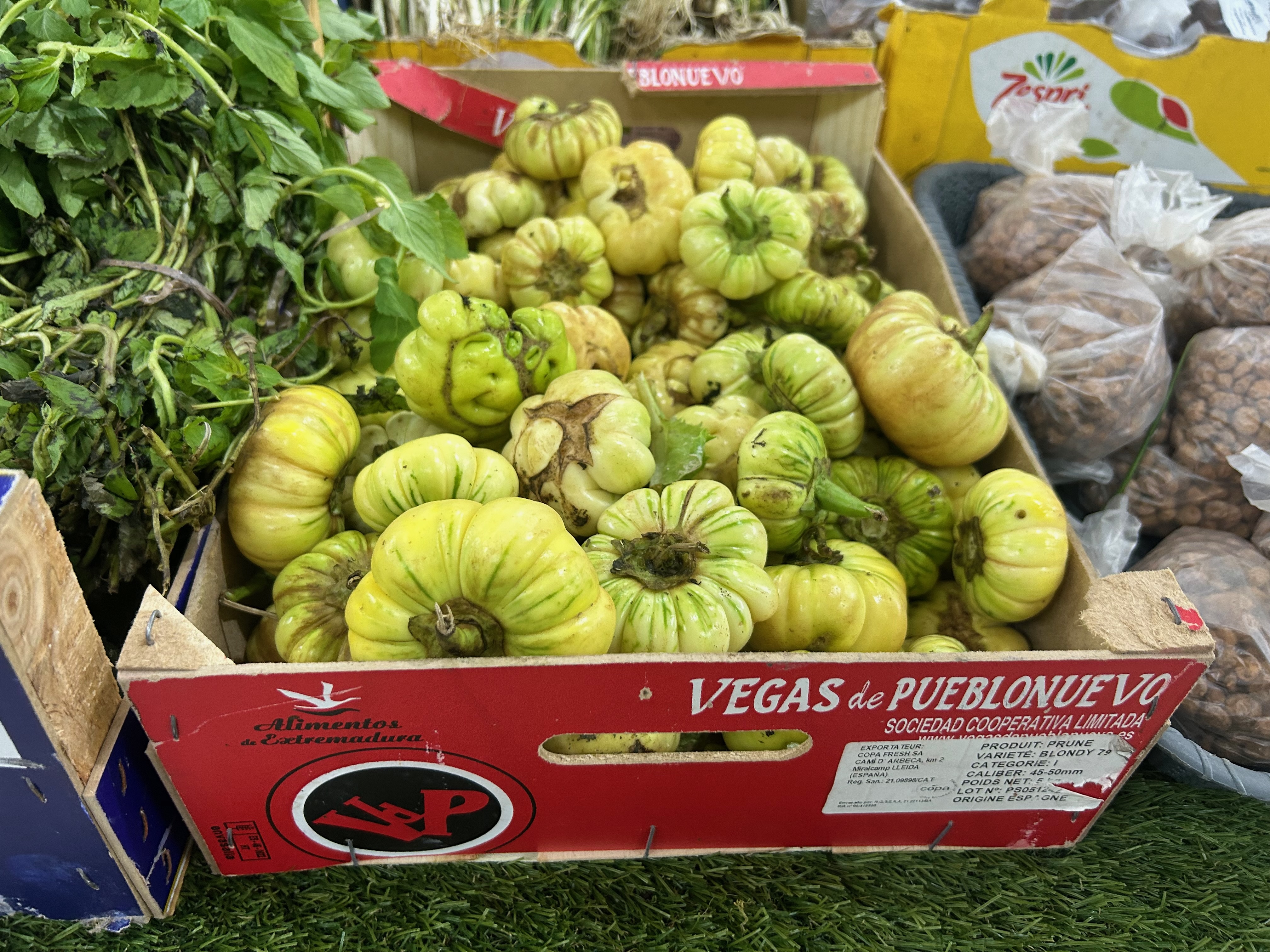
African eggplant
Bandia Reserve and Somone Lagoon
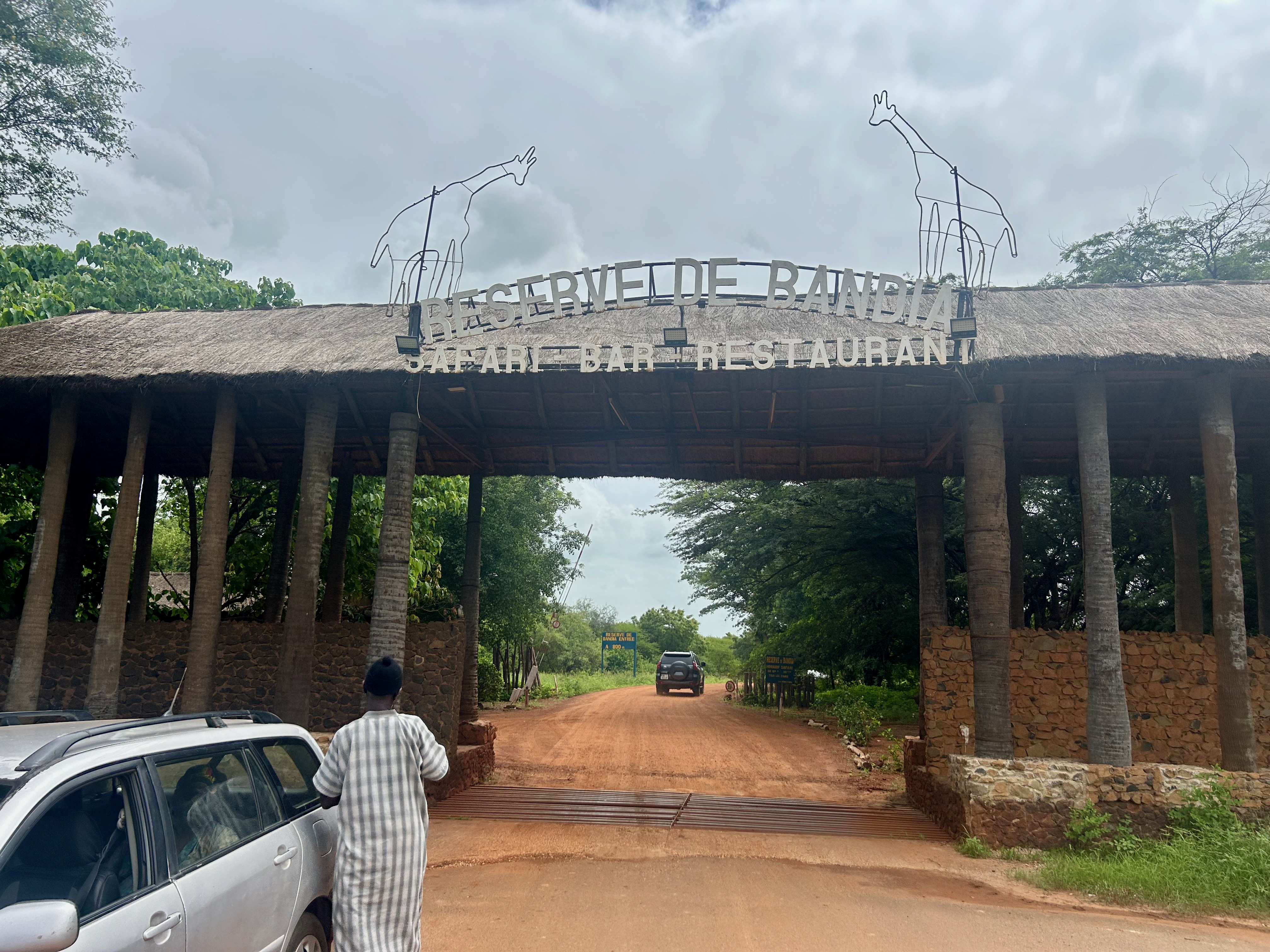
On Saturday, my last day, I visited the Bandia Reserve (pronounced with the “ja” sound). It’s much closer to Saly (a beach city outside Dakar) and the airport.
Mr. Fallou, our driver, picked me up from Ouakam bus station, and we joined the organizer at Bandia Park.
While we waited in the parking lot for more visitors, a monkey walked up to a Spanish tourist and grabbed his bag. The audacity!
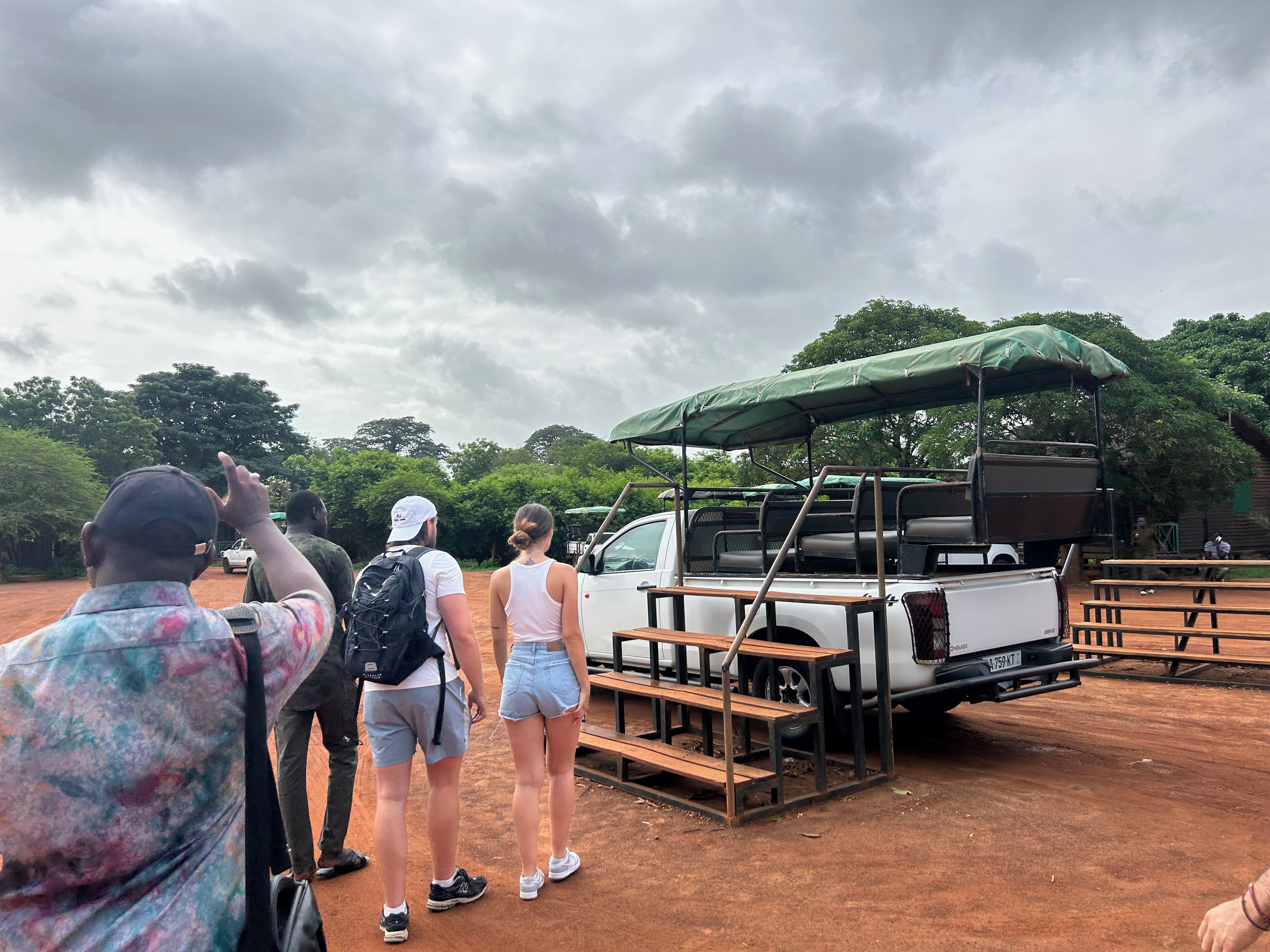
The safari started, and right away we saw many giraffes roaming the reserve. I learned that giraffes “pace,” moving both legs on one side together (left–left, right–right), like camels—unlike dogs, cats, and others that alternate left–right.
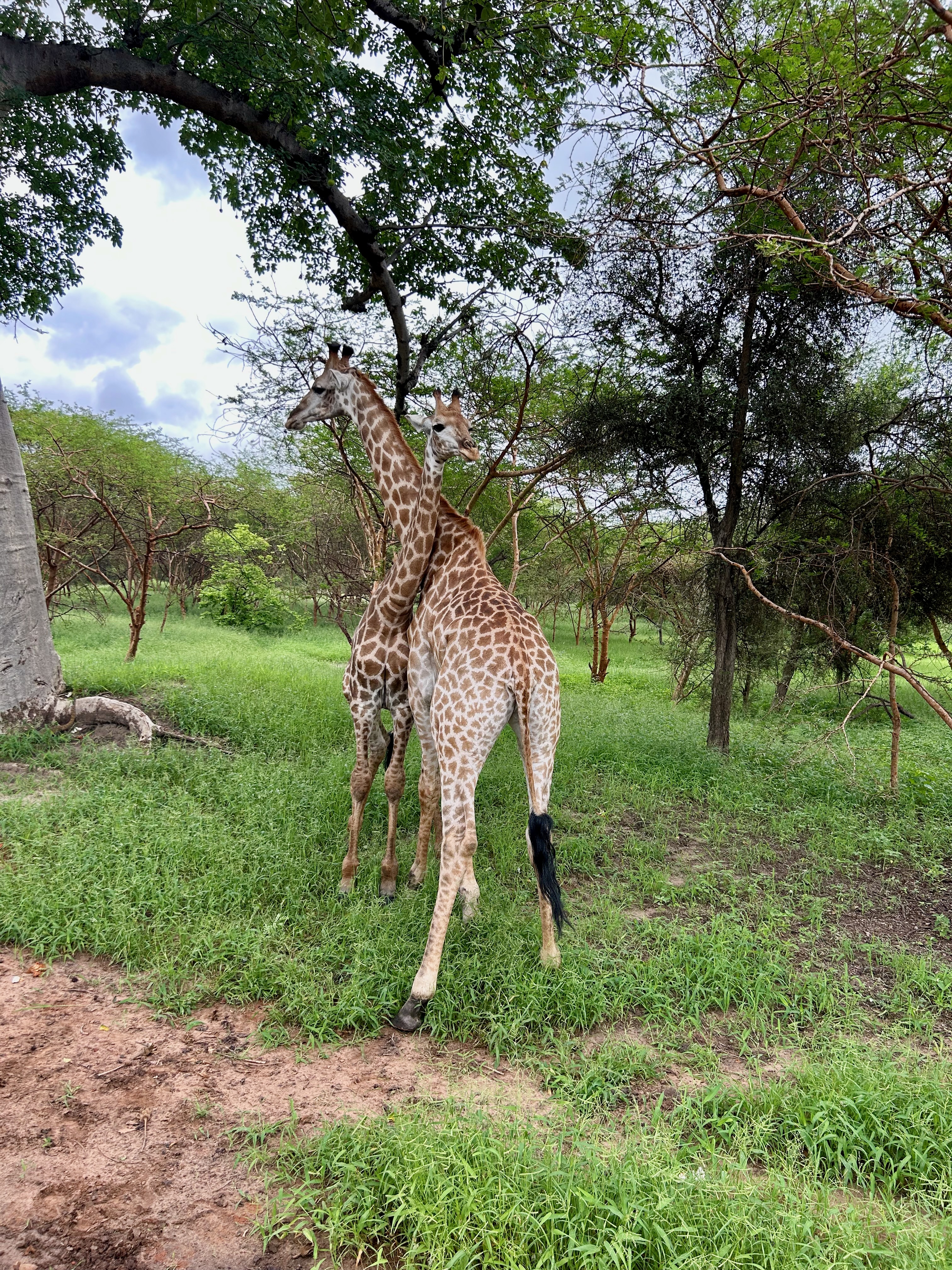
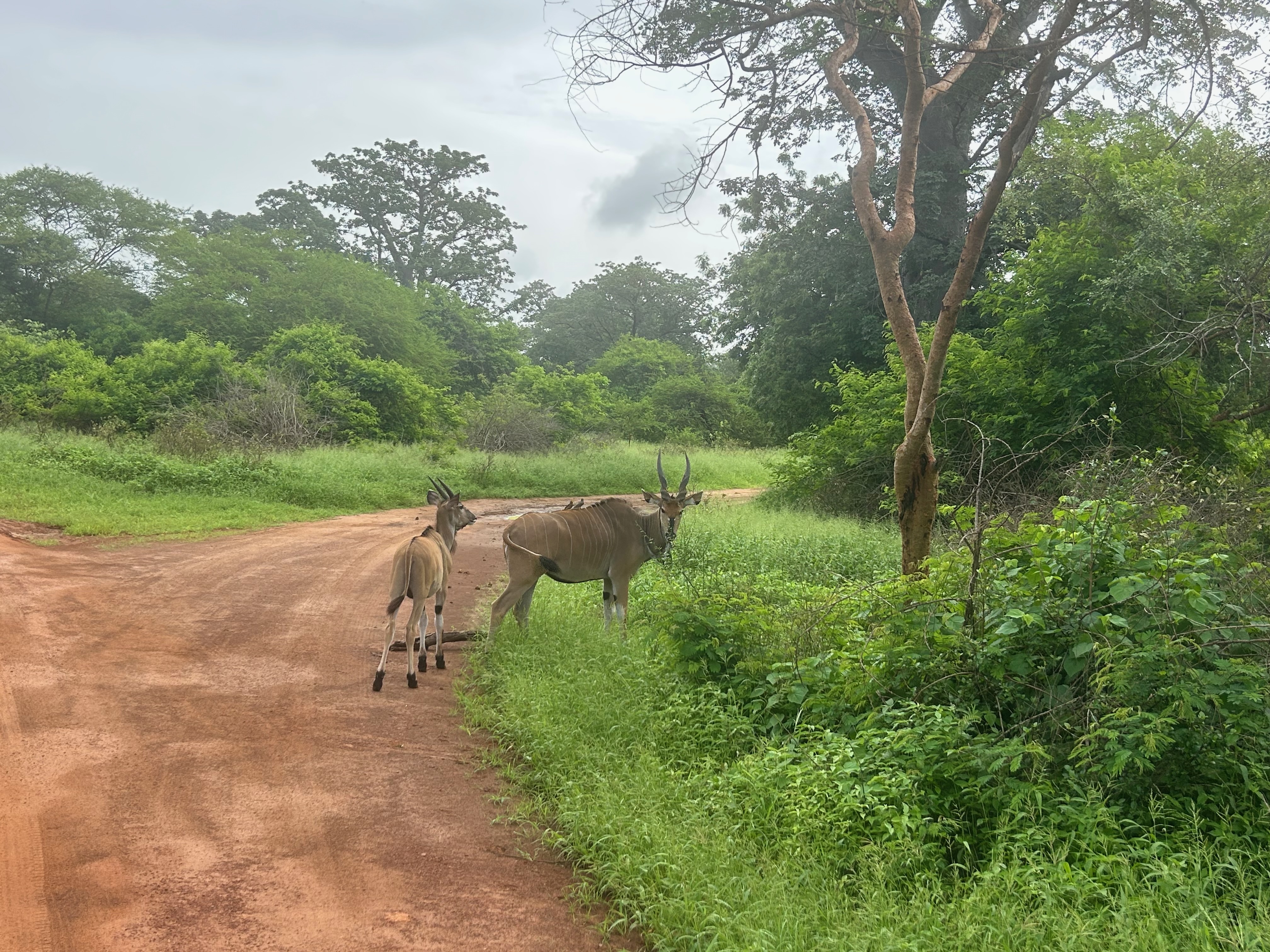 Right: Antelopes
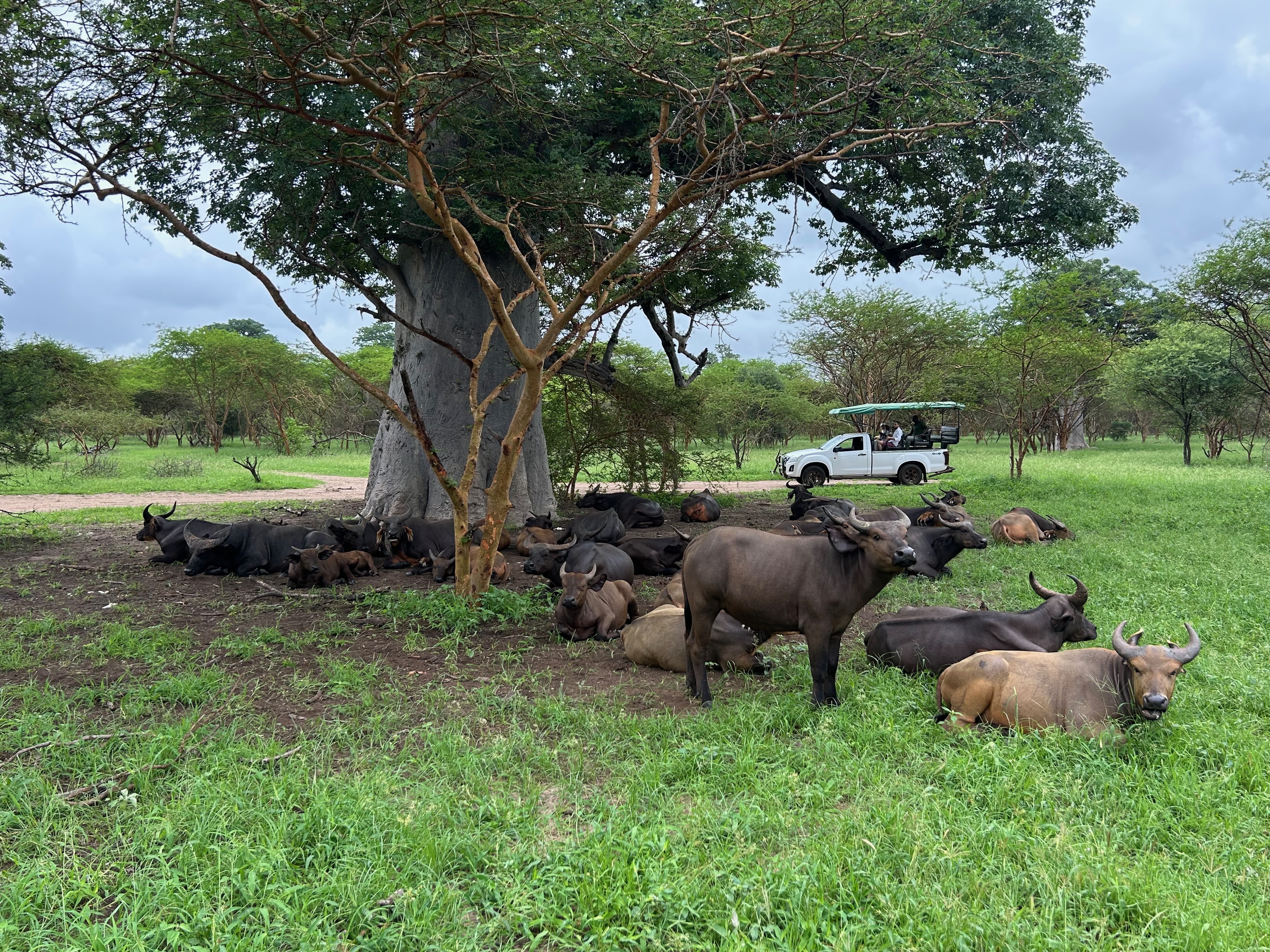
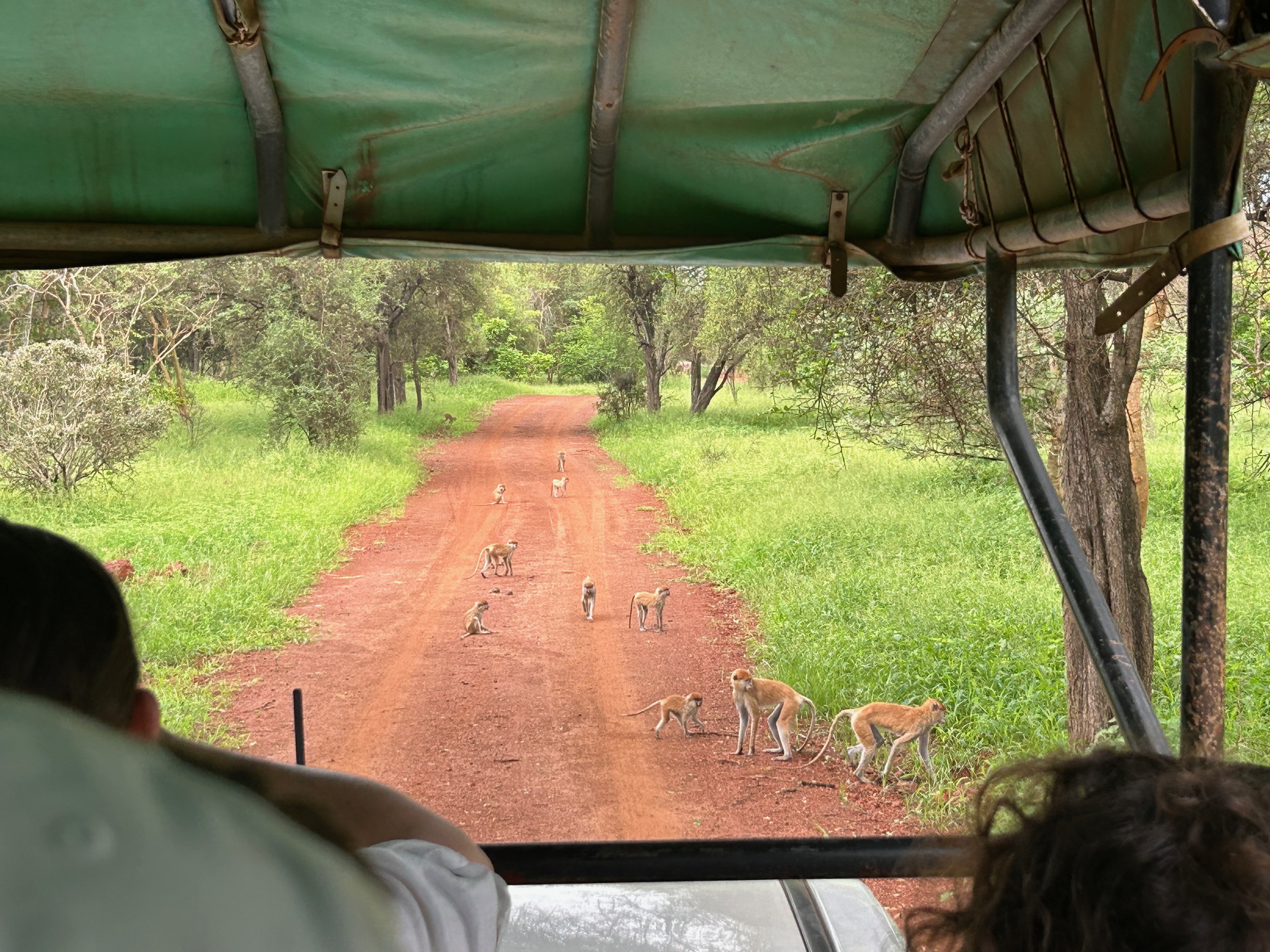
The safari guide was female and had been the original guide since the reserve started in the 1990s. When we saw the buffalo, she joked that the buffalo are just like Senegalese men—they follow the herd and fight each other to mate with the females.
We saw so many herbivores (and only herbivores in this reserve), like wild boars, antelopes, impalas, yellow birds, and more.
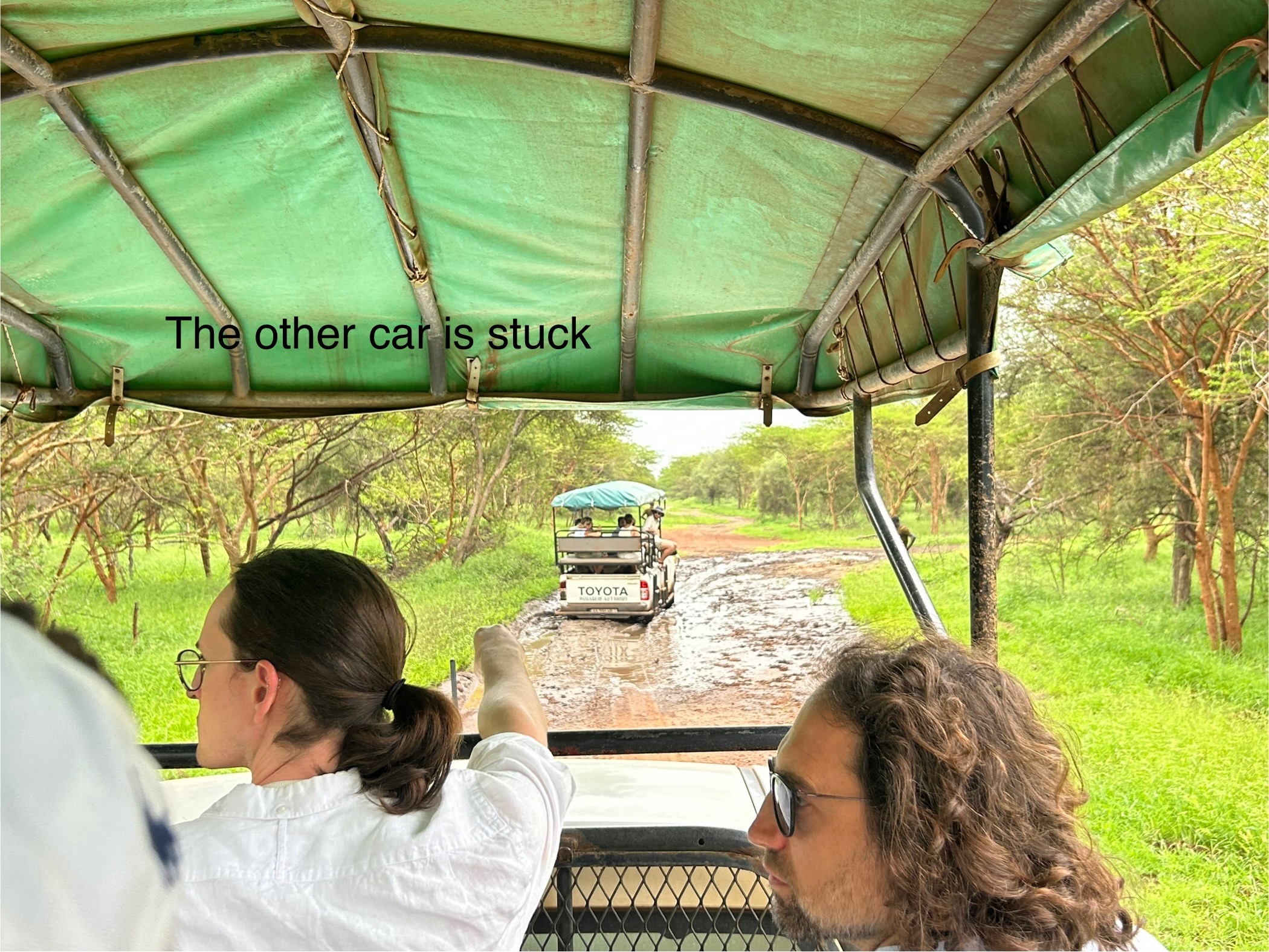
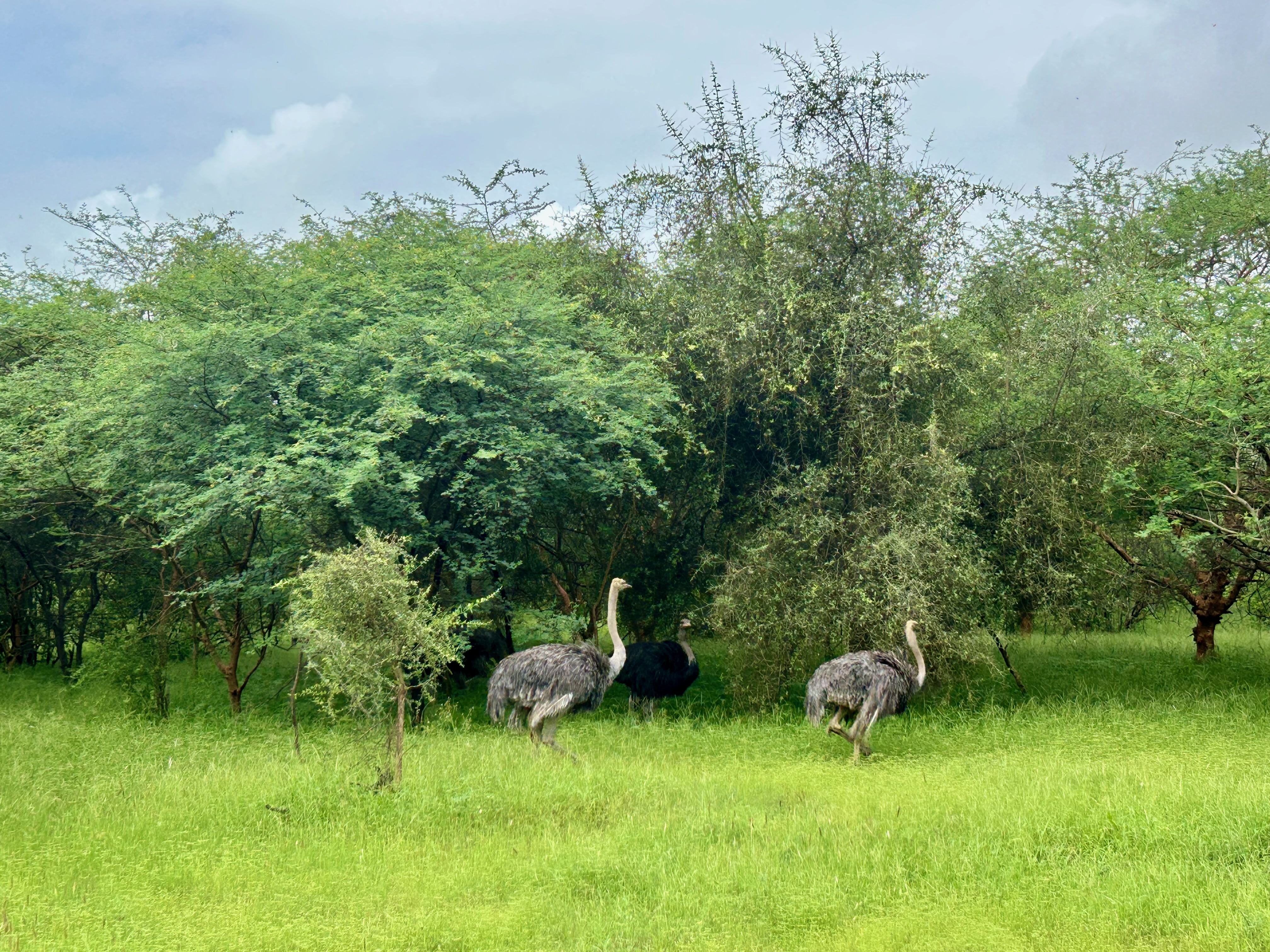
At one point, we also saw that the car in front of us had been stuck in the mud, and they had to be rescued.
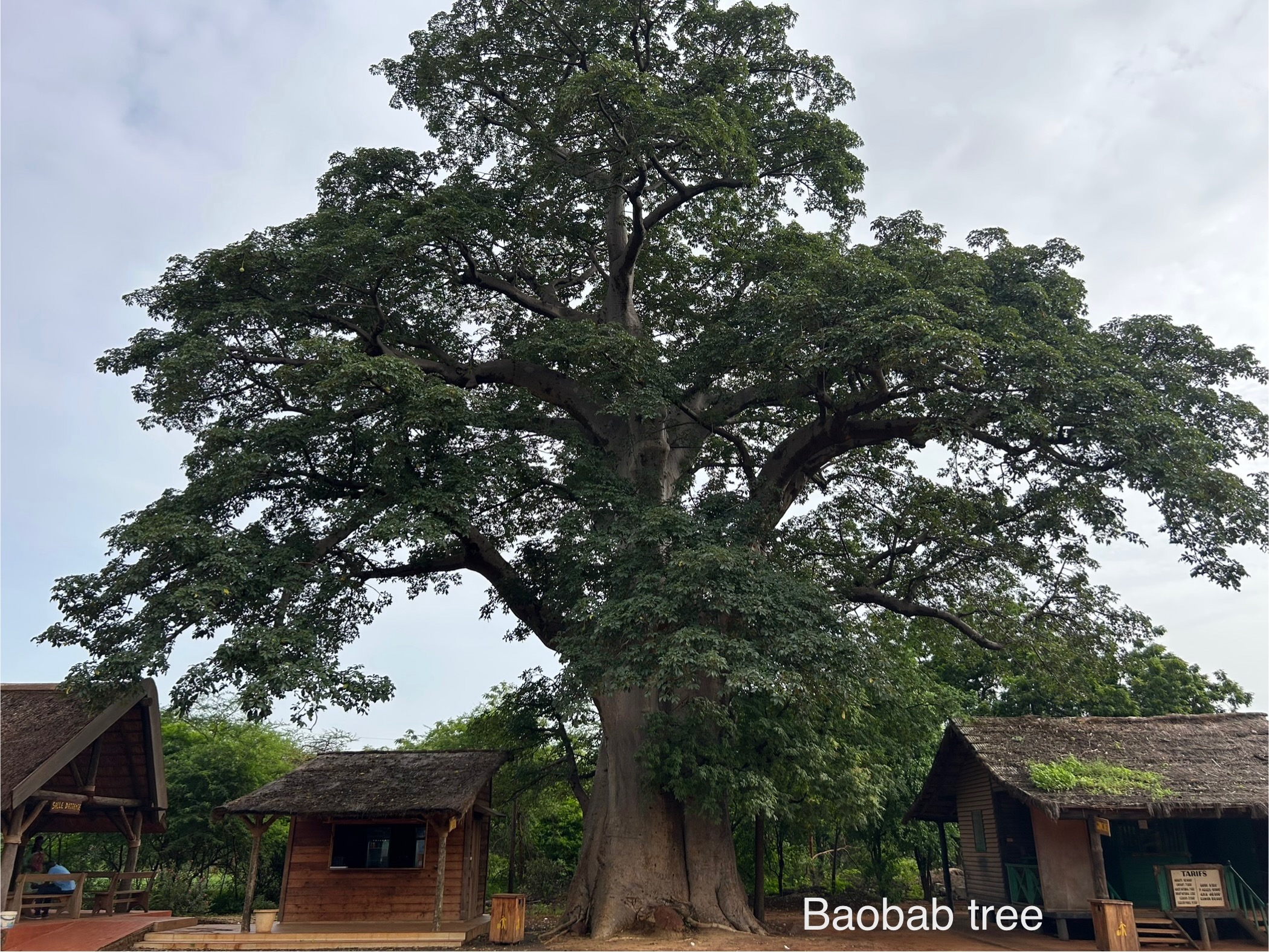
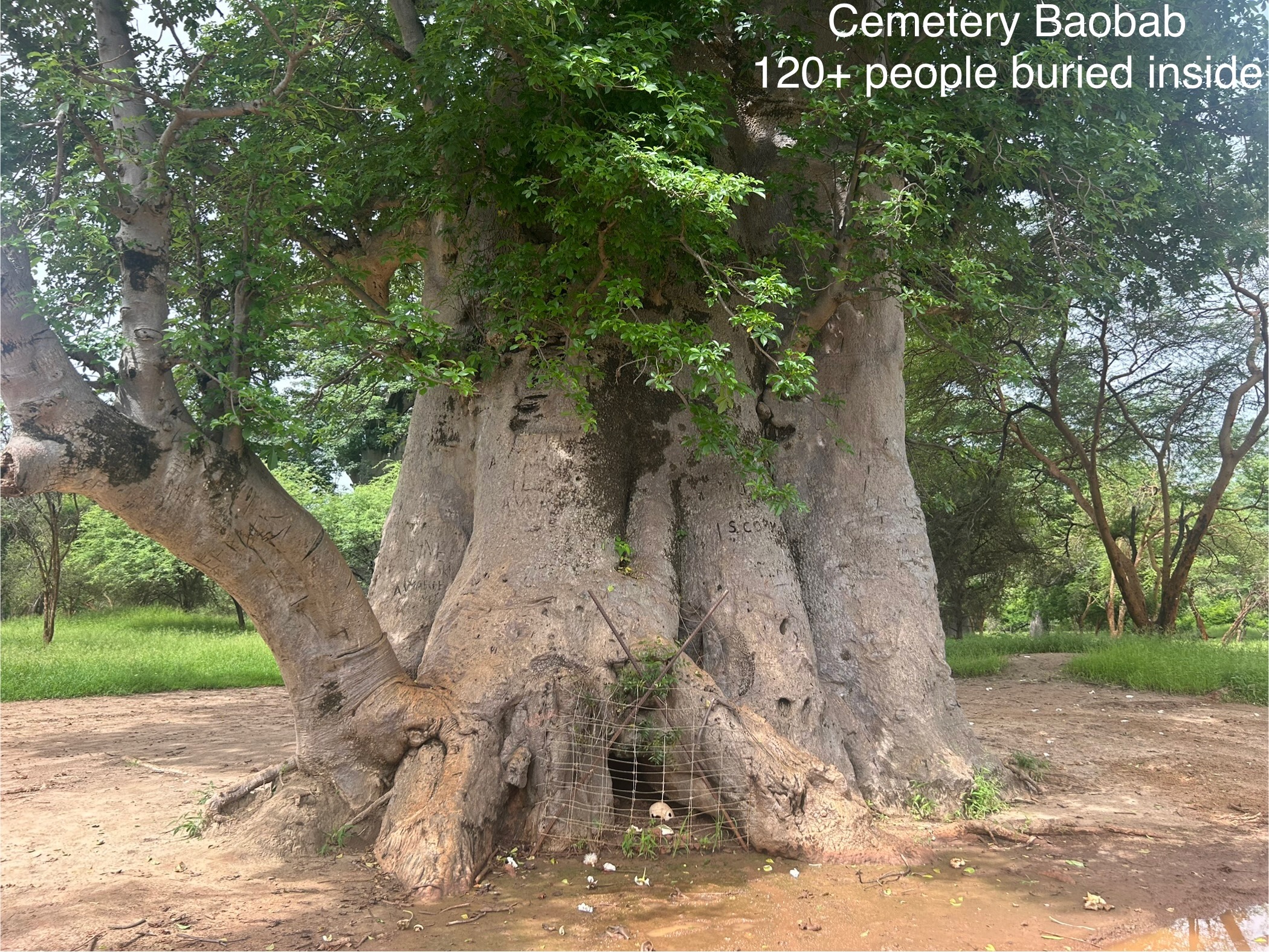
Our final stop in the reserve is the “cemetery baobab.” Dozens of sets of bones are buried within the tree, which is said to be over 1,000 years old.
 Right: Mr. Fallou who drove me for the game day, as well as the airport transfers the next day
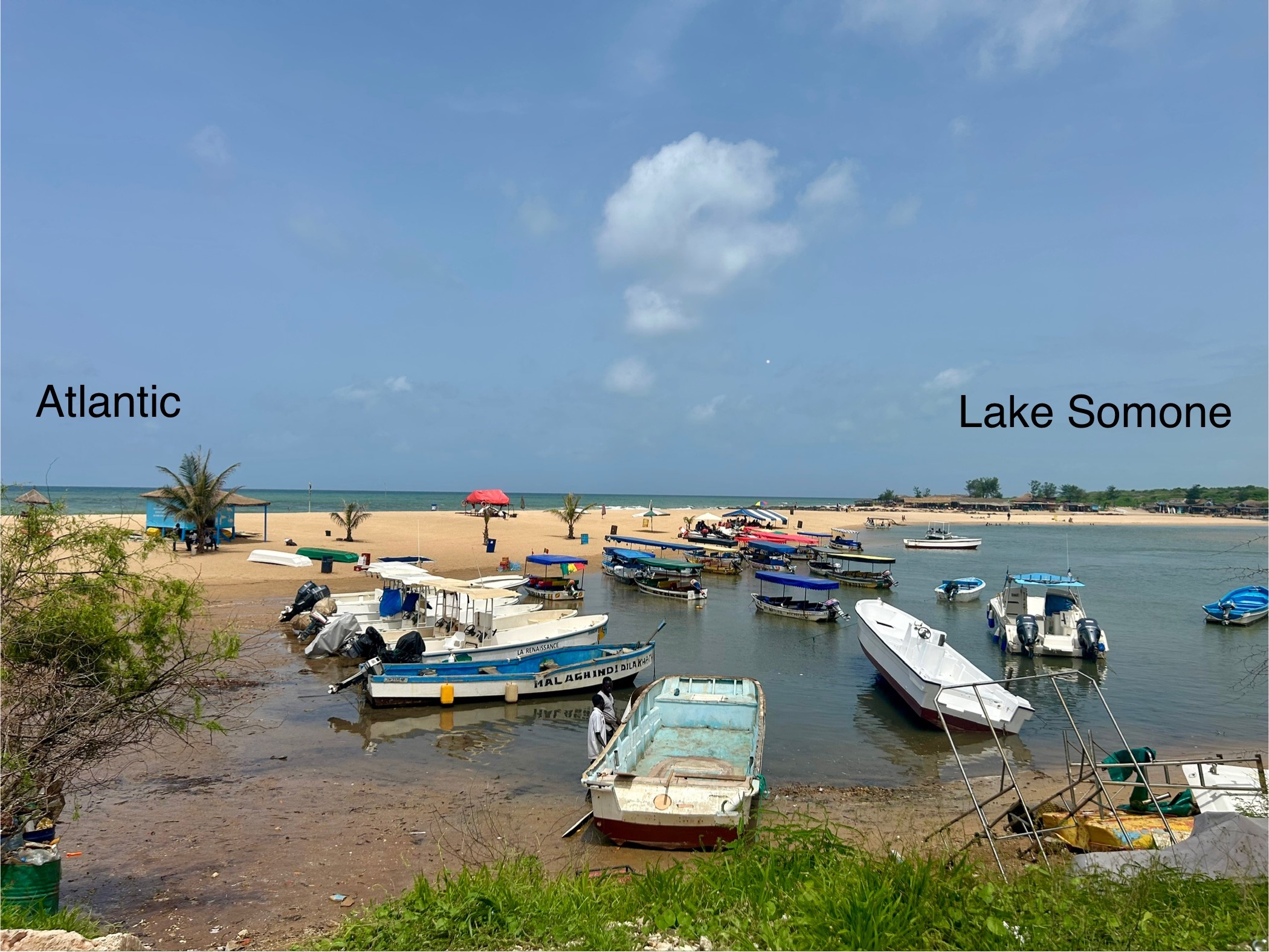
Our next stop is the Somone Lagoon, situated by Saly and part of the Mbour area.
It’s a beautiful lagoon right by the Atlantic Ocean. In fact, the beach that separates the two is only about a two-minute walk. But the hot sand was burning my feet, and I had to wear my shoes for cover.
 Right: Thousands of tiny crabs crawling on an uninhabited island in the lake
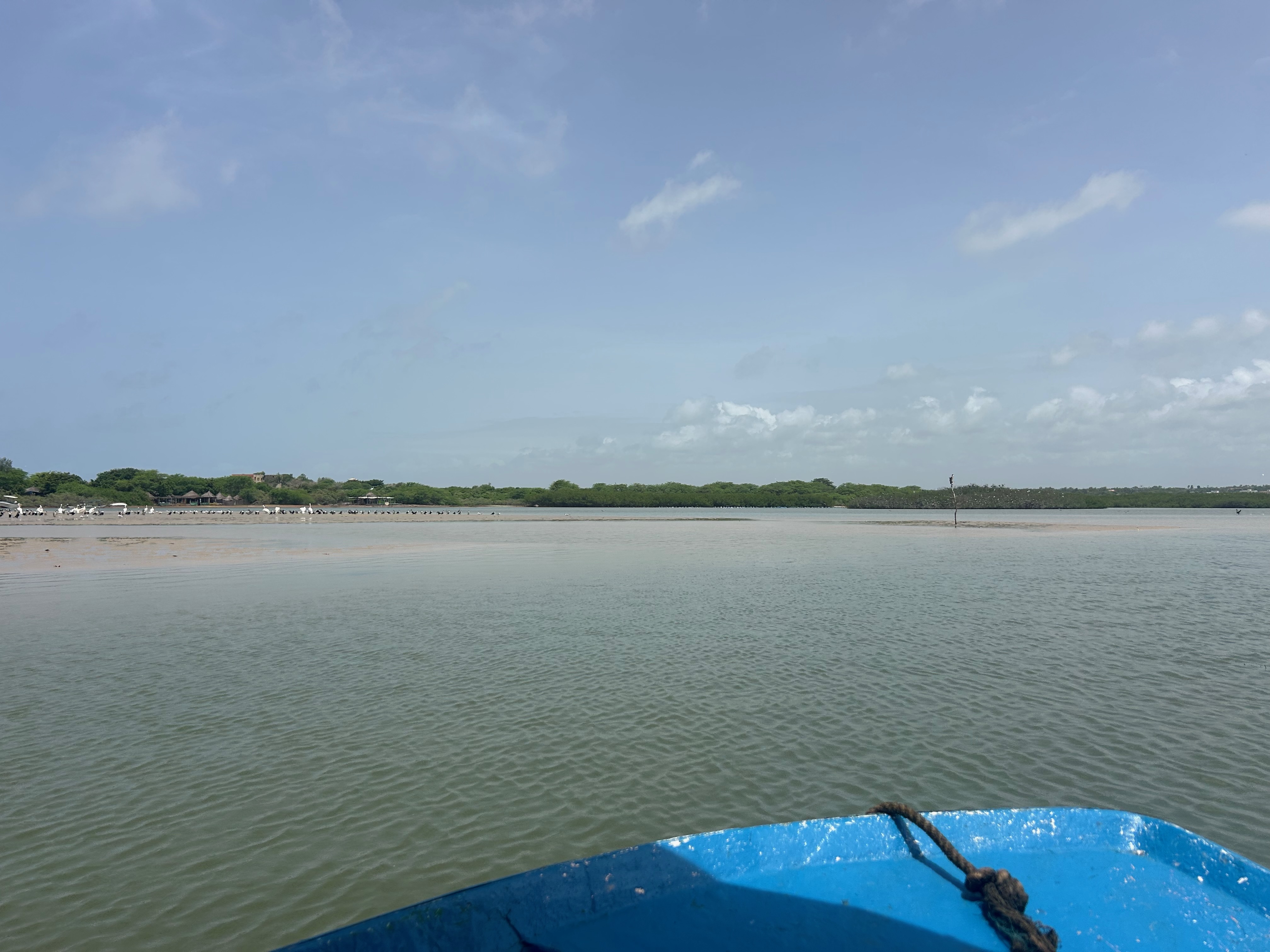
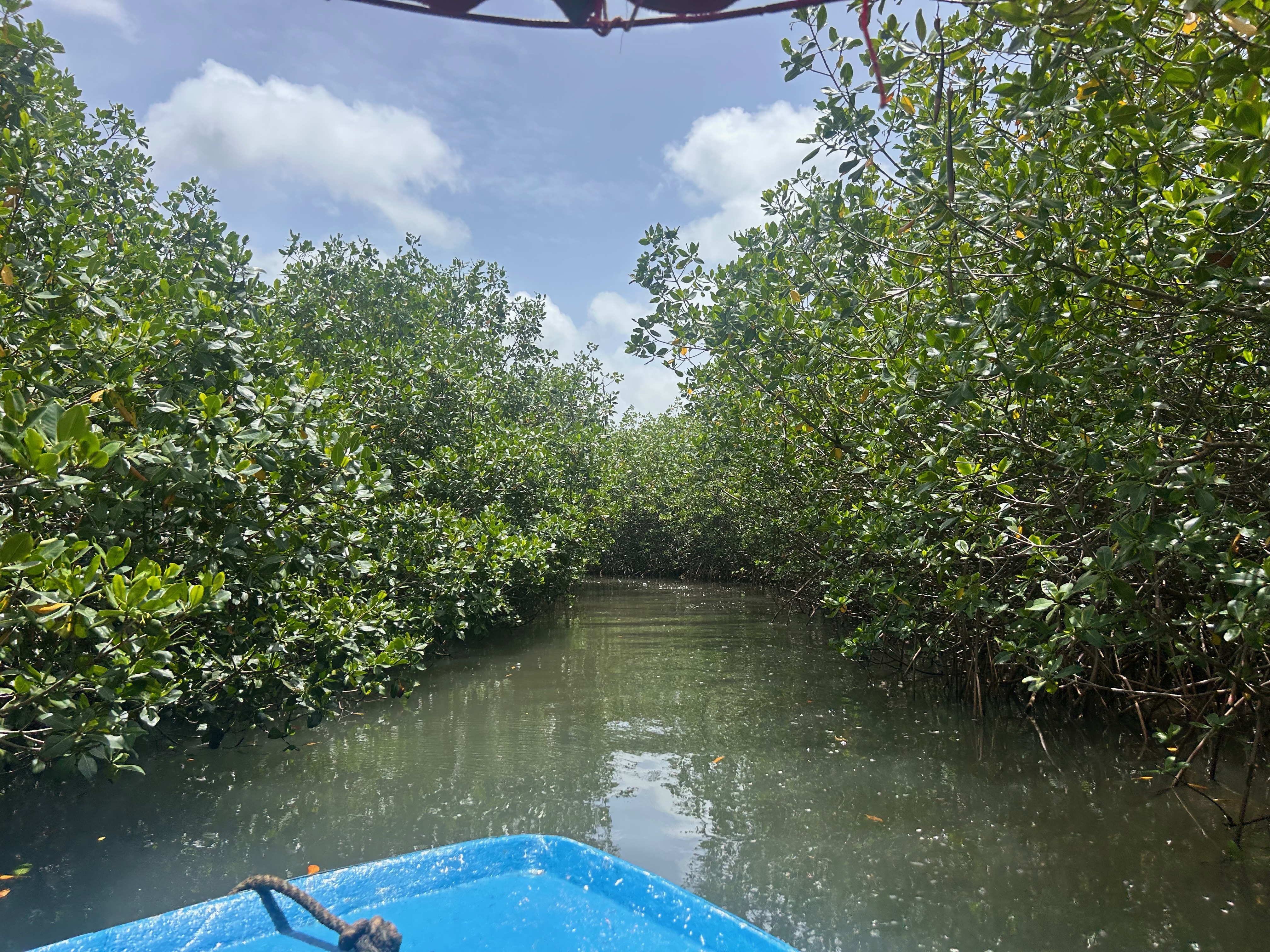
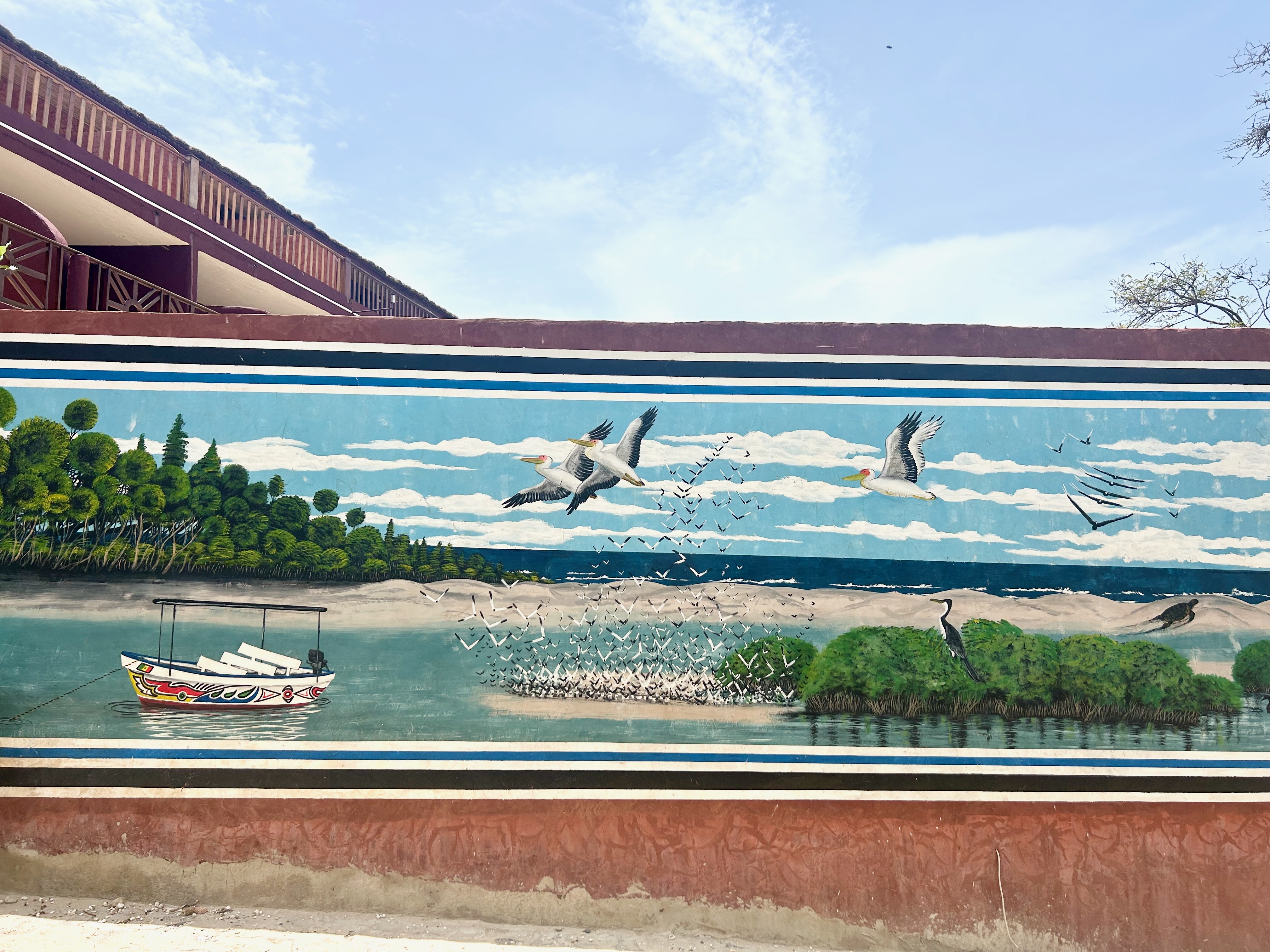
We took a boat tour of Lake Somone. There were so many birds, herons, and little crabs, with mangroves all around us.
At one point, we accidentally ran into the mangroves. The boat driver stopped, maneuvered carefully to the front of the boat, and got us unstuck.
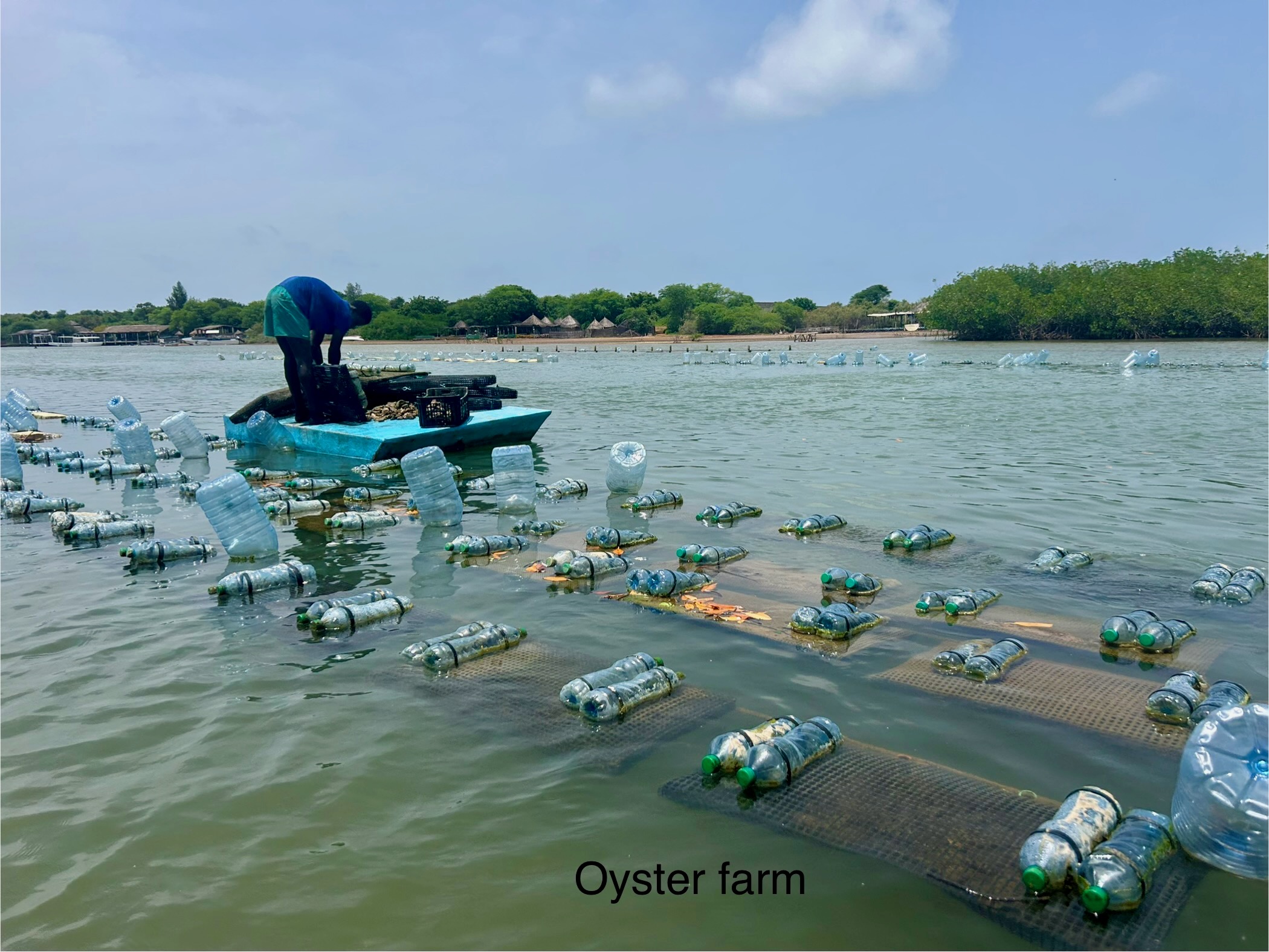
Our tour guide told us about the impressive houses by the shores and lamented that some European (often French) owners should give more back to the country.
The ocean breeze and mangroves made me forget about work, which has been giving me a lot of pressure lately. It was so beautiful, serene.
This was a wonderful end to my week-long trip in Senegal, to witness the local culture and nature.
At dawn on Sunday morning, Mr. Fallou picked me up and I said goodbye to Dakar (funnily, it was raining again).
[Receive future updates]